
Relevance of EWRA in day-to-day AML Compliance

Relevance of EWRA in day-to-day AML Compliance

Relevance of EWRA in day-to-day AML Compliance

The Anti-Money Laundering and Combating the Financing of Terrorism (AML/CFT) regulatory framework in UAE requires Designated Non-Financial Businesses and Professionals (DNFBPs) and Virtual Asset Service Providers (VASPs) to adopt a risk-based approach (RBA) to combat money laundering (ML) and financing of terrorism (TF), and proliferation financing (PF) risks.  

As the regulatory frameworks for DNFBPs and VASPs in UAE require them to adopt RBA, conducting a Business Risk Assessment (BRA) or the Enterprise-wide Risk Assessment is necessary to identify, assess and determine the degree of risk posed to a regulated entity from the perpetrators of M/FT and PF. 

Refer to our blog Checklist for Effective EWRA Documentation to understand the requisites for EWRA. 

Here’s the list of uses of EWRA that regulated entities, such as DNFBPs and VASPs, can  

1. Defining "Risk-centred" AML/CFT and CPF Policies and Procedures

Having conducted EWRA accurately helps regulated entities such as DNFBPs and VASPs to formulate AML/CFT and CPF policies and procedures that are tailored according to the risk findings. 

Tailoring AML/CFT and CPF policies and procedures according to EWRA facilitates developing the compliance processes considering the risk weightage applied to various risk factors such as customers, geography, delivery channels and products or services. 

Illustration: No two regulated entities operating in the same sector require the same set of AML/CFT and CPF policy and procedures. For example, two DNFBPs operating as jewellers can have distinct levels of risk posed by customers and geography due to factors such as: 

  • Region from where they source their raw materials, i.e., the gold bullion could differ. One may source it from the high-risk jurisdictions as defined by FATF, and the other may source it from a well-regulated and reputable jurisdiction with strong anti-financial crime regulations. Then, the degree of risk posed by the delivery channels used or the nature of the customer base differs, requiring respective jewellers to implement relevant AML/CFT and CPF measures.  
  • The resultant AML/CFT and CPF policy needs to be developed by keeping the core risk areas at the centre while developing procedures that help mitigate such risk effectively. 

Drafting adequate and appropriate AML/CFT and CPF program requires the outcome of EWRA to determine the degree and extent of procedures to be taken to customise, supplement, and fortify AML/CFT and CPF efforts. 

2. Foundation for developing Customer Risk Assessment methodology

Regulated entities need to conduct a business risk assessment to identify the proportion of various risk factors that contribute to the overall risk profile. This is then translated into a mechanism to derive the risk each customer poses to the business. A vicious circle – customer risk to business risk and overall business risk to risk from each customer. 

A sound and effective CRA process for a regulated entity such as a DNFBP or VASP is integrated, aligned, and developed with the parameters used for the EWRA process. 

Having access to EWRA findings facilitates regulated entities to formulate and develop CRA parameters, risk scoring methodology and overall program to customer risk assessment. CRA is the function of risk-weightage derived for each risk factors considered during the EWRA exercise. 

Illustration: The outcome of the CRA exercise and subsequent customer risk profiling and scoring would differ for the same customer from one DNFBP to another. For example, the CRA outcome of one real estate agent to another real estate agent shall differ due to variations in degree, extent, and risk weightage assigned to various risk factors in the course of assessing the business risk.  

  • A customer, say, for example, Mr ABC for a real estate agent – Company A, may pose ‘low’ risk as identified post CRA as the majority of Company A’s customer base consists of high net-worth individuals and Mr ABC is also a high net worth individual, becoming homogenous with Company A’s existing and usual customer base. 
  • Contrastingly, the same customer, Mr ABC, for a real estate agent – Company B, may pose a ‘high’ ML/FT and PF risk,  due to Company B’s customer base mostly consisting of lower and middle-income group clients, making Mr ABC as a customer with unusual profile. 
  • In both the above situations, the customer, Mr ABC, and the business sector for which he is a customer remained the same. However, distinguishing factors resulting in different risk scoring as ‘low’ or ‘high’ is the EWRA outcome (the overall business portfolio affects the regulated entity’s risk acceptance level). EWRA outcomes for both real estate agents, Company A and Company B differed because of the general business profile they have. 

The above illustration emphasises how the use of EWRA outcome acts as a foundation on the basis of which, the CRA methodology is developed. 

3. Fosters Optimal Resource Allocation with Risk-Based Approach

A Risk-Based Approach calls for implementing risk mitigation measures commensurate with the level and extent of risk faced. 

The findings of EWRA facilitate a regulated entity such as a DNFBP or VASP to take a risk-based approach (RBA) while making resource allocation decisions, taking into account the following: 

  • Whether all the business activities of the regulated entity are covered by AML regulatory compliance or whether some of their activities are prone to risk requiring AML measures and the rest of the activities are not subject to AML compliance. 
  • The distributing the AML compliance tasks between human resources and advanced technological tools. 
  • Applying EDD measures only to high risk customers and not bothering low-risk customers. 
  • Whether the existing workforce is capable of absorbing the AML compliance workload, or whether new employees such as KYC Analysts, Screening Analysts need to be onboarded or whether the AML compliance obligation needs to be met through the assistance of AML experts or AML consultants. 

Collection of the abovementioned information helps DNFBPs and VASPs to assess how resource-intensive the AML compliance for their organisation would be and take a risk-based decision while allocating funding and resources to mitigate ML/FT and PF risks effectively. 

Illustration/ Use Case: Check out the EWRA and its alignment with the AML/CFT Policy for a TCSP.

4. Customising AML/CFT and CPF Training aligned with assessed risks

Upon conducting EWRA, a regulated entity can assess the level of control measures it needs to exercise for effective mitigation of ML/FT and PF risks. 

Such mitigation measures require active involvement of the employees or personnel of the regulated entity. 

Employees can be effective in mitigating ML/FT and PF risks only when they are adequately and appropriately trained in accordance with the typologies of ML/FT and PF risk specific to their employer’s assessed risks. 

Depending on the EWRA findings and assessed risks, the regulated entity can identify in which specific area its personnel require training. 

Illustration: One DNFBP, having high customer risk weightage in EWRA, would need to have its AML training planned with a special focus on customer onboarding measures such as customer due diligence (CDD), aligning with global sanctions lists, decoding sanctions screening results, how to deal with unaddressed matches during sanctions screening, customer onboarding and offboarding policy and practices, etc.  

Whereas, another DNFBP, having low customer risk due to a homogenous customer mix and low number of customer turnover and repeat customers, needs to have AML training focused around the area like ongoing CDD and transaction monitoring. 

Note: Role-Specific AML/CFT/CPF Compliance Training is necessary throughout the regulated entity to meet regulatory requirements of designing, conducting, and imparting AML/CFT and CPF training to employees. The EWRA findings facilitate tailoring and customising AML/CFT and CPF training on the basis of areas of business that are more vulnerable to ML/FT and PF than others. 

5. Deploying ML/FT and PF Controls, sufficient to mitigate assessed risks

Utilizing EWRA findings helps in determining the baseline AML controls, such as whether there is a need to set up an in-house AML compliance department or whether managed KYC services can be used to mitigate assessed risks. 

Determining the degree of and ways to apply CDD measures and exceptions to CDD, e.g., whether delayed verification of identity can be permitted and, if yes, under what circumstances. 

Determining the process for obtaining user and beneficiary information for implementation of the FATF travel rule when dealing with virtual assets (VAs). 

The findings of EWRA help regulated entities such as DNFBPs and VASPs to determine the type of AML solution required for fulfilling its AML compliance requirements.  

6. Contributes to overall AML governance (Frequency of AML Audit or internal AML reporting

The AML governance framework can be drafted only upon having EWRA findings in hand, giving the regulated entity a clear idea as to how the escalation workflows and allocation of responsibilities shall take place. 

Allocating and determining the roles and responsibilities of AML compliance officer or Money Laundering Reporting Officer. 

Defining the role of senior management in AML compliance process. 

Determining the periodicity of getting an independent AML audit done (more frequent audits for a DNFBP whose EWRA outcome suggests high or medium net risk exposure, as compared to a DNFBP with low net risk exposure). 

Illustration: Mastering STR Filing to Deter Financial Crimes for a DNFBP. 

Illustration II: Assessing AML Control Effectiveness for an Audit Firm

Conclusion

The exercise of conducting EWRA has multifold benefits. The process of EWRA is the starting point for determining what AML measures a DNFBP or VASP needs to take and what are the best-suited options for the fulfilment of AML compliance needs. 

Related Posts

AML/CFT Compliance Culture as a Strategic Tool in the Fight Against ML/TF

AML/CFT Compliance Culture as a Strategic Tool in the Fight Against ML/TF

Table of Contents

Protect your business with reliable and effective AML strategies with AML UAE.

Money laundering (ML) is the legitimisation of ill-gotten gains. Terrorism financing (TF) is the act of providing financial assistance to those persons who undertake terrorist activities. The UAE government strives to regulate those entities that are vulnerable to being used as a conduit for ML and TF through its anti-money laundering / combating the financing of terrorism (AML/CFT) regulatory regime. This blog discusses the importance of establishing an AML/CFT compliance culture in businesses to counter the risks of ML and TF.  

This blog also attempts to shed light on the meaning, components and importance of AML/CFT compliance culture. It also provides guidance on how to create a robust culture of AML/CFT compliance.

What is AML/CFT Compliance Culture?

An AML/CFT compliance culture is the shared beliefs, values and ethical standards regarding adherence to the duties and obligations under a country’s AML/CFT regulatory regime. Such culture flows throughout the entire organisational structure of the entity. It becomes inseparable from the entity’s identity and is reflected in the entity’s decisions, services, practices and conduct. It shapes the behaviour of each individual associated with the entity, from the board of directors to entry-level employees.  

An AML/CFT compliance culture helps the entity stay on the right side of the law. It increases the reputation of the entity and creates a positive brand image. Therefore, the importance of adopting an AML/CFT compliance culture is immense and should not be understated.  

Components of AML/CFT Compliance Culture

An AML/CFT Compliance culture can be understood comprehensively through its various components. These components are discussed below. 

Leadership and Management Commitment

The culture of an organisation flows from its leadership; in simple words, it sets the tone from the top. An entity’s AML/CFT compliance will not be effective unless the board of directors or top management lays a strong foundation for the AML/CFT compliance program. Low or inadequate support by the top brass would mean that the AML/CFT policy remains just a paper document and is not reflected in the entity’s culture. Employees’ motivation to promote the entity’s AML/CFT compliance culture depends on encouragement from the leadership.    

The role played by the top management in promoting an AML/CFT compliance culture includes the following:  

  • Overseeing the timely formulation and approving the Enterprise-Wide Risk Assessment (EWRA). 
  • Ensuring assessment of the AML/CFT risks faced by the entity through a risk-based approach and approving the risk appetite of the entity based on its size, business and customer base. 
  • Approving the AML/CFT Policies and Procedures. 
  • Reporting on new ML/TF Red flags and Typologies. 
  • Ensuring regular independent audits of AML/CFT Compliance Framework. 

Ethical Standards and Values

An AML/CFT compliance culture is characterised by values and ethical standards such as integrity, accountability, transparency, trust and collaboration. Through these values, entities are able to embody the ‘spirit of the law’ rather than just adhering to its letter or simply having a tick-box box approach towards compliance These standards help entities make ethical decisions when they encounter circumstances not provided for in AML/CFT laws and regulations.  

AML/CFT Policies and Procedures

Compliance obligations include not only legally mandated requirements but also the entity’s own internal AML/CFT policies, procedures and controls. Robust internal policies help entities meet their AML/CFT regulatory requirements successfully without any lapses. Set policies and procedures also ensure that everyone involved in the compliance process is aware of their individual roles and responsibilities. This helps coordinate and speed up the resolution of any issues.  

Training and Education

When employees are made knowledgeable about the meaning, mode of operation, and red flags of ML and TF, as well as their role in the organisation, they are able to detect and deter AML/TF threats effectively and promptly. Such awareness allows the staff to make informed decisions regarding corrective actions to be taken when they face an ML or TF threat. Thus, AML/CFT training and education are important components of a strong AML/CFT compliance culture.  

We help you prepare and implement

a robust Anti-Money Laundering Program.

Importance of AML/CFT Compliance Culture

After discussing the meaning and components of robust AML/CFT compliance culture, it’s time to move the discussion towards the question of why it is imperative for entities to build a strong AML compliance culture 

Enhancing Organizational Integrity

Rules and regulations seek to deter the crimes of ML and TF. However, laws are ultimately just words on paper. A strong AML/CFT compliance culture inculcates integrity into the organisation and helps ensure that these laws are properly implemented and adhered to. By embedding a culture of integrity, entities not only comply with legal requirements but ethically deal with all situations not dealt with by the law 

Building Trust with Stakeholders

When an entity practices and portrays a strong culture of proper AML/CFT compliance, it generates trust and a positive reputation among its customers, investors, associates and regulatory authorities. The employees working for the entity have faith in it, which boosts employee morale. This creates a positive feedback loop, which results in the further strengthening of the entity’s compliance culture 

Ensuring Regulatory Compliance

ML and TF are threats that continuously evolve to avoid detection. To curb them. AML/CFT laws are dynamic and continuously developing to deal with the new tactics of money launderers and terrorist financers. When entities have a strong AML/CFT compliance culture, they are able to regularly update themselves and evolve new ways to comply effectively with the AML/CFT regulatory obligations.    

The Role of AML/CFT Compliance Culture in Combating ML/TF

Preventive Measures

Robust AML/CFT Policy and Procedures

AML/CFT rules and regulations mandate regulated entities to draft and implement their own AML/CFT policies and procedures. To be effective, the AML/CFT policies and procedures must include the following:  

  • Roles and responsibilities for all employees involved in AML/CFT compliance. 
  • Proactive senior management oversight and appointment of AML/CFT Compliance Officer. 
  • Adoption of a risk-based approach to counter ML/TF. 
  • Continuous training and awareness programs for the staff involved in AML/CFT compliance. 
  • Customer Due Diligence (CDD), including Know Your Customer (KYC), customer risk assessment and profiling. 
  • Sanctions Screening and Adverse Media Screening 
  • Reporting Procedures for Suspicious Activities or Transactions (SAR/STR) 
  • Ongoing monitoring of customers and transactions Record keeping procedures 

When these components are clearly defined, there is better oversight and coordination within the entity. Compliance responsibilities should not be ‘siloed’, i.e., restricted to specific departments with no internal communication. This ensures that all red flags encountered during the AML/CFT compliance process are swiftly identified and dealt with promptly. This prevents ML or TF risks from arising.  

Comprehensive Due Diligence

Customer Due Diligence (CDD) is a process that must be undertaken by entities to check the authenticity of their customer’s identity. It helps them assess the risks posed by a customer through risk assessment, sanctions screening and adverse media screening. Through CDD, entities are able to form an informed decision of whether to onboard customers based on their risk appetite. A rigorous CDD process prevents entities from onboarding clients exposed to ML or TF and thus reduces risk exposure of the entities.  

Transaction Monitoring

Transactions monitoring involves continuously observing transactions to detect any anomalies or red flags that may indicate ML or TF. Suspicious activities and transactions are identified through red flags such as transactions involving large amounts of funds, unusual behaviour by customers, inconsistency of the transaction with the customer’s economic profile or past behaviour, multiple transactions within a short period of time, transactions from, to or through a high-risk jurisdiction, etc. Thus, transaction monitoring helps prevent ML and TF before they occur or are in the early stages of occurrence by detecting and dealing with suspicious activities. Timely and rigorous transaction monitoring is an important constituent of an effective AML/CFT compliance culture.  

Detective Measures

Data Analytics

Data analytics helps entities analyse large amounts of information to detect ML and TF threats. Big Data enables entities to streamline their AML/CFT compliance obligations through real-time updates in customer risk scoring and profiling, automatic transactions monitoring, prompt sanctions screening and adverse media screening, recognising anomalies in customer behaviour, etc. Data analytics thus eases the process of compliance by digitising processes that would otherwise be done manually. Thus, data analytics has made the detection of ML and TF simple and swift.  

Health checks and Audits

Detecting vulnerabilities in the AML/CFT policies and procedures is an important part of the entire AML/CFT compliance process. This detection exercise is done through a health check or audit of an entity’s AML/CFT compliance program. A health check or audit involves a review of risk assessment of the entity, its policies, procedures and controls, communication channels open in the entity for coordination or grievance redressal, CDD and KYC methodologies adopted by the regulated entity, the process of suspicious activities detection and reporting by the entity, adequacy of records obtained and kept, regularity and quality of staff training and awareness, etc. The health check and audit process also includes analysis of the vulnerabilities detected, discussion about the same with top management, and adoption of remediation measures to fill the gaps identified 

Employee Vigilance and Reporting Channels

The active participation of the employees in the entity’s AML/CFT compliance program ensures efficiency in dealing with ML and TF threats. For example, frontline employees are considered the first line of defence and compliance officers, along with the compliance department, are the second line of defence under an entity’s AML/CFT program. Employee vigilance at these levels will nip ML and TF in the bud. Employee vigilance will enable early detection of ML and TF threats, prompt communication of the threat to the compliance officer, senior management, or board of directors, and subsequent reporting to the AML/CFT regulatory authority of the country in which the entity operates 

AML Health Check process just got Smarter,
Easier, and more Efficient.

Reporting Obligations

Investigating Suspicious Activities

Suspicious activities are to be reported mandatorily under a country’s AML/CFT laws and regulations. Suspicious activities are those that indicate the occurrence of ML or TF. For example, the following activities cause suspicion as to ML and TF: 

  • Customer refuses or is hesitant to provide KYC details or identity documents 
  • Third party gives instructions or undertakes transactions through the customer’s account 
  • Too many transactions in a short period of time 
  • Uncharacteristically large funds being transferred 
  • No economic rationale behind transactions or the source of funds or wealth is unexplained 

When these suspicious activities are detected and reported in a timely manner, ML and TF threats are dealt with successfully.  

Collaboration with Regulatory Authorities

Collaborating with AML/CFT regulatory authorities is crucial in aiding the authorities in curbing ML and TF in the country. The collaboration includes adhering to the AML/CFT obligations put on the entity, providing information promptly when required by the regulatory authorities, reporting suspicious activities and transactions as prescribed, etc. Collaborating with regulatory authorities will improve the regulator’s trust in the entity and improve the reputation of the entity in the country as law-abiding and transparent.  

Implementing Corrective Actions

As discussed before, regular health checks and audits are significant features of an effective AML/CFT compliance culture. After a thorough audit, remediating the vulnerabilities identified through corrective actions is an important part of the AML/CFT Compliance process. Such corrective actions include reassessing risk exposure to ML and TF, making necessary changes to AML/CFT policy and procedures, revamping the compliance team structure, establishing new communication channels, etc.  

Building a Strong AML/CFT Compliance Culture

Building a strong AML/CF compliance culture requires businesses to develop an understanding of what strong and weak AML/CFT compliance culture looks like; knowing the distinction between the two shall enable them to formulate a customised strong AML/CFT compliance culture. 

After understanding the meaning, components and importance of a robust AML/CFT compliance culture, it is time to understand how such a strong culture can be built. This is discussed below.  

Top Management Commitment

To build a robust AML/CFT compliance culture, top management must commit to: 

  • Setting the tone of integrity, transparency, morality and non-tolerance towards lapses that enable ML and TF to occur. 
  • Allocating adequate resources for the entity’s AML/CFT compliance.  
  • Overseeing the risk assessment process and drafting of internal AML/CFT policy for the entity.  
  • Having an open channel of communication to handle all the complaints, doubts, criticisms, and concerns regarding the entity’s AML/CFT policy and ensuring accountability. 
  • Duly appoint an AML/CFT Compliance Officer or Money Laundering Reporting Officer (MLRO) who is qualified for the role. 
  • Reviewing the AML/CFT reports and independent audits and remedying any vulnerabilities found. 
  • Leading by example and actively participating in AML/CFT training, encouraging employees to participate and take their role with seriousness and professionalism. 

Crafting Clear and Effective AML/CFT Policies and Procedures

Preparing AML/CFT policies and procedures is a legal obligation under a country’s AML/CFT laws and regulations. It is the backbone of a strong AML/CFT compliance culture. An effective AML/CFT policy has the following characteristics: 

  • It is framed after gaining a thorough understanding of the country’s AML/CFT laws and regulations in which the entity operates. 
  • It is grounded in a risk-based approach, which involves identifying the specific ML and TF risks faced by the entity and implementing tailored measures to mitigate them. This approach is customised to address the unique challenges posed by the firm’s products and services, customer base, geographical operations, and other relevant factors. 
  • It is framed in a clear and concise manner, with all roles and procedures defined to leave no doubt or scope for overlap of responsibilities and powers. Top of Form 
  • It should set clear policies on all the AML/CFT obligations of the entity such as risk assessment, CDD and KYC, sanctions screening, suspicious transactions or activities reporting, etc. 
  • It should be regularly reviewed and updated to ensure all vulnerabilities are filled.  

Implementing AML/CFT Compliance Program

After preparing AML/CFT policies and procedures, it is important to implement them in a manner that achieves its intent and objectives. For effective implementation, the following approach should be adopted: 

  • Make a detailed checklist and ensure that all entries are tick-marked through completion. Here are the components of the checklist: 
  • Registering with the AML/CFT regulator if required. For example, in the UAE, entities have to register with FIU’s goAML portal.  
  • Designating a qualified AML/CFT compliance officer or MLRO with adequate authority. 
  • Conducting Enterprise-Wide Risk Assessment (EWRA) and defining risk mitigation measures. 
  • Laying down the customer onboarding process along with adequate customer due diligence and sanctions screening measures to be adopted.  
  • Establishing a monitoring program that tracks customers, transactions and activities on an ongoing basis 
  • Preparing procedures to detect and report suspicious activities and transactions 
  • Training the employees involved in the AML/CFT program. This step is discussed in detail below. 
  • Conducting an independent audit of the AML/CFT program of the entity and regularly updating it to fill any gaps 
  • To execute the prepared checklist in a timely manner, a comprehensive action plan should be created with deadlines. Senior management must regularly monitor the implementation process. Adequate resources should be allocated to the AML/CFT program. 

Training and Awareness

Training and awareness enable employees and other stakeholders involved in the AML/CFT program to recognise and adopt corrective measures to deal with any ML or TF threats they encounter. The employees must be given regular training by qualified AML/CFT experts. The training module must include subjects such as: 

  • Meaning and typologies of ML and TF 
  • A brief overview of the international efforts to fight ML and TF and the AML/CFT laws and regulations of the country in which the entity operates 
  • Detailed understanding of the internal AML/CFT policies and procedures of the entity 
  • ML and TF risks assessed, and risk mitigation strategies adopted by the entity 
  • Customer onboarding protocol, including customer risk assessment, risk scoring, risk profiling, customer due diligence, KYC, sanctions screening and adverse media screening 
  • Detecting and reporting suspicious activities and transactions 
  • Records acquired during the AML/CFT process that must be kept  
  • Coordinating and cooperating with the AML/CFT compliance department of the entity 

The training program should be a continuous process. When regulations change, or independent audits find discrepancies, employees should be retrained to perform their roles more effectively. Further, new employees must be given basic AML/CFT training when they are onboarded.  

Focused. Flexible. Relevant.

Intelligent, all-encompassing AML training for your business is just a call away.

Challenges in Combatting Money Laundering and Terrorism Financing

Building a strong AML/CFT compliance culture may not be easy at first. An entity may face the following hurdles while implementing and maintaining its compliance practices:  

1. Business Goals

Entities often place profit and growth as their highest priority, ignoring business ethics in the process. There is a need to balance both ethics and profits to build an effective AML/CFT compliance culture.

AML/CFT compliance must be seen as adding to the profits and growth of a company rather than an obstacle. This is so because a reputation of being AML/CFT compliant increases trust among the customers and reduces the costs incurred due to non-compliance. Thus, having a robust AML/CFT compliance culture gives positive dividends.  

2. Staff Resistance

Employees may not be aware of their role in combating ML or TF threats or may see their AML/CFT obligations as irrelevant to their overall job profile. They may resist changes when an entity first makes the decision to align their business with AML/CFT best practices To deal with this challenge, it is necessary that positive behaviour is incentivised and encouragement is given to adhere to the entity’s AML/CFT compliance program that flows from the top leadership. When the leaders set the tone from the top, employees are bound to follow.  

3. Resource Constraints

When the AML/CFT program is seen as a cost rather than an opportunity, AML/CFT compliance suffers. Developing and maintaining an AML/CFT program can be costly because it involves investments in technology, human resources, training, and services of AML/CFT experts. However, these costs have positive returns, such as a good reputation, trust from customers, and no non-compliance costs. Further, the costs of non-compliance, i.e., government-imposed fines and penalties, are significantly more than the cost of installing compliance measures 

4. Evolving Regulatory Framework

Since ML and TF typologies are evolving with advancing technology, AML/CFT laws and regulations are continuously adapting to deal with emerging threats. This means that the AML/CFT law is dynamic, and entities need to keep up. This may seem complex to regulated entities, which are already lagging behind in terms of AML compliance. However, being up to date with the AML/CFT regulatory changes is essential to ensuring AML/CFT compliance.  

The Future of AML/CFT Compliance Culture in Combating ML/TF

After building an effective AML/CFT compliance culture, the next task is sustaining and developing it in a way that such culture becomes an enduring component of the entity’s identity. As ML/TF typologies, as well as AML/CTF regulations evolve, so must the culture surrounding AML/CFT compliance. Here’s a glimpse at the future of AML/CFT compliance culture.  

Impact of AI and Machine Learning on Compliance

Artificial intelligence (AI), data analytics, and machine learning have made the AML/CFT compliance process easier, quicker and cheaper. These technological advancements make the following tasks more efficient: 

  • Entering and keeping records of loads of customer data. 
  • Detecting any red flags while conducting the customer due diligence process. 
  • Sanctions Screening and Adverse Media screening using regularly updated databases. 
  • Analyzing patterns of customer transactions and behaviour and detecting anomalies. 

These technologies keep on improving and thus form the future of AML/CFT compliance culture by making compliance swift, simple and accurate.  

These technologies keep on improving and thus form the future of AML/CFT compliance culture by making compliance swift, simple and accurate.  

Future Regulatory Developments

As the world becomes increasingly interconnected, ML and TF threats evolve, and AML/CFT measures adapt to combat them. This means more cross-border collaborations between countries to deal with the ML/TF threats effectively. AML/CFT regulations may become more stringent and standardised. However, with a strong AML/CFT compliance culture, navigating through evolving and stricter AML/CFT laws and regulations would be easily manageable.   

Importance of Evolving Compliance Practices

AML/CFT compliance culture needs to be dynamic and adapt to the emerging ML/TF threats and challenges as well as keep up with the AML/CFT regulatory developments. Entities must keep pace with technological advancements and adopt them in their AML/CFT compliance program. All vulnerabilities should be detected and reported. Periodical training on new AML/CFT typologies, technology and regulatory developments will ensure a strong and efficient AML/CFT compliance culture. 

Fostering a Culture of Continuous Improvement

Continuous improvement can only be achieved through frequent health checks, open communication and swift handling of grievances and concerns. Leadership commitment to AML/CFT compliance will ensure that the entity’s objectives and practices are aligned towards constant improvement and innovation of the AML/CFT compliance program.  

Conclusion

Establishing a robust AML/CFT compliance culture is imperative to comply with AML/CFT regulatory obligations. It is also an important strategic tool to combat the emerging threats of ML and TF. However, if the entities regulated under a country’s AML/CFT legal regime do not take their compliance obligations seriously, the objective of curbing ML and TF will remain a distant dream. From the macroeconomic prospects of the country to the society and the entity itself, everyone will be severely impacted.

Therefore, establishing a robust AML/CFT compliance culture must involve essential components such as leadership commitment, ethical standards, comprehensive policies, and continuous training to ensure that entities build resilience against the said financial crimes such as ML/TF. By embedding AML/CFT principles deeply into their identity, entities can better detect and deter illicit activities 

Ready to fight money laundering and terrorist financing?

Equip your team with our expert AML/CFT training today!

Share via :

Add a comment

About the Author

Pathik Shah

FCA, CAMS, CISA, CS, DISA (ICAI), FAFP (ICAI)

Pathik is an ACAMS-certified AML consultant specialising in governance, risk, and compliance for regulated entities in the UAE. He brings over 28 years of experience, with 1,000+ hours of AML training and 200+ advisory engagements across DNFBPs, VASPs, and FIs. He supports businesses in aligning with AML/CFT requirements from the CBUAE, DFSA, MoET, MoJ, VARA, CMA, FSRA, and FATF. Known for translating complex regulations into audit-ready procedures, Pathik enables operational clarity and compliance readiness.

Reach Out to Pathik

Why Ongoing Monitoring is Key to Money Laundering Risk Mitigation

Why Ongoing Monitoring is Key to Money Laundering Risk Mitigation

Why Ongoing Monitoring is Key to Money Laundering Risk Mitigation

The process of Ongoing Monitoring entails supervision of business relationships that are established with customers.  The supervision of business relationships includes keeping a close eye on customer activities and monitoring transactions executed throughout the life cycle of the business relationship to ensure that these are consistent with the customer profile created by the regulated entity using the Know Your Customer (KYC) exercise of the Customer Due Diligence (CDD) process. The factors given below showcase why ongoing monitoring is essential for money laundering risk mitigation.  

1. Managing ML/TF Risks

Ongoing Monitoring helps identify, at the earliest, the potential  ML/TF risks associated with customers as any deviation or variation in customer profile, customer behaviour, or transaction pattern is captured during the ongoing monitoring process, enabling the business to manage ML/TF risks by deploying necessary ML/TF risk mitigation measures effectively. 

2. Reputation Management

Having a grasp over identifying suspicious transactions and activities  helps businesses to evade potential reputational loss that comes along due to association with individuals and entities engaged in ML/TF. 

3. Maintaining Transparency

Ongoing monitoring helps maintain transparency in business dealings as it helps with timely identification and disclosure of changes or fluctuations in customer profiles, necessitating seeking the latest information from customers. This gives no room for kickbacks or corruption by employees of the organisation to facilitate criminals in misusing an organisation to further their illicit motives and promotes two-way transparency that includes business and customers equally. 

4. Early Detection of Suspicious Activities

The best part about ongoing monitoring software or tools is that it immediately notifies or generates an alert upon observing any inconsistencies in customer behaviour or transactions. This helps businesses detect potentially suspicious activities indicating ML/TF early. 

5. Compliance with Regulatory Requirements

Conducting ongoing monitoring assists businesses in fulfilling mandatory regulatory requirements of the supervision of business relationships with customers, which forms part of the Customer Due Diligence (CDD) process contained in the AML regulations of the UAE. 

6. Adaptation to Evolving Threats

An ongoing monitoring practice or tool, over a period of time, helps businesses to develop an understanding of evolving ML/TF typologies and helps adapt to evolving ML/TF threats due to continuous observation of behaviour and transaction trends of customers. 

7. Timely Reporting

Conducting ongoing monitoring assists businesses in fulfilling regulatory reporting requirements such as timely filing of Suspicious Activity/Transaction Report (SAR/STR) to the UAE Financial Intelligence Unit (FIU) through the goAML portal, thus reducing incidences of fines and penalties. 

8. Strategic Decision-Making

By having in place an ongoing monitoring mechanism, businesses can make strategic decisions as to client onboarding and client offboarding, along with setting measures for seeking additional information to satisfy queries raised due to findings observed during the ongoing monitoring process, such as those requiring Enhanced Due Diligence measures (EDD) by seeking Sources of Funds (SoF) and Sources of Wealth (SoW).

Conclusion

With the above pointers, businesses in the UAE can effectively utilise ongoing monitoring processes to mitigate ML/TF risks posed by customers. 

Related Posts

Confused with how to mitigate ML, FT, and PF risks within your Regulated Entity?

Critical Risk Assessment Criteria for PEPs

Critical Risk Assessment Criteria for PEPs

Critical Risk Assessment Criteria for PEPs

Critical Risk Assessment Criteria for PEPs

The UAE’s Anti-Money Laundering and Combating the Financing of Terrorism (AML/CFT) regulatory framework requires businesses to scrutinise and assess the Money Laundering (ML), Financing of Terrorism (FT), or Proliferation Financing (PF) risks posed by existing and potential customers who are classified as Politically Exposed Persons (PEPs). The PEP risk assessment forms part of Customer Due Diligence (CDD) measures.  

To ensure compliance and effectively manage these ML/FT/PF, bribery, and corruption risks, businesses must establish clear criteria for assessing the customers identified as PEPs.  

However, not all PEPs pose the same degree and extent of ML/FT/PF, corruption and bribery risk. Thus, businesses cannot deploy a blanket approach and need to adopt a risk-based approach, requiring to analyse each PEP customer on a case-to-case basis.  

Businesses must implement risk assessment criteria to evaluate the ML/FT/PF risks associated with each PEP. This approach ensures businesses can tailor their risk management strategies effectively, addressing the varying degrees of risk posed by different PEPs and maintaining effective controls against financial crimes, including ML/FT/PF. 

Here’s a criterion that businesses should consider while assessing ML/FT/PF risks related to PEPs:  

1. Role and Position

As part of the risk assessment criteria for customers, businesses need to evaluate whether their existing or potential customer identified as PEP holds any highly influential position within the government or political system. Higher-ranking positions typically present higher risks due to greater influence and access to resources, such as a Prime Minister or Foreign Minister or Minister of Defense, or is the PEP merely a member of parliament or an important cabinet that advises higher-ranking PEPs. Assessing the ML/FT and PF risk posed by PEPs on the basis of their role and position in influencing public policy, government programs, and business transactions is an important component of risk assessment criteria for PEPs. Among the other factors, the regulated entities must consider: 

  • The nature of decisions controlled by PEP and the degree of autonomy PEP has in decision-making 
  • Whether the PEP has control over disbursements of funds 
  • The PEP’s rank within the government or international organisation 

2. Public Profile

As part of the PEP’s risk assessment, businesses should evaluate the PEP’s public profile by examining its reputation and image in the public domain. PEPs, who are often in the media and under public scrutiny, may pose different and potentially higher risks compared to those with low profiles.  

However, while high visibility can increase scrutiny, it does not necessarily correlate with higher ML/FT and PF risk.  

Thus, to accurately analyse the potential risk associated with a PEP, businesses need to consider both public opinion and media coverage, depending on the context of information available about the PEP.  

3. Jurisdictional Risk

The jurisdiction risk involves considering the political and economic stability and the rating of the AML framework of the country where the PEP belongs.  

Foreign PEPs pose a higher amount of risks than local PEPs. 

Countries with a high level of corruption, weak governance structure, or unstable political environments pose greater risks, and PEPs residing in these countries may pose significantly higher ML/FT/PF, corruption, and bribery risks.  

Apart from this, as part of assessing jurisdictional risk, businesses should also evaluate whether the PEP operates in jurisdictions that conflict with the country where the businesses operate, as this can further impact the risk assessment criteria for PEPs.  

4. Relatives and Close Associates

Knowing PEPs is essential, but businesses should also investigate the relationships and connections of the PEP, including relatives, close associates, and friends. These relationships can significantly impact the risk profile, as they may be involved in or benefit from illicit activities facilitated by the PEP’s position.  

At the same time, potential and existing customers onboarded must be monitored on an ongoing basis to assess whether they are relatives, close associates, and friends of any PEP as it is highly possible that PEP, to avoid disclosing their identity, operate by proxy of their relatives, close associates, and friends. 

Assessing the background and activities of these connected individuals is essential for understanding the broader network associated with the PEP. 

5. Origin of Funds and Wealth

Businesses should also investigate the source of the PEP’s funds and accumulated wealth to assess the legitimacy of their transactions. When assessing the origins of funds and wealth, it is necessary for businesses to know if wealth and funds are aligned with their official income or business profits of such a PEP.  

Unexplained wealth and funds inconsistent with the PEP’s known income or profit may indicate involvement in financial crimes, including ML/FT/PF, bribery, and corruption.  

6. Transaction Patterns

Another critical risk assessment criterion is to analyse transaction patterns involving the PEP.  Businesses should monitor the nature and frequency of transactions involving the PEP on an ongoing basis.  

Unusual and suspicious transaction patterns, such as those involving unusually large numbers of transactions or involving high-risk jurisdictions, can signal involvement in potential illicit activities.  

Thus, as part of the risk assessment of the PEP, businesses should ensure that transactions are consistent with the PEP’s known wealth, business, and financial activities. 

7. Duration of Public Position

The length of time the PEP has held its position of power also impacts the risk assessment. Long-standing PEPs may have developed extensive networks and influence, impacting their risk profile.  

Even after leaving office, former PEPs may still pose risks due to the established network and influence.  

Evaluating the duration and impact of the PEP’s tenure helps in assessing potential risks associated with their involvement.  

Conclusion

Assessing the risks associated with PEPs on a case-to-case basis is critical for businesses to ensure compliance with the UAE AML/CFT regulations. By carefully evaluating these criteria, businesses can make informed decisions and implement appropriate measures to manage and mitigate ML/FT/PF risks related to PEPs. 

Related Posts

What Is The Role of Technology In Anti-Money Laundering Compliance

What Is The Role of Technology In Anti-Money Laundering Compliance

Table of Contents

Protect your business with reliable and effective AML strategies with AML UAE.

What Is The Role of Technology In Anti-Money Laundering Compliance

This blog discusses the exponentially growing role of technology in Anti-Money Laundering compliance. With criminals using advanced tactics to successfully evade the suspicious activities and transaction detection techniques used by financial institutions, Designated Non-Financial Businesses and Professions (DNFBPs) and Virtual Assets Service Providers (VASPs) need to understand the role of technology in Anti-Money Laundering (AML) compliance.  

The DNFBPs and VASPs must take the help of technological advancements such as Artificial Intelligence (AI), Machine Learning, Data Analytics, Cloud-based solutions and more to counter ML/TF and comply with regulatory requirements.  

Limitations of Traditional Anti-Money Laundering Processes

Traditional and legacy AML processes suffer from challenges relating to cost, time, and human intervention. Following are the difficulties faced by financial institutions, DNFBPs and VASPs in AML compliance while using traditional or legacy AML processes: 

Resource-Intensive

The annual cost of anti-money laundering (AML) compliance for financial institutions and reporting entities is enormous.  

This cost may rise in the upcoming years due to the scaling of the business, requiring a higher volume of AML activity, rigorous checks, complex investigations, greater people-centric costs, and an ever-expanding scope of offences.  

In practice, reporting entities spend a significant portion of the budget on Customer Due Diligence (CDD), followed by internal investigation and data collection. CDD is the process by which reporting entities identify or verify client information. This adds pressure on the workforce, thus increasing the entity’s labour costs. 

Ineffective Customer Due Diligence (CDD) Measures

With legacy and traditional CDD, businesses risk gathering outdated, irrelevant, or incorrect information. They are prone to human error, technical incompetence, and lack of expertise. With all in place, it becomes difficult to identify patterns if all CDD measures do not align properly. This can cause failure to identify red flags and put businesses at risk. 

Time-Consuming

AML compliance is inherently time-consuming as it requires proper risk assessment of customers, obtaining and verifying customer information from multiple public and private sources, including customer sanctions lists and continuous monitoring.  

At a time when customers are looking for one-tap access to services and instant approvals, any delay or loss of productivity and rounds of information gathering may result in a negative customer experience. 

Scope for Human Error

The AML/CFT guidance for DNFBPS categorises three lines of defence in an AML program. 

The Three Lines of Defence in the AML Program comprises the employees who execute KYC or Customer Due Diligence, compliance officers or money laundering reporting officers who ensure the obligation of AML/CFT regulations, independent auditors who assess the effectiveness of the first and second line of defence.  

Any scope for human error on either line of defence can weaken the organisation’s entire AML program. 

In the First Line of defence:

Lack of adequate frontline employee training to recognise red flags can result in establishing business relationships with suspicious individuals and entities. It also results in failure to submit a Suspicious Activity Report (SAR) or Suspicious Transaction Report (STR) with the UAE FIU. 

In the Second Line of defence:

Compliance officers and professionals involved in AML compliance processes often face burnout due to the high volume of important daily decisions they make for their clients. Such decisions can range from a simple onboarding task to reporting suspicious activities.  

Decisions are highly likely to vary due to differences in opinion, experience, and knowledge and susceptibility to bias, which increases the scope for human error. 

In the Third Line of defence:

Ensure the auditors have the relevant training, expertise and experience to conduct AML audit functions. Any relaxation can allow irregularities to go unnoticed.  

It is also important for an auditor to understand the nature and size of the business, applicable laws and regulations, sanctions regime, and risk appetite of the financial institution, DNFBPs, or VASPs. Any deviation by the auditor can elevate the organisation’s risk. 

Sophisticated Money-Laundering Tactics

The virtual asset space has evolved a lot in recent years, providing new possibilities for offenders. The creation of synthetic identities, i.e., a mix of real and fake identities, the use of privacy coins, mixers, and tumblers to conceal the origin of funds, and other Anonymity-Enhanced Currencies (AEC) make it difficult for financial institutions, VASPs, DNFBPs, and regulatory authorities to trace transactions. Non-fungible Tokens (NFTs)  are blockchain-backed images, videos, audio, or memberships that a holder owns by owning the data associated with such items.  

Lack of High-Quality and Real-Time Data

AML compliance is a highly data-driven process. One of the biggest challenges in legacy AML compliance is the lack of high-quality, real-time data. The primary reason behind this is the practice of storing data in silos. It is impossible for any small, medium, or large organisation to manually analyse the abundance of available data with their limited processing power. This raises issues such as unnecessary duplication of information, redundant tasks, and bottlenecks within the organisation.   

The lack of availability of quick and real-time data directly impacts the data-driven AML compliance processes such as sanctions screening, which, if not screened across real-time data, would give false results, causing sanctioned individuals or entities to pass through the filter of sanctions screening, leading to their establishment of business relationship with them, exposing business to ML/TF and PF risks. 

Rule-Based Systems and High False Results

When deciding if a transaction is suspicious, AML professionals rely on a certain set of principles, which can be rule-based or risk-based. Every transaction involves details such as parties engaged, money consideration, mode of payment, and place of transaction.  

Rule-based systems rely on rules framed by industry experts to guide the decision-making process. This includes threshold-based, transaction-based, location-based, and customer-based rules. The rule-based system is rigid and views transactions from a single lens, which can lead to high false positives, making the job of compliance officers more cumbersome. 

The inefficiency in the legacy rule-based systems is causing regulatory and reporting entities to adapt to new and advanced technologies in compliance processes. 

Enabling Regulatory Framework

The present regulatory framework endorses relying on novel innovations for AML compliance. However, it also cautions Financial Institutions, DNFBPs and VASPs about their potential risks. The following laws and regulations deal with the adoption of modern technologies. 

The Cabinet Resolution No. (134) of 2025 concerning the Implementing Regulation of Federal Decree by Law No. (10) of 2025:  

  • Enables Financial Institutions and DNFBPS to adopt modern technologies to counter Money Laundering and Terrorism Financing challenges that may arise.  

AML/CFT Guidance for DNFBPS  

  • Requires the reporting entities to ensure risk management of modern technologies. 
  • Suggests reporting entities use technology to counter ML/TF risks effectively.  

Specific guidance for Financial Institutions on Digital Identification for Customer Due Diligence (CDD) by the Central Bank of UAE. 

  • Enables the use of Digital ID Systems to prove a person’s identity online using electronic databases, digital credentials, and Application Program Interfaces (APIs).  
  • Components of Digital Identification Systems include: 
  1. Identity Proofing and Enrolment: It establishes a person’s identity account by collecting and validating available information about the person. 
  2. Identity Authentication: It verifies a person’s identity using authenticators.  
  3. Transferability and Integration Mechanisms: These mechanisms allow the verification of other customer relationships using a person’s identity. 

The digital identification system is in line with the Key Principles issued by the Supervisory Authorities for Financial Institutions adopting AML Enabling Technologies. 

Key Principles for AML enabling technologies: 

1. Data Protection: Financial Institutions, DNFBPs, and VASPs must comply with all prevailing laws and regulations on data protection at all stages of data handling, use, transmission, and storage. 

2. Control Functions: Regulated entities should adopt a risk-based approach and employ proper controls to mitigate risks.  

3. Independent Review: Institutions should conduct formal, independent reviews/audits. Additionally, while appointing an AML auditor, regulated entities should ensure that the auditor understands the entity’s operations and risks. 

4. Skill, Knowledge, and Expertise: Organizations should ensure that their staff possess relevant resources, skills, knowledge, and expertise specific to their roles when adopting a new technology. 

5. Training: Organizations should provide adequate training to relevant staff for handling modern technologies. 

Evolution of AML Technology

The AML Mechanisms have undergone drastic changes over the years due to the crime’s evolving nature. Earlier, AML practices heavily relied on manual, rule-based processes that suffered from numerous challenges.

The static nature of manual mechanisms could not cope with the complexities of the crime. For instance, compliance officers used to search through various government and private sources to collect relevant information and verify it with documents provided by the client. This straightforward process assumed substantial time, energy, and resources without guaranteeing accuracy. 

The industry slowly moved onto systems that used data analytical models, also known as legacy systems. While these systems saved time and resources, they came with their challenges. Many technological models adopted were also rule-based and failed to detect behavioural patterns. Data quality deteriorated due to redundancy, insufficiency, and potential human bias. The advent of artificial intelligence and cloud-based services has opened new opportunities for reporting entities to overcome the challenges posed by traditional and legacy systems, with the scope for real-time tracking and data analysis. 

Key Technologies in AML

Artificial Intelligence (AI)

Artificial Intelligence is a technology that allows computers and machines to perform tasks that replicate Human Intelligence. Institutions can apply AI in AML compliance for pattern recognition, task automation, and predictive analytics to streamline operations and enhance customer experience.  

Machine Learning (ML)

Machine Learning is a subset of artificial intelligence (AI). It uses data and algorithms to enable AI to imitate human learning, thus gradually improving its accuracy. Machine learning provides the scope for accuracy and scalability in automation. 

Big Data Analytics

Big data analytics is the process of gathering, verifying, and analysing enormous amounts of data to quickly and efficiently discover market trends, insights, and patterns. Professionals can utilise advanced tools such as sophisticated algorithms and statistical models. Big Data Analytics is the practical manifestation of AI and Machine Learning. 

Blockchain and Distributed Ledger Technology (DLT)

Blockchain and other distributed ledger technologies (DLTs) provide a safe method of executing and documenting digital asset transfers without the interference of any central authority. The scope of assets that may be monitored and exchanged on a blockchain network is enormous. It includes intangible assets like patents, copyrights, and trademarks and tangible assets like real estate, cars, money, and land. This adaptability lowers costs and minimises risks for all parties involved. 

Robotic Process Automation (RPA)

Robotic Process Automation (RPA) uses modern automation technology for data collection, form filling, file transferring, and other repetitive office tasks. Bots are being increasingly used in customer service. Their ease of use makes them a popular choice among small businesses that can adopt either semi-automation or complete automation. 

RegTech and RiskTech Solutions

Companies and their compliance teams should always be aware of changes in the regulatory environment. However, not every company has the resources to hire a compliance team. This is where RegTech (Regulatory Technology) comes into play. RegTech is a FinTech (Financial Technology) branch that uses technology to manage regulatory procedures. Its key features include regulatory monitoring, reporting, and compliance. 

Besides regulatory compliance, risk assessment and risk management are other major functions of the AML Process. RiskTech encompasses the use of technology to manage risks.  Regulated entities can better understand risk exposure and improve risk-related decision-making using RiskTech technologies. 

Natural Language Processing Models

Natural language processing (NLP) is a branch of machine learning that allows computers to interpret, manipulate, and comprehend human language. It can decipher large amounts of unstructured data and is extensively used in chatbots and other communication tools to enhance customer experience while complying with AML/CFT legal requirements. 

Helping you with AML software selection that streamlines

Your AML, CFT, and KYC compliance procedures.

Integrating Technology in Anti-Money Laundering

At present, there are different technological solutions for different AML processes. This variety of solutions can confuse small financial institutions, payment service providers, DNFBPs, and VASPs when deciding which solution works best according to their risk appetite and integrating it into their existing compliance program. So, it is important to understand the application of innovative solutions in AML processes. 

Data Management and Information Sharing

Natural Language Processing can simplify standard AML tasks such as screening client names and related parties across various lists for sanctions, negative news, risk indicators, and political exposure. Moreover, it automatically verifies and resolves alerts and activates accounts based on their usage and available records. Machines can identify, score, prioritise, enhance, close, or archive alerts more quickly than people. 

Sanctions Screening

Sanctions Screening is an integral part of the AML system. Customer screening includes matching customer data with existing governmental and international databases and lists of Politically Exposed Persons (PEP)and adverse news. Robotic Process Automation (RPA) software enables the automation of the screening process by instantly processing customer information against multiple sanctions screening databases, alert processing, automatic closure of alerts in case of a false positive, or directing alerts to relevant personnel based on priority, risk, and geographical factors. It also compiles data from various internal and external sources.  

KYC (Know Your Customer)

The time gap in periodic KYC processes exposes organisations to financial risks. Perpetual KYC (pKYC) uses AI and machine learning to assess customers based on their increased probability of committing crimes. A pKYC model can automatically re-verify existing documents, significantly reducing compliance professionals’ time and resources. Businesses can utilise pKYC to streamline customer onboarding and verification based on data sources such as national identity databases, eKYC, face recognition databases, corporate registries, and tax databases. 

Risk Assessment

AI-powered AML systems can integrate and analyse diverse data, discover intricate hidden transaction patterns, assess and highlight high-risk regions with complex systems, swiftly respond to rapid fund movements, and detect discrepancies between customer information and behaviour. 

Example: Companies use AI to recognise patterns, assign a score to risk activities that pose a greater danger of money laundering, and flag alerts that need priority action. 

Transaction Monitoring and Case Management

AI allows real-time transaction monitoring that can effectively prevent and help in the early investigation of money laundering activities. This speed in monitoring can help reporting entities and supervisory authorities to remain one step ahead of the offenders. 

Example: Financial Institutions use AI-powered solutions to monitor transactions as they occur. This allows prompt alerts on all fraudulent activities. 

Anti-money laundering (AML) case management is a crucial step in which experts at financial institutions examine suspicious activity. The experts build a case by examining the parties, accounts, and transactions involved. Finally, they report suspicious activity to the government. Sophisticated AML compliance software solutions use robust engines to identify patterns that automatically improve using machine learning. 

It then builds a case based on the activity. Each case makes it easy to briefly see all the relevant parties, accounts, and transactions and inquire in-depth into each one. For instance, it can identify similar transactions made by other parties.

Regulatory Reporting

Specialised AML software can automate reporting procedures by eliminating manual intervention, ensuring fast and accurate data delivery while reducing human errors. These procedures include categorisation, processing and preparation, data validation, regulatory monitoring, case management, and analytical calculations. 

Record Keeping

The regulatory framework on money laundering mandates reporting entities to maintain all records, data and transactions, and correspondence for the duration of the business relationship. The regulations also obligate them to retain such records for five years or more, depending on the circumstances. However, the Abu Dhabi Global Market (ADGM) and Dubai International Financial Centre (DIFC) require reporting entities to keep records for at least six years.

At the same time, The Virtual Assets Regulatory Authority (VARA) requires Virtual Asset Service Providers (VASPs) to retain records for at least eight years. Similarly, the Securities and Commodities Authority (SCA) requires regulated entities to maintain records for at least ten years. 

Independent AML Audit

The purpose of an independent AML audit is to provide an unbiased assessment of the effectiveness of a company’s AML program and the status of its regulatory compliance. Artificial Intelligence removes any scope for familiarity, recency, or attention bias humans are prone to. Tech-based independent auditing can provide data-driven insights into the effectiveness of a client’s AML program. AI and Big Data Analytics can simplify the benchmarking process to identify areas where a company’s AML efforts fall short of industry expectations. 

Accountability and Overall Good Governance

Blockchain networks make data openly accessible to network participants using technologies like block explorers, allowing them to inspect holdings and transactions associated with public addresses. This transparency ensures that all parties know the transactional activity, lowering the potential for bias or manipulation. Further, blockchain’s rigidity ensures that once a transaction is entered into the ledger, it cannot be modified or deleted, providing a permanent audit trail of financial transactions. 

To make the most of your investment in AML screening software

Get the professionals to validate and test the systems now!

How Does Technology Ease Anti-Money Laundering Processes?

Digital Transformation is no longer an option or an advantage; it is now a necessity for AML compliance. Artificial Intelligence is expanding the scope of Anti-Money Laundering (AML) processes and making them more vigilant towards illicit activities. The most significant benefit of incorporating advanced technologies is that they improve recognition, comprehension, and handling of ML/TF risks. They can assess and process extensive data sets more quickly, accurately, and efficiently, improving quality.  

The biggest boon for small enterprises is technological tools’ ability to perform complex tasks at lower cost. Reporting entities need access to the entire channel of suspicious transactions to comprehend the nature and risk of suspicious transactions completely. Often, such channels or parts of such channels belong to unrelated entities or are available beyond borders. Innovative technologies can traverse borders to provide reporting entities with a comprehensive picture. 

The Impact of Technology on Customer Experience

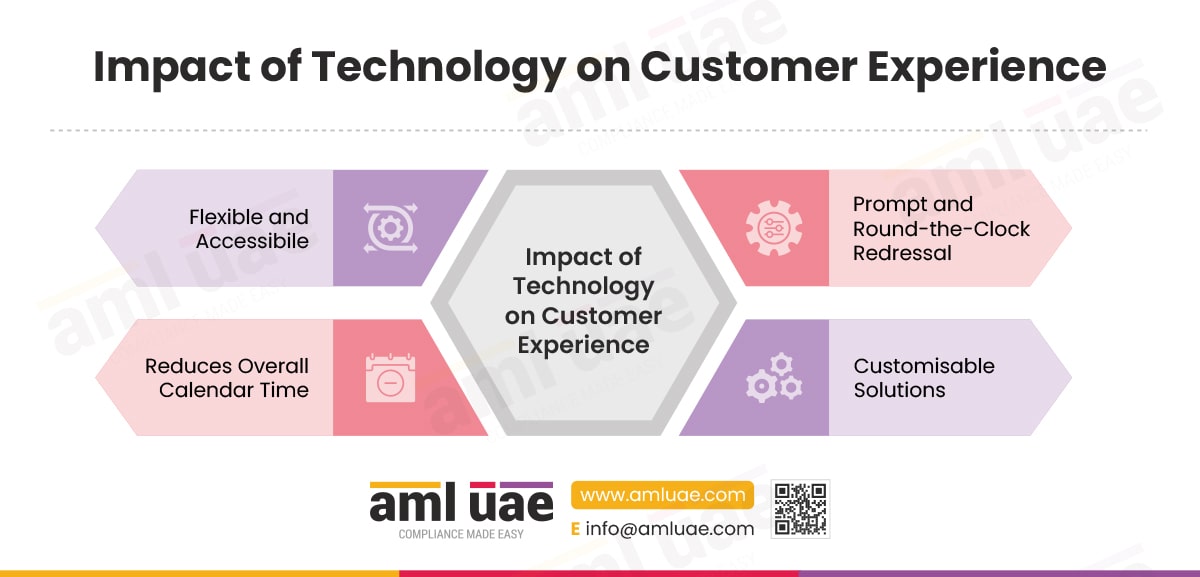
Increased efficiency and effectiveness of AML compliance instil trust and confidence in customers and make AML programs more dependable. Here are ways in which technology positively impacts customer experience: 

  • Automates compliance procedures involving customer participation, such as digital KYC, reducing overall calendar time and providing flexibility in information sharing.  
  • Perpetual KYC (pKYC) eliminates the need for repeated. 
    Identity verification reduces the burden on customers.  
  • Chatbots resolve frequently raised queries, allowing prompt and hassle-free customer grievance redressal.  
  • Custom automation of e-mails supplements chatbots to provide context-specific answers to more complex questions.  
  • The anytime-anywhere flexibility options have increased the overall accessibility of the customer. 

Significance of Quality Data in Digital Anti-Money Laundering Compliance

Data is the backbone of any AML program—traditional, Legacy, or Digital. Compliance professionals and software rely on available data to perform tasks from customer screening to reporting. Digital AML programs use Big Data. Big data refers to extremely large or voluminous data that is organised, structured, and continues to expand over time. 

Big Data can be characterised by the 3Vs. 

The 3Vs of Big Data are: 

  • Volume: The sheer quantity of information processed by AML software is beyond the capacity of any individual or group. 
  • Velocity: The AML software processes an enormous amount of information in fractions of a second, speeding up the time-consuming processes. 
  • Variety: The diverse nature of different data sets processed by AML software reduces the scope for any error or bias. 

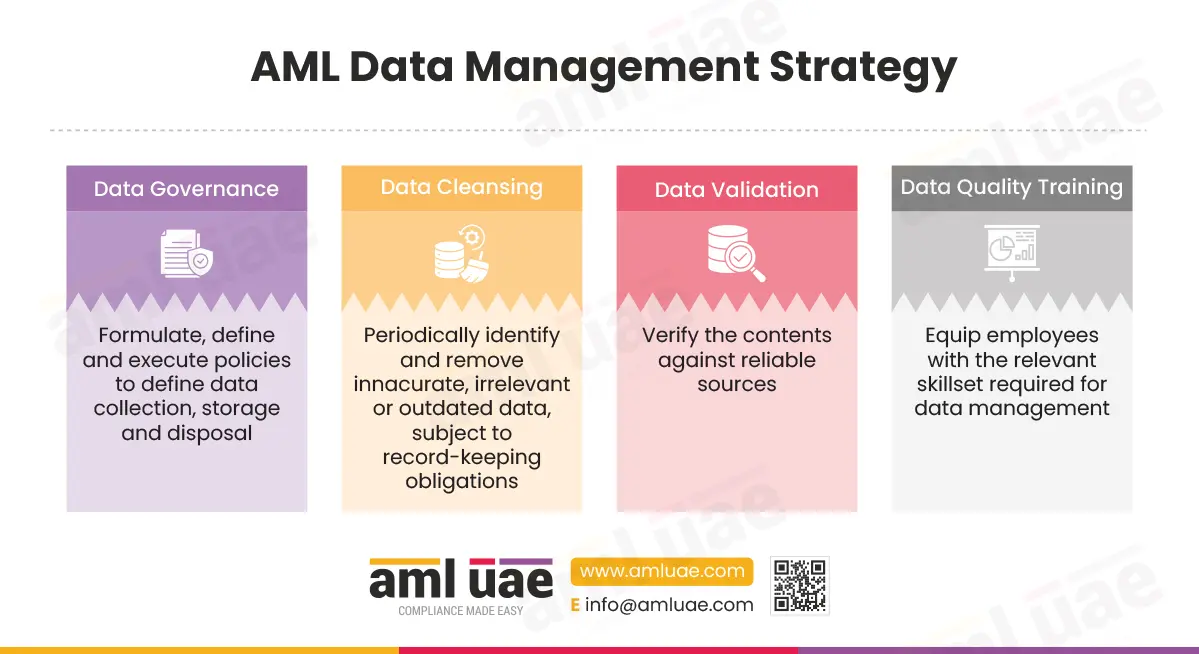
However, data is only as good as its quality. Good quality data is accurate, complete, consistent, and updated. Hence, it is crucial for reporting entities to ensure the authenticity of the data they use. Reporting entities can ensure high-quality data by implementing a data management strategy that includes: 

Data Governance: The primary objective of Data Governance is to ensure that the data stored by any organisation is secure, accurate, accessible, and usable. The business must have an adequate data protection and privacy policy that determines the data collection, storage, and disposal protocols. 

Data Cleansing: When data is gathered from multiple sources, replication, insufficiency, or inconsistency may occur. Data cleansing is identifying irregularities, fixing them, and deleting redundant data while considering record-keeping obligations. 

Data Validation: Data Validation is a form of data cleansing which ensures that the data stored is accurate and credible by corroborating it with verified sources. 

Data Quality Training: This training ensures that personnel know the value of quality and implement the principles of data governance from the first line of defence.  

Step-By-Step Transition from Manual to Technology-backed AML Processes

For any business that has relied on manual AML/CFT compliance procedures for a long time, switching to digital measures might seem complex. So, here is a breakdown of steps a business should take before switching to advanced technological models for AML compliance: 

1. Evaluate the current AML/CFT strategy: Assess the present risks and potential upcoming threats to the organisation and evaluate the effectiveness of current investigative programs in identifying suspicious activities. 

2. Define the purpose of modernisation: Define a clear objective for adopting modern technology and the expected outcome to be achieved.  

3. Prepare a blueprint and action plans: A clear strategy should be framed for achieving the goal considering the following factors: 

  • Specific: Identify specific processes that require technological intervention. 
  • Measurable: The outcome to be derived from digitalisation should be quantitative. 
  • Achievable: The goal should be set considering the relative expertise of staff and infrastructural availability. 
  • Relevant: Innovative RegTech solutions must resolve not just present but also potential future problems. 
  • Timely: There must be a desired timeline for step-by-step integration of new RegTech solutions. 

4. Select Appropriate technological tools: Identify specific AML software or tools that meet organisational requirements. 

5. Train the workforce: Provide appropriate technical assistance to the workforce and conduct pilot runs to ensure proper technology integration in the AML compliance system. 

6. Implementation: Replace or update the existing systems with new AML compliance solutions and inform customers and other stakeholders. 

7. Feedback and Reviews: Take regular feedback to customise the AML software accordingly. 

Challenges in Adopting Technological Tools in AML Compliance

Lack of Regulatory Incentives

The current position of international and national regulatory authorities is neutral toward adopting modern technologies, with minimum to no incentives for organisations that invest in modern technologies 

Data Inconsistencies

Technological models rely on public and private, domestic, and international data. The lack of standard data increases the operational burden and cost for reporting entities. These inconsistencies restrict reporting entities from unlocking the full potential of big data analytics. 

Data Privacy and Data Protection Concerns

AML compliance requires reporting entities to collect and store vast personal data, including biometrics and sensitive financial information. The lack of effective oversight mechanism to ensure proper data management and protection is a cause of concern.

The involvement of a third-party for providing technological services increases risk of breaches for customers and reporting entities alike, creating an environment of distrust among stakeholders. There is also a call for stricter regulation and supervision on RegTech service providers. 

Greater transparency and accountability between regulated entities and their customers are needed to ensure the proper use of personal data.  

Adoption and Application Issues

Reporting entities such as DNFBPs and VASPs have reservations about adapting to new and untested technological solutions and struggle with time, energy, and resources to train their staff to adopt modern technologies. It is difficult to incorporate technology into existing legacy systems, and complete replacement is even more challenging due to the complex nature of innovative solutions and the inadequate expertise of AML professionals. Moreover, smaller regulated entities lack the capacity to determine which solution works best for their risk appetite. 

In practice, the complexity of adopting innovative solutions is far greater than traditional models. While the acceptance of traditional models is lower. Thus, businesses generally prefer a mix of traditional practices and innovative solutions.  

Implementation and Associated Costs

Companies consider the cost of transitioning to digital AML programs to be more than the benefits and are reluctant to invest in modern technologies due to the potential complications in their integration into legacy systems. Many institutions lack the adequate digital infrastructure required for the implementation of innovative solutions. This may increase the cost burden when shifting to modern technologies. 

Post-operational Challenges

Post implementation of a modern technology, entities often lack the technical ability to use the technology correctly and effectively. Technologies also become outdated and need further investment in newer solutions or they fail to satisfy regulatory requirements. Even in case of proper implementation, AI models are dependent on the data using human input, making them vulnerable to not just algorithmic bias but also human bias.

Want to settle the hiccups in your AML Software?

Get the AML software testing and validation services from the experts at an affordable cost!

Human Element in AML Compliance Automation

It is evident that technology is not the panacea for all AML challenges, and relying on just one model may not be the most prudent approach. There must be a constructive collaboration between the human element and automation. Most entities are now automating repetitive tasks while reserving strategic decisionmaking for experts who can be trusted to recognise, evaluate, and implement suitable mitigation measures for any residual risks posed by modern technologies.

Ideally, the efficiency and accuracy of digital solutions combined with the analytical abilities of an experienced workforce will result in a more responsible and reliable system that is compliant with regulatory requirements. Following are the ways to leverage technological solutions in manual processes: 

  • Separate strategic tasks from repetitive tasks: It is important to clearly differentiate strategic tasks that require careful consideration from repetitive tasks that can be easily automated. 
  • Foster a data-driven decision-making culture: It is important to develop a culture where any decision is backed by data to improve its authenticity. 
  • Combine AI accuracy with human experience: Technological tools suffer from various biases such as algorithmic bias, cognitive bias, technical bias, and novelty bias. These biases can lead to inaccurate and discriminatory results and high false positives. So, to safeguard the organisation from technological biases, it is important to establish a dual-check mechanism requiring human expertise. 
  • Supplement intuition with analysis: The years of human experience and expertise leveraged to identify red flags can be substantiated by an in-depth analysis using innovative solutions. 

Cryptocurrency and RiskTech Solutions

Cryptocurrency is a type of virtual asset that is traded digitally across the globe. Unlike fiat money, government authority does not back cryptocurrency.

The speedy transferability and anonymity features of cryptocurrency make it a favourable destination for criminals to transfer the proceeds of their illegal activities through cross-border transactions. Currently, domestic and international guidelines are in place to restrict money laundering through cryptocurrencies.  

For instance, the FATF has issued Guidance for a Risk-Based Approach to Virtual Assets and Virtual Asset Service Providers, The Virtual Asset Regulatory Authority (VARA) has published a rulebook on Virtual Assets Transfer and Settlement pursuant to the Virtual Assets and Related Activities Regulations 2023.  

In this modern case of cosmic justice, where technology is the question, technology is also the answer. Cryptocurrency is backed by blockchain technology.

The ledger system of blockchain is immutable, so it records every transaction that occurs by way of cryptocurrency, and it is possible to track them later. KYC compliance can be another big deterrent to money laundering using crypto.  

Best Practices to Follow in AML Compliance Automation

Here are a few the best practices to follow when adopting a modern technology to safeguard institutions from the adversaries in case of unavailability or misuse. 

Ensure Responsible Adoption of New Technologies

  • Institutions should establish a documented governance framework to ensure proper decision-making, management and control of the risks arising from the use of innovative solutions. 
  • Ensure that the Cloud Computing system is auditable by maintaining necessary records. 
  • Institutions should devise a comprehensive business continuity plan with the objective of maintaining the continuity of the service/process performed by the enabling technology in the event of an incident that adversely affects the availability of such technology. 

Place Adequate Risk Mitigation Measures

Ensure that formal, independent reviews/audits of enabling technologies are conducted periodically. 

Adhere to the Data Privacy and Data Protection Standards

Ensure that the AML software adheres to the data privacy and data protection standards to instil trust among customers and third parties.

Provide Effective Training to Relevant Personnel

Design training campaigns and provide hands-on experience to the employees and workers before implementing new compliance technologies. 

Ensure Transparency

  • Institutions should be transparent with their customers regarding the use of AI and big data analytics. 
  • Establish procedures and controls to safeguard customer profiles against vulnerabilities and unauthorised access or disclosure during the authentication process. 

Future Technological Trends in AML Compliance

Looking forward, Artificial Intelligence and Machine Learning predictive analysis are set to take centre stage as opposed to a supportive role in identifying patterns, trends, and unusual behaviour. Here are the upcoming digital processes that may be applied in AML processes in times to come: 

Biometric Processes 

Biometric verification has so far transformed AML and KYC processes. Moving forward, multi-model biometric systems combining voice recognition and fingerprints with facial recognition will be a go-to option for regulators and reporting entities. It will be interesting to understand how safety will balance security.  

Quantum Computing 

According to scientific theories, quantum computers can use ‘Quantum Walks’ to reveal hidden transaction chains while examining parallel routes at once via transaction networks. This may allow regulatory authorities and reporting entities to uncover hidden connections among unrelated accounts that traditional computers are not able to recognise. Quantum Computers are quite a possibility for the future of AML compliance.  

Open-Source Intelligence (OSINT) 

Open-Source Intelligence is the intelligence produced by utilizing openly available information to address specific questions. With the increasing digitalization and globalization, the role of OSINT is analysing digital footprints, Dark Web monitoring and blockchain analysis is bound to grow. 

AML personnel should, therefore, be open to new developments and technologies that make their task easier while being cautious of their incidental effects and keep investing in research and development to keep technological systems secure. 

How can AML UAE assist you?

AML UAE can help you identify and document your AML/CFT automation requirements. We assist you in selecting the right AML technology for your compliance process automation. Be it KYC, Screening, Risk Assessment, AML Audit, Case Management, Transaction Monitoring, or Regulatory Reporting, we help you choose the best technology to automate your business functions. 

FAQs

How is technology used in Anti-Money Laundering (AML)?

Anti-Money Laundering (AML) technologies use automated digital tools and solutions to assist in the prevention, detection, investigation, and reporting of suspicious activity. 

Artificial Intelligence and its branches, such as Machine Learning, Big Data Analytics, Blockchain and Distributed Ledger Technology (DLT), Robotic Process Automation, Natural Language Processing Models, RegTech and RiskTech Solutions. Entities may adopt any of the tools depending on their industry and risk requirements. 

Artificial Intelligence (AI) can be used to analyse vast amounts of data in real time and identify patterns; it can automate manual tasks such as transaction monitoring and customer due diligence; overall, it can streamline existing processes and make them faster and cost-effective. 

Modern technologies can make anti-money laundering (AML) and counterterrorism financing measures (CFT) quick, efficient, and cost-effective. Technology can enhance data collection, processing, and analysis and help regulators and regulated entities identify and manage money laundering and terrorist financing (ML/TF) risks more effectively in realtime. 

RegTech solutions automate biometric verification, use facial recognition, voice recognition, or fingerprint scanning and document verification through optical character recognition (OCR) to verify passports, driver’s licenses, and other identity documents. RegTech also reduces the overall calendar time by allowing self-KYC and faceless KYC. 

Effective AML consulting services

make your business dealings brighter, smoother, and better

Share via :

About the Author

Pathik Shah

FCA, CAMS, CISA, CS, DISA (ICAI), FAFP (ICAI)

Pathik is an ACAMS-certified AML consultant specialising in governance, risk, and compliance for regulated entities in the UAE. He brings over 28 years of experience, with 1,000+ hours of AML training and 200+ advisory engagements across DNFBPs, VASPs, and FIs. He supports businesses in aligning with AML/CFT requirements from the CBUAE, DFSA, MoET, MoJ, VARA, CMA, FSRA, and FATF. Known for translating complex regulations into audit-ready procedures, Pathik enables operational clarity and compliance readiness.

Reach Out to Pathik

Mastering STR Filing to Deter Financial Crimes for a DNFBP

Mastering STR Filing to Deter Financial Crimes for a DNFBP

Mastering STR Filing to Deter Financial Crimes for a DNFBP

Mastering STR Filing to Deter Financial Crimes for a DNFBP

AML UAE assisted a DFNBP in submitting and mastering Suspicious Transaction Reports (STR) on the goAML platform. Our client is an established medium-sized Designated Non-Financial Businesses and Professionals (DNFBPs) in UAE.

On a daily basis, the client engages with the diverse variety of customers and transactions, which caused the DNFBP to struggle with detection of suspicious transactions and activities, such as Money Laundering, Financing of Terrorism, and Proliferation Financing (ML/FT and PF).

Customer Goals:

As a DNFBP entity, the client is governed by the Federal Decree by Law No. (10) of 2025, which requires DNFBPs to report all suspicious activities and transactions to the UAE FIU. To comply with regulatory requirements and effectively deal with transactions engaged with customers, the client is required to enhance its ability to detect suspicious transactions and file Suspicious Transaction Report (STR) in a timely manner.

In addition, the client needed a streamlined, step-by-step process that the compliance team could adopt for filing STRs through the goAML platform. Once the process was defined, the client requested CAMS Certified AML Expert from AML UAE to train the staff on the red flags associated with their business, the role of the frontline staff, the compliance team, and the management in detecting and handling customer transactions and activities indicating potential ML/FT and PF threats.

Challenges:

As a DNFBP entity, the client routinely engages with various customers and businesses. While engaging, the client encountered various situations requiring the filing of an STR on the goAML platform.

However, the client, because of its medium-sized business, lacked the resources, both in terms of personnel and technology, to monitor and report suspicious transactions. This impacted the client’s ability to report STRs on time. Further, the client also faced various challenges in STR filing:

  • Understanding regulatory requirements surrounding STR filing
  • Red flags associated with the relevant DNFBP sector
  • Identifying suspicious transactions and avoiding false alerts
  • Conducting manual and time-consuming reporting processes

Addressing these challenges required the client to collaborate with AML UAE to develop clear policies and procedures for reporting suspicious transactions.

Legal Background:

The DNFBP is governed by:

DNFBPs in UAE are mandated by the AML regulatory framework to identify and file Suspicious Transaction Reports (STRs) through the goAML Portal of the UAE Financial Intelligence Unit.

Solution Provided by AML UAE Team:

AML UAE collaborated with the DNFBP and helped them implement an efficient approach to comply with regulatory reporting requirements.

  • We helped the, a DNFBP to understand complex regulatory requirements surrounding STR filing, enabling the client to effectively detect instances of suspicious transactions and activities indicating ML/FT and PF. This helped the client in the prevention and detection of suspicious transactions, safeguarding the business operations and reputation.
  • We conducted a thorough assessment of the client’s current AML compliance and regulatory reporting processes and systems to identify any gaps in meeting STR filing requirements.
  • We presented the client with a clear step-by-step procedure for STR reporting, highlighting each step, job roles and responsibilities, a template for raising internal STR, approval requirements, Turn-Around Time (TAT) to be followed, and record-keeping requirements.
  • We helped the client implement an automated regulatory reporting system to replace the manual, time-consuming process.
  • Hands-on AML training was provided to the frontline employees for the identification and internal escalation of red flags related to suspicious activities and transactions, the procedure for submitting internal STR, and awareness was provided around the “tipping off” provisions.
  • The AML compliance team was provided with thorough AML training around handling internal STR, tipping-off provisions, goAML reporting procedures, and maintaining business relationships during and after filing a STR.

End Result:

Through collaboration with the AML UAE Team, our client attained accuracy and efficiency in filing STRs.

With our assistance, the , a DNFBP achieved mastery in STR filing, ensuring compliance with AML regulations in the UAE, thus mitigating the risk of penalties and reputational damage.

Furthermore, by automating manual processes, the client reduced the time required to file STR by 70%, allowing for the timely reporting of suspicious transactions and activities on the goAML platform.

Through data analysis and risk assessment, false alarms were minimised, enabling the client to focus on red flags and enhancing the effectiveness of their AML/CFT efforts.

The guidance provided by AML UAE helped the client with STR reporting and enhanced their AML compliance capabilities.

Share via :

AML/CFT Training for Real Estate Professionals: Building a Culture of Compliance

AML training for real estate Professionals

AML/CFT Training for Real Estate Professionals: Building a Culture of Compliance

AML/CFT Training for Real Estate Professionals: Building a Culture of Compliance

AML UAE conducted AML training programs designed to elevate compliance standards for a prominent UAE-based real estate company.

Our client, a leading real estate entity in the UAE, faced significant challenges in implementing effective Anti-Money Laundering (AML) and Counter-Financing of Terrorism (CFT) measures. With a large and diverse team, including real estate agents, compliance officers, and senior management, the company struggled with timely compliance and understanding of AML regulations.

Customer Goals:

To address the need and requirements of AML compliance, our client had the following objectives that made it approach AML UAE to undertake the AML training program:

  • Increase AML awareness and best practices across all employee levels to identify, prevent, detect, and report suspicious transactions.
  • Equip employees with fundamental AML/CFT concepts and their importance to support and oversee compliance efforts.
  • Empower professionals and managers to ensure robust AML/CFT compliance and nurture a culture of compliance.
  • Provide advanced training for the Compliance Officer/Money Laundering Reporting Officer (MLRO) to combat financial crime effectively.

Challenges:

Assessing AML Control Effectiveness for an Audit Firm

Given the size of the team and the nature of the operations, the client faced challenges in adopting comprehensive and effective AML/CFT/CPF measures.

  • Lack of awareness – Employees were not fully aware of their AML obligations, leading to inadequate compliance.
  • Staff turnover – Frequent changes in staff and un-avoided employee turnover delayed compliance efforts.
  • Complex transactions – Real estate transactions involve multiple parties and complex financial arrangements, making it challenging to detect suspicious activity.

Therefore, these challenges underscored the need for a tailored, comprehensive AML/CFT training program to address both general and industry-specific issues.

Legal Background:

The real estate professionals were governed by:

The AML/CFT framework in the UAE includes real estate entities and professionals within the list of Designated Non-Financial Businesses and Professions (DNFBPs). As a DNFBP, the client was required to adhere to stringent AML regulations to combat financial crimes effectively.

For this purpose and to combat ML/FT crimes, they need to implement robust measures, which include equipping staff with AML compliance requirements through training programs.

Solution Provided by AML UAE Team:

AML UAE crafted and delivered a comprehensive training and awareness program tailored to the real estate sector.

The overall approach of the training program was designed to address the unique needs of the client and equip staff with the knowledge to identify, detect, and respond to ML/FT activities, including red flags and the importance of reporting suspicious transactions promptly.

Employees Group

Challenge Faced

Solution-oriented AML Training Program

Real estate agents and brokers

– Lacked knowledge of AML compliance regarding the Real Estate sector


– Acquired the basic session to introduce ML/FT/PF risk and governing laws in UAE.

– Not able to identify red flags indicating ML/FT or PF instances in the Real Estate sector


– Discussed and established an understanding of ML/FT and PF related red flags and common ML/FT/PF typologies pertaining to the Real Estate sector and needs.

– Faced resistance from customers in obtaining information


– Helped them to apply techniques and strategies for effective communication and addressing customer concerns.

AML Compliance team 

– Adapting to regulatory changes


– Helped them update their AML compliance requirement and aligned them with the latest AML regulations, guidelines, and industry best practices.


– Lack of support from customers in providing KYC data


– Emphasised the importance of coordinating with customers and communicating effectively about legal obligations. 

– Difficulty in handling complex cases

– Offered advanced training on analysing and addressing complex cases and emerging trends indicating ML/FT or PF activities.

Senior Management

– Drafting effective AML policy and implementation 


– Guided in developing and refining AML policies and ensuring they align with regulatory requirements and best practices.

– Balancing compliance and employees' interest


– Helped to establish a culture of compliance throughout the organisation and engage employees at all levels.

– Employee Turnover


– Provided recorded training sessions. 


Compliance officer 

– Implementing ML/FT and PF risk assessment technique

– Tailored the training program for advanced compliance monitoring techniques and risk assessment methodologies.


– Compliance crisis management 

– Aided in preparing strategies for managing potential ML/FT and PF related crises and regulatory investigations.

The training was delivered in virtual mode by CAMS-certified AML Experts to ensure the flexibility and effectiveness of the AML Training Program.

Additionally, based on training, AML UAE also conducted tests to analyse the level of understanding of the staff. Furthermore, all participants were provided with a certificate of completion of the AML training.

AML UAE also provided the Real Estate entity with recordings of AML training sessions, adding value to the client.

End Result:

Through collaboration with the AML UAE team, the client experienced a significant improvement in its overall efficiency in undertaking AML measures, leading to enhanced compliance with AML regulations and mitigating the risk of regulatory fines and penalties.

As a result of this successful collaboration, the real estate entity experienced a 45% reduction in compliance-related issues.

Further, with the tailored training program focusing on how to approach customers, real estate agents and professionals saw a 65% increase in effective customer onboarding and streamlined the collection of critical documents, facilitating the compliance team’s ability to meet AML requirements more efficiently.

The client was able to take the proactive approach to AML compliance with well-trained staff, who were empowered to play an active role in preventing financial crime and upholding integrity and professionalism.

Through this successful collaboration, the real estate firm navigated complex regulatory landscapes effectively and established a strong culture of compliance, demonstrating its dedication to upholding the highest standards in the industry.

Share via :

A Framework for Decoding Sanctions Screening Results

Decoding Sanctions Screening Results

A Framework for Decoding Sanctions Screening Results

Table of Contents

Protect your business with reliable and effective AML strategies with AML UAE.

Whether you use AML software or perform manual name screening, sanctions screening outcome interpretation is not limited to segregating screening outcomes into usual categories, such as those needing regulatory reporting and those requiring no action. Each match has a distinct implication, and the criteria for its analysis, disambiguation, and categorisation are based on the degree of similarity or distinction with key identifier details of the customer and sanctioned individual or entity. This blog provides a framework for decoding sanctions screening results so that you can categorise them into Perfect Match, Partial Match, False Match, and No Match.  

A Framework for Decoding Sanctions Screening Results

What is Sanctions Screening?

Sanctions Screening is a process through which the names of prospective and existing customers, who can be natural persons or legal entities, are matched against names available in relevant and applicable sanctions lists to check if any of the customer names match those contained in the sanctions list. 

What is Sanctions Compliance Program?

Financial Institutions, DNFBPs and VASPs operating in the UAE must have in place a Sanctions Compliance program that documents the Targeted Financial Sanctions (TFS) compliance measures, such as Sanctions Screening methodology, tools, and measures. Such a Sanctions Compliance Policy would generally elaborate upon the measures taken to assess sanctions-related risk by the regulated entity considering the regulatory framework in UAE concerning sanctions compliance and set rules and steps for conducting and disambiguating screening matches. 

What is Targeted Financial Sanctions (TFS) ?

Targeted Financial Sanctions (TFS) are restriction measures imposed by UAE requiring Designated Non-Financial Businesses and Professions (DNFBPs) to freeze funds with other assets of any existing or prospective customer whose name is found in any of the:

  • Local Lists, including UAE local terrorist lists issued by the Cabinet and sanctions lists containing names of natural persons and legal entities linked to the Financing of Terrorism (FT) or Proliferation Financing (PF) of weapons of mass destruction.
  • Sanctions lists issued by the United Nations Security Council Resolutions (UNSCRs). The names of relevant UNSCRs for DNFBPs in UAE, according to Circular No. (2) of 2022 for implementation of Cabinet Decision No. 74 of 2020 are Resolutions 1718 (2006), and 2231 (2015) and following resolutions.

Also, read about aligning your business with global sanctions lists.

Why is Sanctions Screening important for AML compliance and fighting ML/TF/PF?

  • To ensure that prospective and existing customers do not bring along Money Laundering (ML), FT and PF risks to the regulated entity.
  • To identify if any prospective or existing customers appear in any of the relevant sanctions lists and report them to the UAE Financial Intelligence Unit (UAE FIU) through the goAML portal, ensuring regulatory reporting compliance obligation.
  • To ensure compliance with sanctions screening regulatory requirements prescribed in applicable Anti-Money Laundering and Counter Financing of Terrorism (AML/CFT) and TFS regulations in UAE.

Also, read the role of sanctions in achieving international peace and security.

What are the Common Sanctions Screening Outcomes?

Sanctions Screening process usually generates four types of outcomes, namely:

1. Perfect Match

The name of the customer matches completely with the screening outcome generated through screening across relevant Sanctions Lists. A complete match is also known as a full match, or complete match, or an exact match.

2. Partial Match

The name of the customer partially matches the screening outcome generated through screening across relevant Sanctions Lists.

3. False Match

The name of the customer does not match with the screening outcome generated through screening across relevant Sanctions Lists.

4. No Match

Screening the name of the customer across relevant Sanctions Lists generates no or zero outcomes.

Sanctions Screening Process

The Sanctions Screening Process is carried out by taking the following steps such as:

1. Subscription to relevant and applicable Sanctions Lists

The FIs, DNFBPs, and VASPs are required to subscribe to the Executive Office for Control & Non-Proliferation (EOCN) mailing list to receive updates as to the addition and deletion of names in the sanctions list.

2. Collection of Key Identifier details

The DNFBPs are required to collect information to input data for conducting sanctions screening, such as in the case of:

a. Natural Person:

  • Name
  • Aliases
  • Date of Birth
  • Nationality
  • ID or Passport information
  • Last known address

b. Legal Entity:

  • Name
  • Aliases
  • Address of Registration
  • Address of branches, if any
  • Other relevant information

c. Ultimate Beneficial Owner (UBOs) of Legal Entity

  • Same as that of a natural person

3. Name Screening

Upon collection of key identifier information, all there’s left to do is to enter the key identifier details of the customer into the appropriate fields given in the Sanctions Screening software and execute the name-match command, doing so, will trigger the sanctions screening software to start searching the customer name entered across various relevant and applicable sanctions list to which the DNFBP is subscribed to.

The name-matching process can also be undertaken manually by searching through the relevant sanctions lists.

4. Screening Outcome Generation

Once the name-matching process is executed by the name screening software, screening outcomes will be generated, depending upon the type of filters and match percentage accuracy threshold settings configured into the sanctions screening software.

5. Screening Outcome Disambiguation

Finally, the analytical role of a Screening Analyst comes in; the screening outcomes generated by the sanctions screening software need to be segregated and organised by the screening analyst into the following categories:

  • Perfect Match
  • Partial Match
  • False Match
  • No Match

Enabling the regulated entity to deploy adequate AML/CFT Customer Due Diligence (CDD) measures and imposing TFS freezing measures if the need arises, based on the framework for decoding sanctions matches.

Unsure of how to implement the Sanctions Compliance Process?

Let AML UAE guide you with the Targeted Financial Sanctions Compliance.

Decoding Sanctions Screening Matches: A Step-by-Step Guide

Usually, in a large-scale organisation, distinct roles and responsibilities are assigned to relevant personnel, such as having a dedicated Screening Analyst to decode sanctions screening results. However, a small business, usually having very few or no employees, requires the owner or founder to take responsibility for decoding sanctions screening results.

Also read, risks of unaddressed matches in sanctions screening.

Decoding the Sanctions Screening Results requires the person entrusted with screening matches disambiguation to conduct the following measures:

1. Initial Assessment:

When attempting to decode sanctions screening results, an initial assessment needs to be carried out. Ideally, this can be commenced by segregating screening results into potential matches and obvious false matches.

2. Verification and Validation:

The potential matches derived need to be examined for further verification of potential matches with the key identifier details of the customer collected by the regulated entity.

This verification process would entail careful comparison between the key identifier details of the customer and those mentioned in the profile of a potential match. Based on comparison, the degree of similarity between customer details and the screening outcomes generated can be validated.

Followed by verification, the validation of such findings is carried out with the help of government-issued customer identification documents or copies of the same available with the regulated entity. Examples include a Passport or Emirates ID for a natural person as a customer and a trade license or the certificate of registration of the legal entity.

The validation process helps in determining whether the potential match can be classified as:

  1. Perfect Match
  2. Partial Match
  3. False Match
  4. No Match

3. Risk-Based Approach (RBA):

The fundamentals of RBA dictate that risk mitigation measures must be applied in proportion to the extent of risk faced by an entity. In the AML/CFT and TFS compliance context, adopting RBA would mean that a business applies ML/FT and PF risk mitigation measures, such as Standard Due Diligence, Simplified Due Diligence, and Enhanced Due Diligence (EDD) based on the degree and extent of ML/FT and PF risk posed by the customer to the business.

 Sanctioned individuals and entities pose a high degree of ML/TF/PF risks, and hence, the regulated entities are obligated not to establish a business relationship with them, apply freezing measures and submit a Confirmed Name Match Report (CNMR). Further, in the case of partial matches, the risks could be higher, and hence, the regulated entities are required to submit a Partial Name Match Report (PNMR) with the UAE FIU.

4. Escalation:

Depending upon the severity of the sanctions screening outcome finding, the case can be escalated internally to the AML Compliance Officer or Money Laundering Reporting Officer (MLRO).

5. Documentation:

The regulated entity must document all the procedures, steps, methodologies, tools, sanctions lists subscribed to, verification findings, and validation exercises carried out while conducting match disambiguation and the sanctions compliance process.

6. Regulatory Reporting:

Depending upon the screening outcome, if a perfect match or partial match is found, such an observation and finding must be reported through the goAML portal by the regulated entity within 5 calendar days of such an observation.

7. Record-Keeping:

To ensure compliance with record-keeping requirements imposed by relevant regulators, regulated entities conducting Sanctions Screening must maintain all records of their Sanctions Compliance Program, including sanctions screening results, screening disambiguation findings, and CDD measures taken for the prescribed period.

Let us now delve into decoding screening results based on customer profile and details of potential match found during sanctions screening process.

Worried about how to deal with potential ML/FT and PF risks?

Engage us to obtain customised Enterprise-Wide Risk Assessment.

Decoding Sanctions Screening Results: Perfect Match

Decoding Sanctions Screening Results when there is a Perfect Match requires the person conducting screening outcome disambiguation to know how the perfect match outcome is derived. A perfect match outcome is derived when all key identifier parameters of the customer match the screening outcome in totality.

Understanding the Sanctions Screening Perfect Match Disambiguation Matrix

Understanding the Perfect Match disambiguation matrix is quite straightforward. The comparison between the customer profile and screening outcome would visually appear like the matrix given:

In a Perfect Match scenario, all the key identifier parameters of sanctions screening outcome and the customer profile are compared with one another. The conclusion of such comparison is that both the customer profile and sanctions screening outcome have been found to match exactly with one another, resulting in the initiation of the regulatory reporting process by the regulated entity conducting sanctions screening.

Note:

  1. The human element is always required in disambiguating sanctions matches. The screening analyst may rely on the information available and his professional judgment to conclude the sanctions screening outcome.
  2. For a sanctions-perfect match, it is not necessary to possess all the information outlined in the above example. The key is to satisfy oneself that the customer and the name appearing in the sanctions list are the same. The screening analyst must document his findings and conclude the match type.

AML/CFT Regulatory Requirements Around a Sanctions Perfect Match

Upon finding a perfect match because of sanctions screening, the regulated entity is required to:

  • Freeze the assets of the sanctioned customer within 24 hours and prevent making any funds or services accessible to them.
  • File a Confirmed Name Match Report (CNMR) on the goAML portal within 5 calendar days of becoming aware that the customer has been sanctioned.

In case a prospective customer is found to be a perfect match, the regulated entity is required to:

  • Reject or avoid onboarding the prospective customer.
  • File a Confirmed Name Match Report (CNMR) on the goAML portal within 5 calendar days of becoming aware of the customer being sanctioned.

While taking the above measures, regulated entities must ensure that they do not let prospective or existing customers become aware of such a perfect match outcome.

Found a Perfect Match while conducting Sanctions Screening?

Let us assist you with Regulatory Report filing on the goAML Portal to avoid non-compliance fines and penalties.

Decoding Sanctions Screening Results: Partial Match

Decoding Sanctions Screening Results when there is a Partial Match requires the person conducting screening outcome disambiguation to know how partial match outcomes are usually found. Partial match outcomes are found only when the name of the customer matches partially with that of the screening outcome as either due to lack of further information, the match disambiguation exercise on remaining key identifying factors cannot be concluded or only limited key-identifier details match, such as first name only.

Understanding the Sanctions Screening Partial Match Disambiguation Matrix

The partial match disambiguation comparison between the customer profile and screening outcome would visually appear like the matrix given:

In a Partial Match scenario, upon a comparison of all the key identifier parameters of sanctions screening outcome and the customer profile, only the partial name of the customer matches with that of the screening outcome. Some of the reasons for partial name match are as follows:

  • Lack of complete information with screening data, sanctions data aggregator, or the DNFBPs themselves, where the screening analyst can neither confirm nor deny the potential match as perfect match or no match.
  • Lack of validating documents such as government-issued identification cards or licenses (in case of a legal entity customer) that can help rule out a potential match result as no match or perfect match. Also, upon request, the customer fails to provide or avoids providing additional or missing validation documents, or repeated requests for the same might result in ‘tipping off’ the customer.
  • Though the regulated entity is in possession of validating identifying documents or the screening aggregator provides such information through their database, the authenticity of such information or documentation is questionable due to identifying documents appearing to be forged or tampered with, resulting in inconclusive findings, often the photographs match, date of birth or age matches, and the partial name matches but remaining information is different. Such a situation can be the result of forged or tampered documents or identity theft, making it impossible to decide whether the match is a perfect match or no match.

The conclusion of comparison is that both the customer profile and sanctions screening outcome match only on the aspect of partial name and are inconclusive on the status of match likelihood of other key identifier parameters. Resulting in the initiation of a partial name match regulatory reporting process by the regulated entities conducting sanctions screening.

Note:

  1. The human element is always required in disambiguating sanctions matches. The screening analyst may rely on the information available and his professional judgment to conclude the screening outcome.
  2. For a partial match, it is not necessary to possess all the information outlined in the above example. The key is to satisfy oneself that the customer and the name appearing in the sanctions list are potentially the same. The screening analyst must document his findings and conclude the match type.

AML/CFT Regulatory Requirements Around a Sanctions Partial Match

Upon coming across a partial match, the regulated entity is required to:

  • Suspend all transactions with existing customers and prospective customers with immediate effect and maintain the suspension of the business relationship until further instructions from the UAE FIU.
  • File a Partial Name Match Report (PNMR) on the goAML portal within 5 calendar days.

While taking the above measures, the regulated entity must take care of tipping off provisions and ensure that it doesn’t let prospective or existing customers become aware of the partial name match outcome and its regulatory reporting.

Ensure timely and accurate PNMR Reporting through the goAML Portal!

Leave your Regulatory Reporting concerns with us!

Decoding Sanctions Screening Results: False Match

False match outcomes are found when the customer’s name initially generates a screening outcome. However, upon comparing the customer profile and screening outcome, the screening analyst conducting screening disambiguation can conclude that the potential match is a false match.

Understanding the Sanctions Screening False Match Disambiguation Matrix

The false match disambiguation comparison between the customer profile and screening outcome would visually appear like the matrix given:

In a False Match scenario, upon a comparison of all the key identifier parameters of sanctions screening outcome and the customer profile initially appear similar or sanctions screening software has generated the false screening outcome due to the following factors:

  • Customer data quality and uniformity issues, due to which the screening software is generating false matches.
  • Algorithmic errors in the screening tool result in the generation of false matches.
  • The fuzzy match threshold is set too low while conducting sanctions screening.
  • Lack of knowledge as to what nationalities, languages, and cultures the screening data and customer details belong to, leading to not setting screening parameters accordingly.
  • Lack of fine-tuning the screening parameter filters or lack of customizability of the screening tool.
  • Outdated screening data and lack of whitelisting.

Note:

  1. The human element is always required in disambiguating sanctions matches. The screening analyst may rely on the information available and his professional judgment to conclude the screening outcome.
  2. For a false match, it is not necessary to possess all the information outlined in the above example. The key is to satisfy oneself that the customer and the name appearing in the sanctions list are not the same. The screening analyst must document his findings and conclude the match type.

AML/CFT Regulatory Requirements Around a Sanctions False Match

When a False Match is found during sanctions screening, no regulatory reporting or compliance measures need to be initiated. The regulated entity can onboard the potential customer or continue the business relationship as usual with an existing customer upon finding a false match.

Sanctions Screening Best Practices to Avoid Unusually High False Matches

As a best practice measure, the regulated entities can analyse if the occurrence of false matches is normal or higher than usual, based on its experience and acceptable thresholds. If false matches appear higher than normal, the regulated entities must take measures to minimise false matches by taking measures such as:

  • Re-tuning the sanctions screening tool
  • Opting for a better sanctions screening tool with a proven record of least false matches.
  • Opting for whitelisting certain repetitive false matches, but with caution.
  • Conducting a sanctions screening software testing and validation exercise or conducting an AML software audit to identify the cause of false matches.
  • Ensure that the sanctions screening tool is customisable to modify rules and re-set match percentage parameters.

Thinking of changing your sanctions screening software because of its inability to detect false matches? Read Switching Sanctions Screening Software: Pain or Gain?

Ensuring accurate screening results with minimum False Matches!

Make the most of your investment in AML Sanctions Screening software

Decoding Sanctions Screening Results: No Match

When conducting sanctions screening of a customer across sanctions lists generates no result, then such lack of screening outcome is also known as ‘No Match’. This simply means that the screening exercise generated no results, and the customer’s name does not appear in any of the sanctions lists to which the regulated entity has subscribed.

Understanding the Sanctions Screening No Match Disambiguation Matrix

The no-match screening result between the customer profile and screening outcome would visually appear like the matrix given. However, such a matrix happens in the background of the screening software process, and the illustrative matrix helps visualise how a no-match result is generated by screening software. This happens when, on all customer key identifier parameters and names available in the sanctions list, the screening software is unable to find any remotely matching outcome.

Note:

  1. The human element is always required in disambiguating sanctions matches. The screening analyst may rely on the information available and his professional judgment to conclude the screening outcome.
  2. Sanctions Screening software must be properly tested, leaving no room for false negatives.

AML/CFT Regulatory Requirements Around a Sanctions No Match

When there are no matching results while conducting sanctions screening, the regulated entity may onboard such a customer and conduct CDD according to its customer onboarding policy or may continue the business relationship as usual in case of an existing customer relationship.

Conclusion

The Sanctions Screening Compliance is not merely limited to conducting sanctions screening and regulatory reporting if needed. Businesses in UAE, such as DNFBPs, need to understand the intricacies of why sanctions screening is required in the first place, the laws governing sanctions compliance, and the methodology and process of conducting sanctions screening to be able to decode the sanctions screening outcomes with the framework illustrated effectively.

Regulated entities must also understand their rights and obligations in the event of every possible type of sanctions screening outcome generated, and they must be equipped with personnel and know-how to ensure AML compliance that a possible screening outcome requires, be it filing CNMR, PNMR, or proceeding with customer onboarding, as the need be.

Effective AML consulting services

make your business dealings brighter, smoother, and better

Share via :

Add a comment

About the Author

Pathik Shah

FCA, CAMS, CISA, CS, DISA (ICAI), FAFP (ICAI)

Pathik is an ACAMS-certified AML consultant specialising in governance, risk, and compliance for regulated entities in the UAE. He brings over 28 years of experience, with 1,000+ hours of AML training and 200+ advisory engagements across DNFBPs, VASPs, and FIs. He supports businesses in aligning with AML/CFT requirements from the CBUAE, DFSA, MoET, MoJ, VARA, CMA, FSRA, and FATF. Known for translating complex regulations into audit-ready procedures, Pathik enables operational clarity and compliance readiness.

Reach Out to Pathik

Mastering Customer Risk Assessment and EDD: A strategy to mitigate ML/FT risk!

Mastering Customer Risk Assessment and EDD

Mastering Customer Risk Assessment and EDD: A strategy to mitigate ML/FT risk!

Mastering Customer Risk Assessment and EDD: A strategy to mitigate ML/FT risk!

Confused about what the process of Customer Risk Assessment (CRA) and Enhanced Due Diligence (EDD) entail? Look no further!

Strengthen your business’s defences against Money Laundering (ML), Financing Terrorist (FT), and Proliferation Financing (PF) risks posed by prospective customers and existing low-risk customers whose risk rating may shift to high-risk due to any fluctuation in their customer profile by taking appropriate ML/FT and PF risk mitigation measures.

Through this Webinar, our Anti-Money Laundering expert Dipali Vora has explained the nitty-gritties of the Customer Risk Assessment (CRA) and Enhanced Due Diligence (EDD) requirements under the Anti-Money Laundering/ Combating the Financing of Terrorism (AML/CFT) laws in the UAE.

Watch this Webinar and gain insights into:

  • The meaning and importance of the CRA as an essential element of the Customer Due Diligence (CDD) process.
  • Carrying out and implementing the CRA exercise through Customer Risk Profiling and deciding on the corresponding measures to be taken
  • Red flags to look out for while conducting CRA
  • Best Practices for conducting CRA
  • When and how to conduct Enhanced Due Diligence (EDD) on High-Risk customers

So, don’t let ML/FT and PF risks hold you back! Watch the webinar recording now and empower your business through effective AML/CFT compliance.

Effective AML consulting services

make your business dealings brighter, smoother, and better

Share via :

eBook on AML Compliance for Accountants and Auditors in UAE

eBook on AML Compliance for Accountants and Auditors in UAE

eBook on AML Compliance for Accountants and Auditors in UAE

eBook on AML Compliance for Accountants and Auditors in UAE

Accountants and auditors have specialised knowledge to assist and advise their customers on financial matters and provide assurance services. Thus, independent accountants and auditors are uniquely positioned to identify potential financial crime vulnerabilities because of their privileged duties of examining the accounts, records, and governance structures. Criminals use their means to exploit accountants and audit professionals to engage in illicit activities behind the curtains.

For this purpose, the UAE’s AML regulatory framework has identified accountants and auditors as one of the Designated Non-Financial Businesses and Professions (DNFBPs) and entrusted the responsibility of combating money laundering, financing terrorism, and proliferation financing (ML/FT and PF). Thus, the accountants and auditors in the UAE must adhere to AML/CFT laws and regulations.

Further, accountants and auditors must also implement adequate anti-money laundering programs to detect and report ML/FT/PF-related suspicious transactions promptly. To adhere to this reporting obligation, they must comply with federal AML legislation and AML/CFT guidelines issued by the AML supervisory authorities.

This eBook provides a detailed analysis of the AML regulatory framework for accountants and auditors in UAE. In addition, this eBook also covers AML compliance obligations of independent accountants and auditors in detail. These AML/CFT compliance requirements for accountants and auditors in UAE include:

  1. goAML Registration
  2. Appointing a right AML Compliance Officer
  3. Adopting a Risk-Based Approach and Conducting Enterprise-Wide Risk Assessment (EWRA)
  4. Crafting the AML/CFT Policies, Procedures, and Controls
  5. Customer Due Diligence (CDD) Program
  6. Ongoing Monitoring of Business Relationships
  7. Compliance with Targeted Financial Sanctions (TFS)
  8. Reporting the ML/FT Suspicion and other goAML Reporting
  9. AML/CFT Training and Awareness
  10. AML Governance
  11. AML Record Keeping

By going through this eBook, accountants and auditors can understand their responsibilities and safeguard their organisations against money laundering and terrorism financing while maintaining regulatory compliance. 

Check out this ready reckoner to navigate AML compliance smoothly.

Our timely and accurate AML consulting services

For your smooth journey towards your goals

Share via :

Share via :