



ID Verification
Identity Verification, also known as ID Verification, is a regulatory obligation, but more than that, it’s a first line of defence against money laundering and terrorism financing. It plays a key role in ensuring compliance with UAE’s Anti-Money Laundering and Counter-Terrorism (AML/CTF) regulations.
What is ID Verification for DNFBPs in UAE?: AML Compliance Context
Under UAE Federal Decree by Law No. (10) of 2025 and Cabinet Resolution No. (134) of 2025, ID Verification is a process used to confirm the authenticity of individuals as well as entities by verifying the identification documents they provide.

From Frustration to Compliance: Identify Your Pain Points
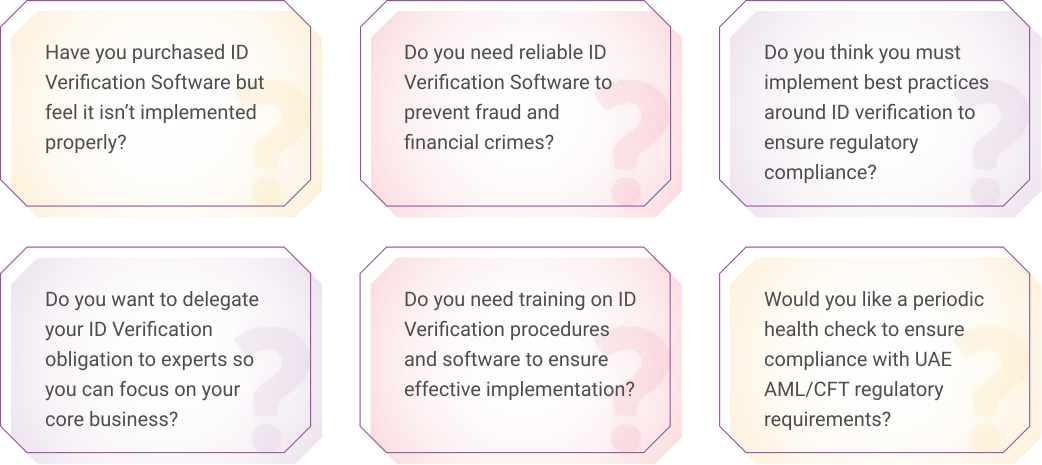
You bought the IDV software. Now let’s make it work.
Let’s talk. Expert support is just a click away.
Don’t Just Collect IDs. Verify Them
Compliance is not a checkbox. A scan of an Emirates ID or a PDF of a trade license doesn’t meet today’s AML standards unless it’s backed by:
- Document validation (real vs fake),
- Sanctions Screening,
- Liveness checks and biometric matching
- And a documented verification trail.

How to Conduct Electronic ID Verification: A Step-by-Step Process for Regulated Entities
Regulated Entities (REs) should not just be collecting a few documents and ticking a box. It is a regulatory requirement to verify every customer, whether they walk into your organisation or are remotely onboarded. This ID verification process needs to be balanced with a seamless customer onboarding experience without making them wait, doubt your process, or walk away frustrated.
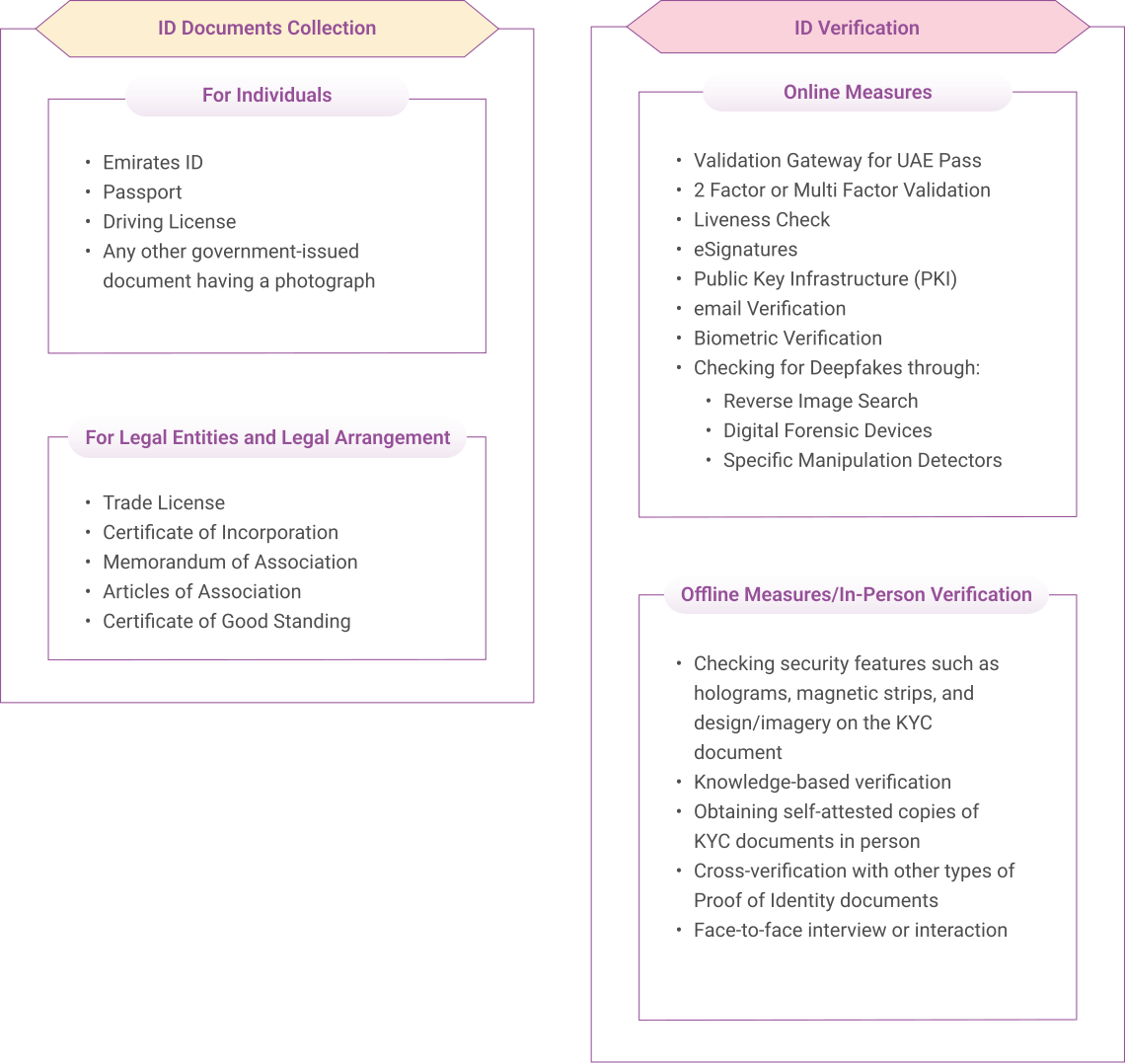
Step 1: You Have to Collect the Right Documents
For Individuals:
- Emirates ID
- Passport
- Driving License
- Any other official government-issued photo ID
For Companies and Legal Setups:
- Trade License
- Certificate of Incorporation
- Memorandum & Articles of Association
- Certificate of Good Standing
Step 2: Now, You Actually Have to Verify Them
ID Verification, if performed remotely:
- UAE Pass integration for instant Validation
- Liveness Detection and Selfie Matching
- 2-Factor or Multi-Factor Identity Authentication
- Biometric Checks, Facial Recognition, Fingerprint Scans
- Email and Device Verification
- Deepfake Detection, Reverse Image Checks, Forensic Tools
- Digital Signature Validation using PKI
- Real-time Fraud Detection
ID Verification, if performed in-person:
- Manual Checks for Holograms, Magnetic Strips, and Watermarks
- Face-to-face interaction for Behaviour and Document Consistency
- On-the-spot KYC Questionnaires or Knowledge-Based Verification
- Cross-referencing with Supporting ID Documents
- Collecting and Authenticating Self-Attested Copies

Government Digital ID Verification: UAE Pass
End-to-End ID Verification Process for UAE Businesses
To stay compliant with UAE’s AML/CFT regulations, the Regulated Entities’ ID Verification process must be thorough, structured, and risk-based. Here’s how REs should operate for an effective implementation of the AML/CTF program.

Assess your ID Verification needs based on ML, TF, and PF risk exposure, industry, and types of customer profiles with whom the organisation usually conducts business.

Determine the most appropriate ID Verification method (such as physical, digital, or API-based) and implement it for secure and efficient solutions.

Establish clear communication while collecting ID Documents securely from its customers.

Perform rigorous document verification and validation, checking authenticity, expiration, and consistency, including integration with UAE Pass App and API for secure and seamless Digital ID Verification.
End-to-End ID Verification Process for Businesses in UAE:

Fast. Secure. Verified
Let our biometric and AI-driven tools streamline your compliance procedures.
ID Verification Best Practices: What Regulated Entities Must Do to Stay Compliant
Digital ID Verification Procedures and Policies
Use Multiple Verification Methods
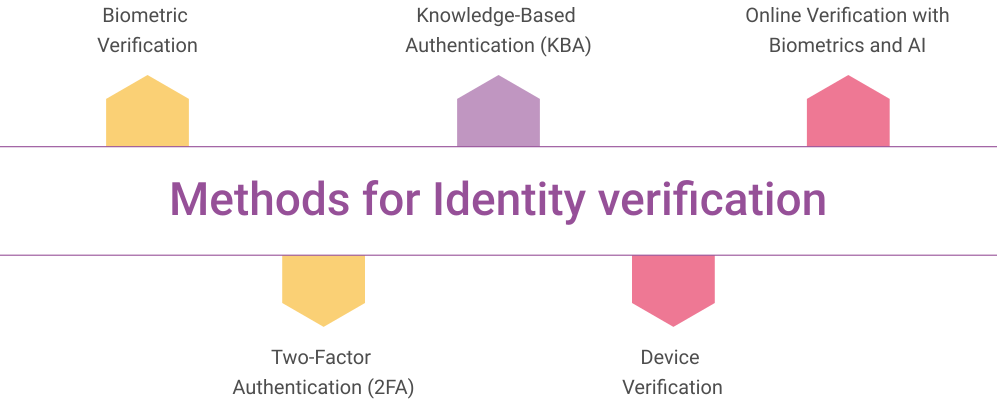
- Facial recognition, fingerprint identification, and iris or retina scans to match the individual’s official ID. This helps prevent impersonation and fraud.
- Ask the customer personalised security questions that only the genuine customer can answer. This adds an extra layer of protection.
- Authenticate IDs in real-time by prompting users to upload selfies. Match this against their ID photo using AI and human review for accuracy.
- Use multi-layer security by adding a layer of security and asking users to confirm their identity through a second method, such as a code or One-Time Password (OTP) sent to their phone or email, along with the password.
- Assess the legitimacy of ID documents and the device used by the customer during onboarding or transactions to detect fraud and ensure security.

ID Verification Templates

Digital ID Verification Software Selection

ID Verification Implementation

ID Verification Training
Tailored. Trusted. Compliant.
Are you a DNFBP or financial entity? Discover how our ID verification solutions are customised to fit your business and risk profile.
AML UAE: Your Trusted ID Verification Partner Across All AML Compliance Operations in the UAE
At AML UAE, we offer comprehensive ID Verification Solutions designed for businesses operating in mainland UAE and free zones, including Abu Dhabi Global Market (ADGM), Dubai International Financial Centre (DIFC), Jebel Ali Free Zone (JAFZA), and Ras Al Khaimah Economic Zone (RAKEZ), etc. Our tailored approach integrates government-approved verification methods to meet regulatory standards across jurisdictions.
| Complete Delegation | Partial Delegation | Fully DIY Consulting | |
|---|---|---|---|
| One-Time | We understand your business, draft SOPs, and develop comprehensive end-to-end ID Verification Policies, Procedures, Systems, and Controls and execute the same for you. | We assist in drafting afresh as well as reviewing your entity’s prevailing ID Verification Policies and Procedures which help you ensure alignment with your current and projected business operations and AML compliance needs. | We provide customised ID verification policy with guidelines to structure your ID verification procedures with current regulatory requirements. |
| Ongoing | Our dedicated and experienced AML team keeps a tab on regulatory changes in the business environment and ensures your entity’s compliance with the evolving and ever-changing regulatory modification landscape. | We conduct periodic reviews of your ID Verification Protocols and provide Remedial Recommendations to enable you to fill gaps, if any. | We offer expert consultation and an IDV checklist enabling you to refine and improve policies based on best practices. |
| Complete Delegation | Partial Delegation | Fully DIY Consulting | |
|---|---|---|---|
| One-Time | We customise ID Verification templates for your business which helps you in seamless identity authentication of your client as per AML/CTF requirements. | We help you with customised ID Verification templates which enable you to align your IDV requirements with AML/CTF Compliance. | Our AML Experts offer advisory support, which helps you to execute and optimise an IDV template that is tailored to your business needs and AML Compliance Policy. |
| Ongoing | Our AML expert team keeps track of the regulatory changes and updates the IDV templates based on regulatory changes and operational needs of your business in real-time. | Our team reviews in real-time and recommends steps to refine and update ID verification templates, which help you ensure the best IDV practices in your AML/CTF program. | We continually refine IDV templates in real-time as per changes in UAE AML regulations and incorporate them effectively in your IDV compliance. |
| Complete Delegation | Partial Delegation | Fully DIY Consulting | |
|---|---|---|---|
| One-Time | We evaluate your business requirements and select the best-fit ID Verification Software, which you can operate for the automation and security of your clients. | We shortlist suitable software options based on your budget and operational needs to suit your AML/CFT Compliance Program. | We offer guidelines and a checklist to help you select the right ID verification software for your business needs. |
| Ongoing | We manage the project, conduct health-checks, usage analysis, and keep ROI on track. | We keep an eye on upgrades and advancements in technology and provide periodic assessments and updates on your current software performance. | Our expert team provide self-assessment tools to help your business make informed software decisions for IDV. |
| Complete Delegation | Partial Delegation | Fully DIY Consulting | |
|---|---|---|---|
| One-Time | Our experts provide the SOP for the entire implementation process, including integration and system set up for effective ID Verification of your client. | We assist in configuring the most suitable ID Verification solutions that can be implemented in your business for effective compliance with the AML/CTF Program. | Our team provides setup documentation and implementation guides to implement automated ID Verification solutions for your business. |
| Ongoing | We oversee real-time system maintenance, updates, and security enhancements in the effective implementation of the ID Verification system for effective AML/CFT/CPF Compliance. | We provide ongoing technical support for troubleshooting and optimisation of the Digital Identity Verification system for your business. | We offer regular self-help resources and booklets for system management and enhancements of your Electronic ID Verification Compliance measures. |
| Complete Delegation | Partial Delegation | Fully DIY Consulting | |
|---|---|---|---|
| One-Time | We deliver full-scale training programs covering Online ID verification techniques and fraud detection for effective AML regulatory compliance with your business. | We provide you with customised training modules and a checklist focused on specific ID Verification processes. | We provide self-learning materials, video tutorials, and training guides for effective IDV. |
| Ongoing | We conduct real-time, full-scale, as well as refresher training and compliance workshops to keep employees up to date with regulatory changes in ID Verification. | Our team offers scheduled refresher courses and regulatory updates regarding ID Verification Compliance. | We offer continuous support through knowledge resources and online learning platforms. |
Identity document verification
Verify identity documents and resolve exceptions
An identity document must be assessed alongside the person presenting it, and the verification method used. We help you review document validity, consistency and available authenticity checks within your onboarding process.
Document and identity checks
We compare names, dates, document numbers and photographs across the file. Where digital verification is used, we review the outcome and relevant exception evidence, including liveness or face-match results where available and appropriate. Suspected alterations or unexplained mismatches are escalated rather than overridden to complete onboarding.
A documented verification outcome
You receive a verification record stating the checks performed, supporting evidence and unresolved issues. We work within the systems and data access agreed for the engagement. The authorised person in your organisation decides whether further evidence or enhanced due diligence is required before the relationship proceeds.
Let ID Verification Protocols Protect Your Business
Confused. Struggling. Finding IDV Baffling?
We help you stay compliant with evolving UAE and International Laws without slowing your operations.