
Money laundering and terrorism financing risks in Non-Profit Organisations (NPO)

AML and CFT Risks in NPO

Blogs

Published On: 06/30/2022

Table of Contents

Protect your business with reliable and effective AML strategies with AML UAE.

Last Reviewed On: 08/27/2026   |   Last Updated On: 08/27/2026

AML and CFT Risks in NPO

Money Laundering and Terrorism Financing Risks in NPO

Non-Governmental organisations NGOs or NPOs – Non-Profit Organisations play a critical role in a crisis and contribute significantly to resolving issues and disputes. They provide humanitarian relief, sometimes even before the government can. But are they exposed to money laundering, and do they play a role in combatting money laundering and terrorist financing? Well, it’s a double-edged situation that they present. On the one hand, they help alleviate poverty and prevent situations from deteriorating, and on the other hand, they are prone to the risk of money laundering and financial terrorism.

Non-profit organisations are subject to Article 19(2)(a) of Federal Decree-Law No. 10 of 2025 and Articles 34 and 50 of Cabinet Resolution No. 134 of 2025. 

Adequate Customer Due Diligence when Dealing with Non-Profit Organizations Min

Current Scenario Of Money Laundering and Terrorism Financing Risks in NPO

The FATF recommendation number 8 requires that countries review their laws and regulations to ensure that non-profit organisations are not misused for the financing of terrorism. The recommendation is directed toward eradicating terrorist funding in the non-profit sector. But the irony is that even after two decades, only 10 jurisdictions comply with the recommendations. This connection is inevitable and came to light after 9/ 11 when the role of a charitable organisation with terrorist organisations was unearthed.  

It is noteworthy that in the initial days, the FATF recommendations were not focused on non-profits. But after 9/ 11, the FATF extended its actions to the non-profits. The tricky part is to conduct financial surveillance without putting a question mark on the integrity of the charitable organisations.  

Over-regulation has become a concern, so the FATF introduced a risk-based approach and adopted tactfulness to deal with money laundering cases. FATF has recommended that such measures should be taken that should not disrupt charitable activities and should not discourage legit philanthropic activities.  

These measures are applicable in scenarios in which government services do not reach, and non-profit organisations first reach the people to offer financial assistance. So, they should not be unduly prevented from accessing resources so that they can carry out their legit charitable activities successfully.  

The complexity lies in dealing with the charitable organisations and identifying the intention and ignorance of the non-profits. There might be organisations involved in the money laundering crime, and there are also some organisations that have been subject to exploitation without their knowledge. 

There might be several reasons for this, such as depending on the goodwill of the donors, ignorance or oversight of the working of the concerned staff. The financial abuse might be the work of insiders for which increased governance and stringent financial control are required.  

If there’s the involvement of the outsiders, it is best to depend on the authorities and share relevant and complete information so that they can take the appropriate and timely actions. 

Charities can be based on cultural or religious beliefs, so some charities might receive huge donations in cash which might be a routine thing. But the authorities need to recognise the peculiarities. The non-profit sector is vulnerable, which is often considered a high risk as the terrorists can exploit that.  

Over-regulation to prevent the misuse of non-profits has become common, but it has led to a highly controlled environment for charities which they find hard to operate. They cannot access funds quickly and disperse them to provide humanitarian relief.  

Such over-regulation has had adverse effects on the working of charities. So, the FATF accepted that de-risking without considering the level of risk associated with the customers and taking risk mitigation measures for customers within a particular sector can increase the risk. It will reduce the transparency required in the global financial system, and it will prevent the authorities from efficiently combatting money laundering and terrorist financing.  

A risk-based approach helps thwart the challenges arising out of the vulnerabilities and the risk to which the non-profits are exposed. Charitable organisations need to focus on proper registration, sharing relevant information, and maintaining the correct records to help keep a tab on money laundering. They need to identify the beneficiaries and the sources of the distributed charitable funds.

Money Laundering and Terrorism Financing Risks in NPO

Why are NPOs vulnerable to Money Laundering and Terrorist Financing?

Globalisation has made extreme changes in the way the NGOs were working, and it has brought them into the ambit of the terrorist organisation opening the doors for financial terrorism.

The charitable organisations work primarily on the strength of the volunteers, who are often not made to go through stringent identity verification checks. Moreover, the non-profits lack the technical expertise as they don’t have competent professionals to handle risk assessment and are not familiar with the legal framework. So, it becomes a vulnerable space that criminals can misuse easily.  

The public trust in the noble work of the NGOs often does not attract any scrutiny regularly. The criminals often try to hide their unlawful acts in the legitimate activities of non-profits.

Conclusion - Money Laundering and Terrorism Financing Risks in NPO

Targeted risk assessment requires better assimilation of information and identifying the processes that criminals use to launder money. So, there needs to be a thorough understanding between the authorities and the non-profits. The required knowledge and information should be shared, and both parties benefit from the actions taken.  

It is noteworthy that in the fight against money laundering, the authorities can also include the public. A good example of such a collaboration is the public advice and awareness carried out in the UK and Denmark. It helps the citizens to donate to Syria safely. 

Collaboration between the government and NGOs will continue to help fight money laundering. It creates a network of organisations, including micro-financial institutions, that can help fight against money laundering. The authorities can strengthen their fight against money laundering and terrorist financing with collaboration and cooperation. Mutual learning and coordinated fight can undoubtedly deter criminals from indulging in financial crime.  

AML UAE

AML UAE is one of the leading aml consultant in the UAE, offering AML compliance advisory services. We help organisations in the UAE be AML compliant with the rules and fight money laundering. We offer a wide range of services such as AML/CFT Policy, Controls, Documentation, and an in-house AML compliance department setup.

We help identify the weak compliance areas and help you avoid penalties. You can also get assistance in the proper AML software selection and AML/ CFT health check. Our other services include Annual AML/ CFT Risk Assessment Report and AML Training. We have a highly experienced team with core expertise in AML compliance. Talk to our experts now and follow the AML rules and regulations without any difficulty.  

Our timely and accurate AML consulting services

For your smooth journey towards your goals

Share via :

About the Author

Pathik Shah

FCA, CAMS, CISA, CS, DISA (ICAI), FAFP (ICAI)

Pathik is an ACAMS-certified AML consultant specialising in governance, risk, and compliance for regulated entities in the UAE. He brings over 28 years of experience, with 1,000+ hours of AML training and 200+ advisory engagements across DNFBPs, VASPs, and FIs. He supports businesses in aligning with AML/CFT requirements from the CBUAE, DFSA, MoET, MoJ, VARA, CMA, FSRA, and FATF. Known for translating complex regulations into audit-ready procedures, Pathik enables operational clarity and compliance readiness.

Reach Out to Pathik


Money Laundering Fines and Penalties in UAE

Money Laundering Fines and Penalties in UAE

Blogs

Published On: 06/17/2022

Table of Contents

Protect your business with reliable and effective AML strategies with AML UAE.

Last Reviewed On: 08/27/2026   |   Last Updated On: 08/27/2026

Money Laundering Fines and Penalties in UAE

Money Laundering Fines and Penalties in UAE

AML compliance is mandatory for financial institutions, Designated Non-Financial Businesses and Professions (DNFBP), and other regulated entities. The UAE Ministry of Economy announced different Money Laundering Fines and Penalties in UAE. Administrative fines range from AED 10,000 to AED 5,000,000 per violation under Article 17 of Federal Decree-Law No. 10 of 2025 (violations schedule Article 39). In addition, article Articles 26 and 27 prescribe criminal fines for money laundering offences committed by natural persons and legal persons respectively. The Ministry has listed 26 categories of fines for violating the money laundering and terrorism financing laws. 

The UAE government monitors the AML compliance and has set up a specialised unit to investigate the control of DNFBPs, dealers in precious metals and stones, auditors, real estate agents and brokers, etc., as such businesses and professionals are prone to money laundering and corruption.  

Let’s know the different fines and penalties applicable in the UAE for violating AML rules and regulations.

1. Money Laundering Fine of Dirhams 1 million or more

When organizations fail to take appropriate actions for customers included in the international or local sanction lists– they must follow the due diligence process before starting a business relationship. If there is a dealing with unauthorized banks, AED 1 million or more fine is also applicable. The penalty is also applicable if bank accounts are opened or maintained using fake names, not the actual holders’ names.  

2. Money Laundering Fines and Penalties of Dirhams 200,000 or more

  • If the Enhanced Due Diligence process is not followed to identify the high-risk customers. If the FIU – Financial Information Unit is not informed of the STR – Suspicious Transaction Report in cases where the institutions cannot follow the customer verification process- due diligence process before creating or maintaining a business relationship or carrying out a transaction for the benefit of the client or in his name. 
  • If the FIU has asked for additional information for the reported suspicious transactions and organisations fail to comply, then a fine is also levied in such cases.  
  • Suppose, due to suspicions about the nature of the business relations- its process or intentions are disclosed directly or indirectly to the customer or a third party. In that case, such actions attract a penalty of AED 200,000 or more.  
  • If the measures identified by the National Committee for Combating Money Laundering regarding customers from high-risk countries are not implemented, the fines are levied. 
Money Laundering FInes and Penalties in UAE

3. AML Violations and Fine of Dirhams 100,000 or more

  • If the requisite measures are not adopted for identifying risk and evaluating the same when the services are provided or undertaken with new professional activities.   
  • If the requisite due diligence measures are not taken for clients before establishing or continuing a business relationship or making a transaction that benefits the customer. 
  • If the customer identity and that of the UBO or their deputy is not verified before or while establishing a business relationship or before with a client with whom there’s no previous business relationship.  
  • If there’s a delay of information about the STR to the FIU in events where there’s a suspicion that the customer is related to crime wholly or partly- if there’s reasonable ground to suspect that the client money is involved in establishing the business relationship has been obtained from criminal activities.   
  • If the due diligence measures are not followed for PEPs-Politically exposed Persons before establishing or maintaining a business relationship. 
  • If proper records are not maintained on the financial transactions with the customers. 

4. Money Laundering Fine of Dirhams 50,000 or more

  • If proper AML training is not provided to the staff to help them be aware of the procedure of abiding by the AML laws. Preventing competent authorities’ access upon their request and the results obtained from due diligence and continued monitoring are not provided. Access is granted to analyse the results- the records, files, documents, correspondence, and forms on both sides.
  • If financial transactions records are not maintained for: 
    • five years from the date of transaction completion,  
    • expiry of the customer relationship, 
    • completion of inspection of their facility.  
  • The fine is applicable as maintenance of such records is mandatory. 
  • If irregular records for financial transactions have been maintained and do not help in analysing data and tracking the financial activities, a fine is imposed.  
  • It is mandatory to appoint an AML compliance officer (MLRO), and failure of such an appointment attracts a penalty.  
  • If due diligence measures for continuous customer monitoring are not taken, and the required procedure is not followed to understand the type and nature of the client’s business, the ownership structure, and control (UBO) –then the fine is levied. 
  • If the institution has not taken the required measures to understand the purpose and nature of the business relationship and has not obtained information for the same, it also attracts a penalty of AED 50,000 or more.   
  • If the institution has not followed the simplified due diligence processes to manage low risk. 
  • Internal AML policies, procedures, and controls are required to be established to identify suspicious transactions, prevent money laundering and identify customer risk- failure to do so attracts a penalty. 
  • If necessary, measures and procedures are not adopted to mitigate the identified risks, which come to light after a national risk assessment and self-assessment. 

AML Fines and Penalties in UAE

The UAE government has neatly classified each non-violation of AML rules and regulations and clearly defined the fines for them. So it’s essential to follow the AML laws and keep the business AML compliant at all times to avoid penalties. It is necessary to conduct AML/ CFT Health Check, create the Annual AML/ CFT Assessment Report and follow the AML / CFT Policy Controls and Procedures Documentation. AML Training helps to sync with the latest AML guidelines and train the employees about the diligence process and identifying suspicious transactions and financial activities.  

The AML software selection will help choose the best software that will assist in AML compliance. It would be best to contact a reliable AML consultant to access a wide range of AML compliance services and avoid the risk of non-compliance. AML UAE is one of the best AML consultants working diligently in the compliance field and serving thousands of businesses in the UAE to be AML compliant.

Our timely and accurate AML consulting services

For your smooth journey towards your goals

Share via :

About the Author

Pathik Shah

FCA, CAMS, CISA, CS, DISA (ICAI), FAFP (ICAI)

Pathik is an ACAMS-certified AML consultant specialising in governance, risk, and compliance for regulated entities in the UAE. He brings over 28 years of experience, with 1,000+ hours of AML training and 200+ advisory engagements across DNFBPs, VASPs, and FIs. He supports businesses in aligning with AML/CFT requirements from the CBUAE, DFSA, MoET, MoJ, VARA, CMA, FSRA, and FATF. Known for translating complex regulations into audit-ready procedures, Pathik enables operational clarity and compliance readiness.

Reach Out to Pathik

Checklist for AML Compliance: Best Practices for Anti-Money Laundering Compliance

Checklist-for-AML-Compliance-Best-Practices-for-Anti-Money-Laundering-Compliance feature image

Checklist for AML Compliance: Best Practices for Anti-Money Laundering Compliance

Published On: 05/26/2022

Table of Contents

Protect your business with reliable and effective AML strategies with AML UAE.

Last Reviewed On: 08/31/2026   |   Last Updated On: 08/31/2026

Checklist for AML Compliance: Best Practices for Anti-Money Laundering Compliance

How do you track the progress as far as complying with anti-money laundering is considered? In order to make your compliance program more resilient, cost-effective, and efficient, you need to follow best practices for anti-money laundering compliance and use checklists for AML compliance extensively.

This article is going to suggest some of the best practices you can adopt in order to comply with your AML programs. So without wasting much of your time, let us begin with the same.

Best Practices For AML Compliance

Here are the best practices that you have to follow in order to comply with the Anti-Money Laundering Laws and Regulations.

1 - Anti-Money Laundering Compliance Fundamentals

Every jurisdiction has its own set of requirements, but there are a few practices that form the ground rule for the compliance of Anti-money laundering practices.

2 - Red Flags of Anti-Money Laundering Compliance

There will always be some signs that clearly establish that something is not right in the system or the process. Money laundering is all about bringing the illegalized money back into the market after legitimizing it through several means.

Here are a few unusual activities/red flags that you must control:

2--Red-Flags-of-Anti-Money-Laundering

You can experience these activities at an early stage of the Customer Due Diligence (CDD) process or via an ongoing monitoring process.

At the time of onboarding a client, normal and baseline information like the type of account, expected transactions, and sources of funds should be gathered to avoid last-minute chaos.

However, it is essential for you to note that irrespective of internal examination or external reporting to the regulators, the information mentioned above is not enough to tag the activity or the transaction as a red flag.

Read More – Red Flag Indicators For AML/CFT

Compliance. Trust. Transparancy

Customized and cost-effective AML compliance services to support your business always

3 - Anti-Money Laundering Compliance Screening

Anti-Money-Laundering-Screening

One of the best ways to eliminate risk or reduce its impact is first to identify the scope of any sort of risks in your system and take mitigative measures at the right time.

For instance, you might want to perform a comprehensive identity verification check that has the potential to reduce the risk or scope of any fraudulent activities.

This verification check has the power to keep you safe from the threat of dealing with illegal money, breaking the rules of compliance, and many more.

People with ill intentions or the idea of fraud on their heads are getting more and more sophisticated these days.

Terrorists and money launderers are getting proficient in identifying the weak links or the loopholes in your systems which in return helps them in hiding their authentic sources of income or funds and also their relation to it.

You can block access to the individuals who want to bypass your safeguards, making your prevention systems even more secure and robust.

4 - Anti-Money Laundering Compliance Monitoring

Compliance is not complete merely after the initial onboarding process. You have to keep a constant eye on the entire process. Monitoring is basically the analysis of ongoing and continuous activities to ensure that all the other activities are in compliance with each other.

You need to keep an eye on a few activities like exceeding thresholds, change of status, suspicious activities, surveillance of employees and staff, recording of the communications, new regulations, trade data, market trends, and transaction monitoring needs of various other markets.

Financial institutions must monitor all the activities thoroughly in order to ensure that no fraudulent activities are going on. In addition to that, it also restricts terrorism funding, and money laundering is not entering their

Anti-Money-Laundering-Monitoring

5 - Risk Management for Anti-Money Laundering Compliance

Risk-Management

With the rate of regulatory and technological change, determining modern-day risk assessment is not the only motive. Instead, it is more about creating dynamic, adaptable, and defendable procedures and policies.

In order to make your business grow, you have to mitigate the risks even before it gets into the power of position to destroy your business.

Therefore, in order to identify the possible quantifiable risk, you must constantly monitor all the activities and take data-driven and not guts-driven business decisions.

Compliance. Trust. Transparancy

Customized and cost-effective AML compliance services to support your business always

6- Integrating Anti-money Laundering Compliance Technology

Merely hiring dedicated staff to manage costly manual compliance activities is not enough. You must utilize the potential of automation software instead of using rather wasting manual intelligence and energy.

Here are the few technologies and their eternal use that you might want to add to your existing systems in order to enhance the efficiency of the entire process.

It is crucial for you to understand that automation won’t eliminate the need for manual powers and judgments, especially in investigations. But with the help of automation, you will be able to reduce regulatory risks, streamline the process, and restricts unnecessary overheads.

Read More – What Is The Role of Technology In Anti-Money Laundering Compliance 

Implementation of AML Compliance Best Practices

In order to comply with your AML policies and procedures, you must seek help from all the practices mentioned above. The entire process is complex, and a single mistake has the potential to bring irreparable damage to your brand name. However, if you are looking for someone who can effectively and efficiently tick right on all the items of the Anti-money laundering checklist, then AML UAE is the name to trust.

FAQs - Checklist for AML Compliance

Here are a few frequently asked questions about the Checklist for AML Compliance

What is the AML checklist? 

AML/CFT audit checklist includes beneficial ownership, source of wealth, involvement in past or present frauds, incomplete documentation, unnecessary use of intermediaries, and many more.  

Companies must perform AML checks of customers, suppliers, and employees. Details include full name, photo identity proof, address proof, date of birth, nature of the business relationship, the purpose behind it, employment details, source of funds, type of transaction, and relationship with the beneficial owner.  

AML requirements in UAE include Know Your Customer, Customer Due Diligence, reporting suspicious transactions, risk profiling, robust governance structure, and implementation of AML policy.  

AML compliance checklist includes checking KYC documents such as identity proofs, residence proofs, signature verification, company ownership details, and company registration or licensing certificate.  

Share via :

About the Author

Pathik Shah

FCA, CAMS, CISA, CS, DISA (ICAI), FAFP (ICAI)

Pathik is an ACAMS-certified AML consultant specialising in governance, risk, and compliance for regulated entities in the UAE. He brings over 28 years of experience, with 1,000+ hours of AML training and 200+ advisory engagements across DNFBPs, VASPs, and FIs. He supports businesses in aligning with AML/CFT requirements from the CBUAE, DFSA, MoET, MoJ, VARA, CMA, FSRA, and FATF. Known for translating complex regulations into audit-ready procedures, Pathik enables operational clarity and compliance readiness.

Reach Out to Pathik

How To Find The Best Anti-Money Laundering Software?

How-To-Find-The-Best-Anti-Money feature image

How To Find The Best Anti-Money Laundering Software?

Published On: 05/26/2022

Table of Contents

Protect your business with reliable and effective AML strategies with AML UAE.

Last Reviewed On: 08/31/2026   |   Last Updated On: 08/31/2026

How To Find The Best Anti-Money Laundering Software?

Anti-Money Laundering software is a technological solution that facilitates organizations to meet their AML obligations. In recent years, technological advancements have enabled business enterprises to utilize the power of anti-money laundering software instead of manual methods in the process of anti-money laundering compliance. Companies want to use the best Anti-Money Laundering Software to automate their AML Compliance.

As a result, anti-money laundering solutions have multiple advantages as compared to the manual way of operations. Hence, in the current modern times, with an ever-evolving state of technology, AML software is gradually starting to come into the limelight.

What Is The Need for An Anti-money Laundering Software?

The financial service industry and Designated Non-Financial Businesses and Professions (DNFBPs) have evolved exponentially in the last few decades and are expected to grow in the coming years as well substantially. Because of this, the AML software industry has also evolved along with the same. However, the success of any financial service industry depends upon the level of customer satisfaction.

Hence, financial institutions (FIs) primarily focus on developing and offering solutions that will amplify the overall customer experience and satisfaction.

In addition, financial institutions have to provide for these services by clearly meeting their anti-money laundering obligations. Therefore, financial institutions can offer solutions and services under anti-money laundering obligations with the respective AML solutions that they use.

DNFBPs subject to AML Compliance in the UAE

Several financial crimes such as money laundering or terrorist financing continue to pose significant risks across the globe. Accordingly, the audits and regulations of anti-money laundering regulators have increased substantially in recent years.

Business enterprises that fail to meet their anti-money laundering obligations have to bear hefty amounts as penalties or fines. This is the primary reason why anti-money laundering compliance has become vital for all types of business enterprises, especially financial institutions.

Anti-money laundering software solutions play a huge role in ensuring the AML compliance of the companies.

Checklist for AML Software

While buying AML software, you must check on the availability of the following functionalities and supporting features: 

Functionalities: 

  • Individual Name Search 
  • Bulk Name Search 
  • Individual ID Search 
  • Bulk ID Search 
  • Search scheduler 
  • Categorization/scoring of screened person basis the database searched and results found 
  • Maintains historical records and audit trail 
  • Allows capturing of comments – Individually as well as in multiple search items 
  • Easy downloading of search results with captured comments 
  • Real-time update of the database 
  • Email notification for changes in historical search results, basis the update in the database 
  • Intelligent algorithm to minimize the False Positive outcome 
  • Customer-wise case management 

Database 

  • Local/National Terrorist or Sanctions or Alert List 
  • International Sanctions 
  • Global Watchlists 
  • Global PEP database 
  • Negative media information 
  • Global shelf company database 
  • Law and Regulatory Enforcement 

Other Support 

  • Easy set-up or onboarding 
  • Mandatory training on software 
  • Online support for ongoing query resolution related to software 

Compliance. Trust. Transparancy

Customized and cost-effective AML compliance services to support your business always

Benefits of an Anti-Money Laundering Software

benefits anti money laundering software image

Initially, the business enterprises used to leverage the power of manual controls for anti-money laundering compliance. However, with the constantly evolving state of technology, manual controlling methods have become obsolete and an insecure method of AML controlling.

Manual processes have always been unreliable, and the companies adopting these methods were wasting a lot of money and time. With the development of Anti-money Laundering (AML) software solutions, you can now perform all the manual processes in a more accessible and quicker manner. In addition to that, the entire process is now a lot safer and more secure. The best AML Software will not only make you more efficient but will also help you take timely decisions.

Data Is Quite Crucial For AML Solutions

One of the obligations of all the DNFBPs and Dealers in Precious Metals and Stones (DPMS) when it comes to the customer onboarding process is implementing the risk assessment. Anti-money laundering name screening software aids the business houses in implementing risk assessments for their customers.

AML name screening software screens the name of their potential clients in sanction lists, PEP (politically exposed persons), and adverse media screening to check whether it is safe to onboard a particular client or not. The level of risks is being determined at this stage.

If required, enhanced due diligence (EDD) can be conducted along with the filing of an STR in case if you detect any type of suspicious activities or transactions. The primary function of such software is to provide the companies to scan their potential clients in sanctions, PEPs, and adverse media data that is published by several countries on a regular basis.

Data plays a crucial role in PEPs, sanctions, and adverse media screening solutions. Hence many anti-money laundering software vendors who offer real-time and globally comprehensive data should be preferred.

Enhanced Due Diligence measures under UAE AML Regulations

Furthermore, it is extremely important to have access to real-time data because the sanction lists, PEPs, and adverse media screening are highly dynamic and volatile and simply keep changing with every single second passing by.

Hence, business enterprises need to control their clients in real-time data to achieve the sole purpose of the control process. In addition to that, with the development of several financial technologies, most financial institutions (FIs) started to provide international services. Hence, these business enterprises must apply spherical risk assessment is comprehensive and complex global data in order to protect themselves from potential risks.

This elevates the probability of monetary instability due to improper allocation of resources. It also facilitates a way to avoid taxation and hence depriving the income of the country.

As a result, customers, depositors, borrowers, and investors end their business relationships with the financial institutions whose reputation has been distorted by allegations of criminal activities like terrorist financing and money laundering.

Database coverage

Though the Federal law provides for screening through the UNSC Consolidated List and the UAE Local Terrorist List, it is ideal to have a comprehensive database covering the following, as such additional sanctions lists come handy when you are dealing with people from different countries and the respective countries’ list needs to be screened:

  • Argentina RePET 
  • Australia DFAT 
  • Azerbaijan FMS 
  • Bahrain Terrorist List 
  • Bangladesh CBB 
  • Belgium FPSF 
  • Canada Autonomous Sanctions 
  • Canada Public Safety 
  • Canada RCMP Crypto Freezes 
  • Canada United Nations Act 
  • China MFA 
  • EU Sanctions 
  • France Tresor Registre de Gels 
  • India MHA 
  • Indonesia DTTOT 
  • Iran MFA 
  • Japan MOF 
  • Kazakhstan KFM 
  • Kyrgyzstan FIU 
  • Latvia FIS 
  • Malaysia MHA 
  • Nepal MHA 
  • Netherlands Terrorist Sanctions 
  • New Zealand Designated Terrorist Entities 
  • Pakistan Proscribed 
  • PMA Freezing List 
  • Qatar NCTC 
  • Russia Rosfinmonitoring List of Terrorists and Extremists (Current) 
  • Russia Rosfinmonitoring List of Terrorists and Extremists (Included) 
  • Saudi Arabia PSS 
  • Singapore MAS 
  • South Africa FIC 
  • Switzerland SECO 
  • Tajikistan FMD 
  • Thailand AMLO 
  • UAE National List of Terrorist Individuals and Entities 
  • UK HMT OFSI Sanctions 
  • Ukraine SFMS 
  • United Nations Sanctions 
  • US OFAC Non-SDN 
  • US OFAC SDN 
  • US OFAC SSI 
  • US State Department Cuba Restricted List 
  • US State Department Non-proliferation Sanctions (ISN) 
  • US State Department Terrorist Exclusion 
  • Vietnam MPS 
  • EU Europol Most Wanted 
  • Interpol Red Notices 
  • Turkey MOI Wanted Terrorists 
  • US DEA Most Wanted 
  • US FBI Most Wanted 
  • Regulatory Enforcement: US FRB Enforcement Actions 
  • Regulatory Enforcement: US OCC Enforcement Actions 

Compliance. Trust. Transparancy

Customized and cost-effective AML compliance services to support your business always

Advanced Search Algorithms in AML Software

Advanced search algorithms are required in order to reduce both the false positives as well as negatives in customer monitoring and the customer screening process.

During the course of the customer account opening process, a few errors might occur in the name and surname of the customer. Missing information or incorrect information can lead to a few unintended errors in knowing your customer (KYC)  and customer due diligence (CDD) processes .

Hence, you should pay close attention to whether there is an advanced search algorithm in the PEPs, sanctions lists, or adverse media search data solutions that you have selected.

API Integration feature in AML Software

AML software solutions actually automate the anti-money laundering compliance process of companies. API integration is the feature that facilitates automation.

By integrating the project of your client and anti-money laundering software with API, business enterprises can ensure that all the scanning processes are taking place automatically without having any workforce working actively in the background.

For instance, you are a financial institution that encounters over a thousand clients each day. It would require a massive workforce in order to query all of these customers manually. But the API integration eliminates this problem, resulting in the conduction of all of such processes in the background automatically, quicker, and safer.

AML Compliance officers should take the required steps in order to ensure that the software is updated to its latest version and is perfectly fit to serve its baseline purpose.

In addition, anti-money laundering compliance officers should also consider the unique training needs of the employees within their financial institution. Finally, the employees who will be using this software have to get through with the processing of the entire technology.

Finding the Best Anti-Money Laundering Software

If you take all of these factors into consideration while selecting the AML software, there is not a single doubt that you will not get the best one. However, if you are still facing hardships, we, AML UAE, are at your rescue, always and forever!

Frequently Asked Questions (FAQs)

Here are a few frequently asked questions about the socio-economic impact of money laundering activities.

What Are The Features of AML Software?
Usually, AML software will help financial institutions (FIs) effectively implement their AML programs. However, their practical implementation might differ from institution to institution, but it ranges from data management to predictive analysis and machine learning. In addition, AML software may also be used for monitoring and reporting large-scale suspicious activities which involve the high value of fixed assets, individual transactions, etc.

Share via :

About the Author

Pathik Shah

FCA, CAMS, CISA, CS, DISA (ICAI), FAFP (ICAI)

Pathik is an ACAMS-certified AML consultant specialising in governance, risk, and compliance for regulated entities in the UAE. He brings over 28 years of experience, with 1,000+ hours of AML training and 200+ advisory engagements across DNFBPs, VASPs, and FIs. He supports businesses in aligning with AML/CFT requirements from the CBUAE, DFSA, MoET, MoJ, VARA, CMA, FSRA, and FATF. Known for translating complex regulations into audit-ready procedures, Pathik enables operational clarity and compliance readiness.

Reach Out to Pathik

Micro money laundering: The New Kid on the Block

Blogs

Published On: 05/20/2022

Table of Contents

Protect your business with reliable and effective AML strategies with AML UAE.

Last Reviewed On: 08/31/2026   |   Last Updated On: 08/31/2026

Micro money laundering: The New Kid on the Block

Micro-money laundering has made it even more challenging to identify the fraudulent transactions carried out in small amounts several times.  

Governments worldwide have implemented stricter rules and regulations for AML compliance. There’s also increased awareness on the part of the financial institutions as they are being urged by compliance authorities to follow the AML rules and regulations.  

The government is monitoring the traditional financial transactions. But the criminals are now adopting new ways to launder money. With the advent of technology and a massive increase in online transactions, it has become difficult to trace the source of the funds obtained from criminal proceeds.  

What is Micro Money Laundering?

Micro money laundering involves frequently laundering money in small amounts using digital channels. The small amounts are transferred to prevent detection, and transactions are made to appear regular. The illicit money is not transferred via big or small projects, but they are spread in smaller digital transactions done every day. It makes it difficult for governments to trace every small transaction and identify the risk of money laundering.  

Digital channels are evolving and available in abundance. Multiple payment channels are available today, making it easy for companies to do business and making it effortless for consumers to make payments and buy goods and services online. But criminals have found this evolving digital space attractive, and they are devising new ways to launder money, and the new kid on the block is micro money laundering. 

The digital landscape is continuously evolving, and criminals keep pace with the new technology to devise new ways to launder money. Micro money laundering is on the rise as the criminals take advantage of the loopholes in the AML compliance framework and target online users who are entirely unaware of the fraudulent activities that the criminals resort to launder their money.  

They unknowingly fall prey to the criminals who target them to launder money online.  

But the fact is that the regulators and authorities are now coming to terms with how criminals are adopting new ways to launder money and indulge in terrorist financing. They need to identify the emerging risks and thwart the challenges arising out of online transactions, which remain mostly anonymous. 

The criminals have been using traditional mechanisms for money laundering, such as regulated financial systems, offshore accounts, and shell companies. But now, they have diverted their attention towards online transactions, with transfers in small amounts done multiple times to evade government scrutiny.  

Criminals always take advantage of the anonymous nature of the internet and commit fraud. They carry out massive volumes of micro-transactions every day. Each small transaction goes unnoticed, but the overall amount is a cause of worry as criminals become successful in gradually laundering vast amounts of money in multiple transactions. 

How is micro-money laundering done?

The new digital frauds have become a favourite of the criminals who are continuously devising new ways to launder their ill-gotten money. Today it is common to buy and sell in-game currencies, and criminals think of it as an opportunity to launder money.  

An instance of micro money laundering came to light when the criminals targeted Fortnite- a highly popular game. They used the game for money laundering with stolen credit cards to buy and sell the in-game currency.  

They created Fortnite accounts using stolen credit cards, bought the currency, and made it available to other players to sell them at a lower price within the game. To evade the regulators’ attention, they sold them on C2C sites, eBay, or transacted on the dark web. 

Another example is of using online job portals such as Fiverr. The criminals create an account on such websites to make fake job requests. They search for services that are offered at a particular fee. They log on to the same site with a different user account and a different IP address to reply to the same job offer.  

The amount is paid to an escrow account of the website, and then the first account creator authorises the second account holder (which is the same person) to perform the task advertised. After the work is completed (as shown by the job seeker), the first account authorises the platform to release the payment, and the second account receives the payments. The sender and the receiver are the same, and this modus operandi is rampantly used by criminals in online job markets.

Reason

One reason criminals are flourishing in micro money laundering is lack of awareness as it is a new method that criminals have adopted. AML training should include creating awareness about it and preventative measures. Businesses and enforcement agencies should work together to identify such emerging threats and combat them successfully.  

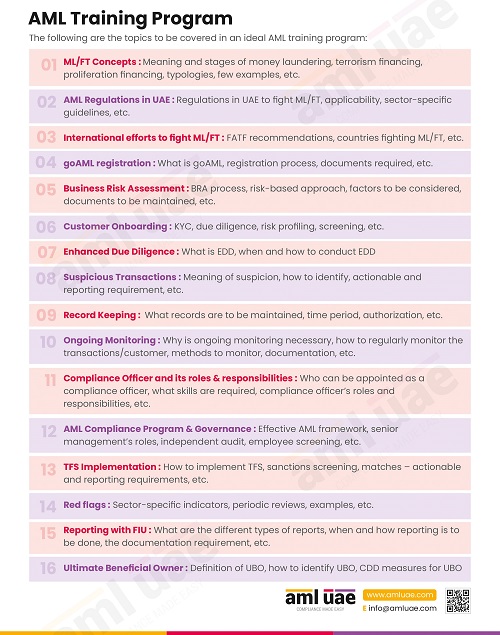
Designing a comprehensive AML Training Program

One of the primary reasons is that AML compliance is put on the backburner as companies have other core activities to ensure business continuity. The online marketplace is continuously evolving, and companies are scrambling to get new products to augment business growth. But all in this hustle, they forget the security of their businesses. Equally enthusiastic technology-savvy criminals jeopardise it. The only difference is that they abuse technology for their unlawful gains. 

The Way Forward 

Technology can come to the rescue of the authorities, regulators, and business organisations that should use it to combat money laundering and terrorist financing. The AML software can automatically identify unusual transactions, irregular patterns, or unusual consumer behaviour, letting the business know that it needs attention and investigation. Manually it is impossible to track the billions of microtransactions, and the criminals get a free run. However, technology should be used daily and right from the beginning – while verifying customers during the onboarding process. It can go a long way in preventing money laundering.  

The KYC process – Know your Customers, CDD-Customer Due Diligence, EDD-Enhanced Due Diligence, and all other procedures part of the AML compliance program should be diligently followed using technology. It will drastically reduce the number of money laundering cases. Training is also necessary to identify unusual transactions and take the appropriate actions to prevent them.   

Know Your Customer - KYC Requirements under AML regulations in UAE

A collaborative approach is required to prevent criminals from resorting to money laundering. Joint efforts by the government, regulators, compliance authorities, financial institutions, and other regulated entities can help identify criminals and prevent money laundering.  

It would be best to rely on AML consultants to improve the AML compliance program and identify money laundering risks. Some measures include choosing the right AML software, AML Training, and setting up an in-house AML compliance department. Businesses can also outsource other AML compliance activities to stay AML compliant and be ahead of the curve.  

Directors and/or senior management demonstrate overall responsibility and awareness of AML/CFT matters within the entity. The companies must also mention whether the Board and/or senior management receive regular AML/CFT reports from the Compliance Officer.  

Check out our guide on establishing an effective AML/CFT Framework in your business. 

Our timely and accurate AML consulting services

For your smooth journey towards your goals

Share via :

About the Author

Pathik Shah

FCA, CAMS, CISA, CS, DISA (ICAI), FAFP (ICAI)

Pathik is an ACAMS-certified AML consultant specialising in governance, risk, and compliance for regulated entities in the UAE. He brings over 28 years of experience, with 1,000+ hours of AML training and 200+ advisory engagements across DNFBPs, VASPs, and FIs. He supports businesses in aligning with AML/CFT requirements from the CBUAE, DFSA, MoET, MoJ, VARA, CMA, FSRA, and FATF. Known for translating complex regulations into audit-ready procedures, Pathik enables operational clarity and compliance readiness.

Reach Out to Pathik

AML Periodic inspection: What to expect when authorities come for a Periodic AML Inspection

TFS Private Sector Mini Guide

Blogs

Published On: 05/07/2022

Table of Contents

Protect your business with reliable and effective AML strategies with AML UAE.

Last Reviewed On: 09/01/2026   |   Last Updated On: 09/01/2026

TFS Private Sector Mini Guide

AML Periodic inspection: What to expect when authorities come for a Periodic AML inspection

The team representing the Ministry of Economy UAE has started visiting companies to conduct periodic AML inspections regarding the implementation of AML/CFT procedures. As a part of their AML periodic inspection, the team checks whether the company has implemented suitable procedures for anti-money laundering and combating terrorism financing.  

The Ministry’s notification directs the companies to cooperate with the inspection team during the visit. This notification is in regards to the Federal Decree by Law No. (10) of 2025 and Cabinet Resolution No. (134) of 2025 for the implementation of Federal Decree by Law No. (10) of 2025 on anti-money laundering. The financial institutions and DNFBPs are required to fill in the checklist with accurate details and submit a signed copy to the inspection team during their visit. 

DNFBPS must fill in the following information in different sections as asked in the checklist: 

Company details

  • Legal name 
  • DNFBP category 
  • Licensing Authority, Number, and Date 
  • Address 
  • Inspection Date 
  • The name and signature of the authorized signatory, which can be a Compliance Officer or Manager 
  • Ownership structure including details on ultimate beneficial owner (UBO) 
  • Description of the products and services you offer and types of customers 

General policies and procedures

In this section, you have to mention whether you have prepared and documented AML/CFT policies and procedures. If you have those, you have to share your AML Policy via email. The Ministry also intends to know whether you have circulated these procedures and policies to all your employees.  

Download Free AML Policy Template for Jewellers 

Download Free AML Policy Template for Trust and Company Service Providers (TCSP) 

Download Free AML Policy Template for Lawyers, Notaries, and other Legal Professionals in UAE 

Download Free AML Policy Template for Real Estate Agents and Brokers in UAE 

Internal risk assessment

In this section, the Ministry requires you to mention whether you carry out and document an internal risk assessment to identify the money laundering risks to your business. In the document, you need to provide details on the risk categories included in the risk assessment, such as: 

  • Country risk 
  • Customer risk – Check our infographic on customer risk assessment 
  • Delivery channels risk 
  • Products, services, and transaction risk 
  • Results of the National Risk Assessment of the UAE’s money laundering and terrorist financing risks 

Check our blog: The risk-based approach in anti-money laundering compliance

Governance

In this section, the Ministry intends to know whether the Board of Directors and/or senior management demonstrate overall responsibility and awareness of AML/CFT matters within the entity. The companies must also mention whether the Board and/or senior management receive regular AML/CFT reports from the Compliance Officer.  

Check out our guide on establishing an effective AML/CFT Framework in your business.  

Compliance Officer

This section requires information on the Compliance Officer. The first point you have to mention is whether you have appointed a compliance officer. If the answer to it is yes, the Ministry requires the name and email address of the Officer.  

The Ministry also intends to know whether the company has provided all the relevant details and documents to the Compliance Officer, including financials. Also, you must talk about the reporting manager of the Compliance Officer.  

Check out our article on the roles and responsibilities of AML Compliance Officer 

Customer acceptance and onboarding

This section requires companies to talk about their customer onboarding process and policies. The Ministry intends to know whether you have: 

Cash transactions

In this section, the Ministry wants to know whether you allow cash transactions in your business. You must mention the details of specific controls and procedures implemented in your company for cash transactions.  

The Ministry intends to know from you details on: 

  • Percentage of cash transactions of the company’s total transactions 
  • Cases of cash transactions of more than AED55,000.0 during the last 24 months 
111

Suspicious transaction reporting

In this section, the company must answer the following: 

Check out our goAML Web Submission Guide 

Record keeping

The Ministry intends to know if you keep all records, documents, materials, and data of all local or international financial, commercial, and cash transactions for a period of no less than five years from the date of completing the process or the end of the relationship with the customer. Check out our infographic on AML Compliance Requirements in UAE 

Training and awareness

You must provide information on the regular and appropriate training programmes you conduct for your employees in line with the nature and degree of risks of its activities to train employees on AML/CFT procedures. You must describe the training and its format in detail. Check our article emphasising the importance of AML training. 

Targeted financial sanctions

This section allows the Ministry to know if your customers are subject to targeted financial sanctions by the UAE government, the UN Security Council, or any other relevant body. You must also inform any screening tool that you use to check the same in this form.  

You must mention if you have ever identified exposure to targeted financial sanctions designated persons. If yes, what were the actions the company took, including but not limited to asset freezing, reporting to the competent authority, etc.  

Financial activity

In this section of the checklist, you must list all your bank accounts and related details such as name, location, IBAN, etc. The Ministry wants to know if you faced any issues with any banking institution, along with the relevant details.  

Conclusion

All these details will help the inspecting team know about the procedures in place on your premises related to AML/CFT. This proves your commitment to abiding by the AML law and dedication to reducing money laundering activities.  

About AML UAE

AML UAE will help you fill out the form and comply with AML regulations in UAE. AML UAE is a leading provider of AML consultancy services to companies in the UAE to aid in AML compliance. We can help you with: 

Our timely and accurate AML consulting services

For your smooth journey towards your goals

Share via :

About the Author

Pathik Shah

FCA, CAMS, CISA, CS, DISA (ICAI), FAFP (ICAI)

Pathik is an ACAMS-certified AML consultant specialising in governance, risk, and compliance for regulated entities in the UAE. He brings over 28 years of experience, with 1,000+ hours of AML training and 200+ advisory engagements across DNFBPs, VASPs, and FIs. He supports businesses in aligning with AML/CFT requirements from the CBUAE, DFSA, MoET, MoJ, VARA, CMA, FSRA, and FATF. Known for translating complex regulations into audit-ready procedures, Pathik enables operational clarity and compliance readiness.

Reach Out to Pathik

Balancing the jewellery customer experience and AML compliance requirements

jewellery customer experience

Blogs

Published On: 04/26/2022

Table of Contents

Protect your business with reliable and effective AML strategies with AML UAE.

Last Reviewed On: 09/01/2026   |   Last Updated On: 09/01/2026

jewellery customer experience

Balancing the jewellery customer experience and AML compliance requirements

Banks, financial institutions, and DNFBPs need to comply with national and global AML/CFT regulations. Even customers judge companies based on their compliance with regulations. So, complying with AML/CFT regulations is your legal as well as ethical duty that also builds trust in customers’ minds.  

The KYC, CDD, and risk assessment measures under these regulations require you to collect information on customers before onboarding them. You must maintain these records and keep updating them. You also need to assess the risk levels of all customers to prepare a risk profile. But, the problem arises when in the process of complying with these regulations, customer experience suffers.  

This is a serious problem for jewellers because there is heavy competition in the jewellery business. And customer experience is a key point of differentiation where you can gain an advantage over your competitors. If you do not involve in KYC, you may face money laundering risks; if you spend time on KYC, your customers may be disappointed. 

Let us explore how customers experience difficulty and what are the possible solutions to improve it: 

Why is KYC essential in the jewellery business?

  • Customers might pay in cash for large jewellery purchase transactions. The source of this money is unknown and unaccounted for. 
  • There is a possibility of customers selling stolen jewellery in the market; its source is not known.  
  • Money launderers use jewellery as a form of currency to exchange it with other financial products that might be illicit. 
  • Cross-border and multi-jurisdictional jewellery transactions with different compliance requirements that have the involvement of money launderers or criminals. 

With all these possibilities, it becomes essential for jewellers to practice the principles of AML and CFT. Specifically, knowing your customers is critical to reducing the likelihood of money launderers’ involvement. Jewellers must also review the existing customers’ accounts and identify gaps in the onboarding process to ensure compliance with KYC. 

Aml Blog 2

What problems arise in the KYC and CDD process of jewellers?

When potential customers come to the shop for purchase, you do not know anything about them. When they are trying to make a purchase, you stall the process midway to obtain all information about them for KYC.  

Getting information such as name, contact details, profession, and proof of identity is the easy part of the process. Still, some customers would not like to divulge all this information for fear of data leaks.  

The process becomes longer when jewellers collect more detailed information such as the source of funds, beneficial ownership, etc. Jewellers would then go on to perform another step of comparing the customer details on Sanction Lists, PEPs, and terrorist lists of governments. 

All these KYC and CDD steps take a longer time to complete. This may irk the customers who may just want to do away with jewellery purchasing.  

All these steps show that jewellers’ focus remains on complying with the regulatory obligations. The pressure from the senior management and fear of reputation risk also makes them pay attention to compliance.  

But, due to this, they compromise the customers’ experience during the onboarding process. The jewellers do not value the customers’ time and efforts in coming to the shop. Such experience may lead to customers turning to other jewellers. 

Can automation of KYC, CDD, and risk assessment procedures improve customer experience?

The best possible solution to improve customer experience would be the automation of these processes. You can automate the KYC process during customer onboarding as well as integrate customer relationship management with it. You can use the same data as customer intelligence to market your products to customers.  

Automation will include asking customers to fill up the digital forms and submit their verification documents. You can also add other evolving technologies of artificial intelligence and machine learning to enhance the processes, specifically for streamlining the risk assessment and risk management processes.  

Automation makes the handling of data easier and reduces human error. Thus, you can maintain customer data speed, accuracy, and reliability. And automation also helps you create a 360-degree view of the customer with verification from different sources.  

Such automation improves your customer onboarding process, which builds customers’ trust in you. Thus, it’s not about compromising customer experience for regulatory compliance or vice versa. With automation, you improve your KYC and CDD processes that help you comply as well as improve customer experience.

Conclusion 

Both customer experience and regulatory compliance are necessary. If you practice the former, it brings you good business. For the latter, you have no option because it is a legal obligation.  

But regulatory obligations cannot be the reason to worsen your customer experiences. Jewellers must find a good balance between regulatory compliance and excellent customer experience. And, since automation is a sure-shot solution for it, adopt it and make your customers and regulators happy.  

You start with automation of your customer onboarding processes. This improves customer lifecycle management that guarantees higher customer engagement. Thus, you have a competitive advantage over other jewellers.   

Keep in mind that the primary purpose of automating your processes is to improve customer experience with no compromise on achieving compliance with AML and CFT regulations.  

AML UAE

AML UAE is an AML compliance services provider in the UAE. If you face any issues with compliance with anti-money laundering regulations, we can help you with it. We can help you find the most suitable automation partner for your AML compliance process. AML UAE is at your service when you need to: 

Looking for ultimate guidance in achieving AML/CFT compliance for your business?

Look nowhere else because AML UAE is here to handle your AML compliance stress.

Share via :

About the Author

Pathik Shah

FCA, CAMS, CISA, CS, DISA (ICAI), FAFP (ICAI)

Pathik is an ACAMS-certified AML consultant specialising in governance, risk, and compliance for regulated entities in the UAE. He brings over 28 years of experience, with 1,000+ hours of AML training and 200+ advisory engagements across DNFBPs, VASPs, and FIs. He supports businesses in aligning with AML/CFT requirements from the CBUAE, DFSA, MoET, MoJ, VARA, CMA, FSRA, and FATF. Known for translating complex regulations into audit-ready procedures, Pathik enables operational clarity and compliance readiness.

Reach Out to Pathik

The Dark Connection Between the Dark Web and Money Laundering

Blogs

Published On: 04/14/2022

Table of Contents

Protect your business with reliable and effective AML strategies with AML UAE.

Last Reviewed On: 09/01/2026   |   Last Updated On: 09/01/2026

MicrosoftTeams-image (13)

The Dark Connection between the Dark Web and Money Laundering

Governments are taking strict action against criminals involved in the trade of illegal drugs and identity theft. They are trying to identify and prevent criminal activities on the dark web. Dark web criminal activities have become a pressing issue for governments worldwide, and they take the appropriate measures to prevent these illegal activities and catch the criminals. 

Users use the surface web for their online activities and access the web pages indexed by search engines. But there’s another dark part of the web that criminals are rampantly using to launder their dirty money. The dark web refers to websites that users cannot access via regular browsers. The users’ location and internet activities are hidden on the dark web, and authorities cannot scrutinise them. So, when authorities or agencies conduct network analysis or traffic analysis, the users cannot be identified. The content accessed on the dark web is hidden and casual users cannot access it.

Privacy and anonymity are the two factors that make the dark web a popular platform rampantly used to launder money. Other criminal activities are also conducted on a large scale, such as the trade of illegal drugs, goods, extortion, etc., to evade authorities’ attention.

Financial institutions need to adopt strict measures that will help identify, prevent, and report illegal activities and prevent illicit money from entering the legal system. Many organisations fall prey to the dark web and have suffered data breaches in which third-party vendors with their inefficient fraud mechanism have made the criminals’ work easy

Risks of Dark Web

Did you know that cyber-attacks and data breaches are among the most prominent global risks? It’s not surprising to learn this trend as digital technology is omnipresent. Today’s world thrives on the internet, which has become an integral part of our lives. 

Let’s discuss what criminals are doing on the Dark Web.

  • Money Laundering is a common crime conducted on the dark web as it allows the transfer of illicit funds to anonymous accounts.
  • Phishing is a common cyber-attack that has plagued the modern digital world. It is an easy method for criminals to do frauds using fake websites, emails, and messages which appear legitimate, and ordinary users cannot detect that these are fake. They fool users, grab their credit card details, and pose substantial financial and identity theft risks. 
  • Today, identity theft is a massive cyber problem as criminals impersonate legit users on the web, steal their data, and access their financial accounts. 
  • Malware is software laden with a virus that hacks the mobile phone or PCs to steal sensitive data.
  • Criminals steal credit card details to make purchases of large amounts and indulge in fraudulent purchases. They also buy the data of stolen credit cards from other cybercriminals who took advantage of the weak cyber systems. 

Criminals operating on the dark web are compensated with virtual currencies that make it even easier for criminals to launder money. Virtual currencies are not legalised in most countries. There are many challenges that authorities have to face in identifying the money laundering cases with virtual currencies. It makes it difficult for monitoring agencies to track the users and their online activities.

Connection Between the Dark Web and Money Laundering

New UAE Law on Cyber Security

UAE has implemented several laws for cyber security and put in place several legal measures. The new Cyber Crime law addresses the growing concern of cyber security issues in the UAE.

How to Mitigate the Risks from the Dark Web?

It’s essential to know your customers to ensure that your business is associated with a legitimate entity or organisation. Identifying the UBO – Ultimate Beneficial Owner is necessary for any institution. Financial institutions need to understand the type and nature of the business, and the risk posed by the same needs to be examined at all levels.

Whether it’s KYC – Know Your Customer or the CDD – Customer Due Diligence process- financial institutions should diligently follow every step for risk assessment. It will help businesses identify any suspicious transaction, trace the source of the money, and prevent illegally obtained from entering their company.

Companies can adopt this vigilant approach and prevent the misuse of the internet to launder money and fund criminal and terrorist activities. Financial institutions can use AI and ML to avoid criminals with AML software. Modern technologies such as Blockchain can prove to be effective in preventing money laundering and ensuring AML compliance. 

Role Of AML UAE:

The dark web is massive, secretive, and home to criminals involved in huge cyber-frauds. Businesses need strong support to combat the challenges and risks posed by the criminals on the dark web. Get robust help from AML professionals with expertise, experience, and updated knowledge.

AML UAE is one of the top AML consultants that offer an array of AML compliance services such as AML/ CFT Policy, Controls and procedures documentation, AML/ CFT health check, and Annual AML/ CFT Risk assessment. Safeguard your reputation and protect your consumers against cyber-attacks with AML training and AML software selection to help your business identify suspicious transactions immediately. 

Share via :

About the Author

Pathik Shah

FCA, CAMS, CISA, CS, DISA (ICAI), FAFP (ICAI)

Pathik is an ACAMS-certified AML consultant specialising in governance, risk, and compliance for regulated entities in the UAE. He brings over 28 years of experience, with 1,000+ hours of AML training and 200+ advisory engagements across DNFBPs, VASPs, and FIs. He supports businesses in aligning with AML/CFT requirements from the CBUAE, DFSA, MoET, MoJ, VARA, CMA, FSRA, and FATF. Known for translating complex regulations into audit-ready procedures, Pathik enables operational clarity and compliance readiness.

Reach Out to Pathik

What are the causes of the failure of AML programs, and how to strengthen the AML Compliance Program?

Blogs

Published On: 04/07/2022

Table of Contents

Protect your business with reliable and effective AML strategies with AML UAE.

Last Reviewed On: 09/02/2026   |   Last Updated On: 09/02/2026

Despite having stringent AML compliance rules and regulations in place and global AML compliance recommendations, services of AML experts, advanced AML software, and immediate consultation available, non-compliance is a grave concern worldwide. It is estimated that 99.8 % of laundered money goes undetected. So why does black money go undetected and the best AML programs fail? Let’s discuss the causes of the failure of AML programs and how to strengthen the AML compliance program.

male-and-female-business-colleagues-working-togeth-2021-08-26-15-53-22-utc-min

Why do AML Compliance Programs fail?

1. Compliance Officer's absence

A Money Laundering Reporting Officer or Anti-money laundering officer is a compliance officer that manages the AML compliance of a firm. The appointment of an MLRO-AML compliance officer is necessary as per the AML laws and regulations. The FATF – Financial Action Task Force has recommended the appointment of an MLRO at the management level. 

2. Lack of AML training

Lack of awareness and employees not being equipped with the proper knowledge and tools to identify suspicious transactions is one of the reasons for AML compliance failure. The AML compliance and KYC process are intertwined, and lack of clarity often leads to AML non-compliance. So, AML compliance investigation is treated as a hindrance in day-to-day operations. But it should not be the case as AML compliance is necessary for helping the government fight money laundering and avoid non-compliance and penalties.

It’s essential to provide adequate AML training to the employees to equip them with updated knowledge of AML rules and tools to identify suspicious transactions. 

They should be aware of the consequences of non-compliance and get acquainted with the AML policies, rules, and documentation process. They need to adopt the correct behavior to combat the challenges of non-compliance. 

Proper training should focus on the importance of AML and compliance, the social and internal consequences of non-compliance, rules, policies & procedures, and money laundering mechanisms. Employees should be trained to create an STR and avoid false positives

The irony is that criminals hire money launderer professionals. They are well aware of the process of AML detection and are equally vigilant about the ways to circumvent the AML mechanisms. So, to be ahead of the criminals, banks, financial institutions, capital market companies should hire AML experts who can assist them in catching the criminals and identifying suspicious transactions and fraudulent accounts. 

3. Confusion about Customer Data

Many financial institutions are confused about handling the vast customer data and effectively cracking down on criminals. The customer data may be incomplete, not easily accessible, or stored only in physical form. Lack of quick access, incomplete data, and the absence of use of technology is a significant hurdle for financial institutions in AML compliance.

4. Weak KYC process

KYC is an integral part of the AML compliance programs. When institutions do not have a proper KYC process, it provides an opportunity for criminals to launder money easily. 

5. Data stored in digital systems that operate in isolation

Disparate digital systems often pose a massive challenge in collecting customer data and detecting suspicious transactions. In such scenarios, quick access cross verification and scalability are non-existent. So, extracting information is difficult, making the AML compliance process unsuccessful.

6. False Positives

False positives are a huge concern for every organisation. The false alerts put undue pressure on the company, waste resources, and question its reliability and reputation. The transaction monitoring systems should be well-equipped to deal with the menace of money laundering. The transaction monitoring software should be equipped with capabilities to provide accurate results.

It’s essential to get assistance in the proper AML software selection. It’s crucial to integrate a software solution that can spare the financial institution of false alarms, save resources and instead provide the correct alerts that will help identify suspicious accounts and transactions. 

7. Lack of compliance culture

Lack of acceptance of setting up an in-house AML compliance department and no compliance culture is why AML programs fail. The management is responsible for setting up an AML compliance department, and the unwillingness to do so does not help in AML compliance. Institutions have a lot on their plate and are occupied with running the company dealing with other major and minor issues, so AML compliance takes a backseat.

An untrained workforce in AML compliance does not help either, and a vast amount of black money remains undetected, and the company has to pay up the fines imposed by the authorities. Most of the time, the management turns a blind eye to the suspicious transactions because of high gains and treats AML non-compliance fines as not serious enough to worry about. It is not the right approach. The leadership should inculcate the culture of compliance. 

Secure your business from money laundering risks,

With AML UAE’s AML compliance services!

entrepreneur-conducting-business-training-2021-08-27-12-30-05-utc (1)-min

How to prevent the AML program from failing?

1. Hire a good AML consultant

AML compliance is a complex task that needs continuous vigilance and monitoring to avoid the risk of non-compliance. AML consultants have in-depth knowledge of the AML rules and regulations and are aware of the complexities involved in the process. They understand the AML regulations and help companies comply with the AML laws.

The consultants have a strong network of AML professionals and accessibility to AML experts, and their expertise will help mitigate the AML risks. AML training should be provided to the employees and equip them with the proper knowledge and practical tools to identify suspicious transactions.

AML experts help detect suspicious transactions and speed up the identification process to help combat money laundering and prevent associating with fraudulent people and entities. Customized services are provided, and clients from diverse industries can receive robust AML support that is likely to have unique business requirements. The service provider will offer complete support at all stages of the AML compliance cycle and prevent financial crimes. 

The AML consultant team consists of compliance experts, a risk management team, and business analysts who offer expertise to meet the diverse AML compliance requirements. Get access to the vast and rich experience of the experts who will leave no stone unturned to help your business stay AML compliant at all times prevent a single instance of non-compliance. Get access to the updated knowledge of AML rules and regulations and ensure compliance with the global AML regulations and recommendations. 

AML experts know the governments and regulators’ expectations and are in sync to stay AML compliant. Get AML consultancy services online from the experts and rest your worries about AML compliance.  Avoid penalties and guard your reputation by diligently following the AML rules and regulations. 

2. AML Software

AML Software embedded with emerging technologies such as AI and ML help track doubtful accounts and trace the source of black money. The software is available at budget-friendly prices and therefore is a compelling reason why financial institutions should adopt the software and fight money laundering with advanced tools. 

Get assistance from AML experts to help you select the best software for your business and help reduce the rate of false positives. Automation should become an inherent part of AML compliance as with Robotic Process Automation, the process is streamlined and becomes cost-efficient. Let RPA detect suspicious transactions and the human workforce investigate and take the necessary actions to deal with the money launderers. 

Conclusion

Money Laundering is a global financial crime that involves transferring illegally-obtained money into the legal system- banks and financial institutions- and using it to fund criminal and terrorist activities. Criminals use banks, financial institutions, capital markets, and other regulated entities to launder money. Criminals try to run money through these legal institutions and be successful in money laundering.

Regulatory and compliance challenges continue to bother the entities as they struggle to comply with the AML rules and regulations and deal with the rising money laundering cases. The incompetence of the financial institutions in being AML compliant can be known from the fact that more than $15 billion worldwide fines have been imposed for AML violation. Check List of Administrative Fines related to AML non-compliance.

AML violation can result from a lack of knowledge, training, or unwillingness to comply with the AML rules. This attitude and behaviour need to be changed as non-compliance can result in serious consequences.

Regulated entities should follow the AML rules not only because they have to avoid the penalties but should treat AML compliance as a duty in serving the nation. Their AML compliance efforts should be in tandem with the government’s objective to prevent money laundering. It will unburden the world economy of this financial crime’s ill effects and avoid criminal and terrorist activities funding.

AML programs will be successful only if the leadership is willing to go that extra mile to prevent financial crimes and eliminate the menace of money laundering. 

It is crucial to remove the complications which drain the company’s resources when the authorities impose hefty fines and penalties. Incomplete data, reliance on physical storage systems, lack of acceptance or limited use, or isolated digital systems pose a huge problem for companies in being AML compliant.

Proper KYC processes, identification of UBOs and PEP, and other crucial information are necessary to follow the AML rules and regulations diligently. Companies need to get rid of partial vigilance and create a robust AML compliance program is the need of the hour. It would be best to hire AML compliance experts who would assist the business at every stage of the AML compliance process. 

Secure your business from money laundering risks,

With AML UAE’s AML compliance services!

AML Experts

AML UAE is a reliable AML UAE consultant to thousands of businesses in the UAE. It offers a comprehensive range of services such as AML / CFT Policy, Controls and procedures documentation, In-house AML Compliance department set up, AML training, AML software selection. You can also access AML/ CFT health checkups and Annual AML/ CFT risk assessment reports.

Share via :

About the Author

Pathik Shah

FCA, CAMS, CISA, CS, DISA (ICAI), FAFP (ICAI)

Pathik is an ACAMS-certified AML consultant specialising in governance, risk, and compliance for regulated entities in the UAE. He brings over 28 years of experience, with 1,000+ hours of AML training and 200+ advisory engagements across DNFBPs, VASPs, and FIs. He supports businesses in aligning with AML/CFT requirements from the CBUAE, DFSA, MoET, MoJ, VARA, CMA, FSRA, and FATF. Known for translating complex regulations into audit-ready procedures, Pathik enables operational clarity and compliance readiness.

Reach Out to Pathik

Top 15 Anti-Money Laundering (AML) Podcasts

Top 15 Anti-Money Laundering Podcasts

Blogs

Published On: 04/05/2022

Table of Contents

Protect your business with reliable and effective AML strategies with AML UAE.

Last Reviewed On: 09/02/2026   |   Last Updated On: 09/02/2026

Top 15 Anti-Money Laundering Podcasts

Podcasts are a great way of obtaining knowledge and getting updated on the latest information on your chosen subject at your convenience. AML professionals can use the AML podcasts to stay updated on the amendments in the AML rules and regulations. From basic concepts in the AML domain to complex terms and challenges in AML, get access to valuable information via AML podcasts. Let’s discuss the top AML podcasts that will prove helpful for AML professionals or any person who wants to get acquainted with the AML procedures. 

Top 15 Anti-Money Laundering Podcasts

1. AML Talk Show

The podcast will let you know the effectiveness of the global efforts to fight money laundering and prevent terrorist financing. The hosts’ Martin woods and Stephen Platt interview professionals working in the field of financial crime prevention. 

Click Here To Listen The Podcast:

2. Captivated Audience

This podcast is a result of the pandemic that impacted crime prevention professionals while working from home. The hosts talk to people across the globe and understand how they have adapted to the work from home scenario dealing with the challenges of detecting and preventing financial crimes.

Click Here To Listen The Podcast:

3. Dark Money Files

This podcast is presented by Graham Barrow and Ray Blake – professionals working to prevent financial crime and have helped organisations and institutions deal with the criminals abusing the financial system to fulfil their illegal requirements. It explains the layman about money laundering, its various forms, and implications. 

Click Here To Listen The Podcast:

4. Great Women in Compliance

As the name suggests, this podcast celebrates the achievements of women who have contributed to the AML compliance field and have broken down barriers to emerge as winners and as differentiators working relentlessly in the compliance field. Hear the interactive conversations of hosts Mary Shirley and Lisa Fine with several inspirational women. 

Click Here To Listen The Podcast:

5. Sanction Space

Sanction is a crucial aspect of AML compliance procedures. Get to know about sanctions – the prevalent trends and anecdotes and their implication on the presents sanctions scenario. Hear out Dr. Justine Walker, the head of the Global Sanctions and Risk at ACAMS and expert in implementing the global sanctions. 

Click Here To Listen The Podcast:

UAE National Risk Assessment

6. Suspicious Transaction Reports

People looking forward to getting in-depth knowledge of the STRs – Suspicious Transaction Reports, an essential element in the AML compliance process, can listen to this podcast. It is hosted by the Centre for Financial Crime and Security Studies at RUSI. There are two parts to the episode- the first part provides a summarised version of the latest financial crime news, and the second part offers an in-depth insight into new financial crime research. 

Click Here To Listen The Podcast:

7. Bribe, Swindle, or Steal

The podcast with an interesting name is hosted by the president of Trace International, a non-profit that offers anti-bribery compliance support. The conversation steers towards white-collar crimes and preventative measures. Enrich your knowledge with experts in the field of prevention of financial crime, which includes money laundering, sanctions, and financial fraud. 

Click Here To Listen The Podcast:

8. AML Conversations

If you are interested in the vast field of AML compliance or you want to update your knowledge as an AML professional, you can tune in to this podcast. Get to know what is happening in the public and private sector and globally about the AML issue. John J. Bryne introduces industry experts in this podcast and connects with AML professionals.

Click Here To Listen The Podcast:

9. Coffee & Regs

This podcast features regulatory experts, industry partners, former compliance officers, and RegTech collaborators. The conversations produce valuable inputs on improving the operations and technology to get better results. The discussion proves helpful for financial firms to deal with the menace of money laundering and the complexities involved in existing global regulations and ways to strengthen them to combat financial crimes. 

Click Here To Listen The Podcast:

10. FinCrime Spotlight

The podcast throws light on the Fintech community and the measures taken to fight financial crimes. Hear from the best fintech companies and their personal and professional opinion on financial crime and their thoughts of how the problem would be in the future. 

Click Here To Listen The Podcast:

11. Rebank - Banking in the Future

If innovation excites you and you are interested in the financial industry, this podcast will interest you greatly. Learn how innovation, technological advancement, and social changes impact the financial services industry. Educate yourself on the top trends of the financial and banking sector. The podcast discusses the sector’s challenges and developments to combat them. 

Click Here To Listen The Podcast:

12. Suspicious Activity

Inside the FinCEN Files: FinCEN investigation has been a hot topic of the debate that has revealed how banks and regulatory authorities turned a blind eye to money laundering. The leaked documents revealed how more than $2 Tn transactions were made to launder illicit money globally. Get an in-depth insight into the leak and learn how the international banking system, whose operations were always top-secret, had a massive impact on the world economy. 

Click Here To Listen The Podcast:

13. Corruption Crime And Compliance

If you need an expert opinion in compliance, internal investigations, and enforcement, you need to hear Michael Volkov- a former federal prosecutor and a white-collar defense attorney. Listen to the veteran in the podcast, which focuses on the current events happening in financial crime. 

Click Here To Listen The Podcast:

14. C Notes

Ever wondered how AML professionals work and combat the challenges posed by money laundering. Learn about the contribution of these AML professionals and how they work towards achieving AML compliance. 

Click Here To Listen The Podcast:

15. Financial Crime Matters

If financial crime matters to you, you need to tune into this podcast hosted by Kieran Beer, Chief Analyst. Learn about the latest financial crimes and trending topics. Update your knowledge with interviews with leading professionals in the field of anti-financial crime. 

Click Here To Listen The Podcast:

Share via :

Secure your business from money laundering risks,

With AML UAE’s AML compliance services!

The Bottom-line:

Get expert views on AML compliance and the challenges and measures to prevent this global financial crime of money laundering and terrorist financing. Podcasts enable you to learn new things and stay updated. Tune into the AML podcasts and enhance your knowledge about the fast-evolving AML compliance field. 

If you are looking forward to gaining in-depth knowledge of the AML compliance processes or want to benefit from the expertise of AML service providers, you can consider AML UAE – a top AML consultant in the UAE that offers a wide range of AML compliance services. 

Get access to a close-knit team of AML professionals, financial experts, compliance experts, economist, data scientists, law enforcement executives, and technology-savvy people – their expertise help businesses stay ahead of the curve. 

Share via :

About the Author

Pathik Shah

FCA, CAMS, CISA, CS, DISA (ICAI), FAFP (ICAI)

Pathik is an ACAMS-certified AML consultant specialising in governance, risk, and compliance for regulated entities in the UAE. He brings over 28 years of experience, with 1,000+ hours of AML training and 200+ advisory engagements across DNFBPs, VASPs, and FIs. He supports businesses in aligning with AML/CFT requirements from the CBUAE, DFSA, MoET, MoJ, VARA, CMA, FSRA, and FATF. Known for translating complex regulations into audit-ready procedures, Pathik enables operational clarity and compliance readiness.

Reach Out to Pathik