
The role of Re-KYC process in AML Compliance

The role of Re-KYC process in AML Compliance

The role of Re-KYC process in AML Compliance

Table of Contents

Protect your business with reliable and effective AML strategies with AML UAE.

The role of Re-KYC process in AML Compliance

KYC is a critical AML compliance requirement for regulated entities in the UAE. It lets you know your customers better and gauge the risks associated with their transactions. Nowadays, authorities are also stressing on the need for re-KYC of customers to keep track of updated information. Let us learn the role of Re-KYC process in AML compliance and strengthen our defences against money laundering and terrorist financing.

What is Re-KYC?

KYC must not be a one-time event. As customers’ details and regulations change, you must also update these data points in your database. That is why re-KYC of customers is essential. Re-KYC means periodic updates of the customers’ KYC details.

For a smooth conduct of the re-KYC process, you must invest your time, effort, and money in it. Recollect the information on customers, verify them, and add them to your database. This must lead to accurate and up-to-date details on all your customers. You also need to carry out sanctions screening and customer risk assessment to classify customers into low-risk, medium-risk, and high-risk customers and apply suitable countermeasures to fight against the risks they pose.

Need help with the customer Re-KYC process?

Get in touch with us now!

Why is re-KYC of customers essential?

Re-KYC of customers is essential for every regulated entity for the following reasons:

Why is re-KYC of customers essential

AML/CFT policy and procedures

AML/CFT policy and procedures mandate the KYC refresh. Depending upon the local rules and regulations and the risk-based approach adopted by the regulated entity, the schedule for periodic review is predecided and triggered. For example, the organisation may have a policy to conduct re-KYC every year for high-risk customers, once every two years for medium-risk customers, and once every three years for low-risk customers.

Industry transformations

Post-COVID, business models have significantly changed. Some of the old industries do not exist anymore or have undergone significant changes. The associated ML/TF risks have changed. Re-KYC helps understand customer profiles in the changed context, align risks, and take appropriate countermeasures to fight ML/TF.

Change in customer profile

Like fluctuations in your business, your client’s business or profile also witnesses changes. For example, they expand to a new territory, add a new product or service line in their offerings, have new owners, change the source of funds, or something else. These types of deviations in your clients change their risk profiles. To incorporate the amendments in their risk profiles, you must conduct a re-KYC of customers.

Internal shifts

Your business is unique, with its own set of requirements, business models, objectives, capabilities, and procedures. Based on these factors, you also define your risk appetite to tolerate money laundering risks. Any internal shifts in these factors lead to a change in your risk appetite. This leads to changes in your AML measures and compliance policies. In such situations, re-KYC of customers is essential.

Regulatory amendments

To keep up with the regulatory changes, you may be required to gather additional information about customers. Re-KYC helps gather that information and comply with legal requirements.

FATF Greylisting of a country

If a country is greylisted, you need to take a risk-based approach and require your customers to furnish additional information as to the source of funds and source of wealth. Re-KYC helps you do that.

The role of Re-KYC process in AML Compliance

FATF Black listing of a country

If a country is blacklisted, you need more information about your customers in high-risk jurisdictions, and hence Re-KYC or KYC refresh is required.

Due to all these reasons, it becomes essential for regulated entities to conduct the re-KYC process. Whether you conduct it twice a year or once every two years, the aim is to have updated information. Such up-to-date and accurate data facilitates the correct risk profiling of the customer. Based on this, you can take a risk-based approach for further AML compliance initiatives. Thus, you can prevent money laundering and terrorism financing activities.

Another benefit of the KYC process is a better understanding of your customers. You can tailor your services to their needs to improve customer satisfaction. Thus, you can also enhance your customer relationships with the re-KYC of customers.

Steps of the re-KYC process

You have the reasons and benefits of the re-KYC process. But what are the steps of conducting this process?

The re-KYC process involves the following steps:

Steps of the re-KYC process

Step 1: Client communication

The first step of the re-KYC process is letting your customers know you will conduct KYC again. Communicate to them the reasons for this exercise and its importance. Inform them about the documents you will need for re-KYC.

Step 2: Information collection

Once you have identified the customers for whom you want to repeat the KYC process, list the necessary details. You might need some past information as well as dig some new details. Collect all those data points from customers.

Step 3: Information verification

In the next step, verify all the customer details with the necessary documents received from them. You must ask them for proof of identity and address, beneficial ownership, sources of funds, payment methods used, and other necessary documents. Match the details submitted by clients with these documents.

Step 4: Screening

Screen your customers against lists of sanctions, terrorists, watchlists, PEPs, or any other local and international list of criminals. Moreover, check for adverse media or social media mentions of crime-related activities.

Step 5: Risk Assessment

Assess each bit of information on your customers. Examine every slight suspicion you have about them based on their behaviour, transactions, and profile changes. Based on these results of such analysis, update their risk profile. Keep an eye on those customers whose risks have increased.

Need help with the customer Re-KYC process?

Get in touch with us now!

Best practices in re-KYC of customers

For the smooth and accurate performance of the re-KYC process, avoid making the most common errors. You can imbibe the following best practices for successful re-KYC process and quality outcomes:

Establish Re-KYC procedures

AML compliance is not an easy journey. You have to manage quite a few procedures to ensure you comply with all the requirements. KYC is one such procedure. It helps you better know your customers to prevent or mitigate their risks. So, give it the importance it deserves.

Define a strategy for conducting re-KYC of customers. Mention the steps. List the timelines, resources required, and budget for the re-KYC process. Also, define the potential challenges you might face in this process, like customers’ disagreement, and the steps to deal with them. Such a strategy enables a seamless process.  

Implement KYC software

KYC is a lengthy process. If you do it manually, it takes a lot of time. Also, it requires special skills to manage this exercise without errors and hassles. So, you need to spend money on hiring skilled staff as well. Also, the manual process has increased the chances of errors. All these can affect your re-KYC process.

So, the best solution to all these problems is automating the re-KYC process. Such a solution will lead to accurate results, faster processes, and customer ease. Also, these KYC solutions raise an alert when they detect an anomaly, suspicion, or shift from the usual behaviour. Thus, you are better equipped to fight money laundering risks.

Take a risk-based approach

AML compliance is all about a risk-based approach. You have to decide the next action based on your customers’ risk levels. The same is the case with re-KYC. For high-risk customers, the frequency of re-KYC is higher. So, you must know whether your customer is high or low risk and when you last conducted their KYC.

So, if the customer is high risk, conduct a re-KYC frequently. If the risk is low, postpone it for later. Thus, you can decide the frequency and depth of your KYC procedures.

Customer communication is key

Inform your customers about the re-KYC process. They must be aware of the purpose of such data collection and document verification. It is also a good practice to obtain their consent to this exercise. Inform them about the documents needed, the time taken, and other necessary details. Constant communication from your side facilitates better relationships with customers. Since it will be a disturbing and problematic exercise for your customers, explain its significance to them.

Allocate proper resources

Re-KYC is not an administrative process. It is not a scheduled thing that you do away with by just following the steps. It needs your complete dedication and sincerity. It will help you stay away from risky customers and transactions. Thus, it is a part of your business’s risk prevention and mitigation plan.

So, you must give it much importance. Don’t forget to allocate skilful resources, a reasonable budget, and specific timelines to this exercise. Also, ensure that you do not destroy customer relationships while managing this procedure.

Ensure proper record-keeping

You must document every result and finding of the re-KYC process. Since you are analysing the client again and rebuilding the risk profile, the rationale behind it must be saved and secured. So, maintain proper records of each data point on the customer. Save the documents. These records help you during audits or investigations by regulatory authorities.

These six effective approaches can help you with a successful re-KYC process. Ensure that you imbibe them and follow the step-by-step journey. Do not forget to conduct a re-KYC of customers to be doubly sure of their risks to your business. Only with such re-KYC and due diligence can you strengthen your AML measures.

AMLUAE – your partner for conducting re-KYC of customers

AMLUAE is a prominent provider of AML compliance services in the UAE. We help you follow AML regulations in the UAE at every step. You needn’t worry about deadlines or regulatory updates; we handle everything on time and in compliance.

We also handhold you through the entire KYC and re-KYC process. Our consultants and AML experts conduct customer due diligence on your clients for accurate results. Ultimately, you will have each customer’s detailed risk profile to enable you to take a risk-based approach to your AML compliance.

Besides KYC and due diligence, we also help monitor transactions to detect suspicious ones. Our team can impart personalised training to your employees, create and implement AML policies, and manage all communication with regulatory authorities. The aim is to let you focus on your core business while we manage the AML compliance.

Transform the risk profiling process of your customers,

With AMLUAE’s help in KYC and re-KYC of customers.

Share via :

Add a comment

About the Author

Pathik Shah

FCA, CAMS, CISA, CS, DISA (ICAI), FAFP (ICAI)

Pathik is an ACAMS-certified AML consultant specialising in governance, risk, and compliance for regulated entities in the UAE. He brings over 28 years of experience, with 1,000+ hours of AML training and 200+ advisory engagements across DNFBPs, VASPs, and FIs. He supports businesses in aligning with AML/CFT requirements from the CBUAE, DFSA, MoET, MoJ, VARA, CMA, FSRA, and FATF. Known for translating complex regulations into audit-ready procedures, Pathik enables operational clarity and compliance readiness.

Reach Out to Pathik

Why is Record-Keeping of Customer Identity and Transactions necessary?

Blogs

Table of Contents

Protect your business with reliable and effective AML strategies with AML UAE.

Why is Record-Keeping of Customer Identity and Transactions necessary?

Illicit financial activities, such as money laundering, financing terrorism, and proliferation financing (ML/FT and PF), hamper the integrity of the economy as well as the operations of business entities. To combat these illicit activities, businesses adopt robust Anti-Money Laundering and Combating the Financing of Terrorism (AML/CFT) measures, which are aligned with the regulatory framework.

As part of the UAE’s AML/CFT regulatory framework, all regulated entities, including Financial Institutions, Designated Non-Financial Businesses and Professions (DNFBPs), and Virtual Asset Service Providers (VASPs), are required to maintain records of KYC, CDD, EDD, transactions, audit logs, software audit trail, AML/CFT policy, procedures, etc.

In this article, we’ll discuss why record keeping of customer identity and transactions is important and what its best practices are.

What is AML Record-Keeping?

Whenever regulated entities undertake measures and activities to mitigate ML/FT and PF risks, such as customer due diligence, transaction monitoring and AML audit, they generate several documents in the process. Maintaining these documents is necessary as it makes it easier for them to access data as and when required, which is crucial for combating financial crimes, including ML/FT and PF.

This is the essence of AML record-keeping. Therefore, record-keeping in the AML framework means maintaining documents pertaining to AML measures that include customer identity records, transaction records, adverse media checks, etc. Record-keeping thus carries a significant purpose in ensuring AML compliance.

With our AML expert guidance,

Start your AML compliance journey smoothly.

What type of records are required to be maintained?

The types of records that regulated entities need to maintain depend on the regulations they need to follow. In the UAE, regulated entities must maintain records related to various compliance measures undertaken by them.

Here is a comprehensive list of customer-related information and transactions which require record-keeping in the UAE:

1. EWRA, Internal policies, Procedures and Control Measures

The Regulated Entities must take a Risk-Based Approach and conduct an ML/TF/PF Enterprise-Wide Risk Assessment. Regulated entities are required to establish internal policies and procedures as part of their AML framework and maintain their version history.

As part of policies and procedures, regulated entities need to establish a risk appetite statement that provides the entity’s stand on accepting risks and sets a base to analyse trade-off decisions. A risk appetite statement helps everyone understand the level of risks the entity is willing to take and accordingly apply suitable control measures. 

Furthermore, based on risk appetite, the regulated entity must also identify and enforce AML control measures to combat ML/FT and PF risks associated with the entity.

2. Customer Due Diligence

It is essential for regulated entities to conduct the CDD process to measure ML/FT and PF risks associated with customers. There are various elements for an effective CDD. The CDD process includes conducting know-your-customer (KYC) measures to verify the customer’s identity. It is required to maintain KYC records along with supporting documents like Emirates ID, Passport, Utility Bill, etc.

Customer risk assessment is a key component of the CDD process that helps detect and prevent ML/FT and PF risks by evaluating the risk associated with each customer. Regulated entities must maintain customer risk assessment documents as evidence of their risk profiling.

Based on customer risk assessment, regulated entities are needed to undertake Enhanced Due Diligence (EDD) for higher-risk customers that pose ML/FT and PF risks and thus present increased exposure to them. They need to maintain any additional information related to customers within CDD records concerning EDD.

3. Transactional Records

Regulated entities have to keep a record of the business relationship- transactions involved from five years of completing the transaction. The various transaction records involve purchase orders, sales orders, invoices, receipts, payments, credit and debit notes and correspondence with the business. Regulated entities must maintain all the documents to establish a proper audit trail.

4. Regulatory Reports

To meet the internal and external reporting requirements, regulated entities must maintain all submissions made to the regulatory authorities.

As a part of his responsibility, the compliance officer prepares a semi-annual AML compliance report, which he submits to the senior management. These reports must be preserved. Further, semi-annual reports submitted to the regulatory authorities must be preserved for a period of 5 years.

However, the record keeping duration varies from one supervisory authority to another. 

  • The Virtual Assets Regulatory Authority (VARA) mandates Virtual Assets Service Providers (VASPs) to maintain records for a duration of 8 years
  • Dubai International Financial Centre (DIFC) requires DNFBPs to maintain AML/CFT compliance and CDD records for 6 years.
  • Abu Dhabi Global Market (ADGM) requires DNFBPs and VASPs to maintain AML/CFT compliance and CDD records for 6 years.

The AML regulations in the UAE mandate the regulated entities to identify suspicions related to ML/FT and PF and report such suspicions by filing a Suspicious Activity Report (SAR) or Suspicious Transaction Report (STR). As part of record-keeping compliance, they must keep records of STR/SAR.

In addition to MLRO and STR/SAR, the regulated entity needs to submit additional reports based on the nature of the customer’s business, circumstances and place of the customer’s business or transactions. These reports include the High-Risk Country Report, High-Risk Country Activity Report, Real Estate Activity Report, Fund Freeze Report, Partial Name Match Report and Dealers in Precious Metals and Stones Report. Regulated entities in the UAE are mandated to maintain such reports.

An Independent AML Audit report issued by the external auditor must be preserved for at least 5 years.

5. Correspondence and Directives Issued by Regulatory Authorities

Regulated entities should also keep records related to communication and directives issued by regulatory bodies, ensuring compliance with applicable laws and regulations. With such records, regulated entities in the UAE can effectively manage risks associated with their customers and transactions and help supervisory authorities keep checks and balances.

6. Training Logs

Training logs are key tools within the AML/CFT framework. They ensure that staff and employees within businesses are adequately trained to fulfill their responsibilities effectively. By maintaining comprehensive training logs, regulated entities demonstrate their commitment to AML/CFT compliance, fostering a culture of compliance within the organization and empowering staff to detect and prevent financial crimes effectively.

Make your record-keeping accurate, easier, and effective.

Why is record-keeping of customer-related information necessary?

Why is record-keeping of customer-related information necessary?

Record-keeping is an integral part of the AML/CFT framework. It supports various compliance activities like customer due diligence, transaction monitoring, reporting, compliance documentation, regulatory examinations, and investigations. Properly maintained customer records are essential for compliance with AML regulations.

Here is the list of reasons that make record-keeping of customer information and transactions necessary:

Differences-between-AML-risk-management-and-AML-compliance

Legal and Regulatory Compliance

The AML/CFT regulatory framework requires regulated entities to maintain customer-related AML records. If a regulated entity fails to maintain records, it can result in legal consequences, fines, or penalties. Therefore, having a system for record-keeping helps in avoiding legal implications.

Customer Due Diligence

AML regulations require regulated entities to conduct due diligence on their customers to assess their risk levels and verify their identities. Record keeping helps regulated entities maintain proper documentation of customer information, identity verification, and risk assessments. Furthermore, it helps them avoid any financial and reputational loss in case a customer is engaged in illicit activities.

Proactive Monitoring

Regulated entities are required to monitor customer transactions for suspicious activities that may indicate money laundering or other illicit activities. Record-keeping plays a vital role in enabling proactive monitoring from an AML/CFT standpoint.

Regulatory Reporting

When suspicious activities are detected, financial institutions must file SAR/STR with the appropriate regulatory authorities. Proper record-keeping ensures that all necessary information related to the customer’s suspicious activity is documented and can be provided to regulatory authorities.

Performance Evaluation

Record-keeping helps regulated entities assess the performance of AML measures across the entire organisation, including those measures incorporated for customers. By tracking KPIs over time, regulatory entities can easily identify AML measures’ strengths, weaknesses, and gaps for improvement.

Decision Making

Records provide valuable data and insights that aid in making informed decisions. Whether it’s about customer-business relationships, control measures, or strategic direction, having access to historical records enables better decision-making. A well-structured record-keeping system allows for better tracking of suspicions, which in turn helps in making informed decisions.

Independent AML Audit

Regulated entities need to appoint an independent AML auditor to carry out the audit of their AML/CFT compliance. Record-keeping facilitates such audits.

Inspections and Investigations

Often, regulatory authorities come for inspections and ask for various compliance records. Record-keeping also helps investigators conduct investigations into cases related to money laundering and terrorist financing.

How do you maintain customer identity and transaction records?

Record keeping procedure depends on local and global regulatory requirements. The number of records required to be maintained affects the manner in which such records are maintained. The records can be maintained physically or in an electronic form. Ideally, the following documents should be maintained:

  • Original documents
  • Photocopies of original documents
  • Documents stored in electronic form

It is noteworthy that the records maintained should be easily accessible. If the source documents are available in a foreign language, then translated copies must be made available to ensure AML/CFT compliance.

Ensure accurate maintenance of AML records,

With the expertise of AML UAE

Challenges for maintaining customer records

Although it is necessary to keep records of customer information and transactions, regulated entities face various challenges in maintaining an efficient system.

The following are some major challenges:

Large and Complex Data

Customer records are comprehensive data that include information relating to customer due diligence, transactions, ongoing monitoring, suspicion reports and internal policies, procedures, and controls. Thus, handling the large volume and complexity of AML records becomes challenging for businesses.

Regulatory Variations

Global businesses have to adhere to multiple laws and regulations. Such variations in regulatory requirements pose a constant challenge as every jurisdiction requires different record-keeping obligations, making adherence to regulatory frameworks challenging for the entities.

Privacy and Consent

KYC information is personal in nature. Before keeping records, regulated entities must obtain consent from the person to whom such information belongs. However, customers are hesitant to provide information due to privacy concerns. Further, remote onboarding procedures require liveness checks, IP address logging, etc. If customers are not willing to part such information, it becomes difficult to onboard customers.

Data Security

Keeping a large amount of data requires effective security measures. Businesses face challenges in ensuring the security of sensitive data. Additionally, information pertaining to customers and their transactions is very sensitive and is targeted by criminals for facilitating their illicit activities. This obligates regulated entities to deploy enhanced data security measures.

Incomplete and Inaccurate Data

There is an abundance of information collected by the regulated entity from various sources while undertaking AML measures. However, not all information is relevant, complete, or accurate. It becomes a challenge to segregate qualitative and accurate data from the amount of information available.

Best practices for effective record-keeping of customer information

It is essential for regulated entities to implement effective record-keeping measures to maintain accurate documentation concerning customers and third parties.

Here are some best practices that regulated entities can establish for record-keeping of customer information:

Implement Document Management Software

Document management tools provide a harmonious and logical filing system that is easy to understand and use. Regulated entities can implement such tools to standardise AML record-keeping processes for maintaining customer information and transactions across their operations.

Use Cloud-based Storage

Regulated entities collect a large volume of customer data for which they can use cloud-based storage. The transition to cloud-based storage solutions can help them store records while providing scalability and accessibility.

Implement Security and Privacy Guidelines

Customers have privacy concerns about data usage and retention, which makes it difficult for regulated entities to obtain consent from them. Thus, to maintain their trust, they should establish clear data usage and retention policies which comply with relevant privacy regulations.

Deploy Data Security Tools

Keeping a large amount of data requires effective security measures. For this purpose, regulated entities should implement encryption technology, firewalls, etc., to limit unauthorised access and tackle data breaches.

Backup and recovery

Maintaining customer information is very important for regulated entities, and any loss of data can lead to major repercussions. Thus, regulated entities must implement backup procedures for records to prevent data loss by system failure or cyber-attacks. Further, they should also develop a recovery plan to ensure that records can be quickly restored in the event of loss.

Regular Updates and Review

Regulated entities must regularly update their systems and underlying procedures to remain compliant with the ever-changing regulatory environment. Internal health-check reviews must be conducted to find discrepancies in record-keeping and take immediate remedial measures.

Final Words on Maintaining Effective Customer-related Records

For regulated entities, record-keeping of the identities of their customers and transactions is crucial to ensure compliance with regulations, manage risks, and easily access data for submitting it to the authorities as and when required.

AML UAE is a global AML/CFT consulting firm assisting regulated entities in deploying countermeasures to curb financial crimes.

FAQs related to record-keeping under the AML Regulatory Framework

What is the record-keeping law in UAE?

Record-keeping in the UAE’s AML regulatory framework means maintaining documents related to AML measures that include customer identity records, transaction records, adverse media checks, etc.

As per the UAE’s AML regulations, regulated entities need to maintain AML records for five years. However, for ADGM and DIFC-regulated entities, it is necessary to keep the AML records for six years. For VASPs based out of VARA, it is required to maintain records for eight years.

Record keeping is an integral part of AML compliance as it acts as a proof of having followed regulatory requirements and risk-based approach.

The types of records that must be maintained are as follows:

  • Customer information
  • Transactional information
  • Internal/External suspicious reported
  • Records pertaining to ongoing monitoring
  • Training Logs
  • Compliance officer reports
  • Copies of reports filed on the goAML portal

Record-keeping is an integral part of the AML framework. A well-structured record-keeping system allows for easy tracking of any suspicious transactions and facilitates effective AML compliance measures with AML regulations.

Want to have an effective record-keeping strategy for your business?

Let’s connect and discuss your requirements.

Share via :

About the Author

Pathik Shah

FCA, CAMS, CISA, CS, DISA (ICAI), FAFP (ICAI)

Pathik is an ACAMS-certified AML consultant specialising in governance, risk, and compliance for regulated entities in the UAE. He brings over 28 years of experience, with 1,000+ hours of AML training and 200+ advisory engagements across DNFBPs, VASPs, and FIs. He supports businesses in aligning with AML/CFT requirements from the CBUAE, DFSA, MoET, MoJ, VARA, CMA, FSRA, and FATF. Known for translating complex regulations into audit-ready procedures, Pathik enables operational clarity and compliance readiness.

Reach Out to Pathik

Addressing an Existing Low-Risk Customer’s Shift to High-Risk Status

Addressing an Existing Low-Risk Customer's Shift to High-Risk Status

Table of Contents

Protect your business with reliable and effective AML strategies with AML UAE.

Addressing an Existing Low-Risk Customer's Shift to High-Risk Status

Financial institutions, Designated Non-Financial Businesses and Professions (DNFBPs), and Virtual Asset Service Providers (VASPs) in UAE are required to follow a systematic mechanism to conduct a customer risk assessment, determine the money laundering, terrorism financing, and proliferation financing (ML/FT and PF) associated with each customer, and deploy adequate measures to manage the identified risks.

Based on the risk assessment, customers are categorised into three risk levels: low-risk, medium-risk, and high-risk. Based on this risk score, proportionate risk mitigation measures are adopted.

In the course of the business relationship, the level of risk the customer poses to the business may change, which requires immediate attention. Thus, the AML laws require the regulated entity not to stop at the initial assessment but also implement ongoing monitoring to observe and track the changes to the customer information and its impact on the risk profile.

When undertaking ongoing monitoring, the regulated entity might encounter a situation where a customer initially designated as low-risk shifts to the high-risk category. Such a shift may occur due to his engagement in certain transactions or his behaviour, which has subsequently changed, indicating increased ML/FT risk. Therefore, understanding the factors contributing to this shift and undertaking appropriate measures are crucial to mitigating ML/FT and PF risk and continuous AML regulatory compliance.

Customer Risk Rating

An essential aspect of risk assessment and adopting the risk-based approach is evaluating the risk the customer poses to the business, assigning the risk score in line with the identified risk and allocating an appropriate risk rating. Such a rating shall help entities determine the level of customer due diligence (CDD) measures to be deployed at the time of onboarding and on an ongoing basis.

Furthermore, risk rating enables regulated entities to make informed decisions about entering into business relationships with customers whose risk is within acceptable parameters.

Risk Rating’s nexus with customer onboarding and post-onboarding measures

The UAE AML laws mandate regulated entities to perform appropriate customer due diligence processes before establishing a business relationship. In this context, based on the outcome of the customer risk profiling and the assigned risk rating, the regulated entities determine the nature and the degree of the CDD measures to be applied.

Here, the regulated entities must apply Enhanced Due Diligence (EDD) measures when the customer is identified as posing higher ML/FT/PF risk, in addition to the standard CDD process. Similarly, for a customer classified as “low-risk”, the regulated entities are permitted to use relaxed CDD measures, i.e., Simplified Customer Due Diligence.

Thus, the customer risk rating shall empower the regulated entities to optimally use the resources and effectively manage the risk, adopting a risk-based approach.

We understand that the customer risk is dynamic and may change over time. Hence, the process of evaluating the customer profile does not end with customer onboarding. Even post-establishing a business relationship with the customers, the regulated entity is obligated to implement measures to monitor customer activities and transactions continuously to ensure that the customer profile developed at the time of onboarding holds good and the transactions executed by the customer do not contradict the original customer risk profile.

The frequency and degree of the ongoing monitoring measures to be applied varies for each customer, depending on the results of the risk assessment and risk rating given to them. As part of the ongoing monitoring of business relationships, the regulated entities must reassess the level of customer risk and decide whether there is a need to adopt enhanced due diligence measures to manage any changes in the risk level.

Detect and Deter ML/FT and PF risk

With the help of our expert AML team

Factors Shifting Low-Risk Customers to High-Risk Category

Risk scoring, or risk rating, or customer classification varies from entity to entity based on AML policies, procedures, and controls. But primarily, during the initial customer onboarding journey, the customers would be categorised as low-risk, medium-risk, and high-risk (the nomenclature or the methodology to bifurcate customers into three brackets may differ).

Notwithstanding the initial risk classification, the regulated entity might encounter a few instances during ongoing monitoring that warrant a detailed review of the customer, including reassessing the customer risk profile.

Here is the list of such factors that cause the shift in risk rating from low to high due to the following factors:

Being a PEP or association with PEP

A politically exposed person (PEP) is an individual who has been entrusted with a prominent public function and, through their prominent position or influence, is more susceptible to being involved in financial crimes like bribery or corruption.

When first onboarded with a low-risk rating, the customer may subsequently become a PEP or a close associate of a PEP, which increases the potential ML/FT and PF vulnerabilities.

Factors Shifting Low-Risk Customers to High-Risk Category

The regulated entity can detect a customer’s transition to PEP through ongoing monitoring of the customer profile, possibly through screening against the PEP database. This continuous screening of the customer scrutinises the data to look for any changes in their status and triggers an alert when any update is observed.

Therefore, when such a shift is detected from non-PEP to PEP, the regulated entity must reassess the customer risk and employ enhanced due diligence measures to manage the increased risk.

Accused with Criminal Charges or Adverse Media Coverage

Any involvement in criminal activities raises questions about the customer’s risk profile and indulgence in illicit financial crimes, necessitating heightened scrutiny.

Similarly, if any adverse media (unfavourable information about individuals, entities, or organisations that could indicate potential involvement in financial crimes, corruption, or other illicit activities) is found, the same indicates reputational risk to the regulated entity and potential involvement of customers in illicit activities.

When the regulated entities initially onboarded a customer, the customer was not involved in any criminal activity. However, after the regulated entity onboarded the customer, the customer engaged in criminal activities and was proven guilty. Such criminal acts of customers raise questions about the customers’ ethics and possible criminal association.

The regulated entity can detect criminal charges associated with the customer by implementing the latest innovations in background screening and continuous ongoing monitoring, which can give alerts when engaged with such charges. This allows the regulated entity to monitor better the customer profile, which is the key to a safe strategy from onboarding to the business relationship ends.

After a shift is detected, the regulated entity should evaluate the customer’s risk profile, monitor the customer’s activities, and, if necessary, terminate the business relationship if the customer is suspected of attempting money laundering or other financial crimes. Considering the nature of the criminal charges or additional suspicion related to ML/FT and PF, an STR/SAR must be reported on the goAML Portal.

Suspicious and Non-Cooperative Behavior

Customer monitoring does not stop with the customer’s onboarding but extends to post-onboarding decisions. It aims to monitor customers and their activities to ensure no ML/FT and PF activities are initiated.

When an existing customer designated as a low-risk customer demonstrates behaviour that deviates from the standard patterns, does not cooperate with the monitoring inquiries or is reluctant to provide any additional information, it raises red flags, which the regulated entity should be aware of and attentive to.

The regulated entity can use a transaction-based ongoing monitoring system to detect any change in the customer’s transactional pattern, which he usually does not engage in, or the overall transactional trend is contrary to the known customer profile.

To effectively counter the change in customer risk rating from low-risk category to high-risk, the regulated entity must initiate a training program to make the employees aware of the red flags and measures to identify such suspicion. Such a training program shall be conducted for compliance officers and staff, as well as methods to be used for handling such alerts, reviewing them, and taking action accordingly.

Once suspicious behaviour or transactional pattern is observed, the regulated entity must evaluate and understand the reasonableness of such change. Considering the changed circumstances and rationale, the regulated entity must reassess the risk and, if required, apply the EDD measures.

Further, if the changes suggest a potential involvement of the client in ML/FT and PF activities, the regulated entity must terminate the business relationship and file SAR/STR on goAML.

Unreasonable Growth in Net Worth

When a low-risk category customer’s profile suggests swift growth and an unexplained increase in wealth without any plausible explanations, such incidents question their engagement in criminal activities and potential illicit sources of funds.

The regulated entity can detect such exponential growth using threshold-based monitoring rules that help to identify any changes in the customer’s profile, such as increasing involvement in high-valued transactions without any economic rationale. This indicates significant growth in wealth; however, the escalated increase shows a linkage with unknown sources of funds and wealth.

The regulated entity should undertake detailed inquiries into this change and apply additional checks and verification measures to understand the legitimacy of the customer’s source of funds and wealth and evaluate its potential connection with ML/FT and PF activities.

Conducts Unusual Transaction

When a customer engages in a transaction that deviates from normal behaviour or industry standards, such incidents warrant investigation to determine and check the transaction’s legitimacy.

When a low-risk customer engages in unusual transactions, which he usually does not engage in or associates with high-value transactions, it increases concerns about their legitimacy and linkage to ML/FT and PF activities.

The regulated entity can install transaction-based and threshold-based monitoring parameters to detect unusual patterns by continuously collecting data, employing detection algorithms, and setting thresholds to identify deviations from standard business practices. Alerts generated based on these monitoring rules must be further investigated to check their authenticity and understand the purpose of such transactions.

The regulated entities must employ EDD measures to understand the source of funds/wealth involved in such unusual transactions and ensure that appropriate risk-mitigating measures are applied.

Shifts in customer’s location from Low-risk to High-risk Jurisdiction

Relocation to or conducting business in high-risk jurisdictions increases exposure to regulatory and financial risks.

a. When a customer moves to a high-risk country

It is one of the red flag indicators for AML/CFT when customers or their representatives are situated in a country prone to high risks. High-risk jurisdictions often lack stringent laws, providing a platform for criminals to engage in illicit activities.

Therefore, when a low-risk customer relocates to a high-risk country, the exposure to ML/FT and PF risk associated with the customer increases.

The regulated entity can detect shifts in customer locations to high-risk jurisdictions by implementing location-based monitoring mechanisms and regularly reviewing customer information and transaction data for any indications of change in location.

The regulated entity, upon obtaining adequate and appropriate consent from the customer under relevant and applicable data privacy laws, deploy geolocation technologies when undertaking an ongoing monitoring process of existing business relationship with a customer so that they may obtain real-time updates on customer whereabouts.

b. When a customer’s country’s status changes to a high-risk jurisdiction 

Various factors, such as political instability, global assessment by international overseeing bodies like FATF, economic unrest, and emerging issues, change a country’s status from low risk to high ML/FT risk. Thus, when a country’s status changes from a low-risk jurisdiction to a high-risk jurisdiction, a customer belonging to such a jurisdiction needs more scrutiny and monitoring as they become more vulnerable to ML/FT and PF activities.

When undertaking Know Your Customer (KYC) remediation to validate the customer details, the regulated entity can spot the change in the customer’s jurisdictional risk. Furthermore, the regulated entity must keep tracking independent sources like the FATF site or other local authorities’ websites to stay updated with the countries listed identified or notified as high-risk jurisdictions.

When the customer’s risk profile changes from low to high on account of a change in jurisdiction, the regulated entity must reassess the customer risk, identify the level of increased exposure and deploy additional CDD measures. When the shift in jurisdiction emits risk beyond the regulated entity’s risk appetite, the regulated entity must consider terminating the business relationship.

Further, under UAE AML regulations, the regulated entities are also required to file HRC or HRCA (High-Risk Country Transaction or Activity Report) when the remittances are expected from North Korea, Iran and Myanmar. Thus, if the risk shift suggests the involvement of these countries, the regulated entity must comply with the reporting.

Insistence on involving third parties in executing the transaction or for processing the payment

After onboarding, if the customers insist on involving third parties in executing transactions or paying bills, this practice diverges from standard practice and raises suspicion. Third-party involvement by a low-risk customer, without any business logic, amplifies the risk of financial irregularity. It’s important to note that this risk would vary for each business and is crucial in determining risk tolerance.

The regulated entity can detect such factors by implementing a transaction-based monitoring method to track the name of the party to whom the invoice is being issued or the party involved in processing the payment. In such cases, the regulated entity must reassess the ML/FT/PF risk associated with the business relationship and carry out necessary measures to identify the third party, its location, its activities, etc.

AML Measures upon the shift of a Low-Risk Customer to a High-Risk

It is of utmost importance to know about the factors that lead to the transition of a low-risk customer to a high-risk one. With such knowledge, the regulated entity can take sufficient measures for better regulatory compliance, help avoid penalties, and safeguard itself from any risk associated with such customers.

The UAE’s AML/CFT regulatory framework mandates the regulated entity to conduct an Enhanced Due Diligence process for every high-risk customer. Similarly, EDD measures must be undertaken when a low-risk customer shifts to a high-risk status. With EDD, adequate increased controls and risk mitigation measures can be taken to manage the heightened risk.

The following EDD measures should be taken by the regulated entity when a low-risk customer shifts to a high-risk status:

Request Additional Information and Conduct Verification

The primary measure that every regulated entity should undertake to tackle such customers is to seek supplementary information to validate their identities and transactions. Updating the current information and documents according to changes in risk rating helps it implement a better monitoring system and manage risks.

Details regarding Customer’s Source of Funds and Wealth

The regulated entity should thoroughly examine the source of funds and wealth to ensure legality and legitimacy and restrict the facilitation of transactions involving funds whose source is unknown or linked to any criminal activity. 

The regulated entity must make independent inquiries and use reliable documents to establish the legitimacy of the source of funds and wealth involved in the transaction.

Review Criminal Charges and Adverse Media and connection with Financial Crimes

When the regulated entity encounters information related to criminal charges or adverse media concerning a customer, it must thoroughly investigate the nature and circumstances of these allegations. This measure differentiates between criminal charges and adverse media related to financial crimes, including activities concerning ML/FT and PF and those unrelated to financial misconduct. Upon finding such an assessment, the regulated entity must evaluate the potential inferred risk associated with the customer profile and subsequently take measures.

Additionally, when the customer profile shifts due to adverse media, the regulated entity must ensure that it rules out fake news or news posts not backed by reliable data sources. Such measures are required to protect customers and maintain the integrity of the regulated entities.

Furthermore, in cases where the criminal charges are unrelated to financial crimes, the regulated entity should maintain enhanced observation of such customer’s activities. However, in cases where the criminal charges are related to ML/FT and PF, thorough investigations are needed, necessitating vigilant customer monitoring. If it is determined that the customer is still engaged in ML/FT and PF activities, the regulated entity must immediately report them on the goAML Portal and terminate the business relationship.

Obtain Management approval

In cases where a customer is initially categorised as low-risk, however, employing ongoing monitoring shifts to the high-risk category, the regulated entity is mandated to seek management to proceed with the existing business relationship with such a customer.

This measure helps safeguard the regulated entity by validating the business’s commitment to risk management protocols and regulatory compliance standards in dealing with high-risk customers.

Get the payment from the customer’s bank account

For enhanced traceability and transparency, the regulated entity should demand payment from the customer’s bank account, as prescribed under the UAE AML laws as one of the EDD measures. Thus, for the low-risk customer now rated as high-risk, the regulated entity must not accept the payment using alternate modes like cash or a third-party bank account.

This helps document financial transactions and makes monitoring for AML regulatory compliance easier. By aligning payments with the customer’s bank account, the regulated entity can mitigate the risk of transferring funds to an unauthorised channel and prompt greater accountability throughout the transaction.

Increased ongoing monitoring

For the customer now classified as high-risk, the regulated entity must enhance the degree and frequency of ongoing monitoring of the business relationship, transactions and CDD updates. This continuous review shall help the regulated entity keep a close eye on this customer and spot any red flags that may potentially arise during the course of the business relationship.

Continue your AML compliance journey smoothly with handholding

from an AML expert.

Determining future relations with the High-Risk Customer

When a customer shifts from a low-risk category to high-risk, careful consideration and strategic actions are required to manage associated risks and ensure regulatory compliance. For which the regulated entity takes EDD measures. The analysis and implementation of such EDD measures determine how to proceed with such customers. Here is the list of findings and recommendations which regulated entities can adopt to address the challenges posed by high-risk customers effectively:

Continue Business Relationships with Increased Monitoring

Determining future relations with the High-Risk Customer

When customers are designated as high-risk, the regulated entity continues to engage with them to conduct transactions but with a more stringent monitoring system.

Similarly, when a low-risk category customer shifts to a high-risk status, the regulated entity shall maintain the business relationship while intensifying monitoring efforts to detect any associated risks promptly.

Terminate Business Relationship

In certain circumstances, the regulated entity must terminate the business relationship with a customer when its status changes from low-risk category to high-risk.

When the increased risk exceeds the management-approved risk appetite

In cases where the risk rating exceeds the regulated entity’s management-approved risk appetite, termination of the business relationship may be necessary to mitigate exposure. Risk appetite is set for the degree of risk a business is willing to accept, and it helps the regulated entity make decisions regarding customer onboarding.

Therefore, when a low-risk category customer shifts to a high-risk status, the regulated entity must ensure that the customer remains within its risk appetite after a change in risk profile before continuing with the business relationship.

When there’s a lack of Information

Insufficient information or the inability to verify critical details raises concerns about involvement in ML/FT and PF and also hinders the entity’s efforts toward applying the EDD process. Therefore, to safeguard itself from probable ML/FT and PF risk, the regulated entity may terminate the business relationship to avoid risk and also comply with the requirement of not transacting with the customer without the successful completion of adequate CDD measures.

File SAR/STR on the goAML Portal

As part of regulatory requirements in the UAE, the regulated entity must file a Suspicious Activity Report (SAR) or Suspicious Transaction Report (STR) on the goAML portal when suspicious activity pertaining to ML/FT and PF is detected.

If the customer’s risk shift is attributed to engagement in such suspicious activity, the regulated entity must file SAR or STR on the goAML Portal while ensuring compliance with the “no tipping off” requirement.

Concluding thoughts on addressing the shift of low-Risk customers to high-Risk status

The transition of a customer from a low-risk category to a high-risk underlines the changing nature of financial risk associated with customers. Timely evaluation of the customer’s shift is not just a necessity but an essential component for maintaining the integrity of the AML framework. This shift demands vigilant monitoring, proactive measures, and adherence to robust AML compliance protocols, which are vital in mitigating potential risks.

With a proactive approach and robust measures, regulated entities can effectively address such shifts and mitigate the risks associated with high-risk customers. Implementing measures related to such shifts helps to make decisions that underscore its commitment to uphold its regulatory obligations to combat illicit financial crimes.

FAQs about Customer Risk Ratings and AML Measures

What is risk assessment under the UAE’s AML compliance framework?

The Customer Risk Assessment is a critical AML measure that identifies each customer’s money laundering, financing of terrorism or proliferation financing (ML/FT and PF) risk and categorises them according to their associated risk. Customer risk assessment is crucial as it helps the entity determine the nature of CDD measures to be applied.

In the UAE, customers are classified into three main categories: low risk, medium risk, and high risk, based on ML/FT/PF risk associated with the customer.

Customers classified as high-risk require enhanced due diligence (EDD) measures to mitigate the elevated risk associated with their business relationship. EDD measures include conducting additional background checks, verifying the source of funds and wealth, obtaining approval from senior management before establishing or continuing the relationship, and monitoring transactions with more scrutiny.

Ongoing monitoring refers to continuously reviewing the customer profile and transactions throughout the business relationship. It involves regularly reviewing customer information, transaction patterns, and any relevant changes in risk factors.

Begin your AML compliance journey with a positive first step.

Contact our team to handle your Ongoing Monitoring.

Add a comment

About the Author

Pathik Shah

FCA, CAMS, CISA, CS, DISA (ICAI), FAFP (ICAI)

Pathik is an ACAMS-certified AML consultant specialising in governance, risk, and compliance for regulated entities in the UAE. He brings over 28 years of experience, with 1,000+ hours of AML training and 200+ advisory engagements across DNFBPs, VASPs, and FIs. He supports businesses in aligning with AML/CFT requirements from the CBUAE, DFSA, MoET, MoJ, VARA, CMA, FSRA, and FATF. Known for translating complex regulations into audit-ready procedures, Pathik enables operational clarity and compliance readiness.

Reach Out to Pathik

A guide To establishing an Effective AML/CFT Framework in your business

Regulatory Obligations and AML-CFT Framework

A Guide to Establishing an Effective AML/CFT Framework in Your Business

Table of Contents

Protect your business with reliable and effective AML strategies with AML UAE.

A Guide to Establishing an Effective AML/CFT Framework in Your Business

Financial Institutions and Designated Non-Financial Businesses and Professions that do not abide by the Money-Laundering laws or regulations have to pay heavy penalties and face severe reputational losses. Therefore, every business has to establish an effective AML/CFT framework to operate as per the legal requirements of the country.

So, the question arises: what should you consider when managing AML/CFT compliance in your business? This article provides the best practices for establishing an effective AML/CFT framework in your business.

Compliance. Trust. Transparency

Customized and cost-effective AML compliance services to support your business always

What is an Anti-Money Laundering Framework?

Implementing elements of the Anti-money laundering (AML) framework using a risk-based approach is crucial for preventing money laundering, financing terrorism, and proliferation financing (ML/FT and PF). The AML framework is a set of policies, procedures and controls that are formed to detect, deter, and report ML/FT and PF activities.

The AML framework lays down a structured strategy that aims to fulfil regulatory obligations and achieve mitigation of ML/FT and PF risks.

Importance of an Anti-Money Laundering Framework

The following is a list of factors stating why the AML framework is essential:

Ensure regulatory compliance:

DNFBPs are required to comply with different AML regulations, including regulations imposed by national and international regulators. In case it fails to comply with such regulatory requirements, penalties and fees are imposed on DNFBPs. Therefore, with the implementation of an effective AML framework, they can ensure compliance with these regulations and stay away from associated penalties and fines.

Risk mitigation:

The major threat to DNFBPs is using their platforms to facilitate financial risks. Criminals often use them to indulge in criminal activities because of inherent vulnerabilities. The AML framework employs measures that help DNFBPs in detecting ML/FT and PF activities and further aid in combating ML/FT and PF risks.

Protect business’s reputation:

As DNFBPs work in a highly competitive market, it is essential for them to maintain a good reputation to attract and retain clients and customers. Commitment to AML compliance can act as a deciding factor for clients to enter into a business relationship with the DNFBP. Any linkage to ML/FT and PF activities can damage its reputation, which results in client and business loss. The AML framework helps DNFBPs avoid risk and maintain their reputation by laying down the best strategy within its framework.

Maintain the integrity of the financial system:

By promoting stability, preventing illicit activities, risk management, and regulatory compliance, the AML framework helps maintain the integrity of the financial system. With such measures, the AML framework enables a safe, secure and strong global economy.

Regulatory requirements around AML/CFT framework

AML regulatory framework in the UAE includes national regulations, international regulatory framework and national AML strategy.

National Regulatory Framework

The national regulatory structure in the UAE contains federal civil, commercial and criminal regulations. Because criminal legislation comes under federal jurisdiction throughout the country, the ML/FT and PF criminal activities are covered under it. The following are such regulations within the country:

  • Federal Law No. 20 of 2018 on Anti-Money Laundering and Combating the Financing of Terrorism and Illegal Organisations.
  • Cabinet Decision No. 10 of 2019 Concerning the Implementing Regulation of Federal Law No. 20 of 2018.
  • Cabinet UBO Resolution No. 58 of 2020 on the Regulation of the Procedures of the Real Beneficiary (UBO Resolution)

International regulatory framework

The AML framework in the UAE is aligned with the international bodies network, which implements international treaties and conventions for combating illicit crimes. These integrated laws are supervised by the regional regulatory authorities. 

For such an integrated framework, the government and competent authorities in the UAE collaborated with various international bodies such as:

  • United Nations
  • Financial Action Task Force (FATF)
  • Middle East and North Africa Financial Action Task Force (MENAFATF)
  • Egmont Group of Financial Intelligence Units

National AML Strategy

The UAE government has implemented strategic decisions in the form of the National Strategy on Anti-Money Laundering and Countering the Financing of Terrorism. The strategy shapes the key initiative of the country’s national action plan. This strategy is based on four pillars that include:

  • Legislative & Regulatory Measures
  • Transparent Analysis of Intelligence
  • Domestic and International Cooperation & Coordination
  • Compliance and Law Enforcement

Furthermore, the National Committee for Combating Money Laundering and the Financing of Terrorism and Illegal Organisations looks into the implementation of strategy, emphasising effective coordination between different authorities, compliance with regulations and awareness of ML/FT risks among DNFBPs.

Compliance. Trust. Transparency

Customized and cost-effective AML compliance services to support your business always

Regulatory Obligations and AML/CFT Framework

The AML framework needs to be aligned with the statutory obligations of DNFBPs as follows:

ML/FT Enterprise-Wide Risk Assessment

ML/FT Enterprise-Wide Risk Assessment, also known as Business Risk Assessment, is an assessment that lays down an extensive plan that needs to be carried out to manage ML/FT and PF risks at an enterprise level. EWRA is a key pillar of a risk-based approach that addresses business-specific AML risks, threats, and vulnerabilities and further takes action to mitigate them.

EWRA is a continuous process to identify and assess ML/FT and PF risks that DNFBPs face in business lines, their products, and services and associated with different customers. While conducting the assessment, it considers various internal and external factors such as geographical risks, customer behavior, distribution channels and adequacy of the current AML policies.

DNFBPs with EWRA can effectively detect money laundering risks, identify mitigating measures, point out gaps and take cautious decisions relating to risk appetite and allocation of resources.

Customer Due Diligence

Customer Due Diligence (CDD) is an extensive process to identify and verify customer identity with the help of verified documents. CDD process also includes assessing customer risk profile, understanding the nature of transactions and monitoring customer activities. Additionally, it also focuses on assessing risk associated with customer’s business relationships and transactions.

Further, the CDD process differs depending on the ML/FT and PF risks that customers are associated with. CDD comes in three types: Simplified Due Diligence, Standard Due Diligence and Enhanced Due Diligence. Different CDD types are employed for each customer to mitigate ML/FT and PF risks, depending on the circumstance.

Ongoing Monitoring

Only after CDD measures are employed for customers can DNFBPSs establish business relationships with them. Once they enter into these relationships, DNFBPS must undertake ongoing monitoring measures. This measure is crucial as it continuously detects and reports suspicious activities.

Further, as part of ongoing monitoring, DNFBPs monitor business relationships with each customer on an ongoing basis to prevent any probable ML/FT and PF activities which an existing customer can pose.

DNFBPs also need to undertake ongoing monitoring of transactions. In order to undertake such a measure, they need to implement a robust transaction monitoring system that can detect suspicious activity effectively by pointing out unusual patterns and frequent transactions and alerting the involvement of high-risk jurisdictions.

Regulatory Reporting

It is a regulatory obligation under the UAE’s AML regulatory framework to swiftly report suspicious transactions or any reasonable situation where any suspicion relating to proceeds is in question. DNFBPs in the UAE must put in place and update indicators that could be used to identify possible suspicious transactions.

Regulatory reporting means submitting various reports provided under the AML/CFT regulatory framework to the relevant authorities. In the UAE, Suspicious Activity Report (SAR) or Suspicious Transactions Report (STR) are standard reports filed by DNFBPs to report any suspicious activity they come across.

Furthermore, in addition to SAR/STR, they must also file reports depending on the circumstances and nature of their business. These include filing of Partial Name Match Report (PNMR), Confirmed Name Match Report (CNMR), Real Estate Activity Report (REAR), Dealers in Precious Metals and Stones Report (DPMSR), High-Risk Country (HRC), and High-Risk Customer Activity (HRCA) reports.

AML/CFT Governance

For an effective AML framework, DNFBPs must include AML/CFT governance within their AML framework. This governance measure acts as a foundational structure. DNFBPs must include the following measures within AML/CFT governance:

  • AML governance must include compliance staffing and training to ensure that compliance officers and employees understand their responsibilities surrounding AML and further effectively undertake them.
  • It is mandated by the UAE’s regulatory framework that senior management is involved in the institution of the AML framework. Further, the law imposes various responsibilities on it, such as implementing governance and operating systems, approval of internal policies, procedures, and controls, application of the directives of Competent Authorities, and oversight of the AML/CFT compliance programme.
  • The AML framework must include an AML/CFT health check mechanism within DNFBPs that evaluates the business’s performance against all applicable AML/CFT obligations. This measure establishes ways to oversee vulnerabilities across DNFBPs, thereby strengthening the effectiveness of AML policies.
  • AML governance must include AML Independent Audit measures to evaluate efficacy and adherence to AML measures. It is an essential factor of the AML framework to engage auditors for conducting thorough reviews of current policies, procedures, and controls.

Record Keeping

Having a record-keeping system is essential within the AML framework. Records are an important source of information not only for DNFBPs but also for regulators. With record keeping, it is easier to undertake investigations and ensure transparency. As per the UAE’s AML regulatory framework, it is mandated that DNFBPs keep comprehensive information related to transactions, CDD, and any SAR/STR for five years.

Maintaining such records helps in identifying potential ML/FT and PF activities and underscores regulatory oversight. By keeping such records, DNFBPs can effectively counter ML/FT crimes and further safeguard themselves. Furthermore, having robust record-keeping practices, DNFBPs can effectively respond to regulators and commit to having a transparent and answerable culture.  

Targeted Financial Sanctions

Targeted Financial Sanctions (TFS) include measures that the regulatory authority imposes to restrict financial transactions with specific individuals, entities, or countries. DNFBPs must undertake such measures to prevent transactions with sanctioned individuals or entities and freeze their assets when identified.

To avoid indulgence with ML/FT and PF risk, DNFBPs, as part of this measure, undertake screening procedures for customers against relevant sanctions lists released by national and international bodies and further report any matches to the appropriate authorities.

How to frame effective AML Controls framework?

Here are a few ways in which you can effectively build AML Controls Framework:

1-Having Qualified Compliance Professionals

The first and foremost step to building an effective AML and CFT framework is to have an effective and efficient AML expert who wouldn’t shy away from taking the help of creativity and innovation.

A practical AML/CFT framework requires a structure of corporate governance that incorporates compliance professionals or officers who are fluent in terms of legal regulations requirements.

A guide To establishing an Effective AMLCFT Framework in your business

Anti-money laundering professionals are basically responsible for making sure that the reported issues within the organization are addressed or looked after within the organization and within a time frame that will restrict you from further damage.

In addition to that, it is your moral duty to make all the employees of your organization and not just AML professionals know about the legal and ethical responsibilities that need to be effectively managed at an individual level as well in order to comply with the legal AML regulations.

Furthermore, all the employees must understand the fundamental idea of AML/CFT. In order to effectively comply with AML or CFT regulations, all the employees must undergo interdisciplinary training or certification programs in order to identify potential risks.

2- Training of Anti-Money Laundering Experts

Anti-money laundering is a pretty dynamic subject. There is always some sort of updates, changes in regulations, proposals, or laws happening. In addition to that, various methods continue to find channels in criminals with every passing day.

Improving the overall skill set of your employees is essential in order to ensure that AML/CFT measures are actually implemented in the best possible way.

Professionals from the finance department must clearly understand the AML and CFT legislation and regulations for identifying and reporting any suspicious transactions.

Likewise, management employees who have direct contact with customers or the ones who process documents and money must understand the requirements of the Anti-Money Laundering Laws in the UAE.

Your entire staff must be well aware of the AML/CFT Framework and various roles of the consultants, compliance officers, officers, senior management, and the board of directors.

In addition to that, all of your staff members must be aware of ways in which they are supposed to react if at all they encounter suspicious activity.

3- Risk Assessment And Risk-Based Approach

The foundation of a practical counter-terrorism financing framework (CFT) and anti-money laundering (AML) is actually based on a risk-based approach.

Business enterprises should determine the risk level of the clients by conducting an accurate risk assessment during the process of client
recruitment.

Post this, enterprises should aim to implement an efficient and effective AML compliance program in accordance with the AML/CFT Framework. By developing a tailor-made control program in accordance with the risk levels of your respective clients.

  • Building policies and adequate controls to reduce the risk and even the potential of money laundering
  • Understanding the overall levels of risks associated with business transactions and relationships
  • Identifying various sources of risks and evaluating all the potential risk reduction controls
  • Effectively running the successful AML compliance programs
  • Making accurate risk-based decisions about the employees as well as customers.

In addition to that, a risk-based approach is adopted in order to detect and prevent all sorts of money laundering activities.

However, risk-bearing capacity and the risk appetite of all the companies and customers are pretty different from one another. As a result, companies would be failing miserably if they try to implement the same AML controls for every customer.

There are basically two fundamental steps for organizations to move ahead with a risk-based approach. The first one is undoubtedly assessing the risk and the second one is to appropriate control processes to various risk levels.

4- Advanced Anti-Money Laundering Policies

Highly dynamic anti-money laundering policies are needed to protect a business enterprise from criminal activities like money laundering and fully comply with relevant regulations and laws.

Enterprises need to implement robust risk-based governance to guide systems and processes. Providing a practical anti-money laundering policy framework is the topmost priority when it comes to meeting AML obligations.

Anti-money laundering policies should be easily verifiable by the authorized regulators, reflecting the overall risk appetite.

For instance, your AML policies should incorporate customer risk ranking during the recruitment process and due diligence.

Business enterprises should know their customers in order to comply with local and global legal anti-money laundering requirements and operate within the purview of the established AML/CFT Framework.

5- Know Your Customer (KYC)

Know your customer processes incorporate the process of accurately and completely defining the information of the respective customers. Generally, KYC is the most critical step in the entire anti-money laundering control process.

Once you are sure of who your customers really are, the risk levels of these customers can be evaluated without any hassle, and post which, you can apply customer due diligence (CDD) processes.

Determining the level of risks of your customers or even potential customers with the help of CDD makes the AML control process much faster and efficient for the company.

During the process of CDD, the potential customer must be screened in politically exposed persons (PEPs) and the sanction list.

If any politically exposed person is found in this list, then the need and importance of enhanced due diligence (EDD) come into the picture.

This is simply because politically exposed persons are usually considered as individuals who hail from a high-risk profile, and thus, merely CDD processes might not be sufficient. As a result, the risks and threats related to the customer’s account opening can be detected, allowing you to take more effective AML controls and establish a highly-effective AML/CFT Framework.

6- Ongoing Monitoring

Information or risks of institutions or customers may change over a period of time. For example, individuals who are not PEP might become politically exposed person by taking up any new task.

Hence, it is essential to be familiar with the information of the customer that may change over a period, also changing the risk levels of that particular customer.

Therefore, all of this information should be updated in your systems at regular intervals.

In addition to that, the accuracy of this information should also be confirmed so that it does not lose its functions of the risk-based approach.

If you are unable to keep up with the constantly changing customer information, you have to be prepared for some severe consequences.

The AML and CFT framework or policies makes an effective risk management tool. Additionally, an effective AML and CFT regime also reduces the probability of damage to the organization due to fraudulent activities.

7- Detecting And Reporting Any Suspicious Transactions

The primary purpose of anti-money laundering checks is to detect financial crimes and suspicious transactions. Financial crimes must be detected, and necessary precautions must be taken in order to bring your AML processes to their actual purpose.

Although it is pretty challenging to check suspicious transactions almost instantly, they can be detected with the help of transaction monitoring solutions available to you. All of these transactions are stopped immediately and passed onto some other AML experts.

8- Upgrade The Anti-Money Laundering System With AI-Powered Solutions

With the constant technological change, crimes are also changing their pace and ways dramatically, resulting in the evolution and development of the regulations. With this given, manual anti-money laundering controls remain insufficient in organizations that are prone to the risk of money laundering activities.

AI-powered anti-money laundering software solutions help you track the unusual transactions for the known patterns, and they reduce the risk of ML to a greater extent and thereby help in implementing an effective AML/CFT Framework.

Conclusion on Effective AML/CFT Framework in Your Business

The anti-money laundering (AML) framework is vital for preventing ML/FT and PF risks. Policies, procedures, and controls established under the AML framework help to detect, mitigate, and report illicit activities, including ML/FT and PF.

Additionally, as a structured strategy, the AML framework aids in a better understanding of the UAE’s AML/CFT regulatory compliance, thus ensuring compliance and avoiding penalties and fines. Therefore, with the implementation of the AML framework, DNFBPs can protect themselves from ML/FT and PF activities.

FAQs on Effective AML/CFT Framework

Why is AML/CFT important?

AML/CFT is essential for the following reasons.

  • In order to protect the financial systems
  • In order to prevent criminals or money launderers from enjoying the proceedings of the money laundering activities
  • In order to restrict the criminals to develop formidable economic powers and challenge the stability.

If you are a financial institution or a designated non-financial business or profession, then the chances are pretty high that you are more prone to encounter pretty risky situations on a daily basis. Hence, each employee should be aware of the AML/CFT policies of your company so that they can also play their part effortlessly.

However, it will be the responsibility of the AML Compliance Officer to ensure that an effective AML/CFT Framework is implemented in the company.

Begin your AML compliance journey with a positive first step.

Contact our team to handle your goAML registration process.

Add a comment

About the Author

Pathik Shah

FCA, CAMS, CISA, CS, DISA (ICAI), FAFP (ICAI)

Pathik is an ACAMS-certified AML consultant specialising in governance, risk, and compliance for regulated entities in the UAE. He brings over 28 years of experience, with 1,000+ hours of AML training and 200+ advisory engagements across DNFBPs, VASPs, and FIs. He supports businesses in aligning with AML/CFT requirements from the CBUAE, DFSA, MoET, MoJ, VARA, CMA, FSRA, and FATF. Known for translating complex regulations into audit-ready procedures, Pathik enables operational clarity and compliance readiness.

Reach Out to Pathik

AML Compliance for Online Jewellery Marketplace

AML Compliance for Online Jewellery Marketplace

Blogs

Table of Contents

Protect your business with reliable and effective AML strategies with AML UAE.

AML Compliance for Online Jewellery Marketplace

Precious metals and stones and jewellery made from such precious metals/stones are prone to high risk of money laundering, irrespective of the channel through which commercial transactions take place. Thus, anti-money laundering (AML) compliance is equally essential for online jewellery marketplaces to safeguard the penetration of the launderers in the virtual commercial platform.

Before discussing AML compliance for the online jewellery marketplace, let us understand what an online marketplace is.

Detect and deter money laundering in the
online jewellery marketplace

With our expert AML compliance services

What is an Online Marketplace?

Online marketplaces are e-commerce platforms enabling sellers and buyers to connect and conduct business. Such platforms are often known as online, electronic, or digital marketplaces. These platforms act as intermediaries, facilitating transactions between buyers and sellers. Online marketplaces offer convenience to both buyers and sellers across the globe and usually allow for cross-border transactions, enabling sellers to reach buyers beyond their local or national borders. The operators of online marketplaces provide several services to buyers and sellers using their platform, such as payment processing, order placement and customer support.

Online jewellery marketplace

The online jewellery marketplace refers to the segment of the e-commerce industry that facilitates the purchase and sale of jewellery, providing a platform to various customers and dealers in precious metals and stones.

Who qualifies as a “Customer” for online jewellery marketplaces?

As we understand it, a customer is a person who purchases goods or services from a supplier who is engaged in the supply of relevant goods or services. A customer can be an individual or a business.

Since the online marketplaces provide services to buyers and sellers to connect and deal in transactions, it can be said that both-

  1. the sellers listed on the online marketplace to sell their products
  2. the end consumer using the platform to buy the listed items

would come under the umbrella of “customer” for an online jewellery marketplace.

Let us first explore why AML compliance is essential for online jewellery marketplaces.

Why is the online jewellery marketplace prone to ML/FT risks?

There is a high level of anonymity on online platforms, giving an opportunity to money launderers and making it difficult to track down the sellers and buyers involved in such activities.

In general, the jewellery market involves high-value transactions. With online platforms, dealing in high-value transactions for jewellery can easily be done across borders within a split of a second with less suspicion. Thus, it becomes an attractive medium for money launderers.

Fake transactions have risen with the advancement of online marketplaces. Money launderers can form fake or mispriced transactions through online jewellery marketplaces to move high-value funds. Further, the risk of impersonation or using fake identities is rising in virtual commercial platforms.

Globalisation has increased cross-border transactions. However, there isn’t a coherence between the regulatory frameworks of the countries. Different regulatory regimes in different countries affect global transactions. Some countries have strict regimes, while others have few to no restrictions. Also, some jurisdictions do not pay heed to the supervision and monitoring of every transaction. Thus, because of the lack of a standard regulatory regime across the globe, the possibility of attempted money laundering transactions through online jewellery marketplace may go unnoticed.

ML, FT and PF typologies associated with online jewellery marketplaces

a. How are online jewellery marketplaces used by Money Launderers to carry out “Structuring”?

Money launderers use a structuring methodology for conducting transactions, breaking down large transactions into smaller ones to avoid suspicion. Generally, a transaction involving a large amount attracts suspicion and regulatory attention. In the case of online jewellery marketplaces, money launderers might conduct multiple transactions below the reporting threshold under a regulatory framework to avoid detection and consequences. Additionally, money launderers use the layering method, in which small transactions are conducted using different accounts.

b. Trade-Based Money Laundering using online jewellery marketplaces

Money launderers often exploit online jewellery marketplaces to engage in ML/FT activities and conceal and circulate illicit proceeds easily. This is due to the convenience of conducting transactions from anywhere, the global reach, and the anonymity offered by online platforms.

  • Circular transactions – Circular transactions refer to deceptive financial activities conducted among companies within a single group or under the control of a single owner. They are designed to obscure the origin and movement of illicit funds, posing a significant challenge to AML efforts.
  • Invoice tampering – Launderers can manipulate invoices related to jewellery transactions by increasing or decreasing prices, allowing them to move funds across borders.
  • False Documentation – Money launderers use false documentation related to jewellery transactions to legitimise the movement of illicit funds, making them appear legitimate transactions.

These methods show how money launderers can exploit online jewellery marketplaces.

Regulatory Framework for Online Marketplace

Telecommunications and Digital Government Regulatory Authority (TDRA) regulates the e-commerce framework and transactions in the UAE. TDRA approval is sought after obtaining the necessary eCommerce business license from the respective licensing authority, such as the Department of Economic Development (DED) for the UAE Mainland entities.

Laws pertaining to e-commerce/online marketplaces

The online jewellery marketplaces are subject to e-commerce laws as prevalent in the UAE.

Federal Decree-Law No. 14 of 2023 Concerning the Modern Technology-based Trade outlines regulations governing modern technology-based trade (Federal Decree no. 14 of 2023) is the primary law governing e-commerce, including an online jewellery marketplace.

This broadly encompasses how business is carried out by online marketplaces, which provide a platform to buyers and sellers and enable them to buy and sell goods and services through websites and applications.


AML Compliance for Online Jewellery Marketplace

Is there any mention of AML compliance in such laws?

Laws regulating the online marketplace do not cover the requirements needed to combat ML/FT and PF. To address the risk of ML/FT and proliferation financing of weapons of mass destruction, the UAE government, in accordance with the Financial Action Task Force (FATF) recommendations, has enacted laws and regulations to combat these.

AML Compliance for online marketplace, including online jewellery marketplace, can be linked to the following AML regulations due to its nature of dealing and facilitating transactions that involve Dealers in Precious Metals and Stones (DPMS):

  • Federal Decree by Law No. (10) of 2025 Regarding Anti-Money Laundering, and Combating the Financing of Terrorism and Proliferation Financing
  • Cabinet Resolution No. (134) of 2025 Concerning the Executive Regulations of Federal Decree-Law No. (10) of 2025 Concerning Combating Money Laundering, Terrorist Financing, and the Financing of the Proliferation of Weapons.
  • Cabinet Decision No. (74) of 2020 Regarding Terrorism Lists Regulation and Implementation of United Nations Security Council (UNSC) Resolutions on the Suppression and Combating of Terrorism, Terrorist Financing, Countering the Proliferation of Weapons of Mass Destruction and its Financing and Relevant Resolution.

Additionally, the UAE authorities have issued Supplemental Guidance for Dealers in Precious Metals & Stones (DPMS) as part of Guidelines for Designated Non-Financial Businesses and Professions. These guidelines help DPMS, including the online jewellery marketplace, better understand and implement the AML compliance measures.

AML Compliance measures to be undertaken by online jewellery marketplaces

An online jewellery marketplace should set certain requirements for both buyers and sellers to ensure smooth transactions and a safe environment. By implementing these requirements, an online jewellery marketplace can provide a safe and transparent environment for transactions, enhancing trust and confidence among users. Here is the list that should be considered before facilitating any transaction:

Requirement for Buyers and Sellers

  • The online jewellery marketplace should create a system allowing buyers to create an account on the platform and provide necessary information such as name, email address, and password to continue with transactions. Only with such a personal account would buyers be allowed to make and buy jewellery.
  • The online jewellery marketplace should create a system allowing sellers or suppliers to create an account on the platform. The platform should also have a system for necessary business information and documentation as per the country’s law.
  • The online jewellery marketplace shall establish a system for identifying buyers who need to verify their identity. This requirement is necessary to ensure security and prevent fraud, as jewellery involves high-value purchases.
  • The online jewellery marketplace should provide clear terms and conditions for buyers & sellers to establish rights and responsibilities when using the platform. The language of such terms and conditions should be simple for a clear understanding.
  • For listing sellers, the platform must carry out verification to ensure compliance with platform standards and regulations before allowing sellers to engage in business through its platform.
  • The online jewellery marketplace makes sure that sellers on its platform are able to provide the necessary information, records, and documents for inspection, especially concerning compliance with AML laws and regulations.
  • The online jewellery marketplace should allow buyers to make payments only through secure payment options available to them, ensuring convenience and security during transactions. Additionally, restrictions should be imposed on cash transactions involving high-value transactions.
  • The online jewellery marketplace should incorporate a robust customer support system to assist buyers with inquiries, issues, or disputes they may encounter during the purchasing process. It should also include a system for sellers to leave reviews to provide feedback on their experiences and reporting of transactions where the buyer is suspected of being involved in ML/FT cases.

Insistence on AML Compliance from DPMS listed on the Platform

An online jewellery marketplace platform should ensure that all suppliers willing to list themselves comply with AML obligations defined under the respective country’s AML regulations before allowing them access to the platform to execute commercial transactions.

Before listing themselves on an online marketplace platform, jewellery suppliers must take necessary measures to mitigate ML/FT risks. One key measure is implementing strong and effective internal policies, controls, and procedures. Suppliers of jewellery must periodically assess these policies for effectiveness and update them accordingly as and when the need arises to ensure that no criminals exploit their business under the guise of the online marketplace.

The following is the list of policy requirements that jewellery suppliers on an online platform must include in their AML/CFT Policy Manual:

Additionally, an online jewellery marketplace should check that all DPMS sellers listed on its platform comply with the requirement of filing the Dealers in Precious Metals and Stones Report (DPMSR) on the goAML portal for the specified transactions exceeding a certain amount.

Implementation of a Risk-Based Approach

The online jewellery marketplace that facilitates jewellery transactions should have policies, procedures, systems, and controls in place in accordance with the risk-based approach (RBA) as prescribed by the UAE federal laws and FATF while supervising the transactions between buyers and sellers that it facilitates. The RBA calls for applying risk mitigation measures proportionate to the ML/FT and PF risk the business is exposed to.

As part of the risk assessment process, an online jewellery marketplace must identify specific areas of business that customers are more likely to use in order to conduct any ML/FT or PF. The online marketplace must consider the following risk factors:

  • Customer risk – In any online jewellery marketplace, customer risk refers to customer categories based on the assessment of factors that may expose them to potential financial crimes. This risk may arise from dealing with PEP (Politically Exposed Persons) or Sanctioned Individuals.
  • Geographic risk – Geographic risk for an online jewellery marketplace would mean the risk associated with transactions from which the seller/buyer originates. This may relate to jurisdictions with a higher likelihood of financial crime or inadequate regulatory frameworks.
  • Product risk – Product risk means assessing how vulnerable the product is to the online jewellery marketplace. Naturally, dealing in precious metals and stones is a risky affair, and the probability that sellers or buyers will engage in unethical or illegal activities must be assessed by the online jewellery marketplace.
  • Transactional and Delivery-Channel Risk – This relates to the potential risk for financial crime facilitated by the method of delivery, mode of payment or transfer of funds within and to the online jewellery marketplace by using wire transfers, virtual assets, routing transactions through multiple accounts and complex web of transactions.

Establishing AML Governance within the online jewellery marketplace

An Online jewellery marketplace should ensure that ML/FT and PF risk is minimised through the platform and establish a robust AML governance by formulating and implementing comprehensive AML/CFT policies and procedures to safeguard the platform from illicit activities.

  • An Online jewellery marketplace should enforce stringent AML/CFT policies and procedures encompassing customer due diligence (CDD) processes, including verifying customer identities and monitoring transactions for suspicious activities.
  • It should also employ such technologies to enhance the detection of irregular or high-value transactions and ensure compliance with regulatory requirements.
  • Additionally, suppliers’ role in maintaining the integrity of the marketplace is very critical. An online marketplace should also conduct periodic assessments and audits of suppliers to ensure ongoing compliance and mitigate potential risks.
  • An online marketplace should appoint an AML Compliance Officer, who would be responsible for designing, implementing, and monitoring our AML/CFT policies and procedures. Further, an online marketplace shall also make sure that its suppliers appoint an AML Compliance Officer to oversee their respective AML/CFT efforts.
  • As regulatory compliance, an online jewellery marketplace should register themselves on the goAML portal. It must also mandate the goAML registration of the listed suppliers.

Customer Due Diligence (CDD)

An Online jewellery marketplace should conduct comprehensive CDD procedures for customers and suppliers engaging in transactions on an online platform to verify their identities and assess the nature of their activities. Similarly, the suppliers listed on the platform must apply necessary CDD measures to mitigate the risk arising from buyers who are proposed to be onboarded through the online platform.

Know Your Customer

Know Your Customer (KYC) is a process of identifying and verifying customers before commencing a business relationship.

  • Online Marketplace:- To combat ML/FT threats, Online jewellery marketplaces must implement an adequate KYC program. An online marketplace must identify the natural or legal person with whom the business is proposing to transact, including their background, so it does not expose the platform to such criminals. For verification of identity, necessary documents must be obtained, such as identity and address proof.
  • Supplier:- An online marketplace should also ensure that its suppliers implement KYC measures and monitor their customers obtained through online and offline jewellery marketplaces. For verification, the supplier can use and rely on the documents obtained from the buyer by the online marketplace.

Customer Risk Assessment

The Customer Risk Assessment is all about identifying and evaluating the ML/FT risk the buyer and seller pose to the business.

  • Online jewellery marketplace:- An Online jewellery marketplace must conduct a Customer Risk Assessment by evaluating various factors such as transaction volume, geographical locations, frequency of transactions, and the type of jewellery sold. Additionally, the buyers must be segmented based on risk levels such as low-risk, medium-risk, and high-risk. It should also assess supplier risk based on factors like location, reputation, compliance history, and the nature of the jewellery supplied and classify the suppliers into different risk categories.
  • Supplier:- An online jewellery marketplace should also ensure that its suppliers are performing customer risk profiling to better understand the risks involved with customers obtained through the online marketplace. The risk assessed by the online marketplace and the supplier for the same buyer may differ, considering each of their business risk assessment.

Enhanced Due Diligence (EDD)

As part of CDD, if the customer’s risk is identified as high, the online jewellery marketplace must implement EDD measures to further mitigate risks associated with ML/FT. This would include the application of enhanced checks on the identity of the customers, seeking additional documents pertaining to the customer’s sources of funds, and onboarding customers only after senior management approval. Similar EDD measures must be implemented by the suppliers when the customer risk profiling suggests increased ML/FT risk.

Ongoing Monitoring of Business Relationships and Transactions

Ongoing monitoring of business relationships within an online jewellery marketplace should include the continuous evaluation of customer interactions and transactions to assess the legitimacy of these relationships. This includes keeping detailed records of customer profiles, transaction histories, and communication exchanges to facilitate ongoing monitoring and analysis.

The fundamental goal of this ongoing monitoring is to uncover suspicious activity.

  • Online jewellery marketplace:- An online jewellery marketplace must engage in continuous surveillance of transactions occurring on its platform to identify and mitigate potential risks associated with financial crimes. Transaction monitoring must include monitoring for unusually large transactions, transactions involving the same parties, and transactions that deviate from typical customer behaviour. Upon detection of suspicious activity, it should conduct reviews and take necessary actions to mitigate the risk, including reporting the same on the goAML Portal. Similarly, it must monitor business relationships with suppliers on an ongoing basis to ensure compliance with regulatory requirements and mitigate risks associated with financial crimes. This includes regular reviews of supplier performance, transactional performance, and compliance with contractual obligations.
  • Supplier:- Additionally, an online jewellery marketplace should ensure that its suppliers have an ongoing monitoring program in place for their customers and that such procedures are mentioned in their AML/CFT policies and procedures.

Reporting of Suspicious Activities/ Transactions  

An online jewellery marketplace shall ensure that all transactions likely to be part of an ML/FT and PF deal are reported to the regulatory authority in a manner prescribed by law. Thus, an online marketplace should document the relevant red flags that suggest the transaction’s likely association with ML/FT activities.  

Red flags and the Importance of Red Flag Warning

Red Flags are indicators that can help identify illegal activities like ML/FT. They are also called suspicion indicators or risk indicators. Generally, red flags are warning signs that businesses should remain alert for potential money laundering and terrorists.

The growing online jewellery marketplace has made jewellery dealings diverse. This interconnectedness of the online jewellery system has created opportunities for criminals to engage in ML/FT and PF.

List of Red Flags applicable to online jewellery marketplace

  • Customer uses more than one national or foreign bank account under his name.
  • The seller is selling products to selective customers.
  • Sudden change in the mode of payment at the time of conclusion of the transactions without any explainable or logical reason.
  • DPMS sellers frequently enter transactions of an abnormally large amount.
  • DPMS has multiple bank accounts without any business sense or DPMS entities operating bank accounts in the employee’s name.
  • Unreasonable behaviour of large complex transactions by newly formed/listed DPMS entities.
  • Irregular shipping methods inconsistent with the standard business practice of DPMS.
  • Inconsistent documentation or forged documents to disguise the transaction.

After being aware of red flags, an organisation needs to take action to report such transactions. Online jewellery marketplace and the suppliers should keep track of questionable transactions and customers and if any ML/FT/PF suspicion is observed, reporting the same with the FIU by filing suspicious transaction report (STR) or a suspicious activity report (SAR).

Sanctions Compliance Program

To ensure complete regulatory compliance for AML/CFT requirements, an online jewellery marketplace should develop a comprehensive Targeted Financial Sanctions (TFS) program that is designed to ensure adherence to relevant sanctions regimes and mitigate the risk of engaging with sanctioned individuals, entities, or jurisdictions.

  • online jewellery marketplace must have its sanctions compliance policy, which provides the procedures to carry out screening of the customers and suppliers against relevant sanctions lists and implement appropriate controls to prevent engagement with sanctioned entities.
  • A similar sanction compliance program is expected to be implemented by the suppliers, ensuring dual checks for the sanctions and restricting the access of the platform to such criminals.

Maintenance of Records

Entities subject to AML compliance must retain all records, documents, data, and statistics for all transactions for the period required under the applicable law.

  • Online jewellery marketplace needs to maintain comprehensive records of AML policies, relevant documents, transaction monitoring activities, and any remedial actions taken in response to identified risks. These records should be securely recorded and regularly reviewed to ensure accuracy and completeness and must be made readily available to the authorities when requested.
  • Further, the supplier must also retain all the records of the e-commerce transactions routed through the online jewellery marketplace.

With AML UAE, let’s make your online jewellery marketplace a safe business spot!

An online jewellery marketplace demands a vigilant approach to AML/CFT compliance due to the expansion of digital platforms, which may facilitate illicit activities. Therefore, it’s important for online jewellery marketplaces to implement AML/CFT measures in accordance with relevant regulatory frameworks.

Implementing a dedicated framework to combat ML/TF safeguards an online marketplace, upholds regulatory standards, and maintains trust among suppliers and buyers. Thus, by prioritising AML/CFT compliance, online jewellery marketplaces contribute to a safer and more secure digital marketplace for the global jewellery industry.

FAQs on AML Compliance for Online Jewellery Marketplace

What is an Online Marketplace?

An online marketplace is a centralised online platform where buyers and sellers of goods and services conduct business.

The Telecommunications and Digital Government Regulatory Authority (TDRA) regulates the licensing and supervision of online marketplaces, and the Central Bank of the UAE (CBUAE) and the Securities and Commodities Authority (SCA) govern and supervise the digital currency transaction services provided by such online marketplaces.

Online jewellery marketplaces, because of their nature of dealing in jewellery, are required to register themselves on the goAML Portal.

Begin your AML compliance journey with a positive first step.

Contact our team to handle your goAML registration process.

Share via :

About the Author

Pathik Shah

FCA, CAMS, CISA, CS, DISA (ICAI), FAFP (ICAI)

Pathik is an ACAMS-certified AML consultant specialising in governance, risk, and compliance for regulated entities in the UAE. He brings over 28 years of experience, with 1,000+ hours of AML training and 200+ advisory engagements across DNFBPs, VASPs, and FIs. He supports businesses in aligning with AML/CFT requirements from the CBUAE, DFSA, MoET, MoJ, VARA, CMA, FSRA, and FATF. Known for translating complex regulations into audit-ready procedures, Pathik enables operational clarity and compliance readiness.

Reach Out to Pathik

Top 5 methods Criminals use to Launder money

Blogs

Table of Contents

Protect your business with reliable and effective AML strategies with AML UAE.

Top 5 methods Criminals use to Launder money

Money Laundering has become a massive problem for governments as the issue is escalating daily. It hits the world economy badly as the vast amount of money is used to fund illegal activities and fund terrorism. As per a recent UN report, approximately $ 800 billion – USD 2 trillion is laundered every year, accounting for 2-5% of global GDP. Anti-money laundering laws, rules, and regulations are implemented to detect suspicious accounts and transactions and trace the source of the illegal money. Now the question arises: what are the products and services that can be potentially used for money laundering activity, and how? So, let’s jump into it and discuss the top 5 methods criminals use to launder money and evade government scrutiny. 

Top 5 Money Laundering techniques used by criminals in modern era

Top 5 Money Laundering techniques used by criminals in modern era

1. Instant Messaging

Who would have thought the instant messaging platform would become a popular choice for criminals to launder their dirty money? Criminals use instant messaging apps, which are more than messaging apps, and offer services that make payment facilities available.

Online transfers have reduced cash transactions to a great extent. With the vast amount of transactions being made on messaging platforms, tracking might be a problem, so businesses need to be vigilant and track down suspicious transactions and fake accounts. Companies will require resources and a team to identify such doubtful transactions.

AML training can help companies stay ahead of the criminals and know if the messaging platforms are misused. Training will equip them with updated knowledge of the technology being used and adopt a proactive approach to detect any suspicious transaction immediately. 

2. Online Games

The online gaming industry today is growing by leaps and bounds. Criminals have found the gaming platforms to be a potential opportunity to launder money. The games use virtual currencies which users can trade for real cash.

There are no specific regulations for online trading in the gaming industry, so criminals set up numerous accounts in different jurisdictions to transfer money. They purchase in-game credits and transfer them to launder money. They also create fake accounts or hack existing accounts to steal other players’ credits, and all these attempts are made to increase the virtual currencies, which they can later trade for cash.

3. Gift Cards

Gift cards enjoy immense popularity. After the card is activated, criminals quickly transfer the funds available or use them to buy products sold for cash. Stolen debit or credit cards are rampantly used to purchase prepaid cards, and then they are further sold for money.

The method adopted by the criminals is to copy the serial numbers of the cards, scratch the security code and later cover them up. So, it’s essential to catch the criminals when the cards are stolen as these can be used to launder money. A method adopted to prevent prepaid cards for money laundering is that retailers limit the number of prepaid cards anyone can buy in a day.

4. Cryptocurrency

Cryptocurrency is one of the most popular virtual currencies, and criminals are using this newest kid on the block to launder money. This digital currency is protected by encryption which prevents double-spending. But this currency is not issued by the central government and not regulated by the government, so they become a favourite method of the money launderers. Moreover, it is also banned in some countries.

For instance, the Chinese government has stated that all transactions in cryptocurrency are invalid. Though cryptocurrency may not pose a massive threat to a particular country’s currency, its increased use and entry into the mainstream medium of value exchange is undoubtedly something to worry about.

Today, the digital world is expanding, and many large-scale companies accept this modern currency for providing their products and services. So, it allows criminals to make transactions and indulge in financial terrorism. A recent study has revealed that approximately 56 % of worldwide crypto exchanges do not have a robust KYC process. People use this loophole and use digital currency to launder money.

5. Shell Companies

Criminals often use shell companies or front companies to launder money to hide the identity of the true beneficiary of the proceeds or the profit of the illegal activities. The modus operandi is to sell goods at discounted prices and show false profits. The legal and illicit money is mixed to make them appear legal and avoid scrutiny. This money is used to fund illegal activities.

Conclusion

Governments rely on the newest technology and software solutions, such as the AML software dedicated to identifying and detecting money-laundering activities with advancements in technology. Technologies such as Blockchain are being considered to combat money laundering offences successfully. On the flip side, criminals, too, are using technology to their advantage and using innovative ways to launder money. Criminals use various money laundering methods, and the regulated entities must be prepared to counter them.

Criminals will do whatever it takes to make their fraudulent activities successful. They use creative ways to launder money. A proactive approach is required to help the business stay ahead of the criminals as a business owner. It is crucial to have a robust AML compliance program, exposure to technology, and the right team to help identify the criminals.

It’s better to be prepared and choose a reliable AML service provider that will bring value to the table with its array of services. Right from AML/ CFT policy, controls and Procedure documentation to the creation of Risk assessment report and AML health check-up to the

proper AML software selection, the provider will help your business avoid the risk of non-compliance and follow the AML rules and regulations at all times. 

AML UAE is on the mission to empower companies to make them AML compliant. With end-to-end AML compliance services, get complete peace of mind and keep a vigilant eye on the criminals indulging in money laundering and other financial crimes. 

FAQs

What methods are used to launder money? 

The various methods used to launder money include: 

  • Using smurfs, mules, or shells 
  • Gambling 
  • Investing in real estate and then selling it  
  • Investing in jewellery and moving it to other jurisdictions 
  • Online auctions and sales 
  • Virtual currencies 
  • Anonymous online payment services 
  • Fake identities 
  • Counterfeiting 

The most common method of money laundering is using smurfs, shells, or mules.  

  • Smurfing means dividing large sums of money into smaller transactions. 
  • Mules are individuals smuggling money. 
  • Money launderers create shell companies to hide illegal transactions and evade taxes. 

Businesses primarily used for money laundering are: 

  • Financial institutions 
  • Real estate agents 
  • Dealers in precious metals and gems 
  • Trust and company service providers 
  • Lawyers, notaries, and other legal professionals 
  • Accountants and auditors 

Most money laundering activities happen because of the illegal activities of terrorism, drug and sex trafficking, smuggling, gambling, cybercrime, and many others.  

Add a comment

Share via :

About the Author

Jyoti Maheshwari

CAMS, ACA

Jyoti has over 11 years of hands-on experience in regulatory compliance, policymaking, risk management, technology consultancy, and implementation. She holds vast experience with Anti-Money Laundering rules and regulations and helps companies deploy adequate mitigation measures and comply with legal requirements. Jyoti has been instrumental in optimizing business processes, documenting business requirements, preparing FRD, BRD, and SRS, and implementing IT solutions.

Reach Out to Jyoti

Mistakes to avoid during goAML registration

Common-goAML-registration-mistakes-to-tackle

Blogs

Table of Contents

Protect your business with reliable and effective AML strategies with AML UAE.

Mistakes to avoid during goAML registration

Every regulated entity – a Financial Institution, Designated Non-Financial Business and Profession (DNFBP) and a Virtual Asset Service Provider (VASP) is required to access the Financial Intelligence Unit’s (FIU) goAML Portal for submitting various AML reports. This calls for mandatory registration on the goAML Portal.

The goAML registration involves a 2-stages, but it is a simple and straightforward process. So, you must ensure that you do not commit the usual blunders.

This blog lists these typical errors you must avoid while registering on UAE’s goAML Portal.

Detect and deter money laundering in the real estate sector with our expert AML compliance services.

Take action now!

Common goAML registration mistakes to tackle

As a regulated entity subject to AML compliance in the UAE, you must take care of the following mistakes while registering the business on the UAE FIU’s goAML Portal:

Not following the step-by-step procedure of goAML registration

Any new business incorporated in UAE that qualifies as a financial institution, a DNFBP, or a VASP under the AML regime must register on the goAML Portal. While registering on the portal, you must follow each step in the correct sequence. Missing any instruction or doing it inaccurately will disturb the entire registration flow, ending up in an error message or rejection email from the supervisory authority or the FIU.

If the assistance text on the portal offers any notes or directives, follow that. For example, if the instruction mentions avoiding using “+” while entering the contact details, this must be complied with.

So, you must follow the step-by-step procedure to complete your goAML registration. Follow whatever is asked in each step to avoid mistakes and last-minute hassles. You can find the sequence of goAML registration in our publication – goAML Registration Guide.

Erroneous, insufficient, or missing documents

To proceed with the goAML registration, reporting entities must submit relevant documents. These documents serve as proof of the business’s identity and the identification of the person nominated as AML Compliance Officer. These documents include:

  • A copy of the regulated entity’s trade license
  • Authorization letter authorising a person’s appointment as the entity’s AML Compliance Officer
  • A copy of the AML Compliance Officer’s identity documents – Emirates ID, passport, and resident visa

You must ensure that you do not miss attaching any of these documents. Also, these must be accurate and up-to-date. Only valid and legible copies of the required documents must be attached.

If you miss any document or attach an inaccurate copy, a rejection email from the supervisory authority would become inevitable. This will delay the registration process. So, ensure not to make this error for a smooth goAML registration.

Outdated or wrong information

Another mistake most regulated entities make while registering on the goAML portal is feeding incorrect information.

While filling in the information on the portal, you need to provide the following details:

  • Registration type
  • Company name
  • ID number
  • Supervisory body
  • Individual’s name representing the company and making the application on the goAML portal
  • Nationality of the individual
  • Contact details (phone number and email address)

Make sure that you fill in accurate information in these fields. If you have mentioned an incorrect email ID, you will never hear back from the FIU on your goAML registration application status.

Also, once you are registered on the goAML portal, if there are any changes in the details already furnished on the portal (such as a change in the Compliance Officer or the registered mobile number), you must change it on the goAML portal. Maintaining incorrect or outdated information might lead to missing out on critical communication from FIU or even cancelling the goAML registration.

So, submit and maintain error-free data for a smooth ride through the goAML Portal.

Not using a valid email address and mobile number for registration

The first stage of goAML registration involves registering on the Service Access Control Manager (SACM) system. This step gives you a username and Secret Key to access the Google Authenticator.

You need a registered email ID to access this username and Secret Key. Also, you need a registered UAE mobile number to download the Google Authenticator app.

Mistakes to avoid during goAML registration

So, you must use a valid email address and mobile number in the first stage.

In this first step, you must access the webpage:  https://services.uaefiu.gov.ae/sacm/registration.php.

You must fill in all the details on the form. It includes an email address and phone number where you will receive the OTPs. You will then receive the email OTP and URL, after which you can access the Secret Key and username. After this, you must download the Google Authenticator app on your registered mobile number to create your account.

Upon signing in to this account on SACM, you are directed to the goAML page for the next steps of the registration process.

So, if you don’t have a valid mobile number and email ID, you cannot proceed with the goAML registration.

Weak system security

Security of your login credentials to the goAML portal is essential. It might result in compromising your goAML account’s security. So, you must be careful about it by managing the following:

  • Ensure your Google Authenticator is set up on a secure and safe device from unauthorised users.
  • Use strong IDs and passwords to avoid possible hacking.
  • Keep changing passwords at regular intervals.
  • Do not share the login credentials with anyone.
  • If any new user is to be set up on the goAML Portal under your business’s registration, obtain necessary approval from the senior management and AML Compliance Officer.

Thus, keeping your goAML portal secure and confidential can protect your account from a possible security breach and inadvertent access.

Missing relevant notifications from regulatory authorities

Your concerned regulatory authority or the FIU might send you notifications for goAML registration or related matters. If required, whitelist the email IDs to which the FIU responds or sends an update around the registration application.

You must keep yourself abreast of these notifications coming from the FIU. Such notifications may request additional details or highlight any inconsistency in the goAML registration application you have made.

If you miss these notifications, it might delay the registration process. So, ensure that you pay attention to every communication received from the FIU.

AML UAE as your goAML Registration Partner

AML UAE is a distinguished and trustworthy provider of AML compliance services in the UAE. We help you with all the documentation, formalities, and reporting to comply with AML laws. Our legal experts and AML professionals ensure the best AML advice for your business.

Our team understands the gravity of AML laws for any business. If these laws’ provisions and requirements are not met, you can face penalties. So, we provide our AML expertise to your business to enable smooth and hassle-free AML compliance. Our services include help in goAML registration and report submission, among others.

Begin your AML compliance journey with a positive first step.

Contact our team to handle your goAML registration process.

Share via :

About the Author

Pathik Shah

FCA, CAMS, CISA, CS, DISA (ICAI), FAFP (ICAI)

Pathik is an ACAMS-certified AML consultant specialising in governance, risk, and compliance for regulated entities in the UAE. He brings over 28 years of experience, with 1,000+ hours of AML training and 200+ advisory engagements across DNFBPs, VASPs, and FIs. He supports businesses in aligning with AML/CFT requirements from the CBUAE, DFSA, MoET, MoJ, VARA, CMA, FSRA, and FATF. Known for translating complex regulations into audit-ready procedures, Pathik enables operational clarity and compliance readiness.

Reach Out to Pathik

A Guide to Avoiding Common Mistakes in AML Compliance for VASPs

http://13.233.15.5/a-guide-on-mistakes-to-avoid-in-aml-compliance-for-vasps/

Blogs

Table of Contents

Protect your business with reliable and effective AML strategies with AML UAE.

A Guide to Avoiding Common Mistakes in AML Compliance for VASPs

With the rise of instances of money laundering in the virtual assets ecosystem, the UAE government introduced anti-money laundering regulations to supervise and safeguard this sector. Virtual asset service providers (VASPs) operating in the UAE must know these rules. You must create a customised AML framework aligning with these rules and regulations, in sync with the nature and size of the virtual asset activities. While implementing them, be careful of the common mistakes to avoid in AML compliance for VASPs for effective results.

This blog explores these common AML compliance challenges that a VASP must avoid. By avoiding them, you are adopting an effective methodology for achieving your AML compliance obligations and protecting virtual assets from ML/FT vulnerabilities. Before covering the mistakes, we’ll understand why the money laundering threats affect VASPs’ businesses.

Stay ahead in the fight against financial crimes.

Join AML UAE’s hands to sidestep common pitfalls.

Why is the threat of money laundering looming over VASP businesses?

What is the primary factor influencing money laundering activities? Disguised or concealed identities. By hiding their identities, money launderers bring illicit money into the legal financial system and layer it with other transactions.

This is so much possible in the case of cryptocurrencies and virtual assets. The reasons being:

  • The virtual asset transactions are decentralised
  • These transactions allow anonymity or pseudo-anonymity
  • High-value and high-frequency transactions are common
  • Easy and quick transfer of virtual assets from one person to another across boundaries
  • Regulatory frameworks for VASPs and virtual assets are still evolving

All these reasons increase their vulnerability to money laundering threats. So, virtual asset service providers must stay alert to the standard red flags and ML/FT typologies. These indicators must warn you of suspicious activity, which you can investigate further and prevent financial crime. You can find these red flags in our blog: Unusual Transaction Trends for VASPs.

These red-flag indicators help you spot a suspicious customer or transaction. After spotting, you can avoid or stop them. Besides this, you must follow the AML regulations as applicable to the VASPs (such as the Compliance and Risk Management Rulebook issued by VARA or the rulebooks issued by the ADGM’s FSRA or DIFC’s DFSA, along with Federal AML regulations). Per these regulations, you can achieve AML compliance by applying the following AML measures:

Mistakes to avoid in AML compliance for VASPs

VASPs invest in these measures and implement them in their operations. But during their planning or execution, you might face challenges. The following are the common mistakes to avoid in AML compliance for VASPs:

Inability to manage changes per AML regulatory updates

The world of virtual assets is a new and emerging business territory. People are still understanding its uses and benefits. Meanwhile, money launderers have already started using it for their illicit activities. They are leveraging the characteristics of virtual assets to launder dirty money. That is why the rules for VASPs are still evolving in the UAE to manage criminals’ new and sophisticated money laundering methods.

With such an evolutionary nature, you must keep track of regulatory changes. As and when laws change, you need to adjust your AML policies to them. If you miss these changes, your compliance will be incomplete or inaccurate, leading to penalties.

So, one key AML compliance challenge for a VASP to avoid is operating in an uncertain regulatory market. This leads to inconsistent AML practices. To cover this challenge, monitor the AML updates. As and when new rules are introduced, understand them and make relevant changes in your AML strategies. Thus, you can bring consistent and AML-compliant business practices to your virtual asset activities.

Difficulty in keeping pace with the technological innovations and developments

One common mistake to avoid in AML compliance by VASPs is not upgrading their technologies related to the compliance function.

Blockchain, cryptocurrency, and virtual asset worlds witness new technologies daily. Such technological innovations are a big challenge for VASPs.

You must up your game in the technological development space to bridge the gaps between the tools deployed by the criminals and the technologies you use for combating these crimes. Keep your systems updated and in alignment with the market requirements and the newer money laundering trends and patterns. Upgrade your system’s security and work on data protection. Investing in cybersecurity measures can reduce your vulnerability to security breaches and help mitigate ML/FT exposure.

Failure to assess risks to your business

You are a virtual asset service provider. So, you must know the potential risks to your business. If not, it is one of the severe mistakes around AML compliance. You must immediately get it done to identify and understand the risks and plan their AML control measures accordingly.

You must conduct an enterprise-wide risk assessment (EWRA) to identify the potential exposure to all aspects of your business. The risks can be from any or all of the following-

  • Customers and other parties involved
  • Products and services
  • Geographies of your business or where your customers are from
  • Delivery or distribution channels
  • Nature, size and complexity of the transactions
  • Technologies deployed

These factors might expose you to money laundering or terrorism financing risks. So, identify them, analyse their possible impact, and their level. You must be able to build your own business’s risk profile. A comparison of the risk profile with your risk appetite is the gap you want to fill with your AML efforts.

Remember to repeat this exercise regularly to stay on top of your business’s potential risks. You must update the risk assessment when business conditions and elements change.

The absence of a well-defined, customised AML framework

One of the critical aspects of AML compliance is the documented comprehensive AML framework. Without an AML framework, you do not have the policies, strategies, procedures, and controls. You must have a well-defined AML framework tailored to your business and the outcome of the ML/FT business risk assessment. These help you follow the AML compliance requirements and safeguard your virtual asset activities.

After the risk assessment, you need an AML compliance program to mitigate or manage these risks. It must have the following:

  • Relevant AML policies per your AML goals
  • Procedures for due diligence before customer onboarding and during business relationship
  • Checklist of red flags and process to spot them
  • Record-keeping and reporting systems for AML
  • Internal controls to combat these risks
  • Norms to comply with KYT and travel rule requirements
  • Procedures for ensuring effective implementation of the targeted financial sanctions

You must communicate these to all your departments and employees. Also, get approval from the senior management. Also, you must update the framework with regulatory amendments and revisions in business risks.

No focus on the customer due diligence

Customer due diligence is a critical part of any AML compliance program. Its correct and on-time performance is a vital AML compliance challenge for VASPs. However, this process is crucial for identifying suspicious customers and managing vulnerabilities.

Your CDD process must include:

  • Knowing your customer: You must collect the identity details of your customer, along with evidence. For legal entities, collect information on beneficial ownership, nature of business, etc.
  • Knowing your transaction: You must know the originator and beneficiary of a virtual asset transaction. Collect details on wallet addresses, transaction hashes, device identifiers, and other points that help you know it better.
  • Customer screening: The pseudo-anonymity of a virtual asset transaction makes it riskier. So, you need to be extra careful with whom you are dealing. You must match your customers against lists of sanctions, PEPs, terrorists, and adverse media. If matched, make informed decisions to ensure compliance with laws and management-approved risk appetite.
  • Customer risk profiling and enhanced due diligence for high-risk customers: The above three assessments help determine whether a customer or a transaction is high, medium, or low risk. Once you know the high-risk customers, you must apply enhanced due diligence for extra care. Seek information on the source and destination of funds, check their legitimacy, and double-check beneficial owners. Do not form a business relationship or conduct the transaction if it is doubtful.

Thus, all these steps of customer due diligence ensure you are in a better AML compliance position. You know your customers and their risk profiles so that you can decide accordingly. Such risk assessment allows you to take a risk-based approach to AML compliance.

No plan in place to Know Your Counterparty VASP

A virtual asset service provider sells, holds, exchanges, converts, safe-keeps, or transfers virtual assets on behalf of other legal or natural persons. So, in such virtual assets activities, more than one VASP is involved, and thus, such counterparty VASP may also pose a certain degree of risk, influencing the transaction. So, knowing your counterparty VASP is crucial for any virtual asset service provider.

http://13.233.15.5/a-guide-on-mistakes-to-avoid-in-aml-compliance-for-vasps/

Failing to do this is a crucial mistake to avoid in AML compliance for VASPs. So, you must make it a practice to check and know your VASP before engaging in a transaction. You can check the importance of this requirement on our blog: FATF Travel Rule and Know Your Corresponding VASPs.

Like customer profiling, check your counterparty VASP’s beneficial ownership. Make it a practice to check their compliance with the AML regulations. All these details will give you a better view of how legitimate or illegitimate their business is and what sort of risk it can bring to the virtual asset transaction.

Lack of AML training for employees

You must be aware of the applicable AML regulatory landscape. Besides, everyone in your team handling customers, transactions, or any other AML compliance procedure must learn about the process, including the senior management. All this knowledge enables the adequate performance of your business responsibilities while considering the AML measures and compliance obligations.

So, you must design a comprehensive AML training program for your employees. Include theoretical and practical training to facilitate a better understanding of procedures. Provide practical examples of cases with relevant live training on CDD, transaction monitoring, and sanction screening. It makes the conceptual clarity better and more accurate.

If not internally, you can hire an external AML consultant for imparting training. Partner with someone with expertise and experience in training different industries. Missing such training is a big mistake to avoid in AML compliance for VASPs.

Inability to find the right balance between user privacy and AML compliance requirements

The design and delivery of virtual assets is such that you can ensure anonymity. However, AML compliance requires you to gather all details on your customers. So, a proper balance between the two is essential. This is a big AML compliance challenge that VASP must avoid.

Virtual asset transactions sometimes enable the concealment of true identities. Some cryptocurrencies, like privacy coins, enhance anonymity and privacy.

This is in contrast to the AML requirements that VASPs must adhere to. You must get the customers’ identity and other details to fulfil the needs of KYC and CDD under AML. So, you need to find a balance between this anonymity and AML requirements.

Insufficient and incomplete records and reports

Another mistake to avoid in AML compliance for VASPs is insufficient recording and reporting. If you don’t keep records, it would be treated as non-compliance with record-keeping requirements, and also, you won’t have evidence to prove your regulatory compliance. Also, you’ll be unable to submit reports to authorities without such records. So, pay close attention to maintaining records and submitting reports to authorities.

Maintain records of KYC, CDD, customer screening, EDD, KYT, transactions executed, etc. Also, create and save records of transaction monitoring and suspicious transactions identified. These records must be up-to-date, comprehensive, and accurate. Authorities might ask for them during audits and investigations.

Another need is to create comprehensive reports of your AML measures and submit them to the necessary authorities. One mandatory provision is submitting a report on suspicious transactions and activities. Forgetting to do so leads to non-compliance and penalties. So, comply with the reporting and recording requirements of AML compliance in UAE.

You must be aware of and avoid these common mistakes in AML compliance for VASPs. By avoiding them, you make your AML compliance practices effective.

AML UAE – your partner for professional AML consulting services

AML UAE is one of the leading providers of AML consulting services to the VASPs operating in the UAE. We help clients face AML compliance requirements with complete preparations. You can find help with:

For any help in AML compliance, you’ll have the support of AML UAE.

Lacking AML compliance strategies?

Get in touch with us for AML services.

Share via :

About the Author

Jyoti Maheshwari

CAMS, ACA

Jyoti has over 11 years of hands-on experience in regulatory compliance, policymaking, risk management, technology consultancy, and implementation. She holds vast experience with Anti-Money Laundering rules and regulations and helps companies deploy adequate mitigation measures and comply with legal requirements. Jyoti has been instrumental in optimizing business processes, documenting business requirements, preparing FRD, BRD, and SRS, and implementing IT solutions.

Reach Out to Jyoti

A Guide to Sanction and PEP Screening in Customer Onboarding Process

A-Guide-to-Sanction-and-PEP-Screening-in-Customer-Onboarding-Process feature image

A guide to sanction and PEP screening in customer onboarding process

Table of Contents

Protect your business with reliable and effective AML strategies with AML UAE.

A guide to sanction and PEP screening in customer onboarding process

Sanctions are basically the penalties imposed on institutions or organizations that fail to comply with laws and regulations. Government or global organizations usually apply a sanction decision to other individuals or states. A sanction check is taken in order to prevent transactions with persons prohibited from certain activities and transactions.

There could be various reasons behind sanctions. However, the primary reasons behind sanctions could be economic or political disputes. Economic and political conflicts between two or more countries lead to
sanctions against each other.

In this article, we will discuss the importance of sanctions and PEP screening during the customer onboarding process.

PEP and PEP Screening under UAE AML Regulations pre

What are the various types of sanctions?

There are undoubtedly many types of sanctions. The sanctions are based on different reasons. The reasons and various kinds of sanctions are significant for business enterprises.

1- Economic Sanctions

Economic sanctions are basically a foreign policy instrument between war and diplomacy. There are three main objectives of economic sanctions.

2- Military Sanctions

Some countries do not produce their own military equipment. Hence, the most common type of military sanctions is actually the prohibition of the sale of military equipment. With the help of this advantage, stronger states warn the weak states.

3- Diplomatic Sanctions

Diplomatic sanctions are the political measures taken in order to express dissatisfaction between two or more governments. A few of the political sanctions are the cancellation of senior government visits and the withdrawal of diplomatic persons from the target country.

Compliance. Trust. Transparancy

Customized and cost-effective AML compliance services
to support your business always

Sanctions on Individuals

Sanctions on individuals are nothing but the sanctions imposed on economic persons, political leaders, or any illegal identities. Organizations sanction terrorists or governments, money launderers, drug traffickers are the people who are more likely to perform any sort of illicit activities, resulting in blockage of bank accounts.

Many local and global regulators effectively control financial institutions. The sole purpose of these sanction checks is to combat financial crimes. Regulators need these financial institutions to know their customers. Therefore, regulators regularly publish new customer guidelines.

Sanction and politically exposed person screening - PEP screening in customer onboarding process

For financial institutions (FIs), and Designated Non-Financial Businesses and Professions, the customer onboarding process is quite tedious and challenging. As per the know your customer (KYC) requirements, enterprises have to make some checks in the process of onboarding the customers.

Know Your Customer-KYC Requirements under AML regulations in UAE Min

The purpose behind PEP screening is to identify the ability of the customers to pose any threat or risks. The accuracy of the information of the customer is verified at the first stage. Once the customer identification information is confirmed, the level of risk of that particular customer is also identified.

Customer Due Diligence (CDD) and Enhanced Due Diligence (EDD) procedures enable the FIs and DNFBPS to identify the overall risk level involved.

Enhanced Due Diligence measures under UAE AML Regulations

PEP Screening Process

During the PEP Screening process, the customer is screened against the global list of PEPs. The relatives and close associates (RCA) of a PEP are also screened. If there are positive matches, EDD is performed and depending upon the risk appetite of the management; customer onboarding is performed. 

Ongoing monitoring of PEPs is one of the most crucial aspects of PEP screening. PEP screening tools support ongoing monitoring and help comply with legal obligations.

Why is the sanction check and PEP check required for business companies?

Bribery, financing of terrorists, money laundering, and corruption are financial crimes that are considered highly hazardous all over the world. The majority of these financial crimes occur because of the loopholes in the law and economic systems.

Regulators try to prevent all of these financial crimes by thoroughly regulating the companies in the financial sector. Many anti-money laundering regulations have been published to serve this purpose individually.

In order to comply with these anti-money laundering regulations, financial institutions and DNFBPs should get involved in some sort of control process. Therefore, a sanction search and PEP screening are essential processes for financial institutions and DNFBPs to ensure AML compliance. PEP and Sanctions checks help businesses take a risk-based approach and determine if they want to onboard a customer or continue with a business relationship.

AML Compliance Requirements in UAE

Sanction and PEP screening in the process of transaction screening

PEP Screening

Quite a lot of transactions take place throughout the day in your financial systems. Therefore, as per the anti-money laundering regulations, financial institutions should monitor the financial operations of their clients. If the financial transactions are not monitored, severe financial crimes like money laundering and terrorist financing come into play.

However, manually monitoring all your financial transactions can be a cumbersome and time-consuming process. Hence, you can use automated
tools to carry out sanctions and PEP screening.

Compliance. Trust. Transparancy

Customized and cost-effective AML compliance services to
support your business always

Politically exposed person screening in the process of background check

The most essential thing for companies or business enterprises is their reputation. If any business enterprise loses its reputation, it directly loses its customers or clients.

Enterprises make internal controls regularly in order to avoid all of these risks. Pre-employment background checks, employment background checks, and company background checks are taken by the companies in
order to protect the reputation of the company.

PEPs screening is performed against the politically exposed person list on the employees in order to check for the possibility of any sort of risk for the company. 

Watchlist and PEP screening helps regulated entities implement necessary controls while onboarding high-risk customers.

How do business enterprises comply with anti-money laundering regulations?

Financial institutions (FIs) and DNFBPs have to apply PEP sanctions checks on their clients in order to comply with anti-money laundering regulations.

Financial institutions need sanction screening in order to protect the reputation of the company and not to violate any sanctions-related decisions. With the ever-evolving technology, manual sanction checks and PEP screening have lost all the points and have become merely a way of wasting time.

There are pretty many sanctions listed across the world, and enterprises can practically and logically not check them all manually.

Hence, the need and importance of anti-money laundering screening software come into the picture. This type of software automates the complete compliance process of the enterprises.

In addition to that, financial institutions and DNFBPs can quickly check their clients with the help of automated compliance software. This type of PEP and Sanctions check software scans the sanction lists and instantly intimates the positive matches.

PEP Screening Software: Enhancing Due Diligence and Regulatory Compliance

To comply with the UAE AML Regulations, it’s essential that regulated entities carry out screening before onboarding a customer.

There are PEP Screening Tools available in the market which maintain a global database of politically exposed persons. The database is refreshed every hour making sure you always have access to the latest list. PEP Screening Software also supports ongoing monitoring of PEPs and Relatives and Close Associates (RCA) of PEPs. PEP Screening solutions help you meet legal obligations, and take a risk-based approach while onboarding a customer or entering into a transaction with him and record-keeping requirements.

In order to identify individuals holding prominent public positions or persons associated with individuals, the implementation of Politically Exposed Persons Screening Software is a must. PEP Screening Software helps regulated entities to identify and mitigate risks associated with PEPs.

Politically Exposed Person Screening under UAE AML Regulations

AML compliance services

For FIs and DNFBPs, it is of utmost importance to apply sanctions and PEP screening mechanisms. AML UAE, with its team of professionals, provides expert advisory services in AML compliance. Get in touch with us to simplify your anti-money laundering compliance.

FAQs - A Guide to sanction and PEPs screening

Here are a few frequently asked questions About Sanction and PEP Screening

What is a PEP check?

AML PEP check means screening individuals against an already existing register of Politically Exposed Persons (PEPs) with their names, associates, and close family members.  

The PEP screening process is a part of the AML and KYC program of entities. It is a process by which companies can conduct due diligence on any individual or company with which it is entering into a business relationship to compare with the global lists of politically exposed persons. 

PEP means Politically Exposed Person. These are some high-profile roles, such as government leaders, politicians, military or judiciary officials, etc., who can be involved in money laundering or financial fraud activities because of their high-profile positions, which create prominent influence.  

Companies must collect information on their clients, such as their business name, registration details, geographical presence, beneficial owners, etc. You can match this information with the list of Politically Exposed Persons and identify if the client is a PEP or not.  

PEPs are of three types: 

  • Domestic: A high-profile person in the national government body 
  • Foreign: A high-profile person in a foreign government body, including foreign PEPs working in the domestic country.  
  • International: A high-profile person in an international organisation 

It is critical for organisations to know about the risks from customers or suppliers. For this, you need to collect information from them and verify it against the lists of PEPs or Sanctioned individuals. If they do not feature in the list, you can have a business relationship with them; if they feature,  you are supposed to carry out Enhanced Due Diligence (Obtain information about their source of funds), and with the management’s approval you can enter into business with them. 

PEPs can be any one of the following: 

  • Heads of countries or Government 
  • Senior politicians 
  • Officials holding senior positions in the Government 
  • Military or judiciary officials 
  • Officials of key political parties 
  • Senior executives from government companies 

Companies collect data on their customers, employees, and suppliers to check their names against the list of terrorists, PEPs, or Sanctions. This screening process helps to know your customers/clients better, serving as the best tool to avoid money laundering and terrorism financing activities.  

Pep screening means verifying an individual’s presence in the list of Politically Exposed Persons (PEPs) to identify them as high-risk customers.  

Sanction checks mean checking whether an individual or a company features in a list of sanction databases of governments to prohibit the possibility of money laundering or terrorist financing. 

Sanction list screening means verifying individuals and entities against the Sanction lists of countries to check if they are prohibited from carrying out certain activities.  

Customer screening to verify the data on customers against external data sources such as PEP list, Sanction list, Watch list, or adverse media to check their risks to the company.  

Here are a few best practices that you need to follow in order to ensure the efficacy and reliability of your sanction and PEP screening.

  • Integrate with a wide range of and high quality trusted data sources
  • Follow a risk-based approach
  • Conduct ongoing monitoring in the most effective and deliberate manner
  • Relying on best technological platforms
The answer to the above question is a legitimate NO. However, these can still be high-risk because of the nature and scope of their business. For example, they could be involved with terrorist financing, drug smuggling, and any other criminal activities. Hence proper customer due diligence (CDD) on beneficial ownership is needed based on their internal and risk- based approaches.
Global Sanctions are part of foreign policy, covering financial restrictions and prohibitions imposed by a country or groups of countries to ban another country, individuals/entities from doing business with them.
Politically Exposed Persons (PEPs) are natural persons involved in any prominent public function and have power or influence over the spending of government funds.
Through sanctions screening, the entities can avoid the risk of being vulnerable in the hands of money launderers or terrorists. At the same time, PEP screening aids in determining if the person is using the bad influence of their powers to exploit government funds and commit any financial crimes. Without adequate screening, the entities would be subject to non-compliance, exposed to financial crimes, and adversely impacted their reputation.
The following positions would be construed as a PEP:
– Head of Government
– Senior Politician
– Sr. Government Official
– Judicial/Military Official
– Sr. Executive of Government Corporation
– Sr. Official of Political Party
– Management of the international organization
Any family member and close business associates of the above would also be considered as an associated PEP.

Join the Fight against Financial Crimes!

Protect your business with reliable and effective
AML strategies with AML UAE.

Share via :

Add a comment

About the Author

Pathik Shah

FCA, CAMS, CISA, CS, DISA (ICAI), FAFP (ICAI)

Pathik is an ACAMS-certified AML consultant specialising in governance, risk, and compliance for regulated entities in the UAE. He brings over 28 years of experience, with 1,000+ hours of AML training and 200+ advisory engagements across DNFBPs, VASPs, and FIs. He supports businesses in aligning with AML/CFT requirements from the CBUAE, DFSA, MoET, MoJ, VARA, CMA, FSRA, and FATF. Known for translating complex regulations into audit-ready procedures, Pathik enables operational clarity and compliance readiness.

Reach Out to Pathik

Know about AML Compliance

Blog-1

Blogs

Table of Contents

Protect your business with reliable and effective AML strategies with AML UAE.

Blog-1_3

Know about AML compliance

Money Laundering is a global concern, as it weakens the economy and targets its socio-economic structure. Criminals use modern technologies and new techniques to launder money. Criminals try to launder illicit money and transfer it to legal entities.

To combat them, governments create stringent AML laws and regulations. The AML laws provide guidelines to regulated entities, which help them detect and prevent the criminal activities. The law provisions require entities to remain compliant with their AML obligations, protecting them from money laundering risks and avoiding the non-compliance regulatory implications.

What is AML Compliance?

The AML compliance is aimed at countering money laundering activities and transactions and adhering to rules and regulations framed in UAE to ensure that. The regulated entities in UAE are required to register with the goAML portal and submit various regulatory reports, including SAR, STR, PNMR, CNMR, DPMSR, REAR, RFI, RFIT, AIF, AIFT, HRC, and HARCA.

Get high-quality personalised AML consulting
services to stay AML compliant.

Share your concerns with us.

AML regulatory landscape in the UAE

The AML regulatory system

UAE has passed several AML laws that regulated entities must follow to fight money laundering activities. Different Supervisory authorities are identified to lay down the detailed guidelines for the regulated entities to effectively manage the risk of money laundering and terrorism financing and oversee the regulated entities’ compliance with these regulations and guidelines.

It is mandatory for Financial Institutions, Designated Non-Financial Businesses and Professions (DNFBPs) and Virtual Asset Service Providers (VASPS) to register on the goAML Portal launched by the Financial Intelligence Unit (FIU) of the UAE. This platform facilitates cooperation between entities and authorities in the fight against such crimes, allowing regulated organizations to report suspicious transactions on this platform and work towards preventing such crimes in UAE.

AML Laws

The foundation of the UAE AML/ CFT regulations is the Federal Decree by Law No. (10) of 2025 Regarding Anti-Money Laundering, and Combating the Financing of Terrorism and Proliferation Financing.

To effectively implement this Federal Law, the implementing regulations have been issued vide Cabinet Resolution No. (134) of 2025 Concerning the Executive Regulations of Federal Decree-Law No. (10) of 2025 Concerning Combating Money Laundering, Terrorist Financing, and the Financing of the Proliferation of Weapons.

Along with these critical regulations, the regulated organizations must follow the below-mentioned regulations and guidelines to ensure 100% compliance with AML regulatory requirements and effectively mitigate the ML/FT risks.

  • Cabinet Decision No (58) of 2020 Regulating the Beneficial Owner Procedures.
  • Cabinet Resolution No (74) of 2020 regarding the Terrorism Lists Regulation and Implementation of UN Security Council Resolutions on the Suppression and Combatting of Terrorism, Terrorist Financing, Countering the Proliferation of Weapons of Mass Destruction and its Financing, and Relevant Resolutions.
  • Compliance and Risk Management Rulebook issued by the Virtual Asset Regulatory Authority (VARA) of Dubai.
  • Many other sector-specific guidelines issued by the supervisory authorities (Central Bank of UAE, ADGM’s Financial Service Regulatory Authority, DIFC’s Dubai Financial Services Authority, Ministry of Economy, Ministry of Justice, UAE’s Securities & Commodities Authority, etc.) help the regulated entities better conduct their activities in compliance with these laws.

AML Compliance Requirements in UAE

AML Compliance Requirements

Critical AML requirements

STRs/SARs

The Federal Law stipulates that the regulated entities must develop and implement necessary controls and measures to identify and detect any suspicious transactions and report them immediately to the Financial Intelligence Unit of the UAE. FIU receives all the reports for suspicious financial activities, investigates transactions and economic activities involved in money laundering, financing of terrorism, and other criminal activities and disseminate the information to the concerned authority to take action.

1st blog

The report on suspicious activity or transaction must be reported without delay once the entity has determined that the customer’s activity is suspicious, involving money laundering or terrorism financing. The regulated entities must perform their internal investigation before reporting it to the FIU.

STR submission with UAE goAML Portal

The law requires all regulated entities to file a Suspicious Activity Report or Suspicious Transaction Report with the FIU through the goAML portal.

To identify and report suspicious transactions, the regulated entities must have the necessary AML framework – policies, procedures, and controls. The following are the key elements of an AML compliance framework:

KYC and CDD

KYC and CDD Services

KYC (Know Your Customer) and CDD (Customer Due Diligence) are integral to the AML/ CFT program. These measures alert and prevent organisations from associating with the wrong business entity suspected of being involved in money laundering or terrorism financing. These measures help you identify your customers and confirm their identities. You must screen your customers – entities or individuals – to identify if they are sanctioned or associated with terrorist activities or their status as a Politically Exposed Person (PEP) or to look for any negative news about such persons linked with financial crimes.

All financial institutions, DNFBPs and VASPs must follow the KYC and CDD process. The CDD process is a mandatory AML/ CFT element identifying suspicious financial transactions. It helps you collate complete information about the customers’ details required for the onboarding process.

The customer data includes the name, address, contact numbers, alternative contact numbers, legit email addresses, place of birth, date of birth, nationality, etc. These details are necessary for all individual customers and business entities.

Data needed for CDD includes:

  • Name and type of the business entity
  • Nature of business
  • Date and place of establishment
  • Certificate of incorporation
  • Information about the board of directors
  • Information about shareholders and UBOs
  • Annual reports
  • Location of the business
  • And many more

After collecting and verifying customer data, you must create a risk profile (as High, Medium or Low) for every customer to understand the level of risk it poses to the company’s business operations.

KYC - Know Your Customer

Ongoing Monitoring

Once the business relationship has been established, and transactions are executed with the customers, the regulated entities must regularly monitor the transactions to ensure no inconsistency between the transactional pattern or customer behaviour and the Customer Due Diligence profile. Monitoring the customer’s activities will help you promptly identify suspicious behaviour and report it to the FIU.

AML Compliance – an obligation

Money laundering crimes are rampant in the business market, so AML compliance must be a priority. It is crucial to stay up-to-date with the new rules and regulations to avoid the risk of non-compliance. Outsourcing AML compliance services are being looked at as a great option to be AML compliant.

AMLUAE is an AML services provider with a comprehensive range of services to help businesses stay AML compliant. Our AML compliance services include the following:

  • AML Business Risk Assessment
  • AML/CFT Policy, Controls, and Procedures Documentation
  • In-house compliance department set up
  • AML Training
  • AML software selection
  • AML/CFT Health Check
  • Regulatory Reporting
  • Managed KYC and CDD services
  • Annual AML/CFT Risk Assessment Report

FAQs

What Is AML compliance? 

AML compliance is the process of complying with the country’s rules, regulations, and policies specific to AML to eliminate any chances of money laundering. This includes conducting KYC, risk assessments, identifying suspicious transactions, implementing internal processes, and setting up a compliance team.  

The AML Compliance Officer of a company is responsible for achieving compliance of the company with several AML/CFT-specific regulations, laws, and rules.  

Get high-quality personalised AML consulting
services to stay AML compliant.

Share your concerns with us.

Add a comment

Share via :

About the Author

Pathik Shah

FCA, CAMS, CISA, CS, DISA (ICAI), FAFP (ICAI)

Pathik is an ACAMS-certified AML consultant specialising in governance, risk, and compliance for regulated entities in the UAE. He brings over 28 years of experience, with 1,000+ hours of AML training and 200+ advisory engagements across DNFBPs, VASPs, and FIs. He supports businesses in aligning with AML/CFT requirements from the CBUAE, DFSA, MoET, MoJ, VARA, CMA, FSRA, and FATF. Known for translating complex regulations into audit-ready procedures, Pathik enables operational clarity and compliance readiness.
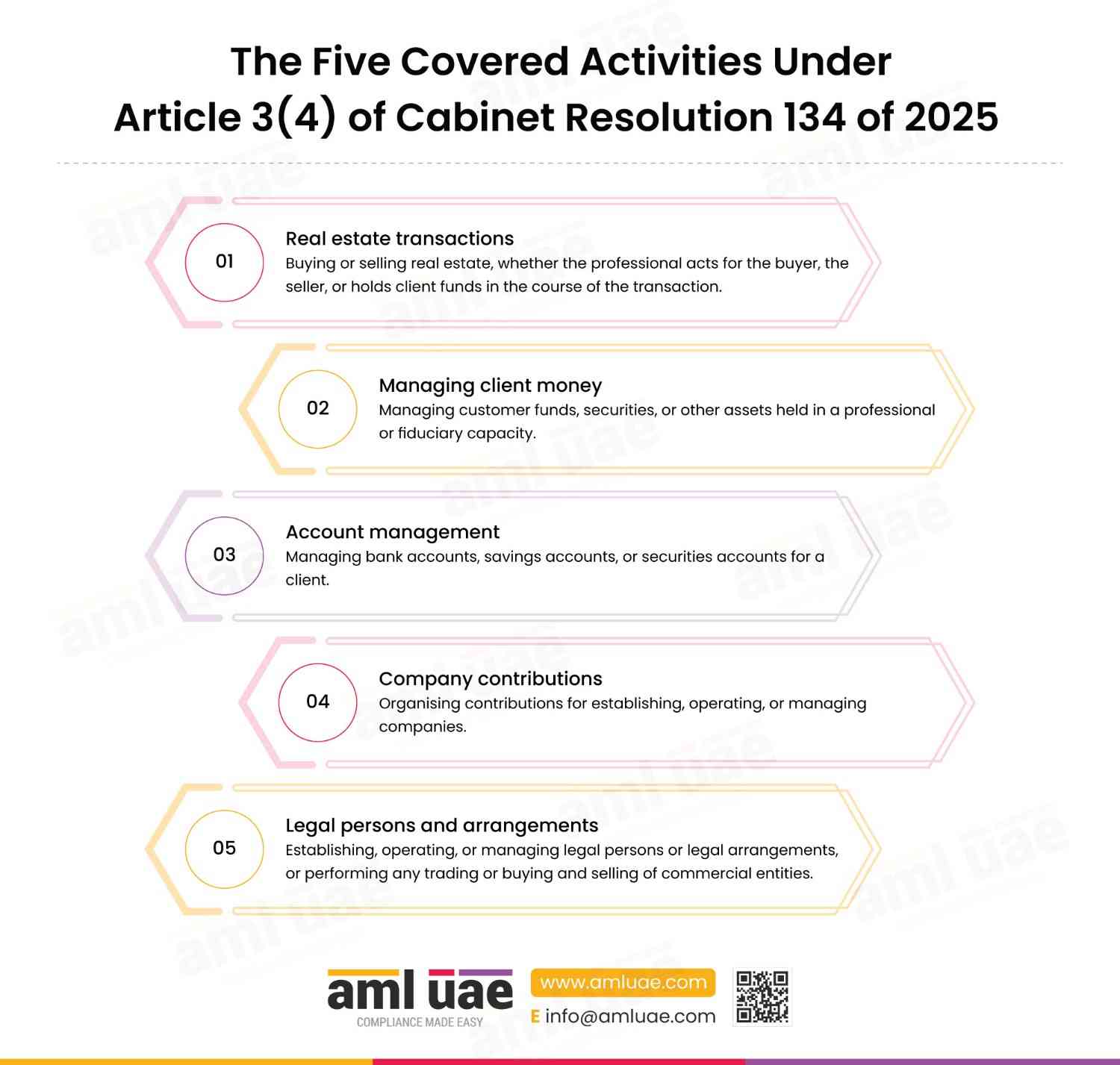
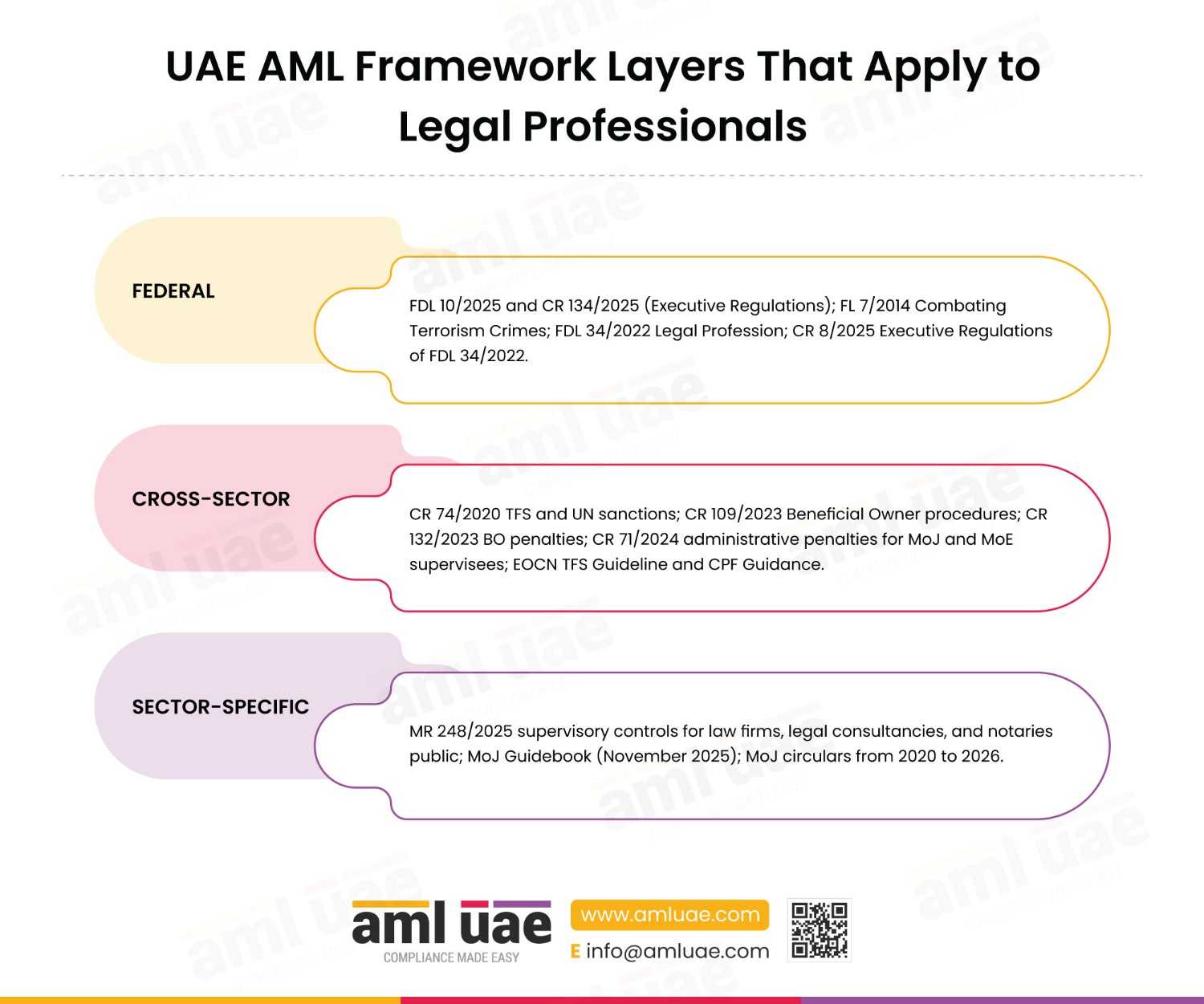
Reach Out to Pathik