
A detailed analysis of the AML/CFT requirements for lawyers, notaries, and legal professionals in the UAE

Pathik Shah

Last Updated: 03/30/2026

Table of Contents

Protect your business with reliable and effective AML strategies with AML UAE.

AML Requirements for Lawyers in the UAE: Key Takeaways

  • Lawyers, notaries, and legal professionals in the UAE, classified as DNFBPs, are subject to the prevailing AML/CFT/CPF framework, which includes:
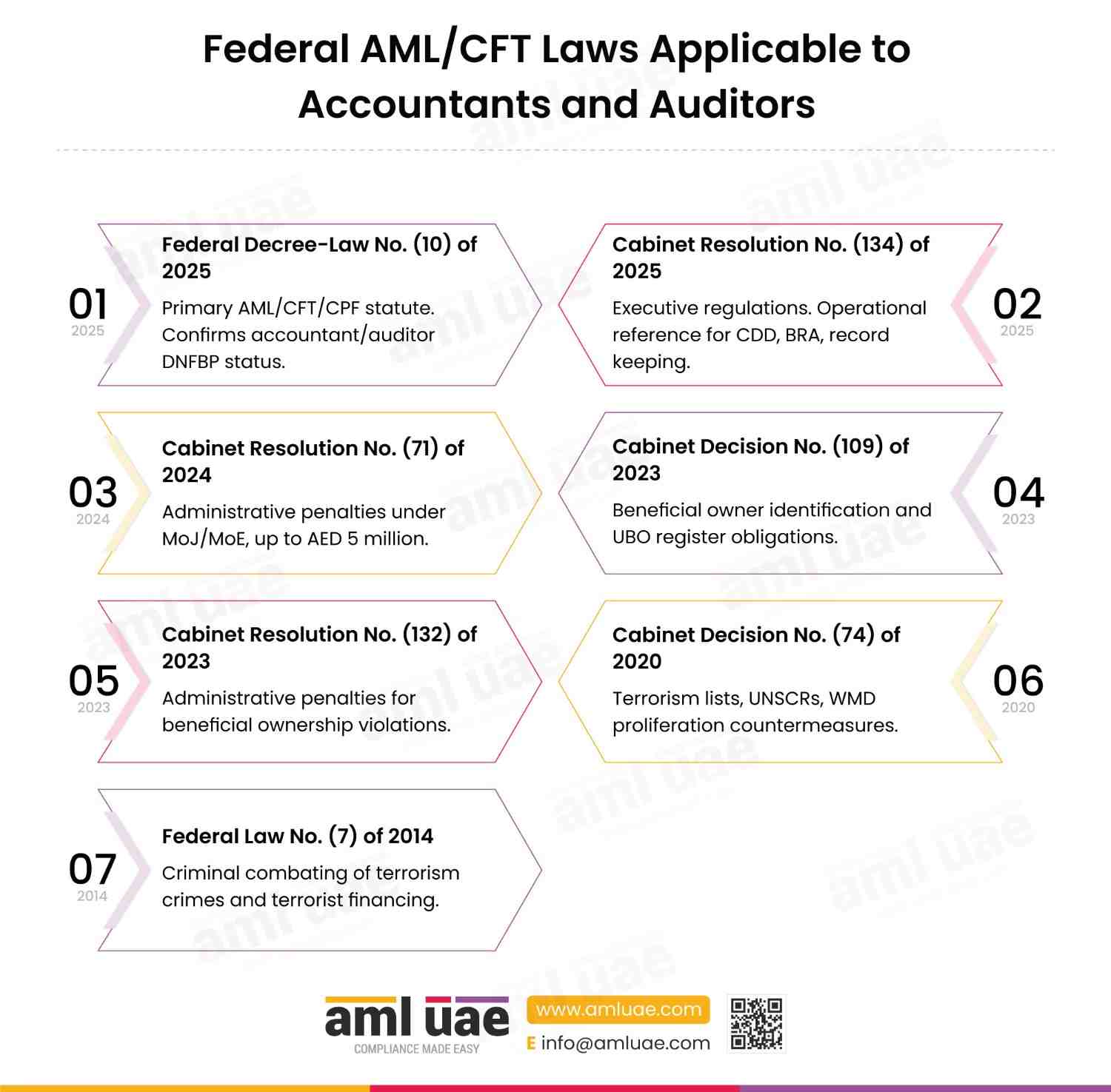
    • Federal Decree-Law No. (10) of 2025 and Cabinet Resolution No. (134) of 2025
  • Lawyers, notaries, and legal professionals in the UAE are supervised by the Ministry of Justice (MoJ), which includes:
    • Regulatory oversight and inspections
  • AML obligations only apply when legal professionals engage in “covered activities, such as managing client funds, real estate transactions, or company formation, making scope identification a critical first step in compliance.
  • Legal professionals must implement a risk-based AML program, including:
    • Client and firm-level risk assessments
    • Customer Due Diligence (CDD) and Enhanced Due Diligence (EDD)
    • Beneficial ownership identification
    • Ongoing transaction monitoring
    • Suspicious Transaction Reporting (STR) to the FIU
    • Sanctions and PEP screening
  • 2025 and 2026 regulatory updates provide emphasis on ensuring:
    • Inspection readiness and audit trails
    • Documented risk assessment methodologies
    • Alignment with FATF high-risk jurisdiction updates
    • Integration of counter-proliferation financing (CPF) controls
  • Lawyers and legal professionals found noncompliant can face severe regulatory action, including:
    • Financial penalties
    • License suspension
    • Practice ban
    • License revocation

When do AML/CFT and CPF Regulations Apply to lawyers, notaries, and legal professionals in the UAE?

AML obligations apply to legal professionals in UAE only when they engage in “covered activities”, including:

  • Purchase and sale of real estate
  • Managing customers’ bank accounts, savings, or securities accounts, creating, operating, or managing legal persons
  • Management of customer’s funds
  • Organising contributions for the establishment, operation, or management of the company
  • Selling and buying commercial entities

In simple words, not all legal services and advisory falls within the ambit of AML/ obligations, AML compliance is only triggered when lawyers engage in specific financial or transactional activities defined under UAE AML/CFT and CPF regulations.

Lawyers, notaries, and legal professionals come under the purview of AML obligations only when they carry out certain “covered activities” or services. It is therefore important to know when AML/CFT and CPF regulations apply to lawyers and legal professionals, i.e., so that they can ensure adequate AML/CFT and CPF compliance.

AML Legal Framework for lawyers, notaries, and legal professionals in the UAE

Core AML Legislation

Regulatory Updates (2022-2026)

These regulatory developments in the legal sector reflect a shift towards stringent enforcement, increased supervisory oversight, and a significant emphasis on proactive risk management.

Supervisory Authority

In the context of lawyers, notaries, and legal professionals or law firms licensed in UAE, other than Abu Dhabi Global Market (ADGM) and Dubai International Financial Centre (DIFC), the Ministry of Justice is the AML supervisory authority.

AML Requirements for Lawyers in UAE

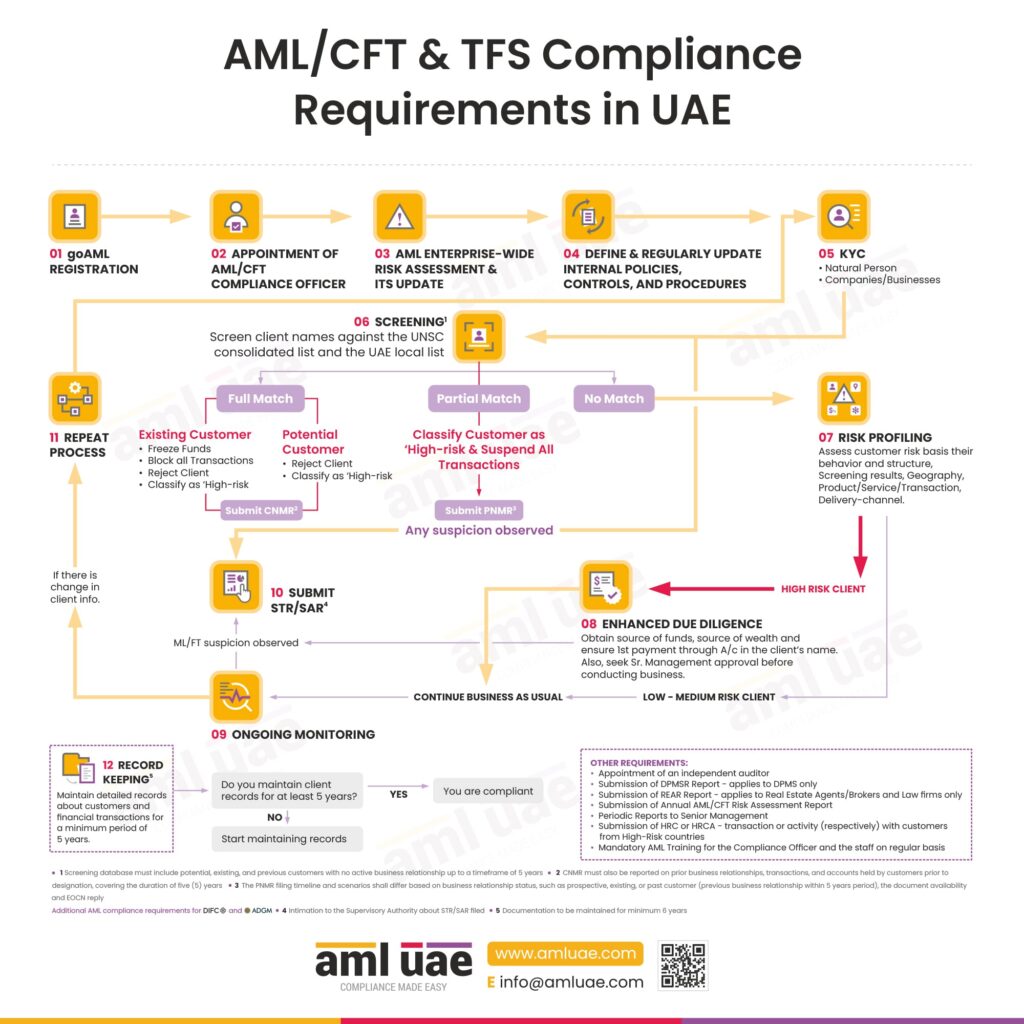
Lawyers operating in the UAE must comply with AML/CFT and CPF obligations, such as:

What Lawyers Must Do to Comply with AML Obligations

In order to ensure AML compliance, lawyers, notaries, and legal professionals in the UAE must formulate and implement a structured methodology based on a risk-based approach that requires continuous risk assessment, verification, monitoring, and reporting across the practice and client lifecycle.

  • Conducting Risk Assessment at the Firm Level: Identifying, evaluating and understanding the inherent ML/TF and PF risks associated with the business is a must for lawyers, notaries, and legal professionals, assessing ML/TF and PF risks on a practice/business level.

Lawyers must be specifically aware of the ways illicit money can enter their ordinary course of business. The entry or placement of illegal funds may be from the client’s side, transaction type, or geography. This understanding will enable the legal practitioner to be careful before taking up any work.

  • Performing Customer Due Diligence (CDD/EDD): Lawyers and notaries must implement simplified or enhanced due diligence measures based on customers’ low or high risks, respectively.
    The client’s risk may also vary based on the type of transaction, which may require an update on the due diligence measures.

With all this information about the client, lawyers can prepare a risk profile and allocate a risk rating. At timely intervals, review and update this information in proportion to their risk rating.

  • Monitoring Client Activity and Transactions: Another essential consideration is monitoring the transactions and relationships with clients. This monitoring ensures consistency and alignment between the information lawyers have about the client and the type of transactions. Any unusual nature of inconsistency will alert lawyers at the right time to take relevant actions.
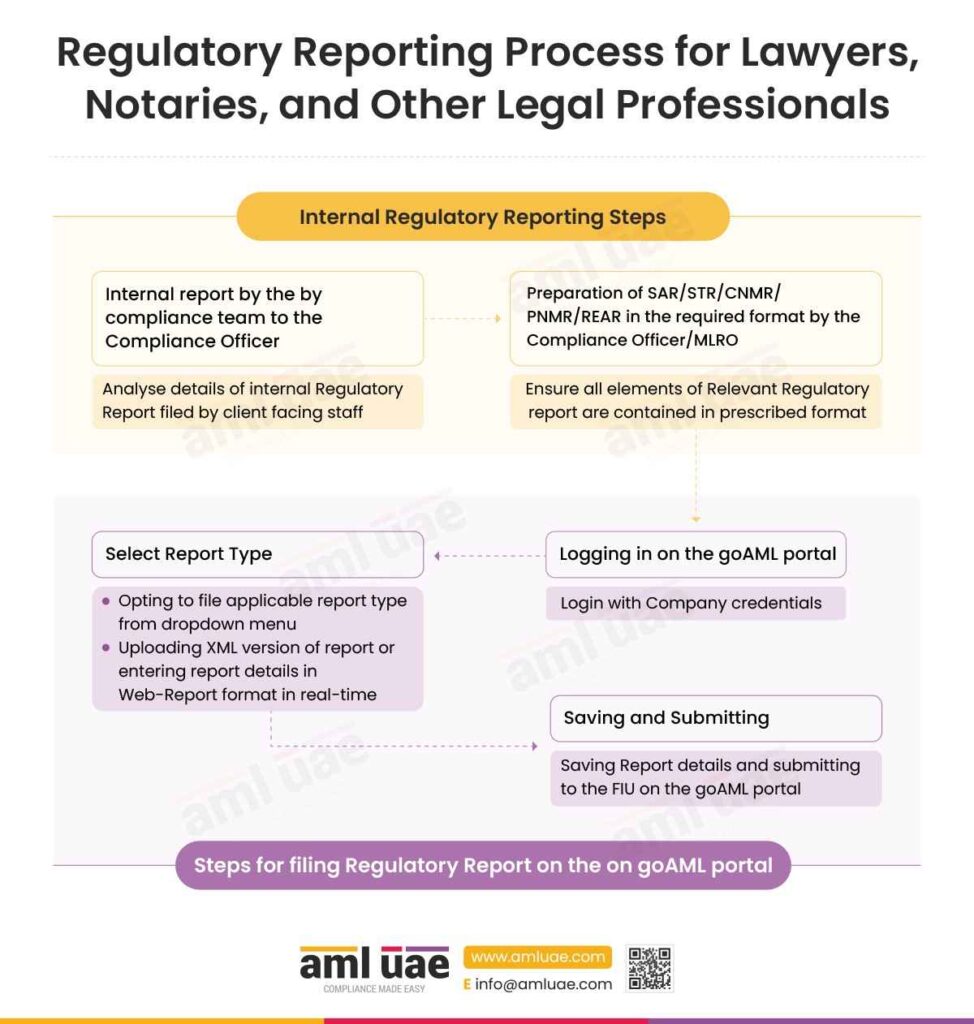
  • Ensuring Regulatory Reporting: Lawyers, notaries, and all legal professionals and practitioners must report any suspicious transaction or activity indicating potential ML/TF or PF risks to FIU. They must provide all relevant supporting information to the authority for further investigation. Adequate internal policies related to this best practice help legal professionals to comply with it.
  • Maintaining Adequate AML Records: Legal professionals must document and save all the compliance measures taken and activities performed for future reference and inspection readiness.

Where Lawyers Face ML/TF and PF Risks

Due to the inherent nature of legal services, certain activities and client behaviours present higher exposure to ML/TF and PF risks. The UAE’s National Risk Assessment (NRA) identifies Professional Money Laundering (PML) as one of the highest threats where criminals target legal professionals to create complex structures and legal arrangements to gain a veneer of respectability while laundering illicit funds.

High Risk Legal Activities

Lawyers, notaries and legal professionals are exposed to high ML/TF and PF risks, and are subject to AML obligations when they step beyond general legal advisory and prepare, conduct, or execute financial transactions on behalf of their clients relating to the following “covered activities” referred to above.

Types of Money Laundering Red Flags

  • Client Behaviour Red Flags
    • Concealing identity: The client actively avoids personal contact without sufficient cause, insists on using intermediaries for all transactions, or uses informal representation such as family or close associates acting as nominee shareholders with the intent to obscure the identities of true Ultimate Beneficial Owner (UBO) without justifiable reason.
    • Refusing Documents: Clients showcasing reluctance or inability to provide personal information, refusal to clarify their sources of wealth or supply the standard documentation required to facilitate and conclude transactions. This also includes instances of customers resorting to providing falsified, forged, or counterfeit documents.
  • Transaction Red Flags
    • Unusual Funding: The transaction involves an unexplained influx of large sums of cash, especially when used as collateral rather than direct payment, third-party funding with no apparent nexus or legitimate explanation, or private loans lacking supporting documents or regular interest repayments
    • No Business Rationale: The prospective transaction or proposal for the same appears entirely incompatible with the client’s socio-economic, educational, or professional profile. It may also include the client insisting on shortcuts or loopholes or exceptionally expedited processing, while offering to pay substantially higher fees than usual without a legitimate reason.
  • Structural Red Flags
    • Complex ownership changes: The business relationship shows frequent or inexplicable changes to the ownership, management, or beneficiaries of the client, especially when the lawyer is not notified in a timely manner or when last-minute changes are made to the identity of the parties before a transaction is completed.
    • Multiple jurisdictions: The client insists upon creation of a complex web of legal persons or arrangements spanning multiple countries, often involving offshore entities, tax havens, or jurisdictions with strict secrecy laws specifically designed to divert financial flows, obscure the money trail, and disguise beneficial ownership.

Beyond establishing and implementing operational control measures, AML regulations in the UAE require lawyers, notaries, and legal professionals to also establish a structured governance framework that ensures ongoing compliance and inspection readiness.

Save yourself from non-compliance penalties

By hiring AMLUAE for AML/CFT compliance

AML Governance and Internal Controls

  • Compliance Officer: Lawyers, notaries, and legal professionals, when engaging in covered activities, are required to appoint an independent, management-level officer to oversee AML controls and serve as the firm’s primary liaison with the Ministry of Justice and the Financial Intelligence Unit (FIU)
  • Documented AML Framework: Legal professionals are required to maintain and continuously update risk-based AML/CFT, and CPF policies, procedures, systems and controls to mitigate ML/TF and PF risks specifically arising from the firm’s covered busine

Download Free AML Policy Template for lawyers, notaries, and legal professionals and practitioners

  • Management Oversight: Senior Management within the law firms or lawyers or notaries working independently, without a firm structure, must approve AML/CFT and CPF policies, establish their practice’s risk appetite, allocate adequate resources and assign clear accountability and delegation.
  • Independent Audit & Review: Legal professionals are required to conduct periodic, independent evaluations that are internal as well as external, to test the effectiveness of the firm’s AML framework and remediate control gaps identified.
  • Regulatory Inspection Readiness: Lawyers are required to securely retain all risk assessment methodologies, outcomes, Customer Due Diligence (CDD) files and transaction records for a minimum of five years to ensure prompt responses during supervisory inspections.

Penalties on Lawyers for AML Non-Compliance

Supervisory Authorities may issue warnings, mandate submission of periodic remediation reports, or appoint a temporary supervisor to oversee the legal professional’s compliance.

Administrative Penalties

  • Financial penalties: Fines of not less than AED 10,000 and up to AED 5,000,000 for each individual violation, and these fines can be applied incrementally if the legal professional repeats the same violation within a year.
  • License suspension: The supervisory authorities, upon coming across violation, can suspend or restrict the activity or profession for a specific period determined.
  • Practice ban: Lawyers, Notaries, and legal professionals may also be subject to a practice ban, preventing them from engaging in the legal sector for a specified period. Authorities may also suspend or restrict the powers of specific directors, partners, or executive personnel proven responsible for the compliance failure
  • License revocation: In the event of systemic non-compliance, complete revocation of legal license may also be directed.

Criminal Sanctions

  • Failure to Report: If lawyers, notaries, and legal professionals intentionally or through negligence fails to report a suspicious transaction to the FIU (in cases where the statutory professional secrecy exemption does not apply) then they are liable to imprisonment and a fine ranging from AED 100,000 to AED 1,000,000.
  • Tipping Off: If a lawyers, notaries, and legal professionals intentionally or unintentionally warns their client that an SAR/STR is underway, they can face a minimum of six months in prison and a fine between AED 100,000 and AED 500,000.
  • General Violations: Violation of any other provisions of AML/CFT and CPR Decree-law can lead to imprisonment or a fine of between ED 10,000 and AED 100,000

AMLUAE makes

your business less risky and more compliant

How Lawyers Can Implement AML Compliance Effectively

  • Risk Assessment Execution: lawyers, notaries, and legal professionals must adopt a risk-based approach to understand their ML/FT risks and implement relevant measures. These risks will be different and unique for each firm or individual. The chances depend on the type of services, geographies of operation, and client base of the legal practitioner.Before commencing any business relationship, lawyers are required to conduct a risk assessment of the client. For this, they may consider national reports or sectoral reports undertaken by supervisory authorities. For instance:
  • Policy Implementation: Lawyers, notaries, and legal professionals need to focus on developing and implementing policies and procedures for the company’s operations. These policies, procedures, and internal controls must manage the risks that the business faces. These controls, policies, and procedures must be:
    • Applicable to all branches, subsidiaries, departments, and functions of the company
    • Reviewed and approved by the management
    • Reasonable, effective for the identified risks, and consistent with the results of their risk assessments. 
  • Training programs: Lawyers, notaries, and legal professionals in the UAE, in order to ensure the effectiveness of ML/TF and PF risk assessment and mitigation measures deployed, must ensure that their employees have adequate knowledge and understanding of risks and awareness of the internal procedures to mitigate such risks.

Conclusion

lawyers, notaries, and legal professionals Legal professionals carry out certain activities that have higher vulnerability to ML/FT risks. They are at increased risk, whether they give tax advice, facilitate property transactions, represent clients in disputes and mediations, or act as intermediaries. Financial criminals take advantage of this vast range of services to engage in money laundering and terrorism financing.

So, they need to be careful about their entity’s risk exposure and employ the above requirements. UAE has categorized them in the DNFBPs list and expects regular compliance with the AML/CFT law provisions. Such compliance with the national AML/CFT requirements will enable them to keep themselves safe from money laundering risks.

To plan and implement any of these measures, you can also take the support of AML consultants in the UAE. A professional AML consultant will be better equipped to help lawyers, notaries, and legal professionals legal professionals and practitioners with suitable, relevant measures against money laundering. The consultant will ensure that industry-specific steps are taken in the fight against money laundering and terrorism financing.

Engage with AMLUAE

to achieve AML/CFT compliance

Role of AML UAE

AML UAE is a leading AML compliance services provider in UAE. We help lawyers, notaries, and legal professionals you with fulfilling all the requirements for AML and CFT in UAE. Our spectrum of AML compliance services is not restricted to national boundaries, but we also make sure that lawyers, notaries, and legal professionals you comply with the global regulations of AML. 

We can help you with:

  • Creating firm-specific AML policies, procedures, internal controls, best practices, and guidelines for lawyers, notaries, and legal professionals your smooth business operations
  • Setting up an expert AML compliance department for your firm that can handle all AML-related activities
  • Selecting the most effective and appropriate AML software for lawyers, notaries, and legal professionals your business needs to ensure AML compliance
  • Helping you in filing and submitting annual AML/CFT risk assessment reports with the UAE government
  • Conducting training for lawyers, notaries, and legal professionals your employees in handling KYC, screening, risk profiling, CDD, EDD, and filing of STRs

Frequently Asked Questions (FAQs)

Here are a few frequently asked questions when it comes to the need and importance of sanction and PEP screening in the customer onboarding process.

Is it compulsory to have a compliance team in your company?

It is a good practice to appoint an AML compliance team in your company that will take care of the compliance. The team will assess the risks, implement an AML/CFT compliance program, and execute CDD measures. If you do not wish to appoint an AML team internally, you can take the services of AML consultants who will help you manage all these activities. 

Legal professionals are required for the transfer of property by law or by market practice. Money launderers and financial criminals invest their illicit money in property. They do this by concealing the identity of the source of funds. They may also hide the identity of owners by using false identities. So, legal professionals must be careful when engaging in such real estate transactions. They must carry out due diligence measures for the party they are representing and the transaction. 

Add a comment
Share via :

About the Author

Pathik Shah

FCA, CAMS, CISA, CS, DISA (ICAI), FAFP (ICAI)

Pathik is an ACAMS-certified AML consultant specialising in governance, risk, and compliance for regulated entities in the UAE. He brings over 28 years of experience, with 1,000+ hours of AML training and 200+ advisory engagements across DNFBPs, VASPs, and FIs. He supports businesses in aligning with AML/CFT requirements from the CBUAE, DFSA, MoET, MoJ, VARA, CMA, FSRA, and FATF. Known for translating complex regulations into audit-ready procedures, Pathik enables operational clarity and compliance readiness.

Reach Out to Pathik

The Complete Guide to the Ultimate Beneficial Owner Verification

Pathik Shah

Table of Contents

Protect your business with reliable and effective AML strategies with AML UAE.

Complete Guide to the UBO Verification: Key Takeaways:

  • Cabinet Decision No (109) of 2023 On Regulating the Beneficial Owner Procedures, calls for corporate entities in the UAE to maintain an accurate and complete register of beneficial owners
  • Cabinet Decision No.(132) of 2023 contains provisions on fines and penalties for violation of the Cabinet Decision No. (109) of 2023
  • Businesses need to have well-documented processes and workflows in place to identify and verify UBOs of legal entity customers

Ultimate Beneficial Owner (UBO) Verification

Identifying the Ultimate Beneficial Owners (UBO) when engaging with corporate customers is a key component of the Customer Due Diligence process under anti-money laundering regulations.

The Anti Money Laundering (AML) compliances in UAE are governed by the following legislations:

  • Federal Decree by Law No. (10) of 2025 Regarding Anti-Money Laundering, and Combating the Financing of Terrorism and Proliferation Financing
  • Cabinet Resolution No. (134) of 2025 Concerning the Executive Regulations of Federal Decree-Law No. (10) of 2025 Concerning Combating Money Laundering, Terrorist Financing, and the Financing of the Proliferation of Weapons.

The Federal Decree by Law No. (10) of 2025 and the Cabinet Resolution No. (134) of 2025 require the Designated Non-Financial Businesses and Professions (DNFBPs), Financial Institutions and Virtual Assets Services Providers (VASPs) to adopt a risk-based approach while onboarding a body corporate, foundation, legal entity, or legal arrangement customers.

Let AMLUAE address your money laundering
concerns

While you focus on your core processes

What is UBO (Ultimate Beneficial Owner)?

A legal entity, legal arrangement, foundation or partnership cannot run itself, and so we often get asked what is the meaning of UBO in UAE? One or more natural persons who are ultimately responsible for running any business and enjoying benefits or profits derived from operating such a business. Such a natural person is known as the “Ultimate Beneficial Owner” or UBO.

What are the Ultimate Beneficial Owners as per the UAE Regulations?

As per the UAE regulations, ultimate beneficial owner needs to be identified for ensuring compliance with prevailing AML/CFT laws and the ultimate beneficial owner of a corporate structure is any person owning 25% or more of the shares, controlling 25% or more of the voting rights, or the person exercising ultimate control or influence over the company and its management is termed as UBO.

Reporting entities in the UAE, such as DNFBPs and VASPs, are required to perform adequate due diligence measures to identify the ultimate beneficial owner of a corporate structure, who is a natural person behind the transactions, when engaging with a legal person or legal arrangement. The UBO checks are important to safeguard the business from money laundering (ML) financing of terrorism (FT), and proliferation financing (PF) of weapons of mass destruction risks, attempted behind the corporate veil.

Why is UBO different than shareholder?

A shareholder is someone who holds some percentage (%) of shares in the company. A shareholder can be a body corporate or a natural person. An ultimate beneficial owner of a corporate structure is a natural person who ultimately owns or controls a body corporate and/or the natural person on whose behalf a transaction is being conducted. It also includes those persons who exercise ultimate effective control over a legal person or arrangement.

To conclude, a shareholder may or may not be a natural person, and they may or may not own or control the company. Whereas a UBO is a natural person having ownership or controlling rights over the company. The ultimate beneficial owner needs to be identified for the purposes of ensuring AML/CFT compliance.

UBO Regulations in UAE

Further, the significance of decoding the corporate structure and bringing transparency around the UBO has also been highlighted by the Ministry of Economy in  Cabinet Decision No (109) of 2023 On Regulating the Beneficial Owner Procedures 

  • This resolution overrides the earlier legislation known as the Cabinet Decision No. (58) of 2020 concerning the regulation of Beneficial Ownership Procedures. Thus, the resolution on the UBO procedures mandates the corporates entities in the UAE to maintain complete and updated register of its beneficial owners and furnish the same with the Registrar, ensuring adequate disclosure.

Cabinet Decision No (109) of 2023 was enacted to set forth the benchmark requirements applicable to the registrar concerning the identification of beneficial owners, maintaining registers, and maintaining a database for them.

Further, Cabinet Resolution No. (132) of 2023 sets out the administrative fines and penalties applicable to businesses in UAE for violation of the Cabinet Decision No (109) of 2023, resulting into inadequate disclosure or transparency around the UBOs.

Ultimate Beneficial Owner under AML - KYC and CDD requirements

The provisions of the Federal Decree by Law No. (10) of 2025 requires businesses in UAE, particularly the DNFBPs and VASPs to adopt a risk-based approach while assessing the ML/FT and PF risk arising out of conducting business with legal entities or legal arrangements.

As a part of risk-based assessment, DNFBPs and VASPs are required to identify the natural person who is/are the UBO of the legal entity. The ultimate beneficial owner needs to be identified for ensuring alignment with the AML/CFT and CPF framework of a DNFBP or VASP. Identifying and verifying the UBO can be done according to the Know Your Customer (KYC) and Customer Due Diligence (CDD) procedures set within the business

UBO International Standards

The UAE AML/CFT and CPF laws are enacted in alignment with the international standards laid down by the Financial Action Task Force (FATF) as UAE is a signatory of United Nations (UN).

The Cabinet Decision No (109) of 2023 specifies that the Ministry of Economy shall share the data of Beneficial Owner’s Record and the Register of Partners or Shareholders (as mandated under the cabinet decision) with the relevant authorities of countries with whom international cooperation is established. It shall facilitate the exchange of data and information by providing and obtaining data pertaining to UBOs with and from their foreign counterparts.

Step-by-Step Process for Identification and Verification of UBO for AML Compliance

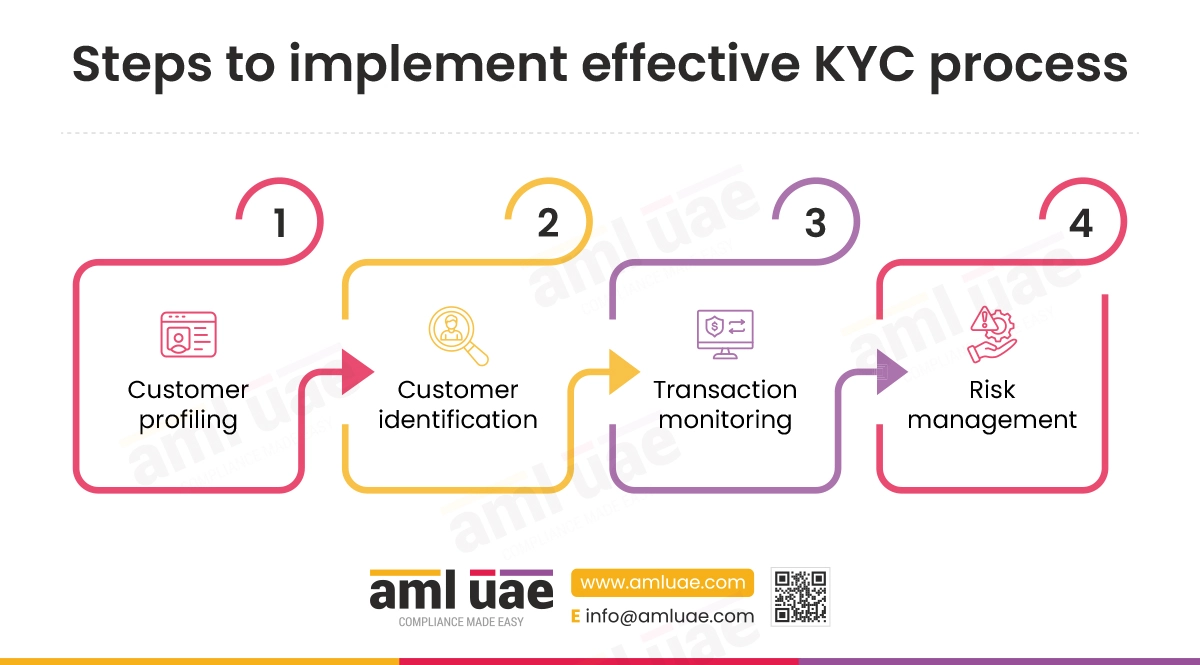
Ideally, the KYC and CDD procedure for identifying and verifying the UBO requires taking the following steps, which are unique from a case-to-case basis:

1. Obtain the Legal Entity/ Legal Arrangement Documents

The first step of identifying UBO starts with the collection of Legal Entity/ Legal Arrangement documents which helps in establishing the ownership or controlling structure of the entity/legal arrangement, such as:

  • Organisational structure;
  • Memorandum of association;
  • Shareholders agreement/partners register;
  • Partnership Deed;
  • Register of senior management/ governing body;
  • Charter and documentary evidence of the Foundation/ regarding the appointment of the guardian or any other natural person who may exercise powers upon the foundation;
  • Trust deed and documentary evidence of the trustee’s appointment or any other person exercising powers for the trust.

Upon document collection, the document needs to be read out carefully to identify ownership structure of the legal entity/ legal arrangement and determine who would qualify as the UBO.

2. Identify Ownership Structure and Percentage

Once any of the abovementioned relevant document is collected, the regulated entity must look out for the details mentioning the name of a natural person having 25% or more of the shares or voting rights of the entity or legal arrangement. If such details are clear, then such individual is to be construed as UBO according to the UAE laws, for applying necessary AML checks and verification measures. The difference between beneficial owner and ultimate beneficial owner is that the UBO has 25% or more of the shares or voting rights of the entity or legal arrangement, while the beneficial owner may hold lesser percentage or diluted control.

How to Identify the Ultimate Beneficial Owner when UBO cannot be identified based on shareholding threshold?

If in an event that no natural person owns 25% or more of the shares/voting rights, then a natural person with the controlling right  (This could be accomplished through a control chain or by having the power to appoint or remove the majority of the company’s management) over the entity, including the management’s decision shall be considered as a UBO.

If in any event, the shares/voting rights of a legal entity are held by another legal entity/entities, then UBO of such another entity must be identified by looking into the company documents and decoding the multiple corporate layers. This process needs to be repeated until a natural person having 25% or more of the shares/voting rights, or the ability to influence or exert control over the management’s decision is identified.

It is crucial to identify the UBO structure and know about the individuals who have a stake in the company, directly or indirectly, via another party or jointly with another person.

Under circumstances when the UBO cannot be identified based on the shareholding or controlling rights, the senior management of the entity must be treated as the UBO for the purpose of AML compliance. As it is clear that the difference between beneficial owner and ultimate beneficial owner comes down to the percentage of shares or control held, DNFBPs and VASPs must equip their staff to identify and verify UBOs and document beneficial owner details as well to ensure complete

3. Collection and Verification of UBO Identity Documents

Once the shareholding pattern of a legal entity/ legal arrangement is established and identity of the UBO is ascertained, the process of collection of identity documents of the UBOs must be carried out. The following details need to be collected from the UBOs:

  • the full name as specified in the identification card (including alias),
  • date of birth,
  • nationality,
  • legal domicile,
  • current residential address, other than post office box,
  • place of birth; and
  • percentage of shareholding or the designation in the entity.

The DNFBPs and VASPs are required to ensure that the information collected is reviewed and verified against an original, current, and valid passport or similar documents, such as:

  • an official government identification document issued by a competent government authority in digital form,
  • a valid identification card or travel document,
  • any official identification document that includes a photograph,
  • a UAE pass for verifying the addresses of individual customers who are residents, of the UAE.

4. Perform AML/KYC/CDD checks on all persons identified as UBOs

Once the UBO identification details are collected and verified, the DNFBPs and VAPS are required to carry out name screening or sanctions screening of the UBOs to ascertain if the UBO is:

  • sanctioned, under any of the relevant local and international terrorist lists, sanctions lists and watchlists,
  • a politically exposed person (PEP),
  • appears in adverse media checks and has negative information regarding their involvement in ML/FT/PF or predicate offences,
  • have a criminal record.

Following this, in line with the internal AML policies and procedures, the DNFBPs and VASPs must carry out further customer onboarding processes such as:

  • assessing the risk posed by the UBO,
  • assigning UBO appropriate risk rating according to AML/CFT and CPF policies, procedures and controls,
  • evaluating the effect of the UBO’s risk rating on the overall customer risk,
  • applying adequate CDD measures on the UBO and the corporate customer,
  • onboarding Legal Entity/Legal Arrangement as a customer, in line with the Customer Acceptance Policy.

Ultimate Beneficial Ownership and AML Compliance

Automated solutions are the futuristic way to comply with the AML/ CFT and CPF requirements as they make the detection and validation of UBOs a seamless and quick process. AML UAE can help you with compliance with the AML/CFT and CPF requirements.

Check out how to find UBO of a company

Identify UBO to ensure AML Compliance in UAE

FAQs

How do you find the ultimate beneficial owner? 

A UBO is an individual having significant control over the business through shareholding or voting rights. A UBO must have at least 25% shareholding (direct or indirect) in the company, the right to vote, and the right to appoint or dismiss directors/managers. An individual/s holding such control is your UBO.  

Entities in UAE are required to comply with UBO rules. These rules require entities to declare who their beneficial owners are and maintain a register for the same. The declaration of UBO ensures that the entity does not have a relation with money launderers or terrorist organizations and is safe to carry out transactions with.  

‘Knowing your Customer’ is essential to keep oneself safe from financial crimes and money laundering activities. By knowing the ultimate beneficial owners, you can match the list with Sanctions lists, PEPs, and terrorist lists and decide whether to onboard the customer or notify the authorities.  

UBO is a person or persons who owns or controls, whether directly or indirectly, through shares or bearer shares: 

  • 25% or more of the legal person’s share capital or  
  • 25% or more of the legal person’s voting rights 

Yes, the UBO declaration is mandatory for entities in the UAE. Declaration of UBO is essential to know your customers and their legal owners. This information helps you decide whether to enter into a business relationship with them. It is a way to detect money laundering, terrorism financing, and other financial crimes.  

A UBO is the one with ultimate control over the business. They are a natural person who owns or controls, directly or indirectly, at least 25% of the company’s share capital or at least 25% of the voting rights or have the right to appoint or dismiss a majority of the managers or directors.  

The legal person must maintain a Register of Beneficial Owners and must submit the same to the Registrar within 60 days of its registration. Also, if any changes occur in the Register, it must be notified to the Registrar within 15 days of the change.  

To verify the identity of the UBO, obtain any of the identity documents of the UBO, such as Emirates ID, valid passport, driving license, or any other ID issued by the government. Screening of the UBO is mandatory to verify whether the UBO has been listed in any of the sanctions or is a PEP. Also, obtain the details of its shareholding or any other details which qualify the person as UBO.
KYC UBO suggests identification and verification of the identity of the customer’s UBO. This is a critical part of performing KYC for any corporate entity, identifying and knowing the owners and controllers of the organization running the business operations.
As per UAE AML regulations, UBO is the natural person:
– who owns or controls, whether directly or indirectly, 25% or more of the legal person’s share capital or 25% or more of the legal person’s voting rights,
– A person having the power to appoint or remove the majority of the company’s management, or
– In case UBO could not determine any of the above criteria, then the Senior Management would be construed as the UBO of the legal entity from AML perspective.

An ultimate beneficial owner of a corporate structure is a natural person who holds 25% or more of the shares/voting rights

Steps to identify UBO include”

  • Obtaining the legal entity/legal arrangement documents
  • Identifying ownership structure and percentage
  • Collecting and verifying of UBO identity documents
  • Performing AML/KYC/CDD checks on all persons identified as UBOs

Our timely and accurate AML consulting services

For your smooth journey towards your goals

Add a comment

Share via :

About the Author

Pathik Shah

FCA, CAMS, CISA, CS, DISA (ICAI), FAFP (ICAI)

Pathik is an ACAMS-certified AML consultant specialising in governance, risk, and compliance for regulated entities in the UAE. He brings over 28 years of experience, with 1,000+ hours of AML training and 200+ advisory engagements across DNFBPs, VASPs, and FIs. He supports businesses in aligning with AML/CFT requirements from the CBUAE, DFSA, MoET, MoJ, VARA, CMA, FSRA, and FATF. Known for translating complex regulations into audit-ready procedures, Pathik enables operational clarity and compliance readiness.

Reach Out to Pathik

What is Placement in Money Laundering?

Methods of placement in money laundering

Pathik Shah

Last Updated: 03/27/2026

Table of Contents

Protect your business with reliable and effective AML strategies with AML UAE.

Placement in a nutshell:

  • Definition: When criminals introduce proceeds of crime (cash, negotiable instruments, precious metals, precious stones, movable assets, etc.) into the legitimate economy, it is called placement. Placement is the stage in money laundering.
  • Why it matters: It’s the criminal’s first interaction with the legitimate economy, and detection at this stage can prevent potential layering and integration.
  • How it is done: cash deposit, hawala, black-market peso exchange, unlicensed money services, casinos, gambling, prepaid cards, mobile payments, alternative payment methods, money mules.
  • Who is exposed: Banks, money service businesses, lawyers, accountants, corporate service providers, DPMS, VASPs, real estate brokers, etc.
  • What AML UAE does: Assess placement risk in EWRA, redesign AML controls and monitoring scenarios, provide placement-focused training and help submit STRs related to placement.

Placement in Money Laundering

Placement in money laundering refers to the initial step where criminals introduce illicit cash into the financial system. Money laundering is all about hiding the source and nature of the illicit funds to make them appear as if they were obtained from some legitimate activities. The process of money laundering begins with the aim of disguising the original source of the criminal proceeds, and to do so, the illegal funds must be introduced first in the open economy. Placement is the first stage of money laundering where criminals use various methods like gambling, blending of funds, currency smuggling, etc., to introduce proceeds of crime into financial system.

What is Placement in Money Laundering?

The placement stage of Money Laundering is the point at which illegal proceeds first enter the financial system. A person who has received some ill-gotten gains will surely be on the lookout for measures to clean them in order to use them freely without any stipulations from regulators.

So in order to use the funds, the criminal needs to disguise the source of proceeds to appear as the funds to be legitimate. In simple terms, the placement meaning in money laundering is the physical injection of dirty money into legitimate channels.

Money laundering involves a series of transactions to make its detection as difficult as possible. However, money laundering can broadly be classified into three stages. 1. Placement, 2. Layering, and 3. Integration. The placement stage of money laundering involves the physical introduction of cash or other assets derived from criminal activity into the financial system.

Criminals use various placement techniques like structuring, blending of funds, currency smuggling, etc., to commit money laundering.

Definition of Placement in Money Laundering

Placement is the first stage of money laundering, where dirty money is introduced into the financial system. It is the most vulnerable stage, and the chances of a criminal getting caught are the highest. 

The goal of Placement in Money Laundering:

  1. To hide the source of illicit money
  2. To distance the money from its illegitimate source
  3. To introduce dirty money into the financial system

The crimes like corruption, fraud, bribery, kidnapping, illegal arms trade, drug trafficking, smuggling, etc., are committed for money. Criminals obtain illegal proceeds, and then they try to find a way for their disposal without attracting the eyes of law enforcement.

Stages of money laundering-01

Stages of Money Laundering

First: Placement Stage

The placement stage of money laundering is the point at which illegal proceeds first enter the financial system. The money launderer puts unlawful funds into circulation by depositing cash into the bank, executing any transactions to buy any luxury goods or using them in other legitimate businesses. This is the stage where the money launderer gets rid of illegal proceeds by placing them into the legitimate financial system.

The placement stage of money laundering is the most challenging for the launderer as the disposal of illegal proceeds by introducing them into the financial system causes suspicion.

Second: Layering Stage

Layering is the second stage of the three-step process. Under layering, the launderers make numerous transactions to distance the true owner and the source of illegal money, making it harder for the authorities to track. This can typically be as easy as using illegitimate funds to invest in something legitimate so that the funds now appear to be “clean”.  Such funds are then transferred to purchase goods and services, making their detection nearly impossible.

Third: Integration Stage

Integration is the final stage of the money-laundering process. It is the stage where the disguised criminal proceeds are returned to and used by the money launderer, with a legitimate appearance given to the criminal proceeds.

When it comes to terrorist financing, integration is accomplished by distributing funds to terrorists and terrorist organizations.

Methods or Examples of placement in money laundering:

The following placement methods are amongst the most widely documented examples of placement in money laundering:-

  • Smuggling illegitimate cash or liquid monetary instruments.
  • Blending unlawful proceeds with legitimate proceeds, such as illegitimate funds introduced into the cash-intensive grocery business.
  • Repayment of debt using illegal proceeds.
  • Buying stored value cards with illegitimate money.
  • Depositing small amounts into several bank accounts to evade reporting threshold. It is also called smurfing, one of the most common money laundering techniques.
  • Buying foreign currency with illegitimate funds.
  • Cash purchase of a security or insurance.
  • Invoice fraud – over-invoicing or under-invoicing.

However, it is not always the case that criminals resort to the placement stage of money laundering. Criminals can use illegal proceeds for various purposes without resorting to money laundering. Black money can be used to pay salaries to partners in crime, bribery, etc.

The placement stage of money laundering is only relevant if the criminals have to introduce money to the legitimate financial system. If the black money is going to be utilized for other criminal activities, then the placement of funds will not occur.

Businesses prone to the placement of illegal proceeds:

Challenges and risks associated with Placement in Money Laundering

Since criminals use a variety of techniques in the placement stage of money laundering, its detection becomes a challenge for financial institutions and authorities. The AML/CFT laws and regulations require regulated entities to employ various control mechanisms to counter placement in money laundering. Placement has a negative impact on the global financial system as various cross-border financial crimes are committed to facilitate placement in money laundering.

As per the UNODC report, the total amount of criminal proceeds generated in 2009, excluding those derived from tax evasion, may have been approximately $2.1 trillion, or 3.6 per cent of GDP in that year (2.3 to 5.5 per cent). 

Risk Factors for criminals in the placement stage:

  1. Regulated entities consider large cash deposits as a red flag and submit a Suspicious Transaction Report (STR) with the FIU for further investigation.
  2. There are KYC and CDD requirements which require the customers to pass through the ID verification and Due Diligence checks. In high-risk situations, a source of funds and a source of wealth is required.
  3. Regulated entities perform increased scrutiny when they suspect money laundering or terrorist financing, as their goal is to counter illegal money entering the financial system.

Strategies for detecting and preventing placement in money laundering

Law enforcement agencies must keep themselves updated with the new money laundering typologies used by criminals to fight money laundering. The AML authorities need to detect money laundering crimes early to prevent them from getting too complex for their detection. The early detection of money laundering at the placement stage would save a country from harmful socio-economic impact.

AI helps institutions detect money laundering activities at the transactional level. AI systems tend to be simplistic and rule-based; a transaction will be flagged as suspicious and require a human-conducted review to determine if it fails to pass a set of rules outlined by the governing authorities. A proper set of AI tools can also minimize the rate of false positives.

The UAE government has significantly tightened measures for money laundering and financing of terrorism. Since it entered countries under increased monitoring set by global watchdog FATF, they have developed enhanced policies and guidelines for different sectors, especially where financial crime rates are relatively high.

How AML UAE can assist you in detecting and preventing of the placement of illegal funds?

AML UAE provides AML compliance services to Financial Institutions, Designated Non-Financial Businesses & Professions (DNFBPs) and Virtual Asset Service Providers (VASPs) in the UAE.

AML UAE can assist you with performing your AML Business Risk Assessment to understand how your business can be exploited during the placement stage of money laundering and customizing the AML/CFT Policies, Procedures, and Controls to mitigate the risk, including imparting necessary training to effectively implement the AML framework.

Get in touch with us to remain compliant with the AML regulations in UAE.

FAQs About Placement in Money Laundering

What is placement in money laundering?

Placement is the first stage in which illegal proceeds are introduced into the legitimate financial system.

The placement process in the money laundering process is the first step where illegally obtained money, usually through predicate crimes, is introduced by criminals into the economy with the goal of integrating.

Placement is the most dangerous step for criminals because cash movements are heavily monitored, making detection, reporting, and seizure more likely at this stage.

Placement refers to the act of injecting unlawful cash into legitimate financial systems using methods like structuring, smuggling, or cash-intensive businesses.

  • Structuring and smurfing
  • Wire transfer
  • Insurance purchase
  • Gambling
  • Currency smuggling
  • Currency exchange
  • Blending funds
  • Loan repayment

Structuring in money laundering refers to breaking large illicit cash amounts into smaller deposits to avoid detection during the placement stage of money laundering.

Structuring splits large illicit funds into smaller transactions, while smurfing goes further by using multiple individuals or accounts to place those funds into the financial system.

Placement is the first stage of money laundering. Here the black money from a crime is entered into a legitimate financial system.

Placement is the first stage of money laundering, where dirty money gets injected into the legitimate financial system. Layering is the second stage of money laundering, where the source of illegal money is concealed through a series of transactions.

Placement is the most vulnerable stage of money laundering for criminals, as placing large amounts of cash into the legitimate financial system may catch the eyeballs of law enforcement agencies.

Placement is the most vulnerable stage for money launderers as it’s the introduction of illicit funds for the first time into the system. So having an effective red flag indicators list will help mitigate the risks of money laundering in the initial stages itself.

Under Federal Decree-Law No. 10 of 2025, Individuals guilty of money laundering face 1-10 years imprisonment and a fine of AED 100,000 to AED 5,000,000 or the value of criminal property, whichever is greater. Legal entities face fines up to AED 100 million.

The process of putting the criminal proceeds into the legit financial system is construed as the “placement” stage, from where the money laundering activity begins.

Some common placement methods in money laundering.

  • Smuggling illegitimate cash or liquid monetary instruments.
  • Mixing unlawful funds with legal business activities.
  • Repayment of the loan using illegal funds.
  • Buying stored value cards (Debit cards) with illicit money.

Placement is the most vulnerable stage for money launderers as it’s the introduction of illicit funds for the first time into the system. So having an effective red flag indicator will help identify and mitigate the risks money laundering in the very beginning itself.

Yes, several industries are prone to money laundering, especially in the placement stage:

  • Money Exchanges
  • Banks
  • Capital Market
  • Trust and Company Service Providers
  • Lawyers
  • Dealers in Precious Metals and Stones
  • Virtual Asset Service Providers
  • Casinos
  • Art and antique dealers

The money laundering process begins with the placement stage, wherein the proceeds of financial crime are placed into the legitimate economy.

The act of depositing illicit money in a financial institution corresponds with the placement stage of money laundering.

Money laundering is easy to detect at the placement stage. It is the riskiest point for criminals, as AML detection measures such as KYC, adverse media screening, tracing beneficial owner information, and ongoing monitoring are triggered, resulting in SAR/STR reporting and enforcement action by the UAE FIU.

Our Timely and Accurate AML consulting Services

For your smooth journey towards your goals

Add a comment

Share via :

About the Author

Pathik Shah

FCA, CAMS, CISA, CS, DISA (ICAI), FAFP (ICAI)

Pathik is an ACAMS-certified AML consultant specialising in governance, risk, and compliance for regulated entities in the UAE. He brings over 28 years of experience, with 1,000+ hours of AML training and 200+ advisory engagements across DNFBPs, VASPs, and FIs. He supports businesses in aligning with AML/CFT requirements from the CBUAE, DFSA, MoET, MoJ, VARA, CMA, FSRA, and FATF. Known for translating complex regulations into audit-ready procedures, Pathik enables operational clarity and compliance readiness.

Reach Out to Pathik

Socio-economic impact of money laundering

Socio-economic impact of money laundering feature img

Socio-economic impact of money laundering

Table of Contents

Protect your business with reliable and effective AML strategies with AML UAE.

Socio-economic impact of money laundering

  • Money Laundering has severe social and economic consequences at the national as well as global level
  • Its socio-economic impacts include weakened financial systems, increasing crime rates, disruption of economic stability, particularly harming developing countries, key impacts include:
    • Increase in the number of criminal activities and corruption, enabling criminal networks to establish foothold in the mainstream economy
    • Weakened financial institutions, damaging credibility and stability of banks and financial markets
    • Reduced foreign direct investment due to reduced global trust
    • Economic instability distorting capital flows, exchange rates, and resource allocation
    • Loss of tax revenue, encouraging tax evasion and informal economic activity
    • Reputational damage to countries, leading to sanctions and isolation risks
  • Significant social consequences include:
    • Shift of economic power to criminal syndicates
    • Increased government spending on enforcement and welfare
    • Reduced public trust in institutions
  • Significance of AML compliance has never been more important as it helps prevent financial crimes, detect and report wrongdoers, supports economic growth, strengthens institutions and promotes transparency.

Socio-economic impact of money laundering

Money laundering is a crime that involves occupying money through illegal means. Corrupt anti-money laundering regimes in various countries allow terrorists and money launderers to use their financial gains in order to expand their criminal pursuits and expand their unlawful purposes and encourage many illegal activities like corruption and drug trafficking.

Although terrorist financing and money laundering can occur in any part of the world, it has particularly many social and economic consequences for developing countries. The developing countries are more susceptible to disruptions from the effects of money laundering, on the economy having significant social and economic implications due to fragile financial systems. This article talks briefly about the socio-economic impact of money laundering.

Social impact of money laundering

The effects of money laundering on the economy have  dramatic repercussions when it comes to economic and social consequences of money laundering. But even society bears the repercussions of money laundering activities. Generally, money laundering allows criminals or launderers to expand their operations deliberately.

This exponentially increases the cost that the government has to bear due to enhanced law enforcement and the need to invest in the healthcare sector and public welfare in order to combat the negative consequences.

Money laundering transfers the economic power from the citizens, government, and the entire market to money launderers or criminals.

Social Impact of Money Laundering

Money laundering can cause a virtual takeover of the political party in power. Overall, money laundering activities arise pretty dynamic and complex challenges to the world community.

As a preventive measure, the government reduces the overall public spending in order to expand the spending on AML regulations, resulting in the ordinary citizens getting affected dramatically.

Compliance. Trust. Transparancy

Customized and cost-effective AML compliance services to support your business always

Economic impact of money laundering

Money laundering activities dramatically affect the Financial Institutions (FIs) and Designated Non-Financial Businesses and Professions (DNFBPs), critical for economic growth. Activities related to money laundering promote corruption and crime that slow down the overall development of the economy and intensely reduce productivity in the nation-development sectors such as real estate and infrastructure.

Money laundering is a persistent problem in the world’s major financial markets as well as emerging markets. Effects of money laundering on the economy. As the emerging markets are in the development phase, it becomes easy for launderers to disguise and target such developing markets to expand their spread.

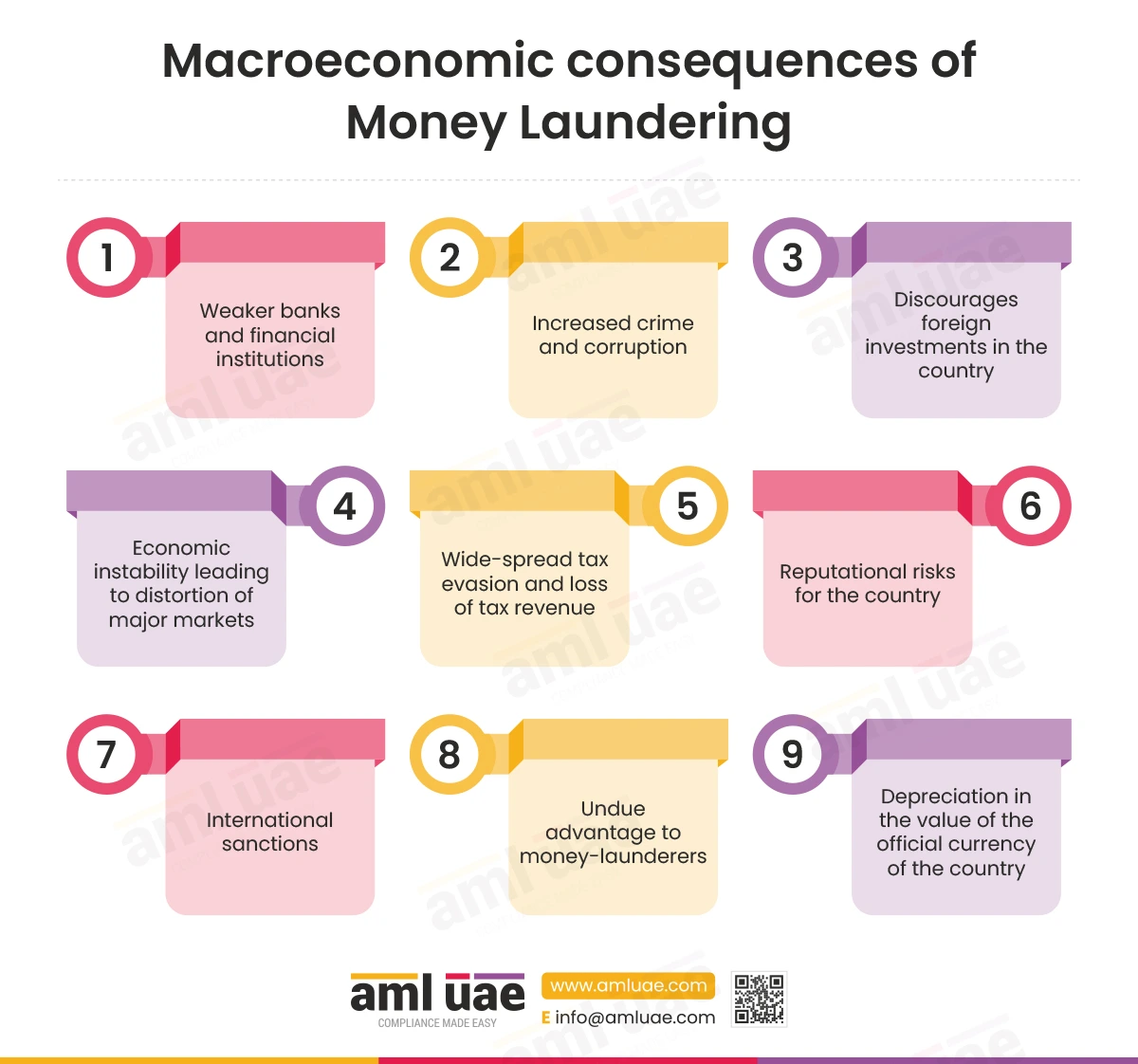
Macroeconomic consequences of Money Laundering

  • Weaker banks and financial institutions
  • Increased crime and corruption
  • Discourages foreign investments in the country
  • Economic instability leading to distortion of major markets
  • Wide-spread tax evasion and loss of tax revenue
  • Reputational risks for the country
  • International sanctions
  • Undue advantage to money-launderers
  • Depreciation in the value of the official currency of the country
Economic Impact of Money Laundering
Furthermore, due to the unpredictable flow of money in the economy without a traceable source, the money demand too changes. This results in dramatic fluctuations in international capital flows and the overall exchange rates. The adverse results of money laundering activities on the economy affect various economic concepts like growth rates, money demand, tax revenues, income distribution, and financial institutions.

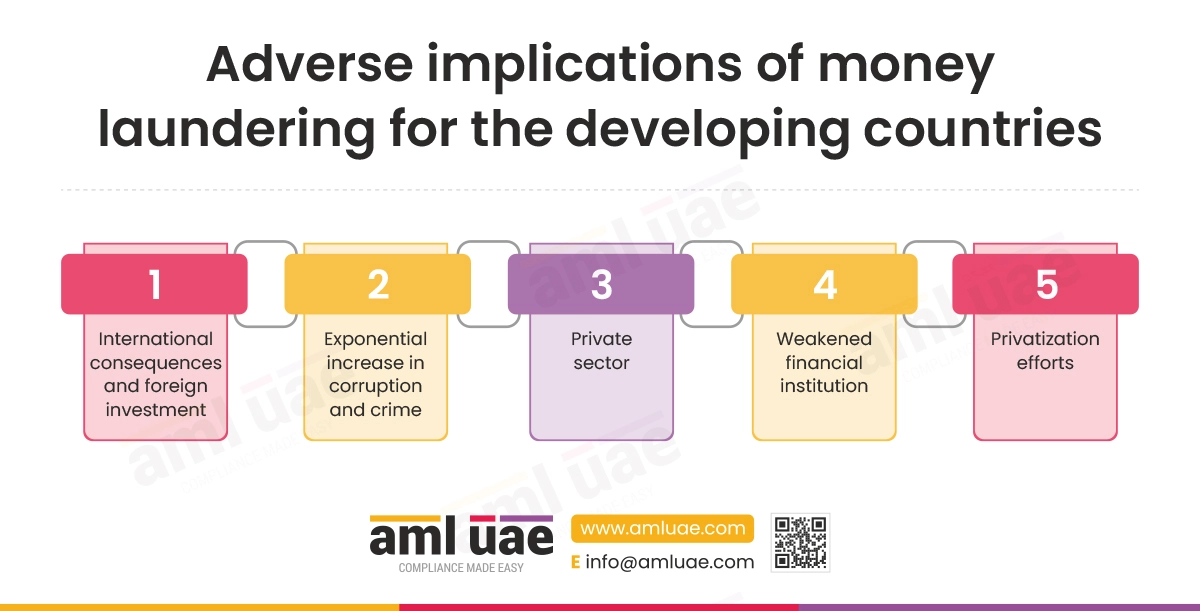
What are the various adverse implications of money laundering for the developing countries

Financing of terrorism and money laundering can happen anywhere, irrespective of the country. However, the economic and social consequences of money laundering   will definitely differ from one country to another, depending on the financial and social stability of the country. For developing countries, the economic and social consequences of money laundering can have a severe social and economic impact because the markets of these countries are relatively small and more prone to disruption from activities such as terrorism and other criminal activities.

In addition to that, money laundering and terrorist financing also have a tremendous adverse impact on countries with fragile financial systems, as weaker social status, economic condition, and security measures aid the mala fide intentions of the criminals for terrorist financing or for money laundering activities.

The extent of the effect that money laundering has on each of the aspects of society and economy varies, as discussed hereunder:

1. International consequences and foreign investment

Any developing country which has a standing for money laundering activities or terrorist funding activities could experience a significant negative impact on their overall growth and development. Foreign financial institutions (FIs) can limit all their transactions with enterprises from money laundering heavens, make transactions more expensive, subject such transactions to extra scrutiny, and stop their overall investments.

Every legitimate business enterprise residing in money laundering heavens can suffer from restricted access to world markets or higher costs because of extra scrutiny of their ownership, control systems, and organizations.
International Consequences And Foreign Investment

As a result, loose implementation of AML and CTF policies in a country may lead to hardships in receiving foreign private investments in such a country’s economy. Furthermore, for developing countries, eligibility for foreign state help is more likely to be severely restricted.

2. Exponential increase in corruption and crime

Exponential Increase in Corruption And Crime

A country that is known as money-laundering heaven is more likely to attract criminals and encourage corruption. Various factors lead to increased corruption and crime. For instance, a weak AML or CTF regulation, weak or selective enforcement of AML/CTF provisions, burdensome seizure provisions, and limited sanctions against money laundering activities. If a country is more prone to criminal activities like money laundering, corruption is bound to happen with high intensity and value.

Criminals or money launderers take the help of bribery before the central institutions of the countries in order to make their money laundering efforts successful.

The counterparties to the bribery could be lawyers, employees, and management of financial institutions, legislatures, accountants, police officials, prosecutors, supervisory authorities, and courts.

Effective and timely practices around anti-money laundering and combating the financing of terrorism in countries can significantly reduce the scope of criminal activities, as such practices would exponentially affect the profit margins from the proceeds of financial frauds or laundering.

3. Private sector

Money launderers utilize shell companies as these companies have distinct commercial existence that might appear legal or legitimate but are actually powered and controlled by the criminals. These shell companies basically mix illegal funds with legal or legitimate funds in order to hide their unfair and unexplainable share of income. Thus, the front face companies are not merely focusing on booking profit but also protecting their illegally occupied sum.

By leveraging the power of shell companies and other investments in legit companies, the proceeds from money laundering can be used to control all industries and sectors of the economies of particular countries.
Weakened Financial Institution
This elevates the probability of monetary instability due to improper allocation of resources. It also facilitates a way to avoid taxation and hence depriving the income of the country.

4. Weakened financial institution

Problem Solving
Money laundering can damage the soundness of the country’s financial sector and the stability of financial institutions like banks. The negative consequences are usually defined as operational, reputational, concentration, and legal risks that are interrelated. Each of these risks comes with its costs associated with it.

For example, when a financial institution experiences reputational risks, they are more likely to lose public trust in the financial institution because of negative publicity.
As a result, customers, depositors, borrowers, and investors end their business relationships with the financial institutions whose reputation has been distorted by allegations of criminal activities like terrorist financing and money laundering.

5. Privatization efforts

Money launderers and criminals threaten the economies of several countries through privatization. All of these criminal organizations may surpass the legitimate buyers of any former state-owned businesses. Moreover, when the illegally occupied funds are utilized or invested in this way, money launderers enhance their potential to conduct even more criminal activities and impact the growth of the country on a negative side.
Privatization Efforts

Compliance. Trust. Transparancy

Customized and cost-effective AML compliance services to support your business always

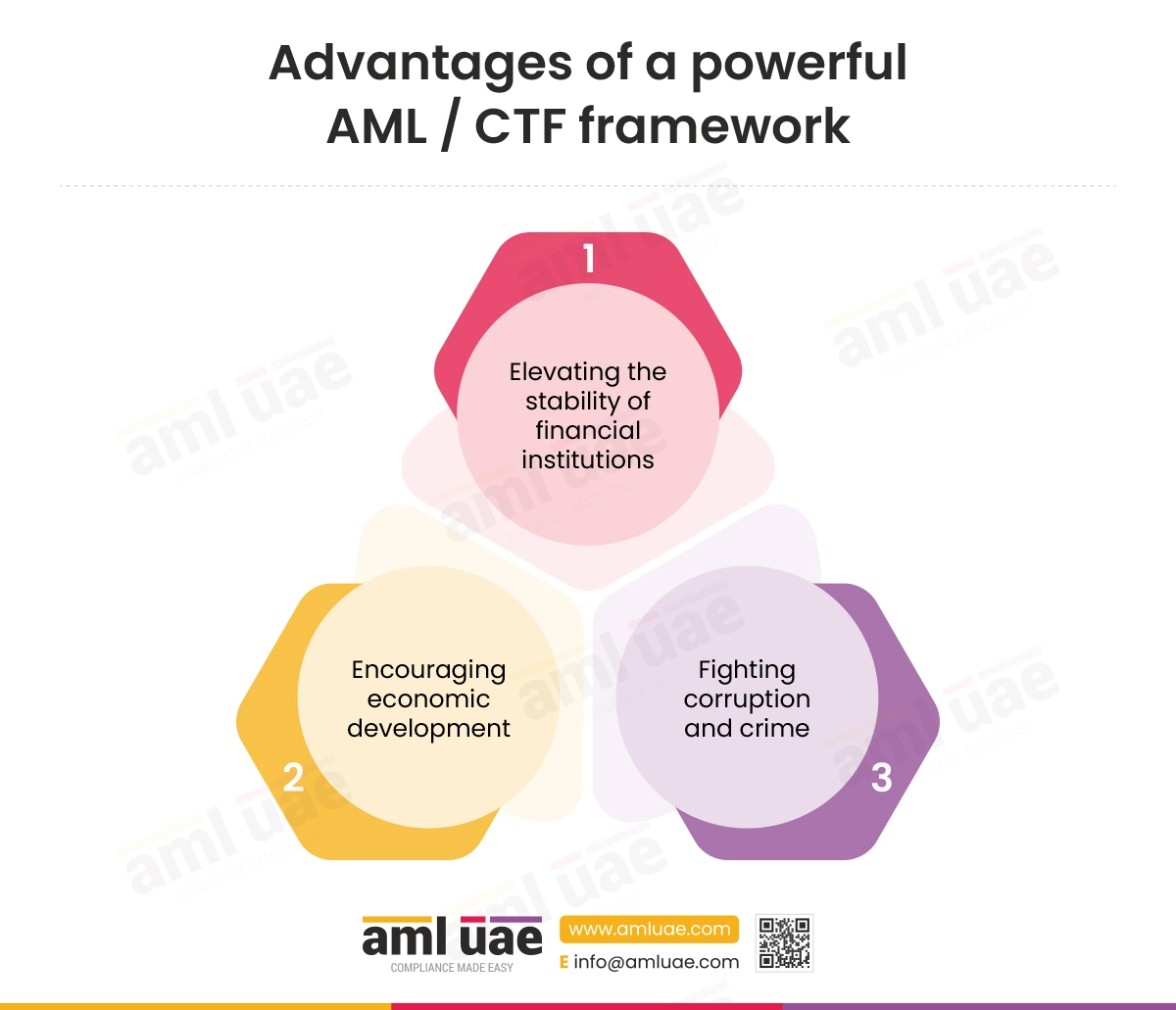
Advantages of a powerful AML / CTF framework

One of the excellent ways to reduce money laundering is to implement AML and CTF programs effectively. Here are a few benefits of having a robust AML / CTF framework:

1. Elevating the stability of financial institutions

Money laundering gives birth to many financial risks, and fortunately, there are sound banking practices that reduce these risks. These risks include the potential for financial institutions and individuals to suffer due to fraud, violation of laws and regulations. Lack of adequate internal controls directly aids the execution of money laundering and other criminal activities. Customer Due Diligence (CDD) processes  and Know Your Customer (KYC) are the essential part of an effective AML and CTF regime. The AML and CTF framework ensure the safe and effective functioning of organizations at higher money laundering risk.

Elevating The Stability of Financial Institutions

The AML and CTF policies or framework make an effective risk management tool. In addition to that, an effective AML and CTF regime also reduces the probability of damage to the organization due to fraudulent activities.

2. Encouraging economic development

Encouraging Economic Development
Money laundering directly impacts the economy of a country in a negative manner. Funds occupied through illegal means take a different path in the country’s economy than the statutory funds. The laundered amount is usually placed in sterile investments to preserve their original value or making them more easily transferable to other productive avenues for further investments. These investments clearly include high-value consumption assets like real estate, jewelry, art, luxury cars, or antiques. These investments simply do not create any additional products for the broader economy.

Not just this, criminal organizations can turn even the productive businesses into vicious investments by operating illegal funds for the sole purpose of laundering instead of profit-making enterprises.
Unlike the investments for legally occupied funds, a country’s response towards sterile investments ultimately reduces the productivity of the entire economy. Therefore, sturdy AML/CTF regimes are hurdles to the execution of criminal intentions in any country’s economy. Furthermore, this allows the investments to be transformed into something productive that responds to the customer’s needs and aids the economy’s overall productivity.

3. Fighting corruption and crime

A steady AML and CFT institutional framework, which incorporates a broad premise for crimes like money laundering, helps in fighting corruption and crime. Money laundering is the crime that facilitates the criminals or money launderers through underlying criminal acts and the laundering of illegally occupied funds. Likewise, an AML and CFT framework incorporates bribery as a primary offense, and its effective enforcement provides a lot fewer opportunities for the concerned person to bribe public officials or to corrupt them in any other manner.

An effective AML and CFT framework regime is a deterrent to any sort of criminal activity.

Fighting Corruption And Crime

Such sturdy regimes make it difficult for the criminals or the money launderers to get benefitted from any of their actions planned amidst the robust AML/CFT regulations. In this context, the confiscation and seizure of the proceeds of money laundering activities are vital to the success of any AML program. Loss of revenues from money laundering activities nullifies the profits and therefore reduces the incentives for criminals to take criminal actions.

Final words

With this, we now understand what social and economic impact money laundering has on the economy of the country and how to overcome or reduce the adverse effects of the same on the economy. For this, AML UAE can help, as an expert, in better implementation of AML/CFT policies in one's organization and contribute towards minimizing the negative socio-economic impact of money laundering activities.

Frequently Asked Questions (FAQs)

Here are a few frequently asked questions about the socio-economic impact of money laundering activities.

What are the effects of money laundering? 

Money laundering’s effects on economies, businesses, and societies are damaging. It promotes crime, drug trafficking, terrorism, and corruption, thereby destroying the growth of economies and societies.  

Money laundering disturbs the economic stability of a country because of the entry of illicit money into the legitimate financial system. Government revenues reduce, due to which the development schemes do not receive enough financing. Also, investors lose confidence in the country, and international trade suffers.  

The effects of money laundering on society are enormous in terms of disturbing the world’s social structure, causing inflation in the product process, rise in corrupt practices, escalation of healthcare costs, and wastage of tax revenues collected by the Government.  

Economic and social consequences of money laundering are devastating and include economic instability, loss of revenues, entry of criminal companies into the economy, liquidity problems, and negative reputation.  

  • Weaker banks and financial institutions
  • Increased crime and corruption
  • Discourages foreign investments in the country
  • Economic instability leading to distortion of major markets
  • Wide-spread tax evasion and loss of tax revenue
  • Reputational risks for the country
  • International sanctions
  • Undue advantage to money-launderers
  • Depreciation in the value of the official currency of the country

Share via :

Add a comment

About the Author

Pathik Shah

FCA, CAMS, CISA, CS, DISA (ICAI), FAFP (ICAI)

Pathik is an ACAMS-certified AML consultant specialising in governance, risk, and compliance for regulated entities in the UAE. He brings over 28 years of experience, with 1,000+ hours of AML training and 200+ advisory engagements across DNFBPs, VASPs, and FIs. He supports businesses in aligning with AML/CFT requirements from the CBUAE, DFSA, MoET, MoJ, VARA, CMA, FSRA, and FATF. Known for translating complex regulations into audit-ready procedures, Pathik enables operational clarity and compliance readiness.

Reach Out to Pathik

What is Proliferation and Proliferation Financing?

What is Proliferation and Proliferation financing

Pathik Shah

Last Updated: 03/24/2026

Table of Contents

Protect your business with reliable and effective AML strategies with AML UAE.

Proliferation and Proliferation Financing: Core Concepts

  • Proliferation involves the manufacture, acquisition, transfer, or use of nuclear, chemical, or biological weapons, their delivery systems, and related dual-use materials.
  • Proliferation financing is most accurately described as a process involving raising, moving, or making available funds or economic resources to support such activities.
  • PF risk arises when financial systems, trade channels, or DNFBPs are exploited to evade TFS, procure sensitive goods, or disguise financial flows.
  • Key red flags include deals with high-risk jurisdictions, dual-use goods, opaque corporate structures, and sanctioned entities.
  • Mitigation requires targeted PF Risk Assessments, appropriate controls, and timely regulatory reporting.
  • PF is a critical compliance risk under AML/CFT and CPF frameworks and applies to Regulated Entities across the UAE.
  • Proliferation financing can be prevented by deploying strong AML/CFT & CPF controls, including KYC, sanctions screening, monitoring, and timely regulatory reporting.

What is Proliferation and Proliferation Financing?

Proliferation Financing is the act of raising, moving, or making available funds or economic resources that enable the development, acquisition, or transfer of weapons of mass destruction (WMD).

In an AML context, proliferation financing means disguising or facilitating financial flows that enable proliferators to procure sensitive materials or technology.

Along with the risk assessment pertaining to money laundering and financing of terrorism, it is obligatory on the part of Regulated Entities to assess the risk associated with “proliferation financing” under Cabinet Resolution 134 of 2025.

  • WMD (Weapons of Mass Destruction) Proliferation refers to the manufacture, acquisition, possession, development, export, trans-shipment, brokering, transport, transfer, stockpiling, or use of nuclear, chemical, or biological weapons and their means of delivery and related materials (including both Dual-Use technologies and goods used for non-legitimate purposes). 
  • Financing of Proliferation or Proliferation Financing (‘PF’) refers to the risk of raising, moving, or making available funds, other assets or other economic resources, or financing, to persons or entities for purposes of WMD proliferation, including the Proliferation of their means of delivery or related materials. 

Thus, proliferation financing is most accurately described as a distinct risk area alongside money laundering and terrorist financing, requiring targeted controls and assessments. Proliferation financing involves the movement of funds to support WMD-related activities, often through complex financial and trade structures.

What are the Stages of Proliferation Financing?

Proliferation Financing usually takes place in 3 stages: 

1. Program fundraising

The initial step in PF involves raising funds to support or facilitate proliferation activities. For instance, state-backed funding, illicit networks, etc.

2. Disguising the funds 

The second step of PF involves concealing or disguising the origin and movement of funds; this stage usually mimics the layering stage of the money laundering process. For instance, using shell companies and carrying out layered transactions. This is the phase of proliferation financing where the proliferator uses several companies in different locations to shroud the flow of money.

3. Procurement of proliferation-sensitive materials and technology  

The third and the last stage of PF involves acquiring proliferation-sensitive goods or technology, which can be used by PF actors to fulfil their motives. For example, purchasing and movement of dual-use goods.

North Korea and Iran are subject to Targeted Financial Sanctions (‘TFS’) to mitigate WMD proliferation, as these countries are a global threat because of their active involvement in developing illegal WMD programs and capabilities. 

Proliferation Financing vs Money Laundering: Key Differences

Differentiating Aspects

Proliferation Financing

Money Laundering


Purpose

Support WMD programs

Conceal illegally obtained funds

Focus

National and global security risk

Financial Crime

Regulatory Measures for Prevention

Targeted Financial Sanctions and Counter Proliferation Finance Compliance

AML Laws and Regulations

Commonly used methods

Trade-based schemes, social engineering, state-sponsored WMD proliferation

Layering and integration

One of the common elements between money laundering and proliferation financing is the attempt made by PF and ML actors to disguise money. IN the context of money laundering, layering is done to disguise the original source of illicit proceeds and the same is done in PF context, at the “disguising of funds” stage, this is the phase of proliferation financing where the proliferator uses several companies in different locations to shroud the flow of money. Proliferation financing involves the movement of funds to support WMD-related activities, often through complex financial and trade structures.

What is Proliferation Financing Risk: PF Risk Explained

Proliferation Financing Risk refers to the potential breach, non-implementation, or evasion of the TFS obligations pursuant to United Nations Security Council Resolutions relating to the prevention, suppression, and disruption of the Proliferation of WMD and its financing. 

Key PF risk drivers include the following:

  • Establishing or continuing a business relationship with sanctioned jurisdictions (e.g., North Korea, Iran)
  • Using front or shell companies to conceal the movement of funds for PF purposes
  • Creating complex trade structures and supply chains to enable procurement of PF-sensitive materials or goods
  • Dealing with procurement and transactions involving dual-use goods
  • Misclassifying or falsifying of trade documentation.

As mentioned above, DNFBPs are required to assess and adopt the measures to mitigate the “proliferation financing risk”.  

Proliferation financing risks arise when individuals or entities exploit financial systems, trade channels, or DNFBPs to evade Targeted Financial Sanctions (TFS) imposed under United Nations Security Council Resolutions. These proliferation financing threats often involve sanctioned jurisdictions, front companies, or complex trade arrangements.

Some examples of proliferation financing risks include the use of front or shell companies to procure dual-use goods, trade transactions involving sanctioned or high-risk jurisdictions, and complex supply chains designed to obscure the true end-user or end-use of goods.

Other common indicators include misclassification of goods, inconsistent trade documentation, routing payments through multiple intermediaries, and transactions linked to industries such as electronics, chemicals, machinery, or logistics where materials may be diverted for prohibited purposes.

An understanding of proliferation risk allows DNFBPs to identify exposure points within their operations. Moreover, conducting a proper PF risk assessment is important for detecting sanction breaches, diversion or misuse of legitimate businesses/funds for illicit proliferation activities.

Examples of Proliferation Financing Schemes

  • Use of shell companies and complex business structures for sanctions evasion and procuring dual-use goods under dormant/non-functional company licenses
  • Trade-based money laundering to disguise shipments of proliferation-sensitive materials
  • Routing payments through multiple jurisdictions to avoid PF detection
  • Mislabelling dual-use goods to bypass export controls.

Industries Most Exposed to Proliferation Financing Risk

  • Accountants: Act as “gatekeepers’ who may unwittingly provide services to prohibited entities or individuals such as PF actors.
  • Financial Services and Banks: Banks and FIs are the primary conduit for conducting transactions
  • Dealers in Precious Metals and Stones: High-value portability and relative anonymity can be used to transfer value overseas
  • Virtual Assets Service Providers: Cryptocurrencies can be heavily exploited to evade sanctions by concealing beneficiary and originator information
  • Trading Companies and Brokers: May end up unwittingly misused as to transmit funds on behalf of their trading partners
  • Shipping and logistics: Vulnerable to being misused for the transport of proliferation-sensitive materials and dual-use goods
  • Trust and Company Service Providers: Can be misused to create complex, multi-jurisdictional shell company structures, often used to hide the identity of end-users in the procurement of proliferation-sensitive materials
  • Lawyers, Notaries, and Independent Legal Professionals: Vulnerable to abuse by clients who seek their services to disguise true beneficiaries of transactions, set up complex legal entities or arrangements, or facilitate the purchase of high-value assets
  • Technology and Electronics: These industries use components that are dual-use goods and proliferation-sensitive material
  • Real Estate Agents and Brokers: Can be misused for the purchase and transfer of value through the purchase and sale of properties to fund PF activities.

Proliferation Financing Red Flags

 Red flags indicating Proliferation Financing are listed below, classified into risk categories and red-flag indicators for each PF risk category.

Proliferation Financing Risk Catagories

Proliferation Financing Red Flags

Geography

Transactions linked to high-risk or sanctioned countries classified by local legislations or global recommendations

Corporate Structure

Use of opaque or complex ownership structures to disguise UBO’s operating behind opaque structures to prevent sanctions evasions

Trade Activity

Inconsistent or suspicious shipping documentation, usually mimics under- or over-invoicing that takes place during Trade-Based  Money Laundering (TBML)

Goods

Dual-use or proliferation-sensitive materials procurement without business rationale or nexus to purpose of transaction or business

Behavior

Transactions inconsistent with business profile indicating any of PF risks

Timely proliferation financing detection relies on recognising these PF red flags and escalating them through internal controls and reporting mechanisms.

Measures to prevent and mitigate Proliferation Financing Risk

DNFBS must implement the ensuing controls aimed at mitigating proliferation financing risks to prevent proliferation financing.

  1. DNFBPs must identify the red flags related to proliferation financing and shall perform the Enhanced Due Diligence(‘EDD’) on the customers categorized as high-PF risk, considering such red flags.
  2. As part of EDD, DNFBPs must collect the information regarding –
  3. DNFBPs must review the customer’s TFS policy to ensure alignment with sanctions compliance.
  4. Before conducting any business transaction with such high-PF risk customers, approval from senior management must be obtained.
  5. DNFBP must have a policy in place to restrict undertaking any transaction with the customer hailing from countries listed for TFS for proliferation financing (i.e., North Korea and Iran).
  6. If any possible PF activities are envisaged for a customer/transaction or the customer is listed as sanctioned, DNFBP must freeze the funds of the customer and should immediately report the same on goAML Portal.

Survey by Executive Office for Control & Non-Proliferation (EOCN)

Executive Office for Control & Non-Proliferation (‘EOCN’) has released a survey to know the awareness about the TFS and Sanction Evasion amongst the reporting entities in UAE.

The EOCN proliferation financing survey highlights regulatory expectations around PF awareness in the UAE. As suggested by EOCN, the survey is performed just to know the understanding of the businesses on the subject and not to investigate the compliance status of the reporting entity. These survey includes questions such as under: 

  • On which countries, the UNSC has imposed the TFS related to Proliferation Financing; 
  • DNFBPs shall freeze the funds of the customer under what circumstances; 
  • For what all parties, a DNFBP is required to carry out screening; 
  • Who all should be made aware about PF guidelines issued by EOCN; 
  • Whether DNFBPs have identified the red-flags related to PF risk; 
  • Whether DNFBPs are aware about the techniques used by the proliferators to carry out PF and evade sanctions; 
  • Understanding related to Sanctions Evasion Technique; 
  • On what all factors, DNFBPs shall carry our PF risk assessment; 
  • What are Compliance Officer’s responsibilities around PF-risk mitigation; 
  • Whether DNFBPs have PF related policies in place and whether trainings are conducted on the said subject. 

These EOCN controls on PF assess understanding of sanctions, red-flag identification, screening obligations, and PF governance frameworks.

This proliferation financing regulatory survey reinforces the importance of embedding PF controls into DNFBP compliance programs.

How to prevent proliferation financing?

Proliferation financing can be prevented by implementing a through a risk-based approach that includes customer due diligence, sanctions screening, transaction monitoring, and reporting of suspicious activities.

  • Customer Due Diligence (CDD) and Know Your Customer (KYC)
  • Enhanced Due Diligence (EDD) for high-risk clients on the basis of risk-based approach
  • Ongoing transaction monitoring
  • Sanctions Screening and TFS Compliance based on EOCN Guidance
  • Reporting of potentially suspicious PF risks to the UAE FIU on the goAML portal by filing SAR/STR/ CNMR or PNMR, as applicable, on case-by-case basis
  • Employee training and staff awareness program pertaining to mitigating PF risk mitigation
  • Conducting PF risk assessment and taking measures to prevent the same.

Proliferation Financing Regulatory Requirements: Across UAE and Global

These UAE legislative requirements were brought forth to ensure alignment with the following global anti-proliferation requirements, such as:

AML UAE at your service 

As required by the UAE authorities and the United Nations Security Council, DNFBPs need to have a PF policy in place to assess and mitigate risk related to proliferation financing, suggested to be integrated with the existing AML/CFT Policy.

AML UAE provides specialised AML services in the UAE, including proliferation financing consulting in the UAE, to help organisations understand PF risks, conduct PF risk assessments, and align their frameworks with the UAE and international requirements. 

FAQs About Proliferation and Proliferation Financing

What is the main reason for the proliferation of nuclear weapons?

The main reason for the proliferation of nuclear weapons is to enhance national security, deter adversaries, protect against external threats, and gain political influence on the global stage.

PF in the context of money laundering refers to the use of financial systems, transactions, or services for the purposes of raising, moving, or concealing funds that support the development or acquisition of weapons of mass destruction (WMD).

The phrase ‘illegal funds” indicates the funds or money obtained by conducting illegal activities such as human trafficking, narcotics supply, bribery and corruption, murder or kidnapping, tax evasion, smuggling, etc. Such illegitimately obtained funds can also be construed as “proceeds of crime.”
Yes, nuclear proliferation threatens international security, as it is more used as a political utility than a security measure. Nuclear proliferation can destroy the country’s demographic and economy in a blink of an eye while paralyzing the coming generation for years.
Yes, nuclear proliferation is an illegal activity, as the use of nuclear weapons is strictly regulated and restricted and cannot be proliferated among the jurisdictions preparing to threaten society and world peace.
Proliferation Financing refers to the various financial activities conducted to develop, acquire, or transfer Weapons of Mass Destruction (WMD) and related technologies and resources.

It involves funding WMD activities and important in AML because such financing poses serious global security risks and is subject to strict UN and UAE sanctions.

It typically involves three stages: raising funds, disguising or moving the funds, and procuring proliferation-sensitive goods or technology.

Key risks include TFS breaches, regulatory penalties, reputational damage, and the possibility of indirectly supporting WMD programs.

Geographic risk increases when transactions involve sanctioned or high-risk jurisdictions, as proliferators often use such countries to route funds or procure materials.

Common red flags include dealings with sanctioned countries, use of shell companies, trade in dual-use goods, forged or inconsistent documentation, and complex structures hiding beneficial ownership.

The EOCN issues guidance, conducts awareness surveys, and oversees implementation of TFS and sanction evasion controls as part of the UAE’s broader framework to combat proliferation financing and related risks.

PF risk can be mitigated through strong KYC and screening, EDD for high-risk customers, transaction monitoring, sanctions compliance, staff training, and timely reporting of suspicious activity or transaction.

Our timely and accurate AML consulting services

For your smooth journey towards your goals

Add a comment

Share via :

About the Author

Pathik Shah

FCA, CAMS, CISA, CS, DISA (ICAI), FAFP (ICAI)

Pathik is an ACAMS-certified AML consultant specialising in governance, risk, and compliance for regulated entities in the UAE. He brings over 28 years of experience, with 1,000+ hours of AML training and 200+ advisory engagements across DNFBPs, VASPs, and FIs. He supports businesses in aligning with AML/CFT requirements from the CBUAE, DFSA, MoET, MoJ, VARA, CMA, FSRA, and FATF. Known for translating complex regulations into audit-ready procedures, Pathik enables operational clarity and compliance readiness.

Reach Out to Pathik

What is Know Your Customer (KYC)?

Steps to implement effective KYC process

What is Know Your Customer (KYC)?

Last Updated: 03/23/2026

Table of Contents

Protect your business with reliable and effective AML strategies with AML UAE.

Know Your Customer (KYC) in a Nutshell

  • KYC is a process of verifying customer identity and prevent financial crime.
  • It is a key component of anti-money laundering and know your customer compliance frameworks.
  • Businesses must collect and verify KYC documents in the UAE to comply with AML/CFT regulations.
  • UAE KYC requirements apply across Banks, DNFBPs, Financial Institutions, and Virtual Asset Service Providers, which are high-risk sectors.
  • Strong KYC frameworks help businesses meet AML obligations and reduce financial crime risks.

What is a KYC (Know Your Customer)?

Know your customer is the process of identifying and verifying the details of customers to assess the potential risks before establishing a business relationship.  KYC is carried out to identify customers with criminal intentions and protect businesses from illicit financial transactions.

Anti-money laundering and know your customer compliance frameworks help organisations detect and prevent illicit financial activities.

KYC is an abbreviated form of know your customer. Nowadays, entities of all sizes have Know Your Customer procedures in place to ensure that their potential customers, consultants, representatives, or distributors are genuine and bona fide.

Under which category does Know Your Customer (KYC) fall?

Know Your Customer (KYC) falls under the category of customer due diligence, which is major component of AML compliance.

What is the Importance of Know Your Customer (KYC) under UAE AML Laws?

KYC is essential to ensure compliance with UAE AML regulations. Beyond checking a compliance box, KYC serves as the primary line of defense in the UAE’s Anti-Money Laundering, Countering the Financing of Terrorism, and Countering Proliferation Financing (AML/CFT/CPF) framework. Its importance is underscored by many critical operational and strategic functions, such as:

  • Enabling a Risk-Based Approach: As accurate KYC data enables businesses to allocate their compliance resources effectively. KYC outcomes directly determine the level of scrutiny a customer profile receives in terms of SDD, EDD or Standard Due Diligence.
  • Establishing Customer Risk Profiles: KYC goes beyond merely collecting and verifying customer details as it enables businesses to evaluate the risks a specific customer poses. By collecting comprehensive KYC data, businesses can construct an accurate customer risk profile, which facilitates them to understand the timing, volume, and jurisdictions of customers’ typical transactions.
  • Detecting Suspicious and Anomalous Activity: KYC enables the creation of a baseline for “normal” customer behaviour, making it easier for compliance analysts to detect activity that falls outside this normal range.
  • Ensuring Supply Chain Integrity: In the context of specific high-risk sectors such as DPMS, KYYC is heavily interconnected with supply chain due diligence. Identifying a supplier and their UBOs is essential to ensure that businesses do not inadvertently source conflict minerals or legitimise materials tied to human rights abuses or criminal syndicates
  • Safeguarding the Financial Ecosystem: KYC processes demonstrate a business’s compliance with to both UAE legal obligations and international benchmarks, such as the Financial Action Task Force (FATF) standards.
  • Preventing Exploitation by Illicit Actors: Criminals usually attempt to misuse legal entities, trusts, and complex corporate vehicles to conceal their identity and/or evade sanctions. Rigorous KYC practices, especially drilling down and verifying the UBO, prevent illicit actors from exploiting the business.

KYC is not only required during onboarding but also throughout the customer lifecycle through ongoing monitoring.

Insurers, banks, and many other financial institutions, and the Designated Non-Financial Businesses and Professions (DNFBPs) are rapidly employing detailed customer due diligence (CDD) processes. Know Your Customer or KYC plays an essential role in determining and eliminating the risks associated with serious crimes like money laundering, corruption, bribery, fraud, terrorist financing, and other illicit financial activities. Read more about: The importance of Customer Identity Verification

Know Your Customer - KYC Requirements under AML regulations in UAE

What is the Importance of Know Your Customer (KYC)?

In the context of KYC in UAE, maintaining accurate and updated records is not only a best practice but also a regulatory expectation under Know Your Customer UAE frameworks. These measures together reflect the broader UAE KYC requirements designed to safeguard businesses from financial and reputational risks.

Many UAE companies have basic HR onboarding processes in place. Often customers wonder what is KYC verification in UAE? KYC verification is a standard global requirement within the economy, specifically for the industries with huge investments and high-risk elements.

It is a process prescribed the regulatory bodies of the industry in order to protect all the stakeholders within the industry. Therefore, KYC is in the best interest of any investor or investment firm, especially when a considerable amount of money is at stake.

In addition to the Know Your Customer process for new customers, conducting KYC for existing customers or investors is also required.

How are Anti-Money Laundering (AML) and Know Your Customer (KYC) related?

Anti-Money Laundering (AML) and Know Your Customer (KYC) are closely integrated regulatory requirements in which KYC forms a major component of AML compliance ecosystem of any organisation.

KYC is a core component of anti-Money Laundering (AML) frameworks and is implemented through Customer Due Diligence (CDD) procedures.

Know your customer is the process of verifying and identifying customers but AML frameworks are those which chart out how a business is supposed to perform KYC, which documents are valid for which jurisdiction, etc.

In simple terms, know your customer is the process of identifying and verifying customers and AML frameworks contain procedures, systems and workflows and tools used to conduct KYC and also elaborate on documents are acceptable and which cannot be used.

Here is the importance of KYC for business organizations as well as customers. These responsibilities collectively ensure compliance with evolving UAE KYC regulations.

What is KYC in Banking?

KYC is the short form for Know Your Customer. KYC in Banking is the process of identifying and verifying customer identity while opening a bank account and during the course of business. 

The purpose of KYC in the banking industry is to identify the customer and prevent financial crimes, including money laundering and fraud.

KYC Requirements For Business Organizations/Corporates

If a business enterprise complies with a KYC policy, it will reduce its risks of any kind of financial uncertainties. Having insights about the source of income or a large pool of funds of a particular customer, gauging their capabilities of investing in the financial market, and checking their economic background or portfolio are the essential aspects of the KYC AML process.

These checks can also be crucial risk management strategies in order to avoid getting entangled in professional relationships with potential customers who might have committed any sort of illicit activities or have intentions to do so.

Know Your Customer process also helps in establishing trust in a professional relationship and gives insights into the nature of the customer’s activities. In addition to that, the KYC process is a crucial part of the customer or client onboarding process. As a result, it can exponentially improve investors’ overall servicing and management over the course of the relationship.

KYC Requirements for Customers

The need and importance of knowing your customer (KYC) are not entirely clear from the customer’s point of view. Customers often ask why is KYC required? However, the protection of the economy from financial crimes is the priority of regulators. All of these rigorous checks can be a cumbersome process for investors. However, they create a trustworthy and secure environment to enable investment or financial activities with the respective business entity.

Ever-evolving technology allows for a smoother and streamlined onboarding process that helps the customer save a lot of money and, most importantly, precious time. The technology behind protecting sensitive and confidential information has also evolved with the help of methods like encryption and advanced authentication, giving customers confidence in the entire KYC process.

KYC AML process will help in making the customer understand that they are associated with a legitimate company.

With AML and KYC regulations, the organization can quickly identify whether the transaction executed or proposed to be executed with a particular customer is legal or illicit. The anti-money laundering KYC regulations include the authentication of customers, document verification like address proof, biometric verification, and face verification. It also requires identification and periodic updating of customer’s sensitive and personal information. When these steps are followed, noticing any unusual movement by any customer becomes relatively easier to notice.

Business enterprises usually start to recognize their clients with their general credentials. The client is then evaluated for authenticity. Customer due diligence or CDD aids the organization in this situation. It keeps the organization protected against the evils of money laundering and financing or terrorist activities from high-risk customers such as criminals, Politically Exposed Persons (PEPs), and terrorists posing a risk to the business organization. 

PEP and PEP Screening under UAE AML Regulations pre

This helps the business entity identify the category of due diligence to be applied to a specific customer, for example, enhanced due diligence (EDD) for customers who belong to high-risk categories. Lastly, regular monitoring of the customers is necessary as part of the KYC process.

What are KYC Documents?

KYC documents include the documents that facilitate identity verification and address proof verification. ID cards and Utility bills are the most basic forms of KYC documents in UAE.

What are the KYC documents required for individual customers (natural persons) in UAE?

For individual customers (natural persons), the following KYC documents are required as part of KYC documents in UAE and are aligned with standard KYC requirements in UAE.:

KYC Documents in UAE

  • For an Individual Customer’s Identification: Emirates ID/Passport/Driving License/Any other Government issued document having a photograph
  • For an Individual Customer’s Address Verification: Utility Bill (not older than 3 months)/Municipal Tax Record/Property Purchase or Rent Agreement/Bank Statement/Insurance Policy/Any other Government issued document capturing address

What are the KYC documents required for corporate customers (legal persons) in UAE?

For corporate customers (legal persons), the following KYC documents are required as part of KYC documents in UAE and are aligned with standard KYC requirements in UAE:

KYC Documents in UAE

  • For a Corporate Customer’s Identification in UAE: Trade License/Certificate of Incorporation/Memorandum of Association/Articles of Association/Certificate of Good Standing
  • For a Corporate Customer’s Address Verification: Utility Bill (not older than 3 months)/Municipal Tax Record/Property Purchase or Rent Agreement/Bank Statement/Insurance Policy/Any other Government issued document capturing address
  • Other KYC Documents in UAE for a Corporate Customer’s Onboarding: Audited Financial Statements, Register of Shareholders/Directors/UBOs, Board Resolution appointing authorized signatory

Implementing an effective KYC process

The KYC AML process is the step-by-step procedure businesses use to identify, verify, and assess customers to prevent Money Laundering and Terrorist Financing. This approach is mandated by Article 19 of the Federal Decree Law 10 of 2025, which requires entities to implement CDD measures and ongoing monitoring.

Here are a few steps that you need to follow in order to make the most out of KYC processes.

Step 1 - Customer profiling

Business enterprises have the right to determine the customer acceptance criteria and reject a certain group of individuals. For example, various factors like past records of criminal history or geographical locations might determine clients’ risk levels.

Step 2 - Customer identification

Obtaining personal information like birth certificates, valid identity documents, income documents, and proof of address in order to verify the identity of the customers.

Step 3- Transaction monitoring

Tracking the transactions of the clients while understanding the source of the customer’s income and also details about ultimate beneficial owners. If needed, reporting customers to proper authorities if any suspicious transactions are found.

Step 4- Risk management

Assessing customers and assigning them a legitimate risk score based on their background information, profiles, and transaction data. This includes refusing the supply of service to suspicious customers and reporting such suspicious or abnormal activities with concerned authorities if need be.

The businesses should also refer to the official Implementation Guide For DNFBPs on CDD issued by the UAE Ministry of Economy, which provides practical guidance on fulfilling anti money laundering and know your customer legal obligations.

Key factors for Customer Risk Assessment under AML regulations

KYC Made Simple: Essentials for AML Compliance in UAE

This video simplifies UAE KYC requirements by explaining the essential information and KYC documents needed for individuals and businesses. It highlights how proper onboarding supports KYC AML compliance and helps businesses meet UAE KYC regulations effectively and help identify the kyc requirements for identity proofs to ensure compliance.

About AML UAE

AML UAE provides AML Consulting Services in UAE to help businesses remain compliant with the provisions of AML Law. AML UAE can help you implement an ideal KYC process in Dubai, UAE and train your staff in carrying out customer identification and verification. Get in Touch Now!

Frequently Asked Questions (FAQs) about KYC

What is KYC AML?

KYC (Know Your Customer) is the process of verifying a client’s identity, while AML (Anti-Money Laundering) is the overarching framework of laws and procedures to prevent financial crime.

AML and KYC in banking are regulatory processes aimed at mitigating financial crime risk. AML provides the framework for detecting suspicious activities and reporting them, while KYC is the process of verifying customer identity and assessing risk during onboarding and ongoing monitoring.

It is the end-to-end procedure of identifying your customer, assessing their risk, and continuously monitoring their transactions for suspicious activity.

CFT (Counter-Financing of Terrorism) is a specific component of AML focused on preventing funds from reaching terrorist organizations.

It is the act of following the required steps to verify a customer’s identity and risk profile as mandated by law.

KYC, or Know Your Customer as per Anti-Money Laundering Laws in UAE is a process of identification and verification of your customers before initiating any business transactions with them. 

As per the KYC regulations, KYC checks involve checking customers’ KYC documents such as identity proofs and address proofs to confirm their name, address, and other details.  

Know Your Customer (KYC) is important for companies to confirm the identity of customers to help prevent cases of money laundering, identity thefts, or any other financial crimes.  

KYC checks are procedures used to verify the identity of clients and assess risks of financial crime.

The KYC process under KYC regulation involves: 

  • Collecting information on your customers 
  • Validating information through KYC documents 
  • Verifying through checks 

UAE KYC requirements involve identifying customers, maintaining records, and verifying documents to mitigate financial crime risks.

KYC applies when dealing in precious metals and stones, opening accounts, incorporation of companies, changing signatories/beneficial owners, or when customer behaviour triggers additional checks.

Here are the three main components of knowing your customer (KYC)

  • Customer Identification Program (CIP)
  • Customer Due Diligence (CDD)
  • Continuous/regular monitoring

KYC is the process used by FIs, DNFBPs, and VASPs to identify and verify clients and assess AML/CFT risks.

There are three steps involved in KYC process:

  1. Customer Identification
  2. Customer Due Diligence
  3. Enhanced Due Diligence

For Individuals:

  • Passport/Emirates ID/ Any other ID Card (Issued by Government)
  • Proof of address (Utility Bill, Government-Issued Document, Lease or Rent Agreement, Bank Statement, etc.)

For Corporates:

  • Emirates ID/Passport of owners, directors, signatories/ Any other ID Card (Issued by Government)
  • Trade License / Certificate of Incorporation/ MoA/AoA/Certificate of Good Standing
  • Proof of address (Utility Bill, Government-Issued Document, Lease or Rent Agreement, Bank Statement, etc.)

Share via :

Add a comment

About the Author

Pathik Shah

FCA, CAMS, CISA, CS, DISA (ICAI), FAFP (ICAI)

Pathik is an ACAMS-certified AML consultant specialising in governance, risk, and compliance for regulated entities in the UAE. He brings over 28 years of experience, with 1,000+ hours of AML training and 200+ advisory engagements across DNFBPs, VASPs, and FIs. He supports businesses in aligning with AML/CFT requirements from the CBUAE, DFSA, MoET, MoJ, VARA, CMA, FSRA, and FATF. Known for translating complex regulations into audit-ready procedures, Pathik enables operational clarity and compliance readiness.

Reach Out to Pathik

Stages of money laundering

Stages of money laundering-01

Stages of Money Laundering

Stages of Money Laundering at a Glance:

  • The correct sequence of stages of money laundering is placement, layering, and integration.
  • Placement, the first and foremost stage of money laundering, where illicit funds are injected into the financial system, often through cash deposits, structuring transactions, or cash-intensive businesses.
  • Layering is the stage where criminals separate illegally obtained funds through multiple complex transactions, accounts, and jurisdictions to obscure their illegal origins.
  • Integration is the final stage where laundered funds are reintroduced into the economy as apparently legitimate income or profits through investments, businesses or luxury purchases.
  • AML Controls: Placement stage can be detected through effective KYC and CDD measures, layering through transaction monitoring and behaviour analytics, and integration through source of funds and source of wealth checks.
Stages of money laundering-01

What are the 3 Stages of Money Laundering?

Money Laundering is the process by which criminals disguise the illegal origins of funds to make them appear legitimate. This process is commonly explained through the money laundering life cycle, which consists of three stages: placement, layering and integration.

In the context of AML compliance, the correct sequence of stages of money laundering is placement, followed by layering and finally integration.

The first stage, placement, is the risky entry point which involves introducing illicit money into the financial system. This is often done by depositing cash into bank accounts, breaking large amounts into smaller transactions or using cash-intensive businesses to mix illegal funds with legitimate income.

The second stage, layering, aims to hide sources of funds through multiple and often complex transactions. Money may be moved across accounts, jurisdictions or converted into assets to make tracing difficult. This stage is characterised by unusual transaction patterns and complex structures, which are key red flags for AML monitoring.

The final stage, integration, occurs when laundered funds re-enter the economy as seemingly lawful money. This can include investments in real estate, businesses, or luxury assets. At this stage, funds appear clean, making ongoing monitoring and source-of-wealth checks essential.

Understanding these stages help entities identify risks, devise requisite AML/CFT controls at the relevant stage in AML cycle.

First Stage of Money Laundering: Placement

The placement stage of money laundering is the first step in the laundering process, where illicit funds are introduced into the formal financial system. At this stage, criminals attempt to move illegally obtained money away from direct possession and into banks or financial channels to reduce the risk of detection.

Common methods of placement in money laundering include large or repeated cash deposits, through structuring or smurfing where cash is broken into smaller amounts to avoid reporting thresholds, trade-based transactions such as over-invoicing or under-invoicing, and informal value transfer systems like hawala. Cash-intensive businesses are so frequently misused to mix illegal funds with legitimate ones.

In the AML context, this stage presents several key red flags, including unusually large cash deposits, frequent small deposits made in short period, deposits inconsistent with customer’s profile or business activity, and the use of third parties to deposit cash.

From a compliance perspective, the first stage of money laundering in KYC context is identified during customer onboarding as due diligence controls are designed to identify persons intending to “place” illicit proceeds into the financial system.

This emphasises why the first stage of money laundering in KYC context is instrumental in detecting financial crime is that identity verification helps pinpoint the actors of ML at the “placement” stage.

When such indicators arise, Customer Due Diligence (CDD) measures play a critical role in assessing the legitimacy of the funds, verifying the source of funds, and determining whether enhanced due diligence is required.

These risks are primarily detected through KYC touchpoints, including customer onboarding, verification of identity and nature of business, assessment of transaction behaviour/patterns, amongst others. When actual transaction activity deviates from the KYC profile, it becomes a red flag and calls for enhanced scrutiny and potential reporting.

Second Stage of Money Laundering: Layering

The layering stage of money laundering is the second phase, where criminals distance illegal funds from their illegal source by creating complex transaction trails. Th e objective is to obscure the origin of funds and hinder tracing by authorities.

Common layering techniques include multiple transfers between accounts, rapid movement of funds across jurisdictions, use of shell companies, crypto-to-fiat conversions and vice versa, through high-risk jurisdictions. Funds may also be routed through investment products, loans or trade transactions to add further complexity.

From an AML perspective, this stage is primarily detected through transaction monitoring systems, which are designed to identify unusual patterns and deviations from expected behaviour.

Key transaction indicators include frequent transfers with no economic purpose, circular fund movements, use of multiple currencies, sudden changes in transaction behavior, use of virtual assets, and repeated cross-border transfers involving high-risk countries.

Third Stage of Money Laundering: Integration

The integration stage of money laundering  is the final phase, where laundered funds are re-introduced into the financial system as seemingly legitimate income/assets/funds. At this point, the money appears clean and is often difficult to distinguish from lawful funds.

Common integration methods include investment in real estate, luxury assets, etc. Criminals may use loans/salaries to justify the origin of funds and give them a legitimate appearance.

Red flags include assets or investments disproportionate to known income, complex ownership structures and unexplained repayment of loans. Once funds reach this stage, they often blend into the legitimate financial system, making AML controls critical for effective prevention.

How the AML process connects to the money laundering stages

The AML process is designed to interrupt money laundering at every point in the AML cycle. The correct sequence of stages of money laundering is placement, layering, and integration, each requiring targeted controls.

During the placement stage, KYC and Customer Due Diligence (CDD) are most effective, as they help verify customer identity, understand business profiles, and detect suspicious cash activity before illicit funds enter the financial system.

In the layering stage, Transactions Monitoring becomes the primary control. Monitoring systems flag unusual patterns such as rapid fund movements, complex transfers, cross-border wires, or crypto conversions that do not align with the customer’s risk profile.

At the integration stage, Enhanced Due Diligence (EDD), source of funds and source of wealth checks, and deeper reviews help assess whether assets, investments, or income match the customer’s legitimate financial background.

When suspicious activity is identified at any stage, SAR/STR filing and investigations ensure timely reporting to the FIU and support enforcement actions. Collectively, these steps form a continuous AML cycle that detects and disrupts money laundering across all stages.

Common red flags across all stages

Money laundering red flags can appear at any stage of the laundering process and should trigger closer review.

These include cash-heavy transactions inconsistent with the customer profile, unexpected international or high-risk jurisdiction transfers, business activity that does not match stated operations, use of intermediaries or third parties without clear purpose, and rapid movement of funds across multiple accounts.

From an automated monitoring perspective, common triggers include repeated cash deposits just below reporting thresholds, sudden spikes in transaction volume, frequent cross-border transfers with no economic rationale, round-tripping of funds, and unexplained changes in transaction behaviour.

Identifying these red flags early helps institutions apply timely controls and escalate risks appropriately.

Practical Controls and Best Practices for Professionals

An effective anti-money laundering process is built on clear, consistent, and well-documented controls.

Professionals should adopt written AML policies and templates that reflect regulatory requirements and risk appetite, supported by a defined escalation matrix that sets out when and how suspicious activity must be reported.

Regular staff training ensures employees understand red flags, reporting obligations, and their individual responsibilities. Risk-based monitoring rules should be applied to detect unusual behaviour, with clear procedures for case escalation, STR/SAR filing, and internal investigations.

Finally, timely and accurate record-keeping is essential to demonstrate compliance, support audits, and meet regulatory requirements.

Quick recap of the stages and where controls matter

Money laundering occurs through placement, layering, and integration. Placement is best detected through strong KYC and CDD controls, layering through effective transaction monitoring, and integration through EDD and source of funds/wealth checks. Targeted controls at each stage are essential to detect and disrupt illicit financial activity.

FAQs About Stages of Money Laundering

What are the three stages of money laundering?

The three stages are Placement, Layering, and Integration, which describes how illicit funds enter, move through, and re-enter the financial system.

Money laundering typically occurs in three stages, namely, placement, layering, and integration.

There are three recognised stages of money laundering: placement, layering, and integration.

AML controls such as CDD, transactions monitoring, and STR reporting detect suspicious activity at each stage, disrupting the laundering process before funds are legitimised.

Structuring or smurfing typically occurs during the placement stage, where large sums are broken into smaller transactions.

Crypto movement is most commonly seen during layering stage where funds are transferred across platforms to obscure their origin.

The integration stage makes illicit funds appear legitimate by blending them with lawful income/funds.

In the UAE, understanding the stages helps entities identify red flags, classify suspicious activity, and file STRs/SARs trough goAML accurately.

The correct order is Placement, then Layering and finally Integration.

Money laundering is easiest to detect at the placement stage because illicit proceeds are first introduced into the economy. Large cash deposits, unusual transaction or behaviour patterns, and inconsistency with customer profile often trigger red-flags that AML monitoring systems can

Stages of Money Laundering: Related Resources and Insights

Understanding the Predicate Offences to prevent money laundering

Understanding the Predicate Offences to prevent money laundering

Pathik Shah

Last Updated: 03/19/2026

Table of Contents

Protect your business with reliable and effective AML strategies with AML UAE.

Quick Overview: Predicate Offences Explained

  • Predicate Offences are unlawful acts which generate illicit funds and form the basis of Money Laundering and Terrorism Financing.
  • Money Laundering occurs independently; it is derived from predicate crimes such as bribery, corruption, tax evasion or drug trafficking.
  • FATF has identified 21 designated categories forming the list of Predicate Crimes in money laundering, guiding global AML frameworks, while the European Union’s (EU) 6th AML Directive adds cybercrime as an additional Predicate Offence.
  • FIs and DNFBPs must understand Predicate Offences accurately to assess Money Laundering risks and identify suspicious activities.
  • A Risk-Based AML/CFT framework, supported by CDD, Transaction Monitoring, Reporting and staff training, helps mitigate risk arising from Predicate Offences.

Understanding the Predicate Offences to prevent money laundering

No significant financial crime can be executed without resorting to other crimes. An interconnected network of crimes drives other crimes or acts as a shield to other crimes.

In this blog, we will discuss Predicate Offences, their impact, the international standards and regulatory framework to combat Predicate Offences and address the associated challenges and relevant best practices.

What is a Predicate Offence? – Predicate Offence Meaning with an Example

Predicate Offences are the primary crimes that generate illicit funds, which can be used in financial crimes such as Money Laundering (ML) and Terrorism financing (TF). For example, proceeds of predicate crimes such as tax evasion or corruption are converted into legitimate income through Money Laundering.

For instance, a common query people ask “is fraud a predicate offence to money laundering?” The answer is yes, fraudulent activities generate illicit proceeds that are often laundered to give them a veneer of legitimacy.

Similarly, another query that people commonly ask, “is theft a predicate offence in money laundering?” The answer is yes, stolen assets or funds by committing robbery can be channelled through financial systems to conceal their origin.

What is a Predicate Offence in Money Laundering?

Money Laundering involves disguising the source of money generated from criminal activity. This criminal activity is known as a Predicate Offence, as it results in the generation of proceeds of crime. Predicate Offences include a wide range of illegal activities such as bribery, human trafficking.

Money Laundering is not an act done in isolation. There is always an underlying criminal activity that results in illicit gains and serves as the basis for Money Laundering. 

If Predicate Offences are controlled, it will naturally result in control over Money Laundering, and hence, Governments across the world have criminalised Predicate Offences to counter ML/TF. There are 21 Predicate Offences of Money Laundering, which are classified by various local and international bodies.

What is Predicate Offence under UAE AML/CFT Regulations?

What is a Predicate Crime? – Predicate Crime Meaning under UAE Laws

Under the UAE AML/CFT regulations, the phrase “Predicate Offence” has been defined as under: 

Predicate Offence Definition:

Any act constituting a felony or misdemeanour under laws of the UAE, whether committed inside or outside the UAE, when such act is punishable in both countries – UAE and the other country where the crime has been committed. 

Further, the definition of the term “Crime” in the UAE AML/CFT regulations includes Money Laundering and related Predicate Offences

With our AML expert guidance,

Start your AML compliance journey smoothly.

Significance of Understanding Predicate Offences

Predicate Offences are important because they serve as the point of origin or source for Money Laundering operations.

Regulated Entities that endeavour to counter Money Laundering risks must be aware of the relevant Predicate Offences, as the act of Money Laundering is dependent on the underlying predicate crimes. The proceeds of Predicate Offences are concealed by way of Money Laundering.

So, to be able to better comprehend the Money Laundering Risks, Regulated Entities must first have a comprehensive understanding of the Predicate Offences.

Stages of Money Laundering and Predicate Offences

The stages of Money Laundering include placement, layering and integration, with the Predicate Offences serving as a critical link in this cyclic process. The illegal proceeds of Predicate Offences are introduced into the financial system at the placement stage, concealed through layering and ultimately integrated into the economy. Once integrated, a portion of the laundered proceeds may be used to finance further criminal activities, generating additional proceeds that again become subject to Money Laundering.

Impact of Predicate Offences

Businesses or institutions that are vulnerable to Predicate Offences run the risk of straining their reputation or facing other kinds of risks, such as:

  • Legal Risks
  • Operational Risks
  • Social Costs, such as the impact on the credit score
  • Money laundering risks
  • Terrorism and terrorism financing risks

The economy of a country and its society bear the final brunt of Predicate Offences. For instance, Terrorism and Terrorism Financing threaten a country’s national security, tax crime and fraud, insider trading, and market manipulation weaken the financial system, lead to a loss of revenue for the government, and negatively impact the influx of foreign investment.

Financial crimes such as fraud are among the most common predicate offences, reinforcing that fraud is a predicate offence to money laundering in most regulatory frameworks.

The increased exposure to such crime affects the overall stability of the country and its reputation.

Predicate Crimes: Regulatory Framework and Standards

FATF Predicate Offences

The Financial Action Task Force (FATF) is the global Anti-Money Laundering and Combating the Financing of Terrorism (AML/CFT) watchdog. It sets international AML/CFT standards and recommendations for the effective implementation of the recommendations. FATF’s 40 Recommendations is the Northern Star guiding countries in adopting effective AML/CFT controls.

Through the recommendations, FATF has also defined the designated categories of offences that are considered ML predicates and suggested a non-exhaustive list of such predicate offences.

What Activities will be considered as Predicate Offences?

FATF recommends that countries apply anti-money laundering laws broadly to cover the list of predicate crimes in money laundering and beyond.

21 Predicate Offences have been classified by FATF, and the crimes on this list have been criminalised internationally. Though FATF recommends that , to cover the broadest range of Predicate Offences, countries should apply Money Laundering laws to all serious offences.

It is important to note that this list is not exhaustive. Other misdemeanours or felonies that facilitate Money Laundering may also be considered Predicate Offences. Nevertheless, the FATF list provides a clear understanding of what constitutes a Predicate Offence.

This globally recognised list of predicate crimes in money laundering helps countries standardise the identification of underlying offences linked to money laundering risks.

FATF’s List of 21 Predicate Offences

  1. Terrorism, including terrorist financing
  2. Illicit arms trafficking
  3. Participation in an organised criminal group and racketeering
  4. Trafficking in human beings and migrant smuggling
  5. Sexual exploitation, including sexual exploitation of children
  6. Tax crimes (related to direct taxes and indirect taxes)
  7. Illicit trafficking in stolen and other goods
  8. Corruption and bribery
  9. Forgery
  10. Counterfeiting currency
  11. Insider trading and market manipulation
  12. Environmental crime
  13. Murder, grievous bodily injury
  14. Kidnapping, illegal restraint, and hostage-taking
  15. Robbery or theft
  16. Smuggling (including in relation to customs and excise duties and taxes)
  17. Illicit trafficking in narcotic drugs and psychotropic substances
  18. Extortion
  19. Fraud
  20. Piracy
  21. Counterfeiting and piracy of products

This substantiates that theft is a predicate offence in money laundering and fraud is a predicate offence in money laundering as well.

European Union (EU) Directives on Money Laundering

The first Directive issued by the EU defined the scope of Predicate Offences as per the 1988 Vienna Convention while encouraging member nations to expand its scope to other countries.

What are the 22 predicate offences?

The 6th Directive, i.e. 6th AMLD states that there are 22 predicate offences, the 21 predicate offences are the same as FATFs 21 predicate offences listed above, with an addition of Cybercrime as the 22nd predicate offence.

Stay Updated with Global Regulatory Standards with AML UAE

Our expert team ensures you remain protected from evolving predicate offences

Global Regulatory Approach to Predicate Offences

Predicate Offences vary between countries and are usually codified in a country’s criminal code, considering the country’s economy and market. Hence, it’s a bit difficult to carve out a general list of predicate crimes in Money Laundering. Here’s a gist of the global regulatory framework for Predicate Offences:

The UAE’s Federal Decree by Law No. (10) of 2025 Regarding Anti-Money Laundering and Combating the Financing of Terrorism and Proliferation Financing defines Predicate Offence as any offence or misdemeanour that is applicable under the laws of UAE irrespective of whether it is committed within UAE or outside UAE subject to the condition of dual criminality.

UAE National Risk Assessment (NRA) 2018 and Predicate Offences

The UAE National Risk Assessment (NRA) conducted in 2018 considered the Money Laundering threat of FATF 21 Predicate Offences and identified the following predicate crimes as posing the most likely threats of Money Laundering:

  1. Fraud
  2. Counterfeiting and piracy of products
  3. Illicit trafficking in narcotics
  4. Professional third-party ML

Identifying and Reporting Predicate Offences in UAE

Cabinet Resolution No. (134) of 2025 Concerning the Implementing Regulation of Decree Law No. (10) of 2025 on Anti-Money Laundering and Combating the Financing of Terrorism and Illegal Organisations requires Financial Institutions (FIs) and Designated Non-Financial Businesses and Professions (DNFBPs) to report a suspicious transaction to the Financial Intelligence Unit (FIU) if they suspect the commission of a crime.

FIs and DNFBPs are thus required to give effect to indicators which can be used to identify the suspicion of the occurrence of a crime for the purpose of reporting to the FIU. Such indicators must also be updated from time to time.

Common Red Flags Associated with Predicate Offences

It is essential for FIs and DNFBPs to identify red-flag indicators associated with Predicate Offences before putting in place controls to safeguard themselves against ML/TF risks and the risks from other illicit activities.

Such red flags include:

  • Transactions involving high-risk jurisdictions
  • No proper explanation for the Source of Funds
  • Inconsistency between the financial status and business or professional activities
  • Unusual transactional patterns

Role of Compliance Officer in Countering Predicate Offences

FIs and DNFBPs are also required to appoint a Compliance Officer to review their internal rules and procedures for combating ML activities and their predicate offences in consonance with the AML/CFT laws and suggest necessary updates.

Suspicious Activity Report/Suspicious Transaction Report (SAR/STR)

It is mandatory for Financial Institutions and DNFBPs to register with the goAML portal. The goAML Suspicious Transaction Reporting System adopted by UAE allows DNFBPs and FIs to report suspicious transactions, activity, or patterns.

Looking for AML Experts in UAE to safeguard your business?

AML UAE offers all-in-one solutions to protect your business against Money laundering and its predicate threats.

Challenges in Addressing Predicate Offences

Addressing the threat posed by predicate offences can be challenging not just for the regulatory authorities but also for Regulated Entities such as FIs and DNFBPS. These challenges include:

Investigation of Predicate Offences

The Financial Intelligence Units face several challenges when investigating Predicate Offences, such as:

  • Identifying the intricate network of entities involved
  • Uncovering the sophisticated nature of criminal activities
  • Establishing a nexus between Money Laundering and predicate crimes
  • Gathering direct or documentary evidence for establishing the committing of a crime

Legal Challenges

The cross-border nature of predicate crimes, the differences in global regulatory standards, the lack of effective mutual cooperation and bureaucratic challenges significantly impact the efforts to combat Money Laundering and its Predicate Offences.

Evolving Nature of Predicate Offences

As technology advances and global economies evolve, criminals constantly adapt their methods, and new types of predicate offences emerge, such as cybercrime and cryptocurrency-related crimes, making it difficult for DNFBPs and FIs to identify such suspicious activities.

Transnational Nature of Predicate Offences

The methodologies of predicate crimes transcend boundaries. This poses a significant challenge to the regulatory authorities and Regulated Entities due to the following:

  • Jurisdictional complexities
  • Difference in legal frameworks
  • Tracing the origin of the illicit acts and their proceeds

Lack of Resources and Expertise

DNFBPs and FIs are required to comply with the regulatory framework for combating Money Laundering and its predicate offences. However, they may not necessarily have the adequate resources or well-trained staff in AML compliance to fulfil their regulatory obligations.

Can a Person Committing a Predicate Offence Be Held Guilty under UAE AML/CFT Regulations?

The AML/CFT law provides that a person shall be held guilty of committing a Predicate Offence and be treated as the perpetrator of the Money Laundering Crime if he knows the fact that the associated proceeds have originated from a misdemeanour or felony and intentionally commits any of the following acts:  

  1. Carrying or transmitting the proceeds to hide the illicit source of funds, 
  2. Hiding the actual source, nature, location, ownership, and rights associated with those proceeds, 
  3. Acquisition, possession, or utilisation of those illicit proceeds, 
  4. Helping the money launderer or perpetrator of Predicate Offences escape punishment. 

The UAE AML/CFT laws provide that Money Laundering is an independent crime. The commission of Predicate Offence alone does not amount to Money Laundering. However, when a person commits a crime and knowingly engages in any of the act that constitutes Money Laundering, then such a person may be charged with and punished for both the Predicate Offence and the Money Laundering. 

Companies need skilful and knowledgeable employees to implement a robust AML framework to safeguard the business from being exploited by money launderers.  

AML training brings a consistent understanding across all levels of the importance of AML compliance and their role in identifying ML/FT threats to save the company and its reputation. All the employees, including the senior management, stay more aligned with AML-related organisational objectives, resulting in the more successful adoption of the AML/CFT compliance program.  

Best Practices for Combating Predicate Offences

DNFBPs and FIs can overcome the above-mentioned challenges by extending their AML compliance efforts to combat Predicate Offences as a best practice. This includes:

Risk-Based Approach

In essence, the Risk-Based Approach (RBA) is the efficient implementation of controls to mitigate the most significant ML risks to which the DNFBPs or FIs are subject. It works on the principle of ‘higher the risks, higher the controls’. By adopting RBA, Regulated Entities are better equipped to detect ML risks, mitigate them, and report them at an early stage.

CDD is a mechanism for identifying customer information by seeking personal information like name, date of birth, nationality, and address and verifying them against independent, reliable sources such as passport, ID Card, or Driving License.

CDD also involves identifying the Beneficial Owner of the customer or proposed transaction and the nature of the business relationship that the customer intends to establish.

Know Your Customer (KYC)

KYC is the first step in CDD. DNFBPs and FIs collect and verify customer identity information and documents based on the legal nature of the customer.

DNFBPs and FIs are required to Screen the names of their customers against the following lists:

This process helps DNFBPs and FIs to ensure that the customer is not involved in any terrorism-related activities or has any adverse news suggesting any relation to a serious offence, such as fraud or drug dealing, that may be a predicate to money laundering. Additionally, determining the PEP status allows DNFBPs and FIs to evaluate if the customer poses ML risks through predicate offences such as corruption.

Customer Risk Assessment and Risk Profiling

Based on the KYC and screening, DNFBPs and FIs can classify their customers into high-risk, medium-risk, and low-risk customers. And adopt a Risk-Based Approach to perform further due diligence.

Enhanced Due Diligence

Enhanced Due Diligence is the additional set of due diligence conducted by DNFBPs and FIs when dealing with a high-risk customer. It includes:

  • Identifying and verifying additional customer information such as the nature of business, the purpose of a transaction
  • Classifying the Source of Wealth and Source of Funds
  • Seeking approval from senior management before onboarding or engaging with the customer

Transaction Monitoring

DNFBPs and FIs must periodically monitor their customers’ transactions to see if they are in agreement with the customer profile, transaction history, customer behaviour or transaction details. Any suspicious deviation or inconsistency with the transaction pattern can be a red flag indicator to potential predicate offences and their subsequent ML risks.

Training and Awareness

DNFBPs and FIs must train their employees and staff members to identify the red flags and suspicious behaviour, transactions or patterns associated with predicate offences and ML activities to effectively implement their internal procedures, policies, and controls.

Using an Efficient AML Software

DNFBPs and FIs can overcome the challenges of resource deficiency, inefficiency, accuracy, time constraints, etc, with the help of AML software based on cutting-edge technologies.  

Adopting a Collaborative Approach

A more collaborative approach through public-private partnerships, information sharing, and greater transparency can bolster the overall efforts to combat Money Laundering and its predicate offences.

Conclusion

By attaining a comprehensive understanding of Predicate Offences, Designated Non-Financial Businesses and Professions (DNFBPs) and Financial Institutions (FIs) can strengthen their control against the risks of Money Laundering and Terrorism Financing.

Frequently Asked Questions

What is a Predicate Offence in Money Laundering?

A predicate offence in money laundering refers to the underlying criminal activity that generates illicit funds, which are later laundered to separate them from their illegal origins. In simple terms, money laundering cannot take place without a predicate crime such as fraud, corruption, or drug trafficking,

The Financial Action Task Force (FATF) provides a non-exhaustive list of designated categories of offences that are predicate to Money Laundering.

Fraud, corruption, tax crimes, extortion, piracy, insider trading and market manipulation are some of the common examples of Money Laundering predicate offences. However, different jurisdictions have different definitions for Predicate Offences.

No, Money Laundering is not a Predicate Offence, but it is a derivative offence that requires a pre-existing unlawful activity.

Globally, FATF identifies 21 designated categories as predicate offences. However, jurisdictions may expand this scope; for instance, the EU recognises 22 predicate offences, which include cybercrime. Therefore, the list of predicate crimes in money laundering may vary across countries.

A predicate offence is any felony or misdemeanour punishable in the UAE, even if committed overseas, subject to dual criminality.

Wish to learn how your business can be protected from the risk of predicate offences?

Consult our experts at AML UAE

Share via :

About the Author

Jyoti Maheshwari

CAMS, ACA

Jyoti has over 11 years of hands-on experience in regulatory compliance, policymaking, risk management, technology consultancy, and implementation. She holds vast experience with Anti-Money Laundering rules and regulations and helps companies deploy adequate mitigation measures and comply with legal requirements. Jyoti has been instrumental in optimizing business processes, documenting business requirements, preparing FRD, BRD, and SRS, and implementing IT solutions.

Reach Out to Jyoti

What is Layering in Money Laundering?

Pathik Shah

Last Updated: 03/17/2026

Table of Contents

Protect your business with reliable and effective AML strategies with AML UAE.

Layering at a glance

  • Layering in money laundering refers to obscuring the origin of illicit funds by moving them through multiple transactions.
  • Criminals use complex transfers, shell companies, and investment instruments to distance the money from its criminal source.
  • The goal of layering is to make detection and tracing extremely difficult.
  • Strong AML controls, transaction monitoring, and risk-based checks are essential to detect and prevent layering activities
MicrosoftTeams-image (1)

The idea of money laundering is simple in principle. The person who has received some illicit gains or funds will try to ensure they can use these funds freely without people realizing that such proceeds are the results of some criminal activities. To do this exercise, the source of illegal funds is disguised, so make such proceeds appear to have been generated from legitimate sources.

What is Layering in Money Laundering?

In simple terms, layering in money laundering refers to a series of financial transactions designed to obscure the audit trail. The stage in which money is dispersed and disguised in the system is known as layering, where criminals disguise and move funds through multiple accounts, jurisdictions, and financial instruments.  This is why the layering meaning in money laundering is often described as creating deliberate financial complexity to distance funds from their criminal origin.

Layering in Money Laundering: Definition

Layering is considered the second stage of money laundering. It is a process of disguising the source of funds through layers of financial transactions, making it difficult for regulatory and supervisory authorities to trace the illicit origin of criminal proceeds. Layering is defined as the process of adding multiple layers to the proceeds of crime to avoid the detection of its actual source.

Put differently, layering money laundering meaning revolves around converting, transferring, or restructuring illicit funds so many times that the original source becomes untraceable.

Our timely and accurate AML consulting services

For your smooth journey towards your goals

There are three Stages in Money Laundering:

The Money Laundering process operates through three distinct stages with each step serving a specific purpose in concealing, distancing and ultimately legitimising illicit proceeds. They are as follows:

3 stages of Money Laundering

1. Placement in Money Laundering

It is the first step when the criminals receive money from unlawful activities. Now they move the money into the legitimate business accounts of the partners-in-crime- the criminals and their family, friends, and associates. 

The trick is to break down the large volumes into smaller transactions that won’t attract much attention as the criminals ensure that the transaction remains within the cash limit threshold.  

In this way, they can avoid deposit alerts. The standard procedure adopted by the criminals is to move money from these companies and use fake invoices. In this way, the money ultimately is run through the legal system avoiding scrutiny.  

2. Layering in Money Laundering

Layering is the second stage of money laundering wherein illegally obtained funds are placed into the financial system and moved to other banks and financial institutions to distance them from the criminal source. The purpose of layering in money laundering is to make the detection of source of illegal money as difficult as possible.

The stage in which money is dispersed and disguised in the system is known as layering, and this stage often involves moving funds across multiple financial institutions or jurisdictions.

It is called layering when money launderers buy other liquid investment instruments using the illegally placed funds. Such funds are then transferred to other forms such as negotiable instruments or used to purchase goods and services to make their detection nearly impossible.

It is worthwhile to note over here that structuring and layering in the money laundering mean one and the same thing.

The layering stage of money laundering makes the entire process of detecting money laundering complex, and it’s essential that money laundering is detected at the early stage of layering.

3. Integration in Money Laundering

Integration is the third stage of money laundering. Here the illegitimate funds are integrated into the legitimate economy.

Money launderers buy real estate, stocks, securities, jewellery, precious metals, or other luxury goods to integrate their laundered money into the financial system.

When it comes to terrorist financing, the integration is accomplished by distributing funds to terrorists and terrorist organizations.


Terrorist Financing Process

Terrorist Financing is a structured process that enables terrorist organisations to collect, store, move, and ultimately use funds to support their operations. Unlike traditional money laundering, which aims to conceal the source of illicit wealth, terrorist financing often involves funds that may originate from both legitimate and illegitimate sources.

This infographic breaks down the four key stages of ‘Collecting, Storing, Moving, and Using’ while highlighting common methods and red flags at each step to help businesses and compliance professionals identify and disrupt financial flows linked to terrorism.

Terrorist Financing Process

What is the difference between layering and placement?

Layering is the second stage of money laundering, where, in order to disguise the illicit source of funds, criminals resort to conducting a series of transactions.

Placement is the first stage of money laundering, where the criminal introduces illicit funds into the financial system. 

What are the common layering techniques used in the money laundering?

In the AML context, it is a process of disguising the source of funds through layers of financial transactions, often involving intermediaries, shell companies, and international fund transfers.

To understand what layering in money laundering terms means, it is essential to see how criminals fragment and reroute funds internationally to evade detection.

Some of the common layering techniques used in money laundering are:

  • Using intermediaries for a complex financial transaction
  • Fund or wire transfers via electronic media to foreign jurisdictions
  • Operating offshore bank accounts where AML compliance requirements are on a lower side
  • Opening of shell companies to layer the transactions in tax haven countries
  • Creation of Trusts to obscure the origin of illicit funds
  • Use of multiple bank accounts and multiple jurisdictions to further complicate the paper trail
  • Use of assets such as real estate and precious metals to hide the movement of money
  • Trade-Based Money Laundering to generate bogus invoices and dummy shipping documents to transfer the funds internationally

Money Laundering is a global concern. It is estimated that 2-5 % of global GDP, which ranges between USD 800 billion to USD 2 trillion, is laundered every year. Criminals try to hide the source of the illegal money used to fund criminal activities such as the trade of banned drugs, human trafficking, kidnapping, extortion, and even purchasing arms and ammunition for terrorism. So, they launder the illegally obtained money, try to run it through the legal, regulated financial system, and use layering to avoid detection.  

Criminal activities are on the rise as the criminals are misusing the financial system, taking advantage of the loopholes, and becoming successful in money laundering. It’s essential to report any transactions or account discrepancies and prevent financial crimes.  

AML – Anti-money laundering rules and regulations have been implemented to combat money laundering and terrorist activities. These laws require financial institutions and other regulated entities to follow stringent AML compliance processes such as KYC– Know Your Customer, CDD– Customer Due Diligence, EDD- Enhanced Due Diligence, UBO identification, etc. The rules enable the institutions to detect and deter criminals from misusing their organisations to launder money.  

Criminals are using the layering method to hide their black money, which means they keep moving the cash from one account to another and transferring it from one company’s account to another. Check our infographic on stages of money laundering. 

By moving the money, it is transferred to several legit accounts, so during an investigation, the names of several account holders crop up, making it harder to locate the origin of the illegal money. It makes identifying the source of the funds difficult for the authorities.  

Our timely and accurate AML consulting services

For your smooth journey towards your goals

Measures for Identifying and Preventing the Layering of Illegal Funds

As part of the AML Program, the UAE AML regulations require the entities to follow stringent measures to detect the transactions attempted to artificial layer the criminal proceeds.

These measures include:

Adequate Customer Due Process

  • Robust KYC (Know Your Customer), involving identification and verification of the customer and the UBOs
  • Screening the customers against the sanctions list
  • Identifying the customer’s connect with Politically Exposed Persons (PEP) or nexus with any adverse media related to financial crime
  • Enhanced Due Diligence for customers identified as high-risk

Ongoing Transaction Monitoring

Customer transactions must be monitored on an ongoing basis to detect any red flags indicating possible layering of dirty money.

Documenting the red flags

The possible risk indicators related to the layering stage of the money laundering process must be documented and communicated with the team.

Training the team

It is essential to onboard teams from various business segments to create an unbreakable shield against layering activities. This is possible only when the team is adequately trained in detecting the risk indicators and applying necessary controls.

Comprehensive AML measures empower entities to detect and deter criminals from misusing their organizations to launder money.

AML Compliance Requirements in UAE

In AML terminology, the money laundering layering definition focuses on how criminals add multiple layers of transactions often across borders to disguise illicit money.

This infographic outlines the complete end-to-end compliance workflow to help entities meet these regulatory expectations – from AML registration and risk assessments to KYC, screening, risk profiling, ongoing monitoring, and record-keeping. It provides a clear visual guide to the steps organizations must follow to detect, prevent, and report financial crime in line with UAE laws.

Examples of Layering in Money Laundering

Here are a few examples of Layering in Money Laundering:

  1. Trade-based Money Laundering
  2. Investment in Real Estate through intermediaries or shell companies
  3. Entering into complex financial transactions to make to disguise the trail of proceeds of crime
  4. Structuring transactions in a way that large amounts of cash can be broken into smaller transactions
  5. Anonymous transactions in virtual currencies

What activities indicate layering in money laundering?

Activities performed by criminals like changing the nature of the assets, i.e. changing cash into casino chips, gold into real estate, etc., indicate layering. Further, they also engage in carrying out a series of transactions to facilitate cross-border money transfer, to complicate the detection of an illicit source.

Challenges in detecting and combating layering in money laundering

The layering stage in money laundering is arguably the most crucial for the launderers. Illicit funds come out of the dark and blend with legitimate instruments. Launderers conclude these multiple transactions to confuse standard money laundering controls, which institutions primarily establish.

After separation from the original source, the crime proceeds enter into the financial system. The funds are dispersed and disguised to reduce the chances of suspicion or detection from law enforcement agencies. These funds are fragmented into smaller transactions and often transferred overseas to keep the money moving internationally, preventing the authorities from tracking the movement easily.

The possibility of transferring money electronically makes the cross-border movement of funds easy without inviting the attention of the authorities.

How to identify money laundering activities?

There are specific activities in which institutions can monitor and identify money laundering: 

  • A huge volume of cash is deposited into different bank accounts. 
  • Frequent international transfers. 
  • Purchasing & reselling high-value goods such as art and jewellery. 
  • Investing in real estate 
  • Investing in legitimate companies and using shell companies to layer money – moving money from one account to another. 
  • Making multiple transactions in different accounts and financial institutions. 

What is structuring in money laundering?

Structuring, also known as layering, is the second stage of money laundering. Structuring is the act of splitting a large financial transaction into a series of smaller transactions to avoid the regulatory threshold prescribed by the AML authorities of the country.

As per UAE AML Laws, all cash transactions in precious metals and stones equal to or exceeding AED 55,000/- need to be reported to the goAML portal maintained by the FIU. In order to avoid this reporting threshold, criminals split their purchases of precious metals, stones, and jewellery items in such a way that they avoid the Dealers in Precious Metals and Stones Report (DPMSR) filing requirements.

What is smurfing and layering?

A Smurf is a money launderer who seeks to structure large transactions into smaller ones to avoid monetary thresholds requiring more scrutiny by banks and financial institutions. Smurfing is a layering technique wherein a Smurf resorts to structuring large amounts of cash into multiple small transactions and spreading them across many different accounts. Smurfing is a known money laundering technique adopted by criminals to circumvent the radar of regulatory authorities.

What are the red flags indicating layering in money laundering?

Criminals across the globe use some common methods for layering a transaction. Some of the red flags indicating layering in money laundering are:

  • Large number of fund transfers within a single bank
  • Large number of transactions with rounded-off amounts
  • Multiple fund deposits and immediate withdrawals
  • Large number of wire transfers in quick succession
  • Fund transfers from high-risk customers or high-risk geographies

Using AI based AML Software to identify layering in money laundering

There are ai powered RegTech AML Software and solutions available which utilise the power of machine learning and big data to detect layering techniques in money laundering. AML Software solutions make it easy to identify red flags in transactions and separate them for further escalation.

AML Compliance: The need of the hour

AML laws in UAE require financial institutions and DNFBPS, VASPs to create a robust AML compliance network and identify money laundering activities to prevent them with timely action. Banks should adopt a proactive approach and rely on technology to get immediate alerts on suspicious accounts and transactions.  

Non-financial institutions are also required to identify such financial crimes and report the suspicious activities to the concerned authorities.  

International bodies like FATF, MENAFATF, and the Egmont Group of FIUs are working together with law enforcement agencies locally and internationally towards the identification & mitigation of these financial crimes. Many countries have joined hands towards stopping these crimes at large.

Financial and non-financial institutions are required to keep a vigilant eye on additional suspicious activities, which include: Prominent transactions indicating layering in ML/FT

Cash deposits into an account are withdrawn immediately. Criminals ensure that they do not cross the transaction and deposit cash limits. If regular transactions barely fall behind the threshold or add up precisely to the prescribed limit, then it’s a red flag. 

Implementing AML compliance framework, including AML/CFT Policy, Controls & Documentation, Annual AML/ CFT Risk Assessment Report, and AML/ CFT health check-ups will help businesses understand if they are following the proper procedures to detect the layering of the criminal proceeds and prevent money laundering and financing of terrorist activities.

Let us together fight money laundering by preventing the layering of illicit funds

There are several reasons why illicit money goes unnoticed. The prominent reasons are having insufficient staff trained in AML compliance, false-positive screening results, sanctions compliance, lack of seriousness of the higher management in AML compliance, outdated technology being used for AML compliance.  

Financial institutions and other regulated entities face these and several other challenges in AML compliance. It would be best to get a company on board that can streamline the process of AML compliance and helps businesses follow the AML rules without fail. 

If you need the services ofprofessional AML consultants, you can always rely on AML UAE- a leading AML consultant in the UAE that provides end-to-end AML compliance services at a nominal fee. We offer a comprehensive range of AML compliance services ranging from AML Training, AML health check, AML/ CFT policy, controls, and procedures documentation, to AML software selection to setting up anin-house AML compliance department set up. Rely on experts to fight money laundering by immediately identifying suspicious transactions and layering.

FAQs about Layering on money laundering

What are the three stages of money laundering?

The three stages of money laundering are:

  1. Placement
  2. Layering and
  3. Integration

Layering is the second stage of money laundering. What makes layering in money laundering difficult to detect is the way it is broken down into smaller transactions and the conversion of money from one form to another.

Money Launderers transfer money from one account to another and split it into smaller amounts amongst countries, individuals, or businesses is the example of layering in money laundering.

Layering, also known as structuring is the second stage of money laundering. 

Layering is the second stage in money laundering. It is a structuring process in which criminally derived funds are legalized and their ownership and source is disguised.

Structuring is the another word for layering.

Layering is structuring a transaction in such a way that the orgin of the criminal proceeds is disguised for the purpose of money laundering.

Layering or structuring involves transferring funds around in the legitimate economy. The prime objective here is to conceal the origin of the funds.

Layering in banking includes transactions where financial instruments are exchanged for smaller denominations, wiring of funds from one account to another, using several accounts to buy or sell securities, etc.

Layering in money laundering refers to the 2nd stage of money laundering, where criminals attempt to disguise the origin of illegally obtained funds through complex transactions. The stage in which money is dispersed and disguised in the system is known as layering. It is a process of disguising the source of funds through layers of financial transactions, such as transfers between bank accounts, currency conversions, or movement of funds across geographies.

Several red flags indicate the layering of funds in money laundering. Banking transactions involving large cash deposits into various banks, international bank transfers, investment and resell of jewellery, art, and other high-value items, fund transfer using shell companies, etc., indicates that the funds are being layered to make the detection of their origin as difficult as possible.

The main goal of the layering stage of money laundering is to make the detection of the source of illicit money as difficult as possible.

Placement is the first stage, where illegal funds are introduced into the financial system through small deposits or cash purchases. Layering is the second stage, where those funds are moved through complex transactions such as trusts, shell companies, etc. to hide their criminal origin.

In simple terms: placement puts the money in; layering hides its trail.

Layering is the second stage of money laundering, wherein illegally obtained funds in the financial system are moved to other entities, specifically financial institutions to distance them from the source. The reason of layering in money laundering is to make the detection of the source of illegal money as difficult as possible.

Layering is one of the stages in money laundering where the launderer makes numerous transactions to take the illegal proceeds far from their original source. Launderers layer illicit money with several transactions to hide its source.

The four stages in the money laundering process are placement, layering, integration, and spending. At the placement stage, illicit funds are introduced into the financial system. The stage in which money is dispersed and disguised in the system is known as layering, where complex transactions are used to hide the origin of funds. Integration refers to money re-entering the economy as apparently legitimate earnings or profits.

In simple words, layering refers to the process of disguising the source of funds through layers of financial transactions, which includes inter-se transfers between multiple bank accounts, use of shell companies and cross-border fund movements designed to obscure the money trail.

The stage referred to is layering. The stage in which money is dispersed and disguised in the system is known as layering, where criminals move illicitly obtained funds through multiple financial transactions to conceal their origin.

The primary goal behind the layering stage is to separate the illicit proceeds from their questionable origin through layers of multiple financial transactions, making it difficult for investigators to trace money back to the original source of criminal activity.

Our timely and accurate AML consulting services

For your smooth journey towards your goals

Add a comment

Share via :

About the Author

Pathik Shah

FCA, CAMS, CISA, CS, DISA (ICAI), FAFP (ICAI)

Pathik is an ACAMS-certified AML consultant specialising in governance, risk, and compliance for regulated entities in the UAE. He brings over 28 years of experience, with 1,000+ hours of AML training and 200+ advisory engagements across DNFBPs, VASPs, and FIs. He supports businesses in aligning with AML/CFT requirements from the CBUAE, DFSA, MoET, MoJ, VARA, CMA, FSRA, and FATF. Known for translating complex regulations into audit-ready procedures, Pathik enables operational clarity and compliance readiness.

Reach Out to Pathik

Alert Fatigue

Pathik Shah

Last Updated: 03/17/2026

Table of Contents

Protect your business with reliable and effective AML strategies with AML UAE.

Summary of Alert Fatigue

  • Alert fatigue occurs when screening and transaction monitoring systems generate excessive unnecessary alerts, mostly false positives.
  • High alert volumes increase AML and regulatory risks. They cause investigation delays, missed suspicious activities, and delays in filing Suspicious Transaction Reports (STRs).
  • Common causes of high alerts include poorly calibrated monitoring rules, overly sensitive screening parameters, incomplete/inaccurate KYC data, and lack of risk-based alert prioritisation, which lead to unnecessary alerts and operational backlogs.
  • Organisations can manage alert fatigue through system tuning, risk-based approach, improved data quality, automation, and AI-driven monitoring, ensuring efficient and stronger regulatory compliance.

What is Alert Fatigue in AML Compliance?

In the AML framework, if the screening is overly strict or a poorly calibrated transaction monitoring system is in place, such AML systems are bound to produce too many alerts, most of which are false positives or low-risk. Alert fatigue occurs when the compliance teams are overwhelmed by the large volume of alerts produced by screening and transaction monitoring systems. Too many false positives cause staff to become desensitised to actual threats, reducing overall productivity and even causing delays in or missed detection of significant financial crimes.

Amid increased regulatory scrutiny, maintaining a properly calibrated and effective screening tool that seamlessly integrates with the organisation’s AML system is essential to reduce the excessive noise and timely detection of illicit activities.

Financial institutions (FIs), DNFBPs, and virtual asset service providers (VASPs) must maintain effective AML systems that not only reduce unnecessary alerts but also ensure that genuine risks are investigated.

How Alert Fatigue Increases AML and Regulatory Risk in the UAE

Driven by high volumes of false positives, alert fatigue affects UAE compliance operations by increasing AML and regulatory risk. It creates bottlenecks, overwhelms compliance teams and attracts significant regulatory risks by missing genuine suspicious activities.

This not only weakens the quality of AML/CFT controls and frameworks but also causes a delay in filing Suspicious Transaction Reports (STRs).

Alert fatigue also leads to Compliance teams making rushed reviews, inconsistent decisions and reduces staff morale. It often causes high turnover due to burnout, which in turn leads to the loss of experienced staff that further reduces the effectiveness of the AML framework.

Regulators such as CBUAE, MoET, CMA, FSRA, DFSA, MoJ, VARA, etc. require organisations to resolve alerts on a real-time basis and maintain well-documented audit trails to demonstrate effective monitoring and risk management.

Common Causes of Alert Fatigue in AML Systems

High volumes of false positives are one of the main reasons for alert fatigue within compliance teams.

Another driver is a poorly calibrated rules-based transaction monitoring system where monitoring thresholds are set too low, or rules are not aligned with the organisation’s risk profile, usual customer transactions, etc.

These systems flag legitimate transactions as suspicious and may even flag names that are similar to sanctioned individuals, even when the match is unrelated.

If the KYC data is incomplete or of poor quality and lacks accurate identifying information, it can lead to higher alert volumes as screening tools may generate multiple potential matches.

When an AML system fails to prioritise alerts, high-risk cases are buried under low-priority noise, leading to manual review backlogs. In the UAE, Arabic and English name transliteration differences can further increase false positives, as the same name may appear in several spellings across databases and watchlists.

Regulatory Expectations Related to Alert Management

The Central Bank of the UAE (CBUAE) expects institutions to use a risk-based approach to prioritise transaction monitoring (TM) alerts by assigning risk-weighted scores.

Alerts linked to higher-risk or transactions should be prioritised, receive higher scores, and be reviewed more quickly.

Institutions must also demonstrate how alerts are prioritised and escalated, and that continuous and timely actions are taken from the moment the alert is generated.

DNFBPs are required to review alerts and potential indicators of ML/TF, and promptly submit a report after determining if the transaction is suspicious.

A robust alert management framework ensures regulatory compliance and strengthens overall AML efforts. Institutions are required to periodically assess whether the monitoring systems remain effective and aligned with the ever-evolving financial crime risks. Periodic testing and real-time review of monitoring systems are also very important.

Best Practices to Reduce Alert Fatigue and Improve AML Efficiency

Reducing AML alert fatigue in the UAE requires a risk-based approach (RBA) that prioritises high-risk cases and helps minimise false positives.

A proper AML system tuning and calibration not only helps in adjusting monitoring rules and thresholds, but also ensures that the screening parameters for alerts remain meaningful and manageable.

This also helps with reducing unnecessary alerts while also maintaining the ability to detect suspicious activities promptly. Another important practice to reduce alert fatigue is to implement risk-based alert triage. This helps with prioritising and focusing on high-risk customers, jurisdictions, or transaction patterns rather than on less significant risks.

Improving data quality also plays a major role in reducing false positives, as KYC remediation and enriching customer records can improve screening accuracy and minimise mismatches.

Advanced technologies such as artificial intelligence and machine learning are becoming increasingly relevant for alert management.

These tools analyse past transaction data to identify patterns and help distinguish between normal activity and potentially suspicious behaviour.

Compliance teams should periodically review monitoring rules to ensure they reflect current business activities and risk exposure.

Automation tools and case-management systems also enable compliance teams to manage alerts efficiently while maintaining consistent documentation and escalation procedures.

How AML UAE Services Help Organisations Overcome Alert Fatigue

Adverse media screening APIs gather data from various sources such as global news, local Arabic-language media, regulatory notices, blogs, social media and court records, etc.

All these open sources have different evidentiary value, verification standards, and bias risk, along with data quality, fairness, and reliability concerns.

Reporting entities are expected to understand what sources are covered and which jurisdictions and languages are underrepresented before relying on adverse media API-driven screening outputs to avoid relying on incomplete or biased datasets.

Unreliable and incomplete information can lead to high false positives, discrimination based on language or jurisdiction, wrongful allegations, and reputational harm. Therefore, in an effective risk-based AML framework, adverse media outputs must be contextualised and independently assessed.

AML UAE helps regulated entities document their screening software requirements and find the best-fit screening software for them from regulatory compliance, organisational policies and procedures, and budget perspectives. Our software selection services not only reduce alert fatigue but also ensure that true positives are never missed.  

AML UAE help organisations to improve the configuration and operation of screening and transaction monitoring systems to reduce unnecessary alerts while effectively detecting financial crime.

Experts also review existing monitoring frameworks to identify sources of excessive alerts- this includes analysis of transaction monitoring rules, review of name-screening parameters, and quality assessment of customer data used by compliance systems.

AML UAE also establish structured procedures for reviewing alerts, conducting investigations, and documenting case outcomes that enable institutions to clear alert queues and maintain timely reporting obligations.

Managing Alert Fatigue to Strengthen the AML Framework in the UAE

Managing alert fatigue involves implementing strategies that control excessive alert volumes while maintaining effective and prompt AML detection.

Monitoring system tuning, improved customer data quality, and risk-based prioritisation help ensure alerts remain relevant and meaningful.

By reducing unnecessary alerts, organisations can enhance overall operational efficiency and maintain strong compliance with UAE AML regulatory expectations.

Frequently Asked Questions- Alert Fatigue

What is alert fatigue, and what causes it?

Alert fatigue is the desensitisation of compliance teams that are overwhelmed by excessive, unnecessary alerts from screening or transaction monitoring systems, often caused by poorly calibrated rules, sensitive matching settings, or poor data quality.

Alert fatigue can be reduced through monitoring rule tuning, risk-based alert prioritisation, improved KYC data quality, and the use of advanced analytics to reduce false positives.

Alert fatigue can overwhelm compliance teams, and thus reduce productivity, causing burnout and desensitisation, while increasing the risk that genuinely suspicious activities might get overlooked or not get reported promptly.

Excessive alerts often result from overly sensitive monitoring rules, poor quality or inaccurate customer data, and the need to align with rigid, non-harmonised watchlist data.

Regulators expect organisations to use a risk-based approach, demonstrate the effectiveness of systems that help in minimising false positives, and ensure prompt investigation and reporting of high-risk cases.

AI helps in analysing transaction patterns, improving accuracy, automating case triage, and identifying true risks from noise and reducing false positives.

Unsure if your watchlist screening meets UAE AML requirements?

Partner with us to strengthen your sanctions and watchlist compliance framework.

Share via :

About the Author

Pathik Shah

FCA, CAMS, CISA, CS, DISA (ICAI), FAFP (ICAI)

Pathik is an ACAMS-certified AML consultant specialising in governance, risk, and compliance for regulated entities in the UAE. He brings over 28 years of experience, with 1,000+ hours of AML training and 200+ advisory engagements across DNFBPs, VASPs, and FIs. He supports businesses in aligning with AML/CFT requirements from the CBUAE, DFSA, MoET, MoJ, VARA, CMA, FSRA, and FATF. Known for translating complex regulations into audit-ready procedures, Pathik enables operational clarity and compliance readiness.

Reach Out to Pathik