
Croatia, Mali, and Tanzania Removed; Bolivia and Virgin Islands (UK) Added: FATF Grey List June 2025 Update 

Croatia, Mali, and Tanzania Removed; Bolivia and Virgin Islands (UK) Added: FATF Grey List June 2025 Update

Croatia, Mali, and Tanzania Removed; Bolivia and Virgin Islands (UK) Added: FATF Grey List June 2025 Update

Croatia, Mali, and Tanzania Removed; Bolivia and Virgin Islands (UK) Added: FATF Grey List June 2025 Update

On 13th June 2025, the Financial Action Task Force (FATF) concluded its second Plenary. During this Plenary, Croatia, Mali, and Tanzania were removed from the Grey List countries while Bolivia and The Virgin Islands (UK) were added to the FATF Grey List countries, 2025.  

FATF is a global leader in efforts against financial crimes such as Money Laundering (ML), Terrorism Financing (TF), and Proliferation Financing (PF). FATF conducts extensive research on these financial crimes and sets international standards on Anti-Money Laundering (AML), Combatting the Financing of Terrorism (CFT), and Counter Proliferation Financing (CPF). Its primary mandate is to lead and encourage international efforts for the mitigation of ML/TF and PF.  

FATF releases a list of “Jurisdictions under Increased Monitoring” colloquially known as the FATF Grey List. This is a list of countries with strategic deficiencies in their AML/CFT/CPF regimes that are actively working with the FATF to address these deficiencies.  

To know about the FATF Grey List Update History, check out our blog here 

To understand the differences between FATF Grey List and Blacklist, read our blog here 

Here are the changes FATF made to its Grey List after its latest Plenary:  

Updates Made to the Financial Action Task Force (FATF) Grey List on 13th June 2025

Countries Removed from FATF Grey List (Jurisdiction Under Increased Monitoring) on 13th June 2025:

  • Croatia  
  • Mali
  • Tanzania

Countries Added to FATF Grey List (Jurisdictions under Increased Monitoring) on 13th June 2025:

  • Bolivia
  • Virgin Islands (UK)/BVI

The FATF Grey List as of 13th June 2025: Jurisdictions Under Increased Monitoring as of 13th June 2025

1. Algeria
2. Angola
3. Bolivia
4. Bulgaria
5. Burkina Faso
6. Cameroon
7. Côte d’Ivoire
8. Democratic Republic of Congo
9. Haiti
10. Kenya
11. Laos
12. Lebanon

13. Monaco
14. Mozambique
15.
Namibia
16.
Nepal
17.
Nigeria
18. South Africa

19.
South Sudan
20.
Syria
21. Venezuela

22. Vietnam

23.
Virgin Islands (UK)
24. Yemen

Immediate impact of the FATF Grey List update 13th June 2025 on Regulated Entities:

As a consequence of FATF Grey List June 2025 Update, AML Compliance measures implemented by Regulated Entities need to be revised:

  • Enterprise- Wide Risk Assessment (EWRA):
  • Customer Due Diligence (CDD): CDD measures concerning customers or suppliers associated with “FATF defined Jurisdictions Subject to Increased Monitoring”
  • AML Policies and Procedures:
  • Recalibrating configuration of AML software solutions

To know more about how the FATF Grey List update triggers changes in a regulated entity’s AML/CFT/CPF compliance process, read our extensive blog on “Impact of FATF Grey List Update on UAE DNFBPs: AML/CFT Compliance Imperatives” 

What will be the Implications of FATF Greylisting on the British Virgin Islands (BVI)?

Due to the greylisting of British Virgin Islands (BVI) by FATF, the costs associated with financial transactions originating from and destined to BVI would increase. Further, the businesses would experience slight delays in the processing of transactions by banks as banks and financial institutions adopt a risk-based approach while dealing with high-risk jurisdictions like Virgin Islands (UK).

The obligated entities will have to assess the BVI greylisting impact on its Enterprise-Wide ML/FT risk assessment, take a risk-based approach and align policies and procedures with the revised EWRA.

The reporting entities would also need to change their internal processes in relation to transaction monitoring and customer risk assessment, consequent to the greylisting of BVI.

Further, the BVI-based entities will have to adopt suitable measures to ensure that they have accurate beneficial ownership information about their clients.

How Does Bolivia’s Inclusion on the FATF Grey List Countries 2025 Impact Its Virtual Asset Sector?

The Virtual Asset Sector in Bolivia would be subjected to stringent ML/FT controls consequent to Bolivia’s greylisting by FATF on 13th June 2025. The government would try to bring in a stringent regulatory framework and stricter supervision of crypto exchanges and crypto assets wallet providers. The obligated entities will have to strengthen their CDD, transaction monitoring, and suspicious transaction monitoring-related controls and have a more comprehensive process for the ultimate beneficial owner identification.

This would result in increased compliance costs for VASPs based out of Bolivia. Banks and financial institutions would adopt a risk-based approach and decide to go for de-risking the relationship.

Due to Bolivia’s inclusion on the FATF Grey List countries 2025, the international businesses dealing with Bolivia in sectors like virtual assets, trade finance, money exchange, and precious metals and stones will reassess their risk, and the Bolivia-based businesses might have to undergo EDD measures.

What Does Removal from the FATF Grey List Mean for Croatia?

Consequent to the removal of Croatia from FATF’s grey list (the list of jurisdictions under increased monitoring), it would benefit Croatia’s economy, and Croatia’s financial institutions will have greater access to international correspondent banking and can resort to relaxed norms around customer due diligence.

The international businesses dealing with Croatia will take a risk-based approach, and they will be exposed to lower compliance risks while dealing with Croatia-based entities. It would make transaction processing faster as there would be reduced customer diligence requirements, and it would improve investor confidence.

Croatia’s successful removal from grey list shows its commitment to following a methodical, transparent, and sustained effort to comply with and implement FATF recommendations.

What should compliance teams do to mitigate risks arising from the greylisting of a country?

Compliance teams should take the following actions to mitigate risks arising out of the greylisting of a country:

  1. Risk Assessment: Review exposure to grey-listed country and update Enterprise-Wide Risk Assessment (EWRA)
  2. Policies & Procedures: Make suitable changes to customer onboarding and screening, as well as enhance due diligence policies and procedures to reflect a country’s new grey list status and the higher risks arising out of it.
  3. Client Communication: Make suitable email templates and KYC templates ready to gather additional information from businesses from grey listed countries. 
  4. Ongoing Monitoring: Increase scrutiny of transactions or ownership links involving businesses from grey listed countries.

Don’t Let FATF’s Grey List Update
Catch You Off Guard

AML UAE helps you decode the FATF changes with expert AML services

Share via :

Share via :

eBook on Decoding AML Regulations: UAE Federal Law vs. DIFC and ADGM Rulebooks

Decoding AML Regulations - UAE Federal Law vs.DIFC & ADGM Rulebook

eBook on Decoding AML Regulations: UAE Federal Law vs. DIFC and ADGM Rulebooks

eBook on Decoding AML Regulations: UAE Federal Law vs. DIFC and ADGM Rulebooks

Complying with AML regulations in the UAE isn’t a simple, one-size-fits-all process.

In UAE, Federal Decree by Law No. (10) of 2025  sets the overall framework for anti-money laundering (AML). However, jurisdiction-specific regulations such as those outlined in the DIFC and ADGM rulebooks introduce additional requirements. As a result, your compliance obligations may vary depending on where your business operates. These differences typically arise in areas such as:

  • The supervisory authorities and list of DNFBPs
  • Difference in record-keeping rules and annual return filings

It is important to have understanding of how AML law works in different jurisdictions so that compliance tasks like CDD, assessing risks, doing record-keeping and reporting obligations can be complied with, thereby helping businesses stay complaint and avoiding ML/TF threats.

Explore our eBook for a clear, practical guide to AML regulations in the UAE. It breaks down the Federal Law, DIFC, and ADGM rulebooks, and offers useful insights on risk-based approaches, customer due diligence, and more helping you and your team stay compliant and manage financial crime risks effectively.

Our Latest Publications

Confused with how to mitigate ML, FT, and PF risks within your Regulated Entity?

Share via :

Share via :
The Town that Forgot to Ask Questions

The Town That Forgot To Ask Questions

The Town That Forgot To Ask Questions

A story about what happens when no one checks where the money came from.

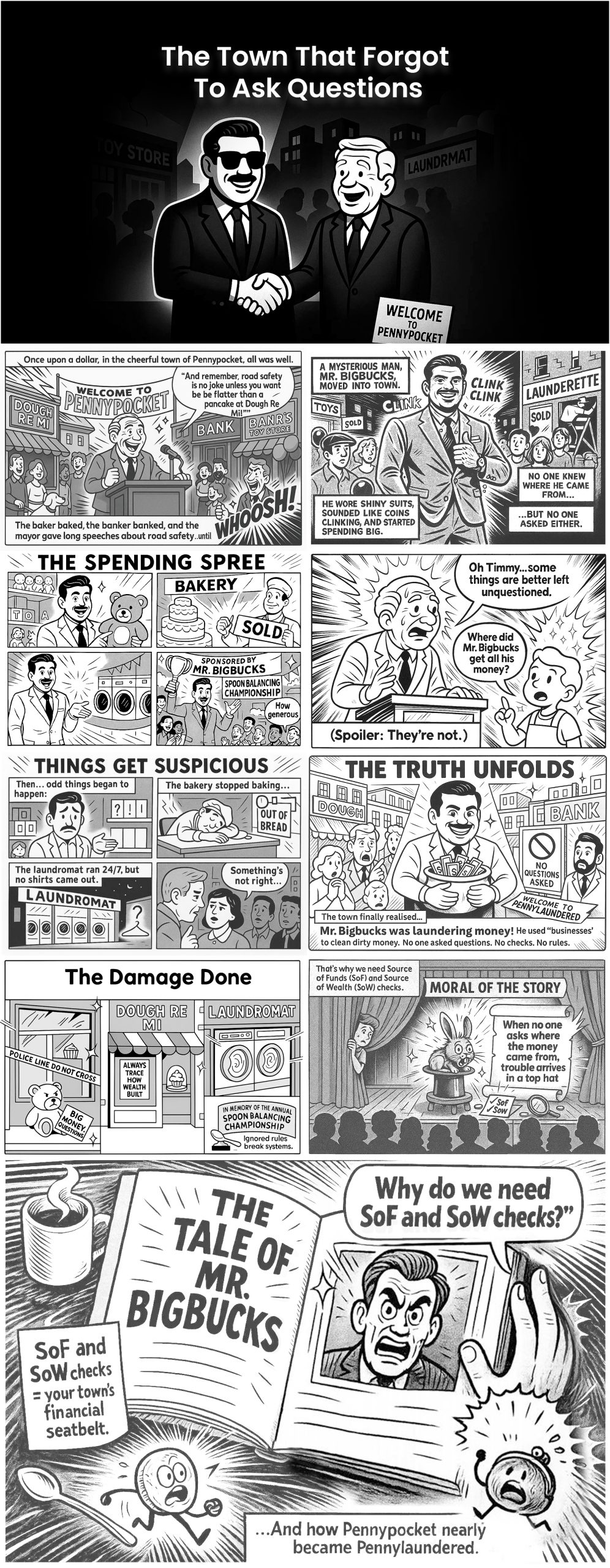
Once upon a dollar, in the cheerful town of Pennypocket, everything ran in fine shape. The baker baked, the banker banked, and the mayor gave overly long speeches about road safety. Everyone was happy until one day, strange things began to happen.

A mysterious man named Mr. Bigbucks moved into the town. No one knew where he came from, but he wore shiny suits, had a laugh that sounded like coins clinking, and he started spending big. Really big.

He brought the toy store, the bakery, the laundromat (ironically), and even sponsored the town’s annual ‘Spoon Balancing Championship’. “How generous,” said the townspeople. “He must really love spoons.”

But little Timmy raised an eyebrow.

“Where did Mr. Bigbucks get all his money?” he asked.

“Oh, Timmy,” said the mayor, chuckling, “Some things are better left unquestioned.”

(Spoiler alert: They’re not)

Soon things took a turn. The toy store stopped selling toys and only stored locked boxes. The bakery stopped selling cakes. The laundromat? It was running 24/7, but not a single shirt came out of it. Suspicious, right?

That’s when the town realised: Mr. Bigbucks wasn’t a hero, he was laundering money!

His fancy investments were a clever disguise to make the illegal money look clean. Without checks, rules, or questions, dirty money had walked right into town and brought everything.

By the time the truth came out, it was too late. The bakery was bankrupt, the toy story was under investigation, and the Spoon Balancing Championship was permanently cancelled (a national tragedy).

Moral of the story

If you don’t ask where the money comes from, you might accidentally invite trouble with top hats and gold watches into your home. And that’s exactly what Source of Funds (SoF) and Source of Wealth (SoW) checks are for. It’s the AML/CFT control that checks, double-checks, and sometimes triple-checks the money in the system, so people like Mr. Bigbucks don’t enter with sacks of shady coins.

AML compliance is like the town guard with a magnifying glass. It’s the reason your bank asks for KYC documents. It’s the reason financial institutions investigate suspicious behaviour. It’s to protect the town.

So, the next time someone asks, “Why do we need SoF and SoW checks?”

Tell them the tale of Mr. Bigbucks and how Pennypocket almost became Pennylaundered.

Our Latest Publications

Where did the money come from? Where is it going? Know and keep it flowing safely.

Share via :

Share via :

AMLCFT Regulatory Change Impact Assessment Questionnaire

AMLCFT Regulatory Change Impact Assessment Questionnaire

AMLCFT Regulatory Change Impact Assessment Questionnaire

The AML/CFT regulatory landscape in UAE is constantly evolving, requiring Regulated Entities to constantly keep up with such changes. This infographic presents a Regulatory Change Impact Assessment Questionnaire, which comes in handy for regulated entities, helping them identify the impact of impending regulatory changes on the state of their internal AML/CFT compliance framework, enabling them to take necessary further decisions and steps.

Intent of the Assessment: Strengthening AML/CFT Compliance Amid Regulatory Change:

A Regulatory Change Impact Assessment helps businesses to understand how such legal and regulatory changes in laws affect their internal AML/CFT framework.  It is not only a compliance requirement but an anticipatory step to ensure that internal policies, controls, and operational strategies remain sturdy, receptive, and risk sensitive.

This self-assessment questionnaire is designed to help entities in the UAE to assess their willingness and alignment with recent and upcoming AML/CFT regulatory changes. Each question stipulates an inspiring thought across governance, risk management, compliance frameworks, and employee willingness.

AML/CFT Program Changes Arising from Updates in AML Regulations and Recommended Courses of Action

1. Does the change in the AML/CFT Laws, TFS Regime, UAE NRA, FATF Updates, Circulars issued by Regulatory Authorities or Supplements Guidelines necessitate updating internal AM/CFT and TFS compliance Framework?

  • If Yes, identify impact on AML/CFT and TFS Framework.
  • If No, continue with the existing framework.

2. Does new AML/CFT Program need to be drawn up to incorporate regulatory updates?

  • If Yes, Prepare new AML/CFT Program according to updates.  
  • If No, Continue with the existing framework.

3. Are there any short-term, medium-term, or long-term implications of Regulatory Changes on the Business’s AML Compliance Framework?

  • If Yes, Identify the implications and implementation timeline.
  • If No, not applicable.

 4. Will the Regulatory Changes impact the Business’s ability to provide certain products or services to customers belonging specific geographies?

  • If Yes, identify such geographies and modify the Enterprise-Wide Risk Assessment (EWRA) and the Customer Risk Assessment (CRA) process. 
  • If No, Continue with the existing framework.

5. Does the Regulatory Change enhance or dilute the Business’s existing product/ service, geographic, customer, technology, service or delivery channel, or transaction risks?

  • If Yes, If there is any dilution or enhancement in ML/FT/PF risk factors, EWRA and CRA must be revised accordingly.
  • If No, Continue with the existing framework.

6. Do changes at the AML/CFT control mechanism level ensure alignment with amended or updated regulatory changes?

  • If Yes, Identify the accuracy and effectiveness of changes carried out by conducting AML/CFT Health Checks and Taking necessary remedial measures.
  • If No, Conduct post-implementation evaluation of regulatory changes incorporated in the Regulated Entity’s AML/CFT Program.

7. What will be the impact of the implementation of regulatory changes within the AML/CFT framework on the Business’s compliance budget?

  • If Yes, Identify the drivers of increase or decrease in compliance costs. Check whether existing AML/CFT policies and controls be redesigned to minimise the impact of such drivers.
  • If No, Continue with the existing framework.

8. What is the preparedness level of the business’s Governance function to oversee and monitor the implementation of any future Regulatory Changes?

  • Identify the gaps if any, in the preparedness level of the governance function and fulfil the same with necessary AML/CFT training.

9. Does the Business have in place an AML/CFT Regulatory Change Management Framework?

  • If Yes, Implement the AML/CFT Regulatory Change Management Framework in timely manner.
  • If No, Devise and develop on AML/CFT Regulatory Change Management Framework.

10. Does Business’s AML/CFT Training and Awareness Strategy ensure accurate and compliant implementation of Regulatory Changes by AML/CFT Compliance Team?

  • If Yes, Proceed with the Training and Awareness Strategy already in place.
  • If No, A new and customised AML/CFT Training and Awareness Strategy and Program needs to be developed.

 11. On which employee or employee group will the Regulatory Changes burden increase/decrease?

  • Identify the employee or employee group whose workload will increase/decrease and allocate tasks and resources accordingly.

Anti-Money Laundering (AML) and Countering the Financing of Terrorism (CFT) regulations are core pillars in shielding the financial system against criminal abuse. In the UAE, regulatory expectations continue to rise in alignment with global standards such as those issued by the Financial Action Task Force (FATF), and national developments including the UAE National Risk Assessment (NRA), Targeted Financial Sanctions (TFS) regime, Enterprise-Wide Risk Assessment (EWRA) and Customer Risk Assessment (CRA) and evolving circulars from supervisory authorities.

Adapting to regulatory change is not a spontaneous task, it is a continuous process, and being compliant with the process means staying aware, informed, aligned and accountable. This questionnaire is intended to help UAE-based regulated entities and businesses` stay amenable, prepared, and resilient in the face of change.

Businesses can use this checklist to identify and pinpoint areas of focus, identify potential gaps, and strengthen their AML/CFT strategy. Assessing the impact of regulatory changes also helps Regulated Entities to prepare themselves in terms of changes required within their AML/CFT policies and procedures and make necessary tweaks to ensure that they are fully compliant with new or upcoming regulatory requirements.

Building Resilience Through Continuous AML/CFT Framework Advancement

Consistently revisiting the AML/CFT framework plays a pivotal role in ensuring that the regulated entity not only meets minimum standards but builds a strong regulatory and compliance-first culture that can withstand evolving financial terrorism.  

Related Posts

Confused with how to mitigate ML, FT, and PF risks within your Regulated Entity?

Sanctions 101: What Every Compliance Professional Must Know

Sanctions 101: What Every Compliance Professional Must Know

Sanctions 101: What Every Compliance Professional Must Know

Sanctions 101: What Every Compliance Professional Must Know

This infographic provides an overview of why Sanctions are imposed. It outlines the goals behind sanctions and how they are used as a strategic tool to promote lawful conduct, maintain international peace and security, and prevent financial crimes.

UAE Anti-Money Laundering and Counter-Terrorism Financing (AML/CTF) framework, requires Sanctions Compliance as a critical part of a regulated entity’s obligations. All the Designated Non-Financial Businesses and Professions (DNFBPs) are required to conduct Sanction Screening procedures for their customers, suppliers, Ultimate Beneficial Owners (UBOs) of legal entity customers, employees, and any associated third parties. The Sanction Screening must be conducted against the following:

  • UAE Local Terrorist List and
  • United Nations Consolidated List.

The word “Sanctions” refers to legally enforced restrictive measures imposed by national or international authorities to address serious global concerns such as terrorism, human rights violations, and weapons of mass destruction proliferation. Instead of resorting to military actions, sanctions are used as a diplomatic and economic tool to influence the conduct of individuals, entities or countries to maintain global peace.

Sanctions can be imposed in various forms, such as economic restrictions, travel bans, arms embargoes, etc. These measures are imposed to achieve a range of objectives. Below are the primary reasons why sanctions are imposed:

Changing Behaviour

One of the primary reasons for imposing sanctions is to encourage countries or individuals to change actions that are in breach of international norms. When any person, entity, or country violates or continues to violate global rules such as human rights, laws, or territorial sovereignty, then in such circumstances, sanctions can be imposed to pressure the offending party to change its behaviour and comply with the norms.

Goal: The primary purpose is to influence a state or regime that supports terrorism to adopt internationally acceptable actions. Sanctions in this context serve as a non-military means to contribute to global efforts to encourage lawful and peaceful behaviour.

Example: If a Country is consistently involved in sponsoring terrorism or committing human rights violations, the United Nations may impose Targeted Financial Action (TFS) on that Country and compel it to change its behaviour specifically to halt human rights abuses and terrorism financing, thereby promoting democratic reform and adherence to international laws.

Meeting Compliance Objectives

Sanctions are often used to ensure compliance objectives at both national and international levels. It enables the regulated entities to comply with the robust sanction screening program while contributing to global security, regulatory alignment and financial system integrity.

Goal: To motivate a country or group to meet a specific set of objectives, usually outlined in international accords or diplomatic agreements.

Example:  Sanctions imposed by the UN to support a peace agreement or disarmament process may prohibit the supply of arms or financial support to conflicting parties. By complying with these sanctions, organisations help enforce international commitment aimed at ending violence and promoting stability.

Enforcing Peace and Security

When diplomatic efforts fail, and conflicts escalate, sanctions serve as a peaceful alternative to military intervention. Instead of resorting to force, authorities use sanctions as a non-violent means to manage conflicts and promote international peace and stability.

Goal: Sanctions are used as a peaceful response when negotiations break down, helping organisations manage conflicts without resorting to violence.

Example: If a country continues to engage in armed conflict or violates peace treaties, sanctions can be applied to restrict its financial or trade activities. This can weaken their capacity to continue aggression and push them towards a peaceful resolution, thereby resorting to regional or international stability.

Blocking Criminal or Terrorist Funding

Sanctions are also used as a measure to stop the flow of financial resources from reaching criminal networks or terrorist organisations. These measures target the economic infrastructure that enables such activities by freezing assets, restricting transactions or denying financial services.

Goal: The purpose is to disrupt funding for unlawful activities like terrorism, drug trafficking, and human smuggling, thereby reducing the threat posed to global and national security.

Example: If a financial institution in the UAE identifies a customer linked to a designated terrorist organisation, it must immediately freeze the account and report the transaction to the Financial Intelligence Unit (FIU). This ensures that terrorist groups are denied access to financial resources, disrupting them to carry out unlawful activities.

Preventing Weapon of Mass Destruction (WMD) Proliferation

Sanctions play a crucial role in preventing the proliferation of Weapons of Mass Destruction, including nuclear, chemical and biological weapons.

Goal: The main goal is to stop the development or distribution of nuclear and other destructive weapons, thereby ensuring global safety and non-proliferation.

Example: Countries suspected of running a nuclear program or proliferation of WMD often face severe financial and trade sanctions. These measures are designed to prevent any logistical or financial support to such a state or organisation involved in the development of weapons of mass destruction.

Conclusion

Sanctions form a core compliance obligation under UAE’s AML/CTF compliance framework. Therefore, the regulated entities must understand the purpose of these sanctions and implement robust controls to ensure adherence to the Compliance framework. By doing so, regulated entities help to safeguard the country’s reputation and contribute to global stability.

Related Posts

Confused with how to mitigate ML, FT, and PF risks within your Regulated Entity?

Red Flags Indicating Employee Complicity in ML, FT, and PF Activities

Red Flags Indicating Employee Complicity in ML, FT, and PF Activities

Red Flags Indicating Employee Complicity in ML, FT, and PF Activities

The UAE AML/CFT Law and AML/CFT Decision require regulated entities to screen their employees to ensure the integrity of their AML/CFT compliance framework. Employee involvement with illicit actors to further Money Laundering, Terrorism Financing, and Proliferation Financing (ML, TF, and PF) needs to be ruled out to ensure adequate AML/CFT Compliance through the identification of indicative red flags.

This infographic aims to equip Regulated Entities (REs) with the ability to identify their own employees who could be potentially involved in facilitating the entry of criminals into the legitimate financial system by being complicit with such illegal actors, also referred to as criminal associates in this infographic.

The word “Complicity” refers to the involvement of an individual, participating, aiding, encouraging, or facilitating another to commit a crime.

In the context of Regulated Entities, they must ensure that their employees are not complicit with any illicit actors who intend to channelise their proceeds of crime through RE’s business. Preventing insider help to curb money laundering is essential for Regulated Entities, as the presence of insider assistance can render the strongest AML/CFT control measures redundant.

RE’s must note that the insider complicity might often be a part of a Professional Money Laundering (PML) Organisation or Network (PMLO/PMLN), which plants their members as employees within unwitting businesses to further their illicit motives of money laundering, making it all the more important to identify and report such activity, if any, at the earliest.

Some of the red flags indicating employee, i.e., insider complicity, are discussed as follows:

Creating Counterfeit Records

Complicit employees may create false or counterfeit records of Customer Due Diligence (CDD) measures taken to disguise deficiencies in the Know Your Customer (KYC) information and documents of their criminal associates to avoid detection or scrutiny by other members of the AML compliance team. Examples of creating counterfeit records include:

False Compliance Trail:

By using fake or forged documents to make the AML compliance process appear complete, creating a fake sanctions screening report to facilitate terror financing, falsifying Customer Risk Assessment (CRA) outcomes to ensure that only simplified due diligence measures are taken to avoid Enhanced and Standard Due Diligence scrutiny through Sources of Funds and Sources of Wealth (SoF and SoW) or planting fake SoF and SoW to give false sense of legitimacy.

Avoiding Audit Scrutiny:

The primary purpose of insider complicity is to facilitate the furtherance of illegal activity through the RE, as well as to avoid audit scrutiny, which might uncover the underlying illicit activities of a complicit employee.

Wilfully Neglecting Ongoing Monitoring

When using an AML Compliance Software, such as those facilitating ongoing monitoring of business relationships, the complicit employee would deliberately and wilfully avoid, evade, or neglect opting for ongoing monitoring of customers who, in reality, are their Professional Money Laundering (PML) associates. This is done by:

Not Opting for Commencing Ongoing Monitoring:

The complicit employee would not commence ongoing monitoring, post onboarding of their PML associates, so as to avoid notifications and alerts on their profile, which might alert other non-complicit employees and require escalating the case for further scrutiny.

Deliberate Dismissal of Alerts as False Positives:

The complicit employee, upon coming across any ongoing monitoring or Re-KYC alerts, may deliberately dismiss such alerts as executed, or may label or classify screening alerts as false positives to avoid scrutiny or escalation.

Facilitating Structuring to Circumvent Regulatory Reporting

A complicit employee aids in structuring transactions through the employer’s business by assisting their criminal associates in routing funds through the RE in a manner that circumvents the RE’s internal controls designed for regulatory reporting. Structuring is done to avoid the filing of regulatory reports such as:

Suspicious Transaction Report (STR):

STRs need to be filed in the event of coming across any suspicious transaction. A complicit employee may help their criminal associates to launder funds through the RE by facilitating them to structure transactions in such a way that internal red flags and triggers are not raised, which necessitate the filing of STR.

Threshold-Based Designated Transactions, Such as Real Estate Activity Report (REAR) or Dealers in Precious Metals and Stones Report (DPMSR):

Complicit employees help their criminal associates in such a way that the internal trigger to file REAR/DPMSR is avoided, as insights and parameters related to designated transactions reporting triggers are overridden or dismissed by the complicit employee to their criminal associates.

Overriding CDD Measures

Complicit employees can facilitate their criminal associates by overriding CDD measures installed within the RE. Some of the ways in which CDD checks are overridden are as follows:

Accepting Forged or Fake KYC Documentation:

A complicit employee can override CDD measures by accepting forged or fake documents pertaining to customer’s identity such as their passports or certificate of incorporation, date of birth or registration, details pertaining to beneficial ownership and SoF and SoW so as to mechanically tick-off the requirement of ID document collection, to facilitate the disguising the true identities of their criminal associates.

Collecting but Not Verifying ID Documents:

A Complicit employee may also aid their criminal associates by completing the requirement of ID document collection but completely skipping the verification of the same. This eliminates potential flags when ID verification reveals the elements of forgery, identity theft, impersonation, or any other form of ID fraud perpetrated by a criminal associate of the complicit employee.

Avoiding EDD and Resultant Reporting

In order to avoid the focused scrutiny involved in the EDD process, which might lead to the filing of SAR/STR to the FIU, the complicit employee may help their criminal associates evade EDD and reporting by manipulating their CDD information through:

Preventing SOF and SoW Verification:

If the SoF and SoW are diligently verified, it may lead the RE to uncover the truth about the criminal associates of the complicit employee, resulting in the filing of reports and criminal charges against the complicit employee themselves.

Preventing Case Escalation to AML Compliance Officer/MLRO and Senior Management for Approval and Scrutiny:

Another reason why complicit employees facilitate EDD avoidance is that customers subject to EDD require approval and scrutiny from the AML Compliance Officer/MLRO and Senior Management. Therefore, if the customer profile of a criminal associate is escalated for approval and scrutiny, it is highly likely that these officials will identify the complicity of the employee and potential fraud in the customer’s CDD process.

However, if the AML Compliance Officer/MLRO or Senior Management themselves are complicit, then the Independent Audit function could recognise their complicity during the AML audit process, leading to regulatory reporting and criminal action against such complicit officials.

Conclusion

Regulated Entities may have the best AML/CFT Framework, unified AML Software, risk-based controls, training and awareness strategies, and due diligence measures. However, the risk of ML/FT or PF activities through the Regulated Entity still remains, as employees or staff of the business could be complicit and involved with the illicit actors, facilitating the movement of proceeds of crime through the business.

Knowledge of employee complicity or involvement red flags can help regulated entities develop stringent employee screening and monitoring measures, which help safeguard the integrity of the regulated entity’s AML/CFT control measures.

Related Posts

Confused with how to mitigate ML, FT, and PF risks within your Regulated Entity?

What is MENAFATF, and who are its members and observers?

What is MENAFATF, and who are its members and observers?

Table of Contents

Protect your business with reliable and effective AML strategies with AML UAE.

The Middle East and North Africa (MENA) region has its dedicated and focused FATF-Style Regional Body (FSRB), known as MENAFATF. This blog embarks upon a journey to introduce its members and overserves while providing a glimpse at MENAFATF’s mission, structure, governance, members, observers, and their key role in strengthening the region’s financial integrity.

What is MENAFATF, and who are its members and observers?

In a world highly interlinked with finance, trade, and technology, the risk associated with money laundering (ML) and the financing of terrorism (FT) has grown significantly. These activities pose a threat to economies, global security, and the integrity of financial systems. Recognising the threats posed by money laundering and terrorist financing operations to countries in the Middle East and North Africa Region, the Middle East and North Africa Financial Action Task Force (MENAFATF) stands out as a critical regional body dedicated to combating money laundering (ML) and financing of terrorism (FT).

The countries in the MENA region work conjointly to comply with MENAFATF’s standards that establish an effective system which countries need to implement in a way that does not contradict their cultural values, constitutional frameworks, and legal systems.

Establishment and Background of MENAFATF

MENAFATF was established in Manama, Bahrain, on 30th November 2004 at an inaugural Ministerial Meeting wherein the Governments of 14 countries decided to establish MENAFATF as a FATF Style Regional Body (FSRB).

MENAFATF operates as an independent body, distinct and separate from any other international body and regionally focused organisation which is designed to reflect the unique political, economic and social culture of the region, and follows the model of the Financial Action Task Force (FATF), the global organisation that sets standards for AML/CFT.

Objectives and Functions of MENAFATF

The primary function of MENAFATF is to combat money laundering (ML) and terrorism financing (TF) by promoting regional cooperation and ensuring that the member countries implement effective measures aligned with international standards, particularly the FATF 40 recommendations. MENAFATF Member countries strive towards achieving the following objectives:

  • To encourage member nations to set up and implement a comprehensive AML/CFT structure, according to the FATF recommendations, and ensure implementation of relevant UN treaties and agreements and the UNSCRs (United Nations Security Council Resolutions).
  • To conduct a mutual evaluation of member nations to assess their adherence to international AML/CFT standards and identify the gaps that need to be taken care of.
  • To provide guidance, training, and support to member nations in developing, implementing, and enhancing their legal, regulatory, and institutional AML/CFT structure.
  • To facilitate the sharing of information, typologies, and best practices among member nations and international partners.
  • To take measures throughout the region to combat money laundering and terrorist financing in a manner that respects the cultural values, constitutional frameworks, and legal systems of the member countries.

MENAFATF Structure And Governance

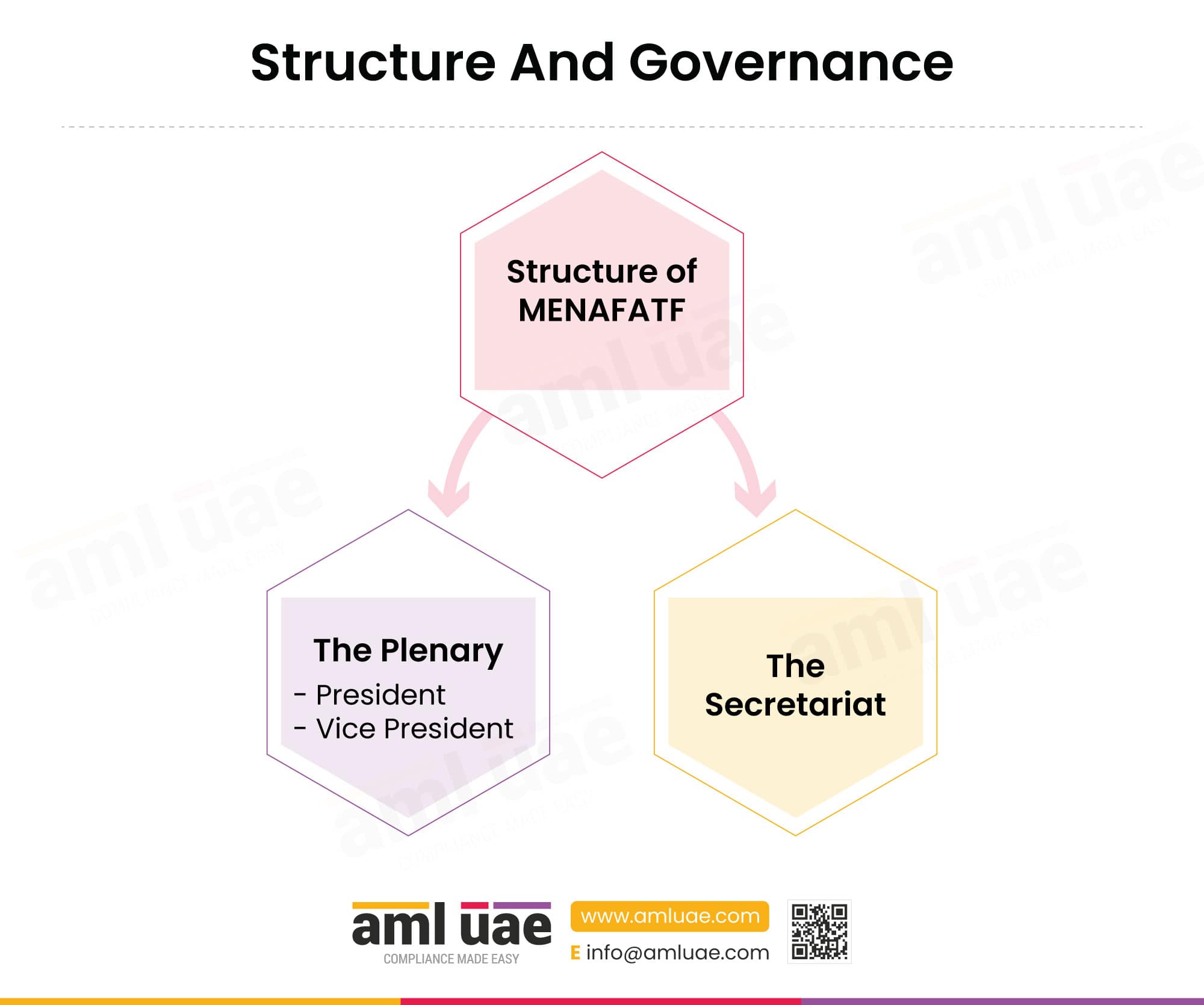
MENAFATF follows a well-defined governance structure that ensures both strategic and operational efficiency. Key components of this structure include two bodies, i.e., the Plenary Meeting of Representatives of member countries, also referred to as the Plenary for the sake of simplicity, and the Secretariat:

The Plenary

The plenary is the decision-making body consisting of the representatives from all member nations. The Plenary meets at least twice a year to discuss policies, approve evaluation reports, and oversee the organisation’s activities. It nominates the President and Vice President among the member countries.

  • President and Vice President: The president and vice president are elected among the members for a term of one year. The president and vice president represent the MENAFATF at international forums.

More details about the plenary session are discussed in the following paragraphs.

Secretariat

The Secretariat is responsible for the day-to-day activities of MENAFATF. It is in Bahrain and supports the implementation of plenary decisions, coordinates evaluations, and manages communication with member nations and observers.

The Secretariat performs the following functions:

  • Prepare the annual report, work plan, and estimated budget, and submit them to the Plenary.
  • provide technical and administrative preparation for convening the plenary, working groups, and any established committees;
  • implement and follow up on the work plan as approved by the Plenary;
  • Submit regular reports on MENAFATF work to the Plenary and the President.
  • manage the expenditure of the approved budget and carry out mutual evaluation exercises;
  • Identify the training and technical assistance needs of member states and facilitate the provision of such needs in consultation with these countries.
  • Monitor worldwide AML/CFT developments and provide appropriate information to the Plenary;
  • carry out any other tasks assigned by the Plenary.

Working Groups

MENAFATF has different specialised working groups that work on areas such as mutual evaluation, typologies, research, technical assistance, and training. These groups help to bring together the experts from member nations to collaborate on specific projects.

Members of MENAFATF

MENAFATF comprises 21 countries from the region of the Middle East and North Africa. Each member is required to implement the FATF 40 recommendations and actively participate in MENAFATF’s activities. The member countries are-

1. Algeria
2. Bahrain
3. Djibouti
4. Egypt
5. Iraq
6. Jordan
7. Kuwait
8. Lebanon
9. Libya
10. Mauritania
11. Morocco

12. Oman
13. Qatar
14. Palestine
15. Saudi Arabia
16. Somalia
17. Sudan
18. Syria
19. Tunisia
20. United Arab Emirates
21. Yemen

Observers of MENAFATF

In addition to the member nations, MENAFATF associates with several observers, including international organisations as well as countries. They participate in MNAFATF’s meetings, provide technical expertise, and contribute to the overall mission of effective regional AML/CFT efforts. The international organisations that are members of MENAFATF are:

1. International Monetary Fund
2. World Bank
3. Co-operation council for the Arab states of Gulf
4. Financial Action Task Force
5. Egmont Group of Financial Intelligence units
6. Asia/Pacific Group on Money Laundering

7. World Customs Organization
8. Arab Monetary Fund
9. Eurasian Group on combating money laundering and financing of terrorism
10. United Nations
11. European Commission
12. Russian Federation

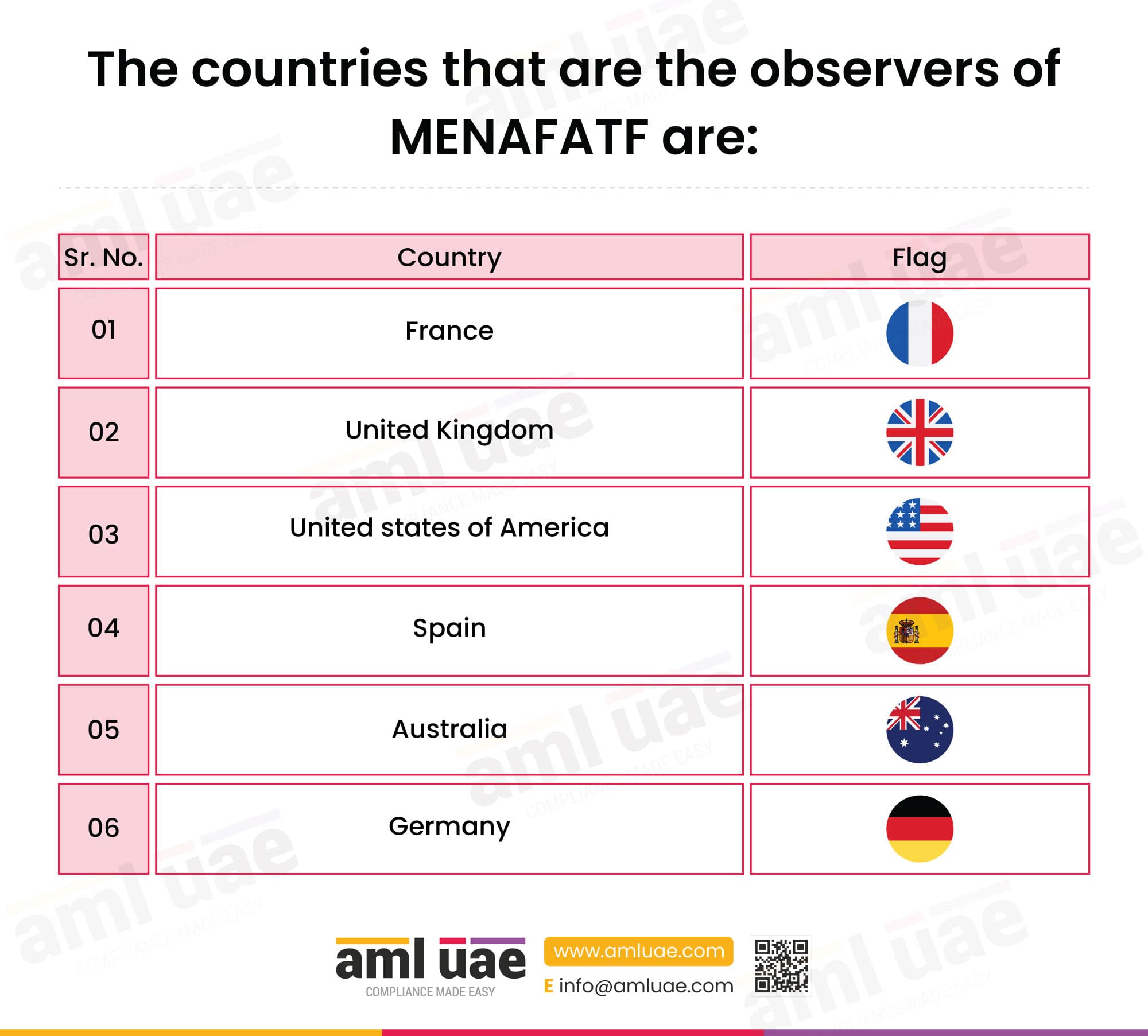
The countries that are the observers of MENAFATF are:

1.  France
2. United Kingdom
3. United states of America

4. Spain
5. Australia
6. Germany

The countries listed above often have bilateral partnerships with MENAFATF members and play a significant role in international AML/CFT initiatives.

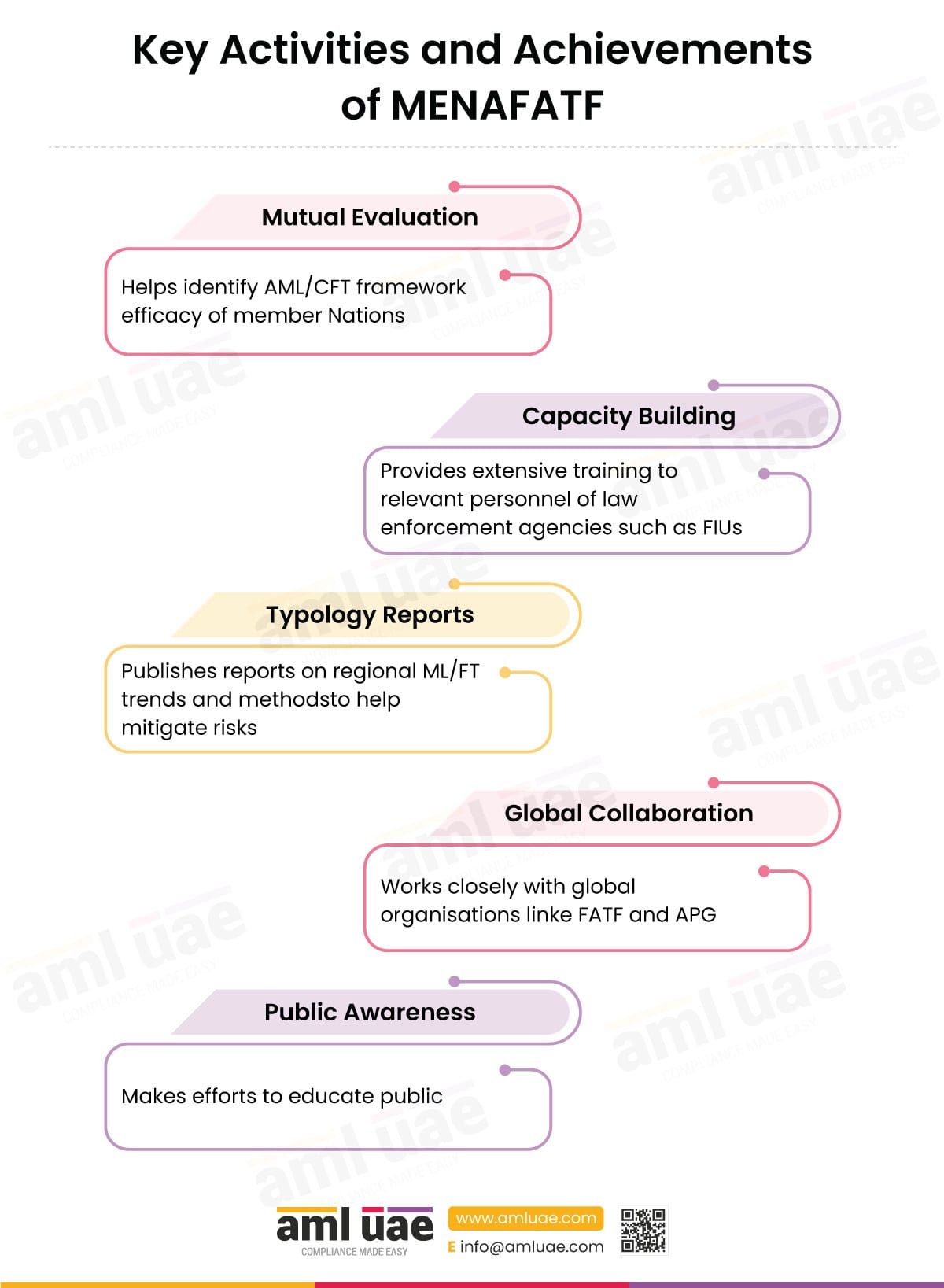
Key Activities and Achievements of MENAFATF

Over the past few years, MENAFATF has made key progress in enhancing the AML/CFT framework across the region. The key activities and achievements of MENAFATF are:

Mutual Evaluation

MENAFATF conducts several rounds of mutual evaluation of the member nations to assess their AML/CFT compliance with FATF standards. These rounds of mutual evaluation are discussed in further paragraphs. These evaluations help nations identify areas for improvement in their AML/CFT frameworks.

Capacity Building

MENAFATF provides extensive training to government officials, regulators, law enforcement agencies, and financial intelligence units through workshops, seminars, and technical missions.

Typology reports

MENAFATF publishes reports on regional ML/TF trends and methods. These reports help member nations identify and mitigate emerging threats.

Global Collaboration

MENAFATF works closely with FATF and other organisations like the Asia-Pacific Group on Money laundering (APG).

Public Awareness

MENAFATF supports efforts to educate the public about AML/CFT obligations and the importance of these compliances.

The Role of MENAFATF Plenary

The Plenary in MENAFATF is the highest decision-making body and plays a significant role in contributing to MENAFATF’s mission. It comprises representatives from each member nation, typically experts in AML/CFT or senior officials from the Ministry of Finance, Central Banks, or Financial Intelligence agencies.

The Plenary assembles at least twice a year and may hold extraordinary meetings if necessary.

In a plenary meeting, a wide range of issues are discussed by the members as well as observers and decided upon, which includes:

  • The approval of mutual evaluation reports
  • Adoption of strategic plans
  • Discussion of typology findings
  • Endorsement of training programs

The Plenary approves the MENAFATF work program and performs the following functions:

  • establish and approve the policies of MENAFATF;
  • determine the rules and procedures of MENAFATF;
  • approve annual report, work plan, and estimated budget, and ratify the financial report and auditor’s report of MENAFATF;
  • appoint the Executive Secretary and independent auditor, and approve the Secretariat’s organisational structure and other functions;
  • decide upon new member countries and observers;
  • adopt any amendments to the Memorandum of Understanding (MOU) that may be significant in the future;
  • identify technical assistance needs of member States and coordinate delivery of technical assistance in consultation with such nations and in co-operation with countries as well as international and regional organizations providing such assistance, particularly those holding observer status;
  • consider and approve mutual evaluation reports of members’ compliance with FATF standards;
  • establish working groups and committees when needed to undertake special tasks;
  • consider any other subjects proposed by any of the member countries, the President, or the Secretariat.

The Plenary also elects president and vice-president, and annually reviews the organisation’s work plan and budget. The rules of the Plenary are designed to encourage transparency, inclusiveness, and effective decision-making.

Moreover, the Plenary provides a platform for observer organisations and countries to interact and participate in the discussions, although they do not have any voting rights. The Plenary is important for ensuring that MENAFATF remains dynamic, responsive, and aligned with the international AML/CFT framework.

Mutual Evaluation Working Group

The Mutual Evaluation Working Group (MEWG) is one of the important components of MENAFATF’s operational structure. It includes the task of managing and overseeing the process of mutual evaluation and follow-up reports of member nations. MEWG ensures that the evaluation is conducted in accordance with FATF standards, and the result reflects an accurate assessment of the country’s AML/CFT system.

MEWG focuses on two reports-

Mutual Evaluation Report

The mutual evaluation process involves an extensive peer review where a team of experts assesses the member country’s compliance with the FATF 40 recommendations. The evaluation includes both the technical and effectiveness compliance. Furthermore, this Evaluation Report is responsible for coordinating evaluations, selecting review teams, guiding on-site visits, and reviewing draft evaluation reports before they are submitted to the Plenary for approval. These reports highlight areas of strength, areas for improvement, and potential red flags. Once these reports are approved by the Plenary, the evaluation report will be accessible to the public.

Follow-up Report

Once a mutual evaluation is completed, the member nations initiate a follow-up process to ensure they take corrective measures. The MEWG monitors this progress by reviewing follow-up reports submitted by the nations.

These reports elaborate on the steps taken to address the areas of improvement identified in the mutual evaluation report. Depending on the level of progress, nations may be subject to enhanced follow-up or regular follow-up with the timelines for submitting these progress reports. MEWG reviews these reports and assesses whether the nation can exit the follow-up process or require further monitoring.

Therefore, MEWG plays a crucial role in maintaining accountability and promoting continuous improvement among its members. This rigorous evaluation and effective follow-up help strengthen the nation’s AML/CFT compliance in accordance with the FATF’s 40 recommendations.

Withdrawal and Suspension of Membership

MENAFATF includes the provision for the withdrawal or suspension of membership of a member nation.

A member, if voluntarily wants to withdraw, may submit a written notice of withdrawal to the Secretariat. This process takes effect after a stipulated period, generally six months from the date of notification, unless an earlier date is decided.

In certain cases where a member nation fails to fulfill its obligations, such as mutual evaluation, continuous non-compliance with the AML/CFT framework, or a lack of cooperation, that member may be subject to suspension by MENAFATF. The Plenary, with a two-thirds majority vote, makes the decision regarding suspension. The decision to suspend results in the loss of voting rights and the ability to influence decisions within the organisation until the issues leading to the suspension are resolved.

The withdrawal and suspension of membership provision of MENAFATF enables better accountability and engagement among members, and facilitates a hassle-free exit process or disciplinary actions in cases of persistent non-cooperation.

Challenges and Future Outlook

Challenges faced by MENAFATF

MENAFATF has achieved notable success in recent times, but even today, it faces several challenges:

  • Political Instability: The member nations can be affected by ongoing political conflicts and governance, which can hinder their AML/CFT framework.
  • Resource Constraints: Not all member nations have enough resources; some may face resource constraints with respect to financial and human resources, which can impact their AML/CFT framework.
  • Diverse Legal System: The varied legal system among different member nations can hinder the standard AML/CFT framework.
  • Technological Evolution: The rise of advanced technology leads to the rise of digital currencies and fintech, which requires constant updates to regulatory approaches that can hinder their AML/CFT standards.

The challenges listed above need to be addressed, and MENAFATF must continue to strengthen its partnerships, enhance technical assistance, and promote the adoption of new technologies.

Outlook for MENAFATF

MENAFATF is expected to

  • Enhance their research and typology to be aware of emerging threats.
  • Boost the Mutual Evaluation processes to ensure efficient ongoing compliance.
  • Deeper integration with the international financial system and standards.
  • Boost greater private sector engagement in the AML/CFT framework.

MENAFATF: The Watch Continues

MENAFATF plays a significant role in ensuring financial transparency and security in the Middle East and North Africa (MENA) region. It stands as a cornerstone of regional cooperation in the fight against Money laundering and financing of terrorism.

By aligning their efforts with international standards and tailoring them to address the challenges of the MENA region, organisations play a significant role in strengthening financial systems, enhancing legal frameworks, and promoting transparency. As financial crime continues to evolve, the MENAFATF’s role remains important not only as a monitor and advisor but also as a driver of sustainable reform. Through continued commitment and innovation, MENAFATF can further empower its members to build more resilient and secure economies.  

Join the Fight against Financial Crimes!

Protect your business with reliable and effective
AML strategies with AML UAE.

Share via :

Add a comment

About the Author

Pathik Shah

FCA, CAMS, CISA, CS, DISA (ICAI), FAFP (ICAI)

Pathik is an ACAMS-certified AML consultant specialising in governance, risk, and compliance for regulated entities in the UAE. He brings over 28 years of experience, with 1,000+ hours of AML training and 200+ advisory engagements across DNFBPs, VASPs, and FIs. He supports businesses in aligning with AML/CFT requirements from the CBUAE, DFSA, MoET, MoJ, VARA, CMA, FSRA, and FATF. Known for translating complex regulations into audit-ready procedures, Pathik enables operational clarity and compliance readiness.

Reach Out to Pathik

AML Policy Documentation Tips From a Compliance Insider

AML Policy Documentation Tips From a Compliance Insider

AML Policy Documentation Tips From a Compliance Insider

AML Policies and Procedures are a reporting entity’s Magna Carta when it comes to AML compliance. However, many businesses often reduce them to mere regulatory templates.

In this episode of the Know Your Compliance Podcast Series, leading AML Specialist Dipali Vora ditches the templates and talks straight about the real work behind a truly effective AML framework.

Join the conversation as she breaks down the must-haves, the missed steps, and the one common-sense tip that somehow still gets overlooked.

Here’s what you can find inside this episode:

  • Why a risk-based approach starts before the pen hits paper
  • The “non-negotiables” every policy must include
  • How to balance growth with control (it’s possible)
  • The blind spots that teams don’t see until it’s too late
  • The simplest fix that nobody’s using (but should be)

The secret isn’t a secret. It’s just that too many people skip it. Hit the play button now and get practical insights on how to write policies for your business.

Effective AML consulting services

make your business dealings brighter, smoother, and better

Share via :

CDD Essentials: What Makes Customer Data Reliable and Independent?

CDD Essentials What Makes Customer Data Reliable and Independent

CDD Essentials: What Makes Customer Data Reliable and Independent

CDD Essentials: What Makes Customer Data Reliable and Independent

This infographic aims to decode the nexus between customer data reliability and its importance in fulfilling AML/CFT Obligations in the UAE, such as Customer Due Diligence (CDD). It highlights the importance of Data Reliability and Independence in the context of fulfilling essential CDD obligations during customer onboarding and monitoring, helping Regulated Entities in the UAE navigate remote customer onboarding requirements while ensuring alignment with the principles of Data Reliability and Data Independence.

Factors That Determine Data Reliability

Data reliability, in the CDD context, determines the level of reliance that can be placed by the personnel of a Regulated Entity when making use of customer data for the purposes of conducting CDD obligations. The factors that determine the degree or extent to which customer data can be relied upon for CDD are:

Customer Checks

The degree to which the customer has undergone verification processes to obtain the data: or the extent and depth to which CDD measures have been applied, helps in understanding its attributes, such as its originality, the level of scrutiny it underwent (Simplified Due Diligence, Enhanced Due Diligence, or Standard Due Diligence), its quality and number of times it has been already relied upon, indicating its dependability, helping build the record lineage of the customer data.

Official Status

The credibility of the issuing person or institution: helps the KYC Analysts to determine the quality assurance factor, i.e., the level of trust that can be placed on the particular ID document and its contents, on the basis of the official status, reputation, and credibility of the issuing authority of such an ID.

For instance, when relying on an Emirati passport for verifying customer identity, which is issued by the Federal Authority for Identity and Citizenship, Customs and Port Security (ICP), then its official status is highly reliable and credible for the purposes of CDD, as the ICP issues passports only after stringent scrutiny, making them highly reliable. Contrastingly, if a customer presents a local gym or library membership card instead, as an ID, then such an ID cannot be relied upon for the purposes of CDD as gym or library membership can be granted to any individual without vetting and verifying their address proof, residency status, professional and educational background, etc., making such an ID completely unreliable for the purposes of CDD.

Additionally, the regulated entity must verify whether the digital ID system used to validate or authenticate customers is authorised by the UAE government for the purposes of fulfilling CDD obligations; if not, then such a digital ID system must not be used.

Digital ID Assurance

The level of assurance tied to the digital identity systems in use helps regulated entities’ staff determine the level of trust that can be placed in a digital identity on the basis of it being part of the national cybersecurity framework.

For instance,  UAE Pass is UAE’s national digital identity solution that helps public as well as private entities (such as Currency Exchange Providers, Remittance Services Providers, and Payment Service Providers), which are heavily regulated under UAE’s AML-CFT Law and AML-CFT Decision to ensure compliance with the following laws on individual privacy and digital identity in the UAE:

  • Federal Decree Law No. 45 of 2021 regarding the Protection of Personal Data
  • Federal Decree Law No. 34 of 2021 on Combatting Rumors and Cybercrimes
  • Electronic Transactions and Trust Services Law.

Digital ID systems help fulfil CDD obligations by:

  • Identity Proofing: Obtaining Name, Date of Birth, ID number
  • Binding and Authentication: Confirming and Verifying digital ID through credentials and authenticators
  • Identity Lifecycle Management: Expiries, Renewals, or Re-Issue of ID documents triggering Re-KYC
  • Portability and Interoperability Mechanisms: Portable ID Verification across various regulated entities through cross-recognition of digital ID systems

making digital ID and the assurance that comes along,  the go-to tool for remote customer onboarding, which helps Regulated Entities conduct non-face-to-face business with relative ease.

Check out our insights on digital ID verification:

RBA & Digital ID Systems

The FATF’s guidance on Digital Identity recommends that regulated entities adopt a tiered and risk-based approach when relying on digital ID systems for the purpose of CDD by ensuring that assurance levels are commensurate with the ML/FT  or PF risks to which the regulated entities are exposed.

RBA simplifies the decision process for deploying adequate and appropriate CDD measures by enabling the RE in deciding if the digital ID system provides an adequate assurance level for the ML/FT or PF risk presented by the customer to the regulated entity. If the digital ID is found to be unreliable and not independent, according to the risk level, it should not be used for CDD purposes. However, if the digital ID is found to be adequately reliable and independent, based on the ML/FT and PF risk, then it can be used to fulfil CDD requirements.

Forgery Resistance

The difficulty involved in forging the provided identity information:  Features such as holograms, microprinting, radio frequency identification (RFID) embedded chips, and stereo laser images (SLI) make ID documents such as Passports, Driver’s Licenses, and National ID Cards forgery resistant. When regulated entities are presented with such forgery-resistant ID documents for CDD, then the data reliability of such documents can be considered high.

Factors That Determine Data Independence

Data Independence needs to be assessed before relying on a digital ID system to ensure that the data contained and relied on through a digital ID system is free from falsification, manipulation, fabrication, cyber-enabled fraud, and insider complicity. Regulated Entities must check Digital ID frameworks and systems’ data independence so as to ensure:

Issuer’s Objectivity

Whether the person or institution providing the data has personal, professional, or familial ties to the customer: if such ties exist, measures must be taken to ensure that issuer’s objectivity remains unquestionable and its dealing are at an arms-length distance, emphasising no undue influence on the contents of data or manipulation of data. The existence of familial, personal, or professional ties might put the data independence factor of customer information at risk, lowering the Digital ID system’s assurance level, making it unreliable for CDD purposes.

Influence Resistance

The likelihood of undue influence by the customer on the data issuer: must be tested by Regulated Entities to ensure that the issuer does not succumb to influence and the digital ID system and framework are safe from the influence of customers and affiliates in an advantageous position, such as politically exposed persons (PEPs), who may influence the digital ID system’s personnel to manipulate or forge any materially relevant information that can bear legal consequences to them.

High Standards of Data Reliability and Independence

Regulated Entities need to ensure that they conduct CDD through digital ID systems that adhere to high standards of Data Reliability and Independence.

Government-Issued information or data is generally considered the most reliable and independent: due to the level of scrutiny that a legal entity customer or natural person customer undergoes in order to obtain a government issued document that can be used for identification purpose, such as a passport, driver’s license, national ID card, certificate of incorporation, trade license, etc. the government-issued ID and information are treated as holy grail that are issued after high standards of security checks, which grant increased data reliability and independence that is free from bias.

High Standards of Data Reliability and Independence

The compliance officer is responsible for reporting compliance reports indicating identified risks to the board to ensure the board is fully aware of the entity’s affairs, enabling them to make informed and appropriate decisions. These reports should include updates on changes to laws and regulations that require immediate action, ensuring the entity remains compliant and responsive to legal requirements.

In addition to compliance reports, audit reports should also be presented to board members, providing an independent assessment of the entity’s policies, procedures, and controls for comprehensive decision-making.

CDD With Reliable and Independent Customer Data: A Way Forward

Data reliability and independence play an important role in the CDD process, ensuring that compliance requirements in terms of AML/CFT laws, data privacy, and cybersecurity are adequately met.

Related Posts

Confused with how to mitigate ML, FT, and PF risks within your Regulated Entity?

Top 3 Movies and Series Every AML Compliance Professional Must See in 2025

Ozark (Series, 2017–2022) - A Closer Look at How Money Laundering Works

Top 3 Movies and Series Every AML Compliance Professional Must See in 2025

Table of Contents

Protect your business with reliable and effective AML strategies with AML UAE.

Top 3 Movies and Series Every AML Compliance Professional Must See in 2025

Ever wondered why economic crime is fascinating on screen? This blog breaks it down for you by delving into the wide picture of three cinematic masterpieces:

  • The Wolf of Wall Street
  • Ozarks (Netflix Series)
  • Scarface

These two movies and one series bring out the nuances of money laundering, fraud, shell companies, cartel dealings, and front businesses, and they briefly introduce the reader to the concept of money laundering.

This blog takes us closer to the cinematic scenario and showcases techniques to explore financial crime, power, and corruption in the real world.

What is Money Laundering?

Money Laundering is the art of converting dirty money into clean money or making it appear as if it has come from a legitimate source. It is the bridge that develops between criminal profits, originating from predicate offences and luxury. Businesses employ anti–money laundering (AML) techniques to prevent the laundering of money. Money laundering typically involves three distinct stages of placement, layering, and integration.

Rank 1: The Wolf of Wall Street (Movie, 2013) - Linking Money Laundering to White Collar Crimes

What makes this movie rank No. 1 is that it explains how money laundering is carried out through white collar crimes, which is suspensefully depicted throughout the film.

Overview

The Wolf of Wall Street is a story that revolves around Jordan Belfort, a corrupt stockbroker who built a financial empire on fraud. This movie is directed by Martin Scorsese, starring Leonardo DiCaprio, and is based on real-life scenarios of the procedures of how the protagonist defrauded investors. The film begins with Belfort’s early days on Wall Street,  where he initially learns the techniques of aggressive marketing. After losing his job during the market downfall of market, he began trading in penny stocks, which are low-value shares that can be sold for high commissions later. After witnessing the prospective growth, he kick-started his own company named Straton Oakmont, where he gave training to his teams to sell stocks while appearing dependable to investors to optimise and influence wealth by selling contingent stocks. As his wealth and company were established, he indulged himself in a lavish lifestyle, ultimately becoming a victim of unethical practices, drug addiction, fraudulent practices, and a lot of chaos.

The film was so well received by critics and audiences that it has been nominated for the Oscars 5 times. The terms used in the film often carry a negative impact, as they highlight and glorify illicit practices in the real world. However, these issues are real-life interpretations, which is where cinema and book publications come into play.

How is The Wolf of Wall Street related to AML/CFT?

These stories are real-life situations that help audiences understand the context and human decisions, and their consequences, leading to fines, penalties, and imprisonment.

Similarly, this film is a real-life story of Jordan Belfort, who started from a small brokerage firm using shady and pump-and-dump schemes and eventually rose to heights by handling IPOs of big companies. The movie covers the beginning from his lavish lifestyle to his downfall through economic crime and illicit practices – a power-packed mix of dark humour and entertainment.

Rank 2: Ozark (Series, 2017–2022) - A Closer Look at How Money Laundering Works

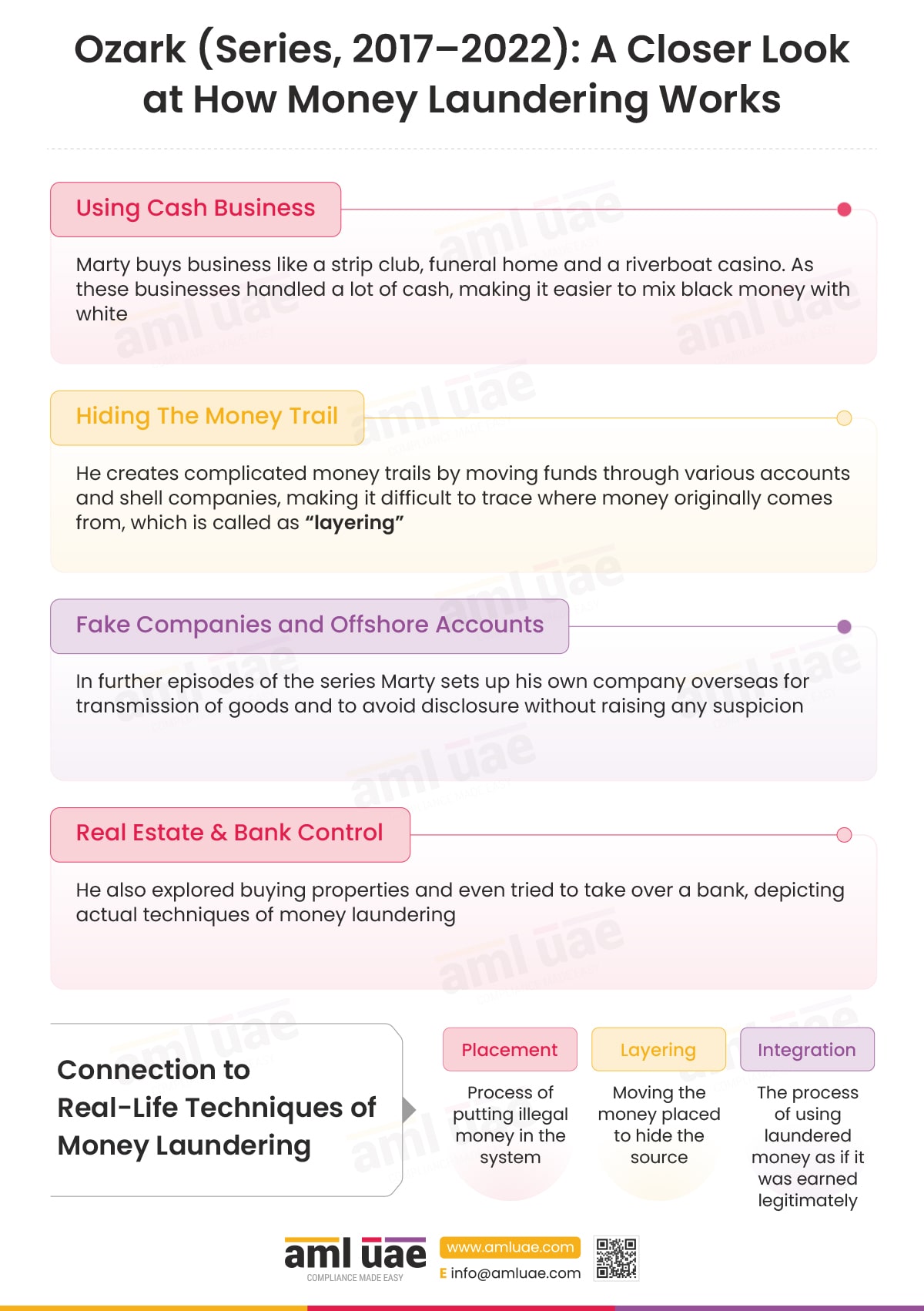
This series is a classic example of how gatekeeper professionals, such as Accountants, get exploited by criminals to further their illicit motives, ultimately leading to situations where the gatekeeper ends up being a complicit actor in laundering illicit funds.

 Overview

Ozark is an interesting drama series on Netflix that follows Marty Byrde, a financial advisor who relocates his family to the Ozarks to launder money for a Mexican drug cartel. The protagonist is played by Jason Bateman. Marty moves along with his family to the Lake of Ozarks to swipe off millions of dollars by the medium of establishing his own local business. Over several seasons, the show revolves around how far one can go to balance their life between legality and luxury. This series has taken a very realistic approach to display the techniques of money laundering; the methods depicted in the film are like those of real-life scenarios.

In this series, Marty and his spouse Wendy do not escape with clean hands, as their techniques grew more complex, using casinos and shell companies, commingling of proceeds, invoice manipulation,  and offshore banking, which eventually got noticed by officials.

How is Ozark related to AML/CFT?

Marty’s business starts to raise red flags related to smurfing, other ML-related red flags, and financial watchdogs start tracking their flow of financial funds. Finally, a whistleblower from the casino reports alarming transactions. International banks freeze their assets and transactions, and investigators could navigate the relationship between cartel money and Marty’s financial transactions, leading to a series ending with a mysterious warning-like impact.

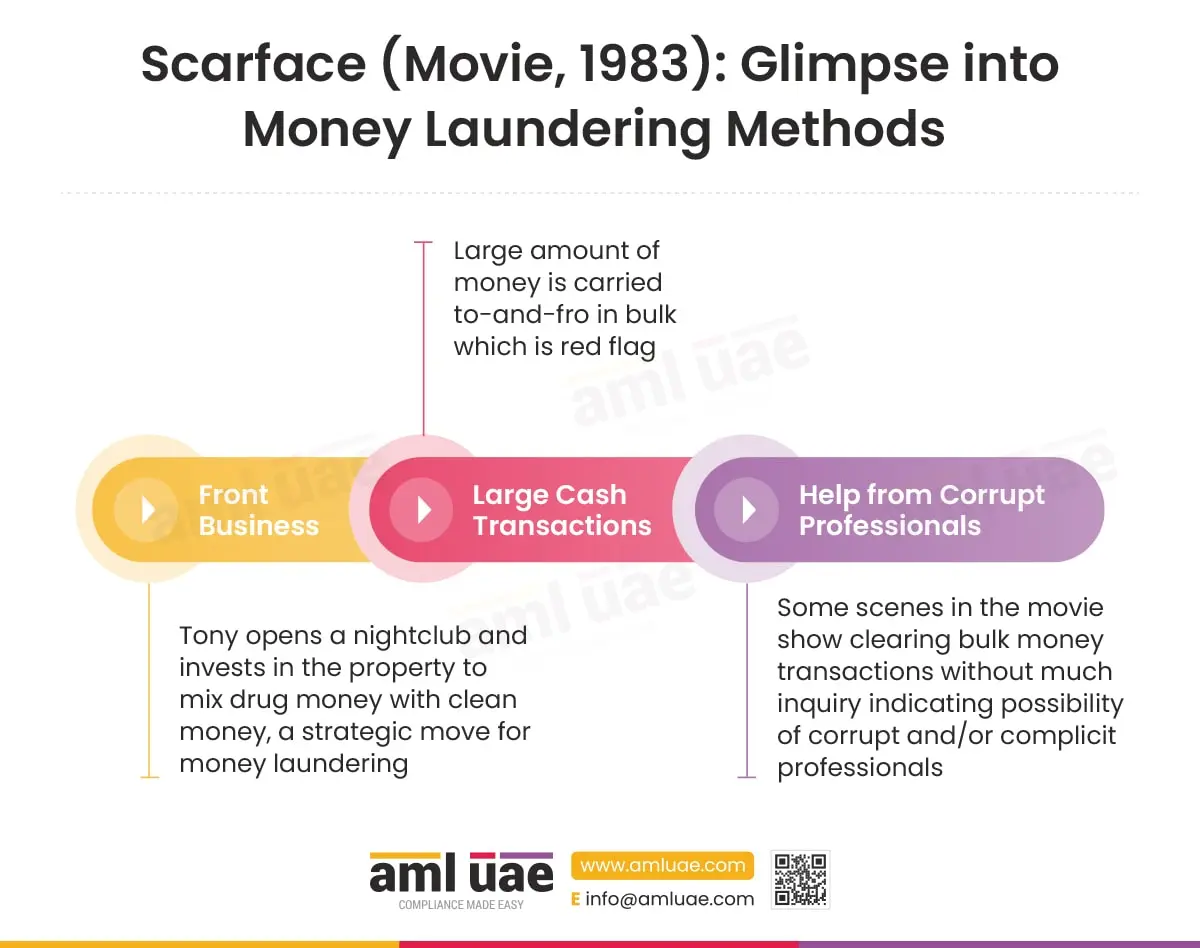
Movie 3: Scarface – (Movie, 1983) Glimpse into Money Laundering Methods

This movie explains how front companies, large cash transactions, and corruption are used to conduct money laundering.

Overview

Scarface, in 1983, narrates the dramatic story of Protagonist Tony Montana, an immigrant who builds a drug empire in Miami. While his focus is on generating money through crime and destruction, this film displays a scenic narrative on how the money generated from drugs, i.e., predicate offence, is laundered. The film doesn’t explain the techniques in detail, but there are clear indications from the movie of how illegal money is circulated and appears to be clean.

In the film, it is very interestingly depicted how Tony handles money. The schemes he used are as follows-

How is Scarface related to AML/CFT?

It is interesting to note that the movie highlights the problems faced by law enforcement agencies that led to the enactment of stricter policies and regulations under the 1980s law in the USA, such as:

– The Money Laundering Control Act (1986)

As the saying goes, all bad things end one day, Tony Montana’s (villain protagonist) downfall comes not from violence, but from his financial criminal record. His lavish lifestyle and major cash dealings triggered government scrutiny. The officials investigated his front business, offshore accounts, and shell companies to create illegal money. His assets were seized and frozen, and his associates turned against him. Tony was lastly arrested for major money laundering and fraud. During trials, the paper trail of his companies became the key evidence. The story ended with Tony in prison, showing how the evolving money laundering laws and compliance systems can change someone’s life.

Reflection of the Films

Scarface, The Wolf of Wall Street, and Ozark all show how offenders try to launder money using different techniques. They also depict distinguishing schemes that have evolved over an extended period.

In Scarface, the protagonist conceals drug money, converting it into clean money through cash business and crooked deals. Back then, the government did not have any strong regulations to prevent money laundering; it was not until later that stricter laws were introduced to track and punish these crimes involving the illicit conversion of money.

The Wolf of Wall Street takes place in the mid-1990s and 2000s, wherein Jordan hides and conceals illicit money in the name of shell companies and manages Swiss Bank accounts. By that time, the law had been recognised, and stricter punishment was being enforced for the same. Banks reported suspicious transactions or any red flags, which made it tougher for Jordan to conceal dirty money; his arrest was a classic example of how law has raced to keep up.

Ozark shows today’s real world of Money Laundering, and how Marty and Wendy used Casinos, charities, and other businesses to mix clean dirty money and dirty money. However, since the laws are evolving, the government now uses efficient technology to keep track of everything that has been happening, depicting how tough it has become to get away with these crimes today.

All these movies document how criminals find new ways to commit financial crimes every time, but the law also keeps on evolving, tracking, and imposing punishments. Banks and businesses are now under stricter obligations to report suspicious transactions so that even the most cunning ones can be caught red-handed. Money laundering looks fascinating on screen, but little did they know that the law is always keeping an eye.

Join the Fight against Financial Crimes!

Protect your business with reliable and effective
AML strategies with AML UAE.

Share via :

Add a comment

About the Author

Pathik Shah

FCA, CAMS, CISA, CS, DISA (ICAI), FAFP (ICAI)

Pathik is an ACAMS-certified AML consultant specialising in governance, risk, and compliance for regulated entities in the UAE. He brings over 28 years of experience, with 1,000+ hours of AML training and 200+ advisory engagements across DNFBPs, VASPs, and FIs. He supports businesses in aligning with AML/CFT requirements from the CBUAE, DFSA, MoET, MoJ, VARA, CMA, FSRA, and FATF. Known for translating complex regulations into audit-ready procedures, Pathik enables operational clarity and compliance readiness.

Reach Out to Pathik