



What is Integration in Money Laundering?
Published On: 12/19/2025
Protect your business with reliable and effective AML strategies with AML UAE.
Last Reviewed On: 08/17/2026 | Last Updated On: 08/17/2026
Integration in Money Laundering: Key Takeaways
- Integration is the final stage of money laundering, where illicit funds are merged with legitimate funds to obscure their criminal origin.
- Once integrated, dirty money becomes difficult to trace, allowing criminals to freely use funds through businesses, assets, or financial products, amongst others.
- Common integration techniques include real estate investments, shell companies, trade-based laundering, and financial instruments, often supported by layered documentation.
- Strong AML measures especially CDD, ongoing monitoring, and employee training are critical to detect and disrupt laundering attempts at the integration stage.
What is Integration in Money Laundering?
Integration in money laundering refers to the final stage of the laundering cycle, where illicit proceeds are reintroduced into the legitimate economy and made to appear legitimate.
In simple terms, the integration meaning in money laundering lies in disguising criminal funds so effectively that they become difficult to distinguish from legitimate income.
Understanding what is integration in money laundering is critical because this integration stage of money laundering often marks the point where criminals freely use illicit wealth.
To deploy anti-money laundering measures, businesses must understand the concept and functioning of the process and its three stages, Placement, Layering, and Integration.
Integration occurs when laundered funds re-enter the legitimate economy through purchases, investments, or business revenues that generate a lawful-looking paper trail. At the integration stage, illegal money is difficult to trace the most obvious suspicious traces have been covered during placement and layering, so the funds are less likely to raise concerns when used. This act of combining criminal proceeds with legal funds to evidence legitimate ownership is also referred to as commingling.
What is Money Laundering?
Money laundering is a complex process wherein the launderer brings in multiple persons and accounts to conceal the origin of the illegally obtained money and make it look as if it is generated from proven legitimate sources. Money laundering is defined and criminalised under Article 2 of Federal Decree-Law No. 10 of 2025, and the financing of terrorism and of proliferation under Article 3. Money laundering is all about disguising the identity of the illicit source and the owner of such illicit funds.
The money laundering process involves three stages – placement, layering, and integration, through which the dirty money is processed or routed to make it appear clean at the end of the laundering process, making it difficult for the authorities to trace its true origin. During the integration stage of the process, the criminal proceeds are mixed with the legitimately obtained funds to erase the distinction of the funds as clean or black.
To detect and prevent money laundering, authorities worldwide have introduced regulations designating certain classes of businesses and professions to implement Anti-Money Laundering processes. The effectiveness of the measures and controls is highly dependent on the understanding of the concept, i.e., if the regulated entity is aware of the working or operating cycle of the money laundering process and the associated risk indicators, then only can the controls be customized to harp on the money laundering attempt precisely.

Understanding the Stages Involved in the Money Laundering Process
The stages of money laundering typically follow a proper cycle consisting of placement, layering, and integration. These money laundering stages collectively describe how illicit funds enter the financial system, are obscured through complex transactions, and ultimately re-enter the economy.
This money laundering cycle highlights why early detection during placement or layering is often easier than at the integration stage.

Placement: Putting the funds in the system
The criminals begin the money laundering process with the placement stage, i.e., by placing or introducing the illegally obtained money into the legal financial systems of the country of origin or any other jurisdiction. The standard placement techniques used by the launderers are smurfing or structuring vast amounts of cash into smaller denominations, which are deposited into multiple accounts using different names or locations. Further, criminal proceeds are also placed in the economy using other methods like buying properties or luxurious items using cash.
Layering: Hiding the illegal origin
As the name indicates, in the layering stage, the illegal money placed in the economy is transferred through various layers of complex transactions – involving various parties, accounts, legal structures, and cross-border transactions, to create as much distance as possible between the illegally obtained funds and its illegal source. Some commonly used layering forms are shell and shelf companies, converting the funds into complex financial instruments, etc.
Integration: Merging the funds
It is the last stage of the process where the criminal proceeds are integrated with the legitimate funds, mingling the two to make it difficult for the authorities to carve out the illegal amount from the legally generated income. Once the funds are integrated with regular funds, the criminals can utilize these funds for personal benefits or divert them back to criminal activities without drawing any inquiry from the authorities.
It is essential to understand the intricacies of the integration stage of the money laundering process to prevent the completion of the laundering process and criminals from mingling the dirty funds into the clean economy.
Placement vs Layering vs Integration: Quick Comparison
| Placement | Layering | Integration | |
|---|---|---|---|
| Order in the cycle | First stage | Second stage | Third and final stage |
| What happens | Illicit cash is introduced into the financial system | Funds are moved through complex transactions to hide their origin | Laundered funds are merged with legitimate money and used freely |
| Typical methods | Smurfing/structuring cash deposits, cash purchases | Shell companies, wire transfers across jurisdictions, converting funds into financial instruments | Real estate purchases, business investments, trade-based transactions, insurance products |
| Traceability | Easiest to detect — cash entering the system triggers red flags | Harder — the trail is deliberately fragmented | Most difficult — funds appear legitimate with supporting documentation |
| Detection focus | Cash transaction reporting, deposit patterns | Transaction monitoring, cross-border flows | Source-of-wealth checks, lifestyle vs. income inconsistencies |
Read the dedicated guides for the earlier stages: placement in money laundering and layering in money laundering.
What Is the Integration Stage of Money Laundering and Common Techniques Used?
The integration stage in money laundering is the phase where laundered funds are absorbed into legitimate financial and commercial activities. Some common money laundering integration techniques include real estate investments, shell companies, trade-based transactions, and others.
These examples of integration in money laundering demonstrate how criminals use seemingly lawful structures, making integration stage examples particularly difficult to detect.
What is the purpose of Integration in the money laundering process?
When the launderer thinks enough layering has been done to conceal the origin of the criminal activities through which the funds were generated, they move towards integration from when the funds can be freely used. The primary purpose of the integration stage of the money laundering process is to enable the launderers to mix illegal funds with their legitimate funds, from where they can use this dirty money for personal benefits without drawing the attention of the regulatory authorities.
What are the common methods used for Integration in money laundering?
As part of the integration, the launderers create a complex structure of transactions involving multiple parties and bank accounts and generating a complicated chain of documentation, making the funds appear as if obtained from legal sources. Some of the common techniques used by launderers to integrate the funds into the legally generated income are:

Investing in legitimate business ventures
Launderers often invest the illegally obtained funds into legitimate business activities. Once put in the business, the funds generated from these activities would be named “business profits” without attracting many inquiries about the source of such business capital.
Buying real estate or other assets
Another technique used to camouflage illegal funds is to buy real estate or put money into luxurious items like expensive cars, yachts, or antiques and also in cryptocurrencies. These assets are then sold to generate the income in nature of the “sale of assets” or are collateralized to get loans from financial institutions, creating more distance from the illegal source. Here, the final amounts generated are shown as funds from selling assets like real estate property with adequate documentation, without raising questions about how the funds were arranged for buying these high-end properties and assets.
Shell companies and offshore accounts
The launderers also use offshore accounts and shell/shelf companies during the integration stage to create an intricated web of legal structure moving across various jurisdictions, involving countries with lax regulatory disclosure requirements, making it difficult for the authorities to trace the true identity of the funds and their owner.
Trade-based money laundering
The launderers resort to trade-based money laundering methods by over/under-invoicing from their legitimate business to move and mix the illegal proceeds across borders.
With commercial transaction-related documentation at the base, the dirty funds change hands and bank accounts without suspicion.
Using Financial Products or instruments
The criminals may also use financial products like life insurance products to integrate the laundered sum. The launderers buy multiple life insurance policies, which are sold off within a short span, encashing the criminal proceeds in the name of “funds generated from insurance”.
What are the key complexities in tracking the integrated dirty money?
Tracking illicit funds becomes increasingly difficult once they reach the integration phase. Challenges in detecting integration arise because funds are blended with legitimate income, supported by documentation and complex transactions.
These money laundering integration risks complicate efforts to trace ownership, making tracking illicit funds one of the most significant AML integration challenges.
The primary reasons causing it difficult to split the funds are:
- During the placement and layering stages of the money laundering process, involving multiple persons and accounts were involved, making it hard to identify the real culprits of laundering during the integration phase.
- Many times, integration occurs across borders, and accessing these foreign systems is challenging without international cooperation.
- Careful planning of the integration stage (such as engaging in limited value transactions), making it look natural and reasonable.
- Using tools like nominee arrangements and shell companies complex the chain, wherein spotting the mastermind of the criminal funds is overwhelming.

What measures must be adopted to identify and prevent money laundering attempts?
Preventing integration in money laundering requires strong AML integration controls, including enhanced customer due diligence, transaction monitoring, and ongoing risk assessment.
Effective AML monitoring and targeted AML detection measures help identify unusual patterns, inconsistencies, and red flags that may indicate integrated illicit funds. These controls are essential for preventing integration in money laundering and safeguarding financial systems.
To combat money laundering and associated financial crimes, authorities worldwide have laid down the laws and regulations, guiding the regulated entities to implement the necessary controls and mitigation measures.
Since the money laundering stages involve exploitation or misuse of the financial sector and other legitimate businesses (designated to comply with AML regulations), these regulated entities must make diligent efforts to detect and prevent the money laundering by adopting robust anti-money laundering Program, covering processes, systems, and controls, such as:
Customer Due Diligence:
The regulated entities must design and implement comprehensive Customer Due Diligence (CDD) measures to identify the person with whom the business relationship is to be established, verifying the legitimacy of their identities, including identifying the legal structure and the beneficial owners. Further, the prospects and the existing customers must be regularly screened to see if they are sanctioned or Politically Exposed or have some association with criminal activities. Based on the gathered information, the customer’s risk profile must be developed, and the level of risk they pose to the business must be determined. If required, an Enhanced Due Diligence process must be implemented to manage the customers posing a higher risk of money laundering.

Ongoing Monitoring of Business Relationships:
Once the customer’s risk assessment is done and is onboarded, the AML measures do not end here. The customer’s risk profile is dynamic, changing over time. Thus, regulated entities must monitor the customer’s identification information, the risk profile of the customer, and the transaction executed by the customer to detect any red flags or inconsistencies suggesting the possibility of money laundering. The entities may deploy emerging tools and technologies to analyze the large volume of data on a real-time basis and generate alerts for any suspicion, warranting the inquiry by the AML Compliance Officer.

AML training for the employees:
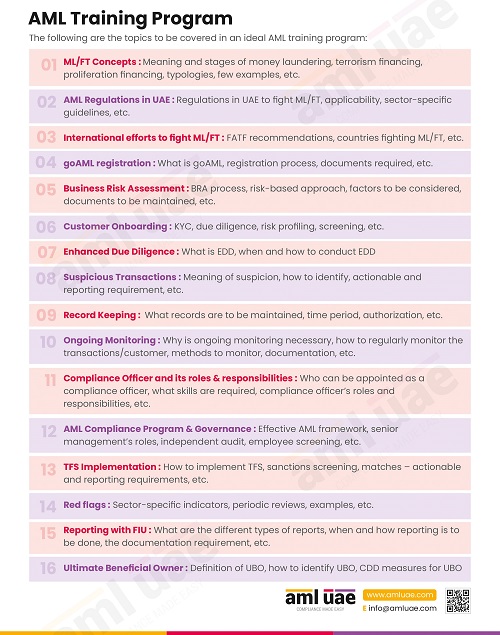
The exercise of identifying the potential risk indicators cannot be managed solely by the Compliance Officer. The employees at different levels of the organization structure deal with customers, manage the transactions, etc., making the customer information and transaction details available for analysis. Only when these employees are trained on the entity’s AML Program, identification of suspicious activities, and made aware of their duties towards combating money laundering can they contribute towards the prevention of the money laundering instances attempted through the exploitation of the business.
Only with an effective and robust AML framework, including documented AML policies, procedures, and controls, can the regulated entity stay ahead of the money launderers and stop their efforts to merge the ill-gotten funds into the legal financial systems.
Role of AML Controls, KYC, and Transaction Monitoring in Detecting Integration
Detecting AML integration requires a coordinated AML process built on strong AML controls, effective KYC AML measures, and continuous transaction monitoring.
Since integrated funds often appear legitimate, enhanced customer profiling, ongoing due diligence, and behavioural analysis are pivotal to identifying inconsistencies between a customer’s risk profile and financial activity.
When applied together, these AML controls strengthen early detection and help prevent illicit funds from remaining embedded in the financial system.
What Assistance Can AML UAE Offer in Preventing Integration Risks?
AML UAE supports organisations in preventing integration risks by providing end-to-end AML consulting and AML compliance services tailored to regulatory expectations.
Through risk-based AML risk management, AML UAE helps strengthen customer due diligence, transaction monitoring, internal controls, and ongoing oversight to detect and mitigate money laundering risks at the integration stage.
AML UAE assists the regulated entities in UAE by conducting Enterprise-Wide Risk Assessment (EWRA), customising the AML policies and processes, and delivering targeted AML training. . Further, we also train the compliance officer and the team on identifying suspicious indicators and actions to be taken to manage and report these red flags.
Let’s come together to prevent the integration of illegal funds into the financial system.
FAQs - Integration in Money Laundering
What is integration as a stage of money laundering?
During the integration stage, the dirty money is mingled with the legit sources to make it appear as if generated from such a legit source itself, obscuring the criminal source of such dirty money.
Which stage of money laundering is easiest to identify?
Money laundering attempts are easy to detect during the Placement stage, as the launderers try creating a series of fund movements, possibly involving multiple accounts or parties, which may be triggered as a red flag in the regulated entities’ system.
What is an example of integration in money laundering?
Some examples the criminals use to integrate the laundered funds are investments in legitimate business ventures, buying real estate property or luxurious items with expensive cars, antiques, or precious stones.
Is integration the second stage of the money laundering process?
Integration is the third and final stage of the money laundering process, preceded by Placement and Layering.
What is the difference between layering and integration?
Once the criminals have introduced the funds into the financial systems (during the Placement stage), in the Layering stage, a complex network of transactions is created to create multiple layers between the criminal proceeds and their origin. During the Integration stage, the movement of funds is almost done, and now the illicit funds are integrated with the legit funds, making its disintegration challenging.
What are the three stages of money laundering in order?
The 3 stages of the money laundering process are:
- Placement
- Layering
- Integration
What activity is most commonly associated with the integration stage of money laundering?
Investing laundered funds in real estate is the activity most commonly associated with integration, followed by investing in legitimate businesses and purchasing luxury assets. These purchases convert illicit funds into assets that generate documented, legitimate-looking income when sold or operated.
Is "AML integration" the same as "AML system integration"?
Why is integration the hardest stage of money laundering to detect?
Because by the integration stage the funds carry a legitimate-looking paper trail invoices, sale deeds, business accounts and are mixed (commingled) with lawful money. Detection depends less on spotting a single suspicious transaction and more on identifying inconsistencies between a customer’s profile, source of wealth, and financial behaviour.
Make significant progress in your fight against financial crimes,
With the best consulting support from AML UAE.
Share via :
About the Author

Jyoti Maheshwari
CAMS, ACA
Jyoti has over 11 years of hands-on experience in regulatory compliance, policymaking, risk management, technology consultancy, and implementation. She holds vast experience with Anti-Money Laundering rules and regulations and helps companies deploy adequate mitigation measures and comply with legal requirements. Jyoti has been instrumental in optimizing business processes, documenting business requirements, preparing FRD, BRD, and SRS, and implementing IT solutions.

Reach Out to Jyoti