



MLRO Personal Liability in the UAE: Decisions, Evidence and Escalation
Published On: 11/24/2026
Protect your business with reliable and effective AML strategies with AML UAE.
Last Reviewed On: 11/25/2026 | Last Updated On: 11/25/2026
A Money Laundering Reporting Officer (MLRO) in the UAE can face a personal fine, restrictions on their role or criminal proceedings if the relevant law applies to their actions. Holding the job title alone does not make someone guilty. The practical question is: can you explain what you knew, what you decided and what you did when a problem arose?
This guide explains MLRO personal liability for business owners, managers, compliance teams and anyone considering the role. It covers reporting decisions, management pressure, limited resources and problems inherited from a predecessor. AML UAE’s advice is to keep clear records and follow through on the action needed. Records help explain your conduct; they do not replace doing the job properly.
A few terms used below: AML means anti-money laundering. An STR is a suspicious transaction report sent to the UAE Financial Intelligence Unit (FIU). An internal suspicious activity report, or SAR, brings a concern to the MLRO for assessment. CBUAE means the Central Bank of the UAE. Your supervisor is the authority that regulates your business.
In a nutshell Personal liability depends on the person’s role, actions and the relevant law. A company fine is not automatically an MLRO fine. Report when required, keep clear records and follow up on problems. Neither a job title nor an escalation email settles liability.
- “Ultimately responsible” does not mean automatically liable. Supervisory guidance describes what the MLRO should do. A personal penalty still needs a legal basis and evidence that its conditions are met.
- Personal fines have been announced. Two CBUAE announcements in 2026 each reported an AED 300,000 penalty on a Head of Compliance and MLRO, alongside much larger bank fines. They do not establish a standard fine for every MLRO.
- Keep a record of decisions and follow-up. Record the concern, your assessment, who decided what, the action required and whether it was completed. Store confidential material only in approved systems.
MLRO personal liability at a glance
There is no single penalty for “being an MLRO”. The outcome depends on the regulator, the person’s responsibilities and the conduct involved. The table below shows selected situations and why the distinction matters.
The amounts below are not a complete list or an overall ceiling. Other laws and more serious consequences may apply. Each personal penalty requires its own legal conditions to be established.
| Situation | Possible consequence | Important limit |
|---|---|---|
| CBUAE Authorised Individual breaches | AED 100,000 to AED 5 million; removal or a ban on carrying out functions. | Relevant regulatory status and a breach within the Central Bank framework must be established. |
| Responsibility for an AML breach | Restricted powers; suspension or replacement for specified roles. | The person must be proven responsible. The separate AML administrative fine falls on the business. |
| Failure to report | Imprisonment, AED 100,000 to AED 1 million, or both. | Deliberate or grossly negligent breach; individual legal responsibility must be established. |
| Tipping off | Imprisonment, a fine of at least AED 50,000, or both; more severe punishment where specified harm to proceeds results. | An unlawful disclosure must meet the offence conditions. The text below explains the more serious outcome. |
| Actual management of a business committing a listed AML offence | Imprisonment and a fine, or either. | Awareness of the offence and a failure of duty that caused it must be established. |
| Central Bank management responsibility | Penalties for the underlying breach. | Applies to the person in charge of management where knowledge, negligence or failure of duty is established. |
| Misleading or obstructing the Central Bank | Imprisonment, a fine of at least AED 500,000, or both. | The listed information, examination or document-handling conduct must be established. |
| Entrusted funds or relevant official orders | Imprisonment, a fine of at least AED 50,000, or both; possible more severe punishment. | Check the conduct, the order and the applicable legal test. Do not assume all cases use the same test of intent or negligence. |
| Applicable sanctions instructions | Imprisonment, a fine of at least AED 20,000, or both. | The instruction and individual breach must be established. |
| Specified compliance duties | Imprisonment, a fine of at least AED 10,000, or both. | An institutional failure does not automatically prove the MLRO’s personal offence. |
| Intentional unlawful disclosure of customer data at a licensed financial institution | Imprisonment, AED 100,000 to AED 500,000, or both. | Relevant confidentiality rules and legally authorised disclosure exceptions apply. |
Table 1. Selected routes to personal exposure. A company’s breach does not automatically establish the MLRO’s personal liability.
Legal basis: Central Bank law, Articles 168, 171, 179 and 181; UAE AML law, Articles 17, 27–29, 33 and 35. The conditions in each provision still apply.
Can an MLRO be personally liable in the UAE?
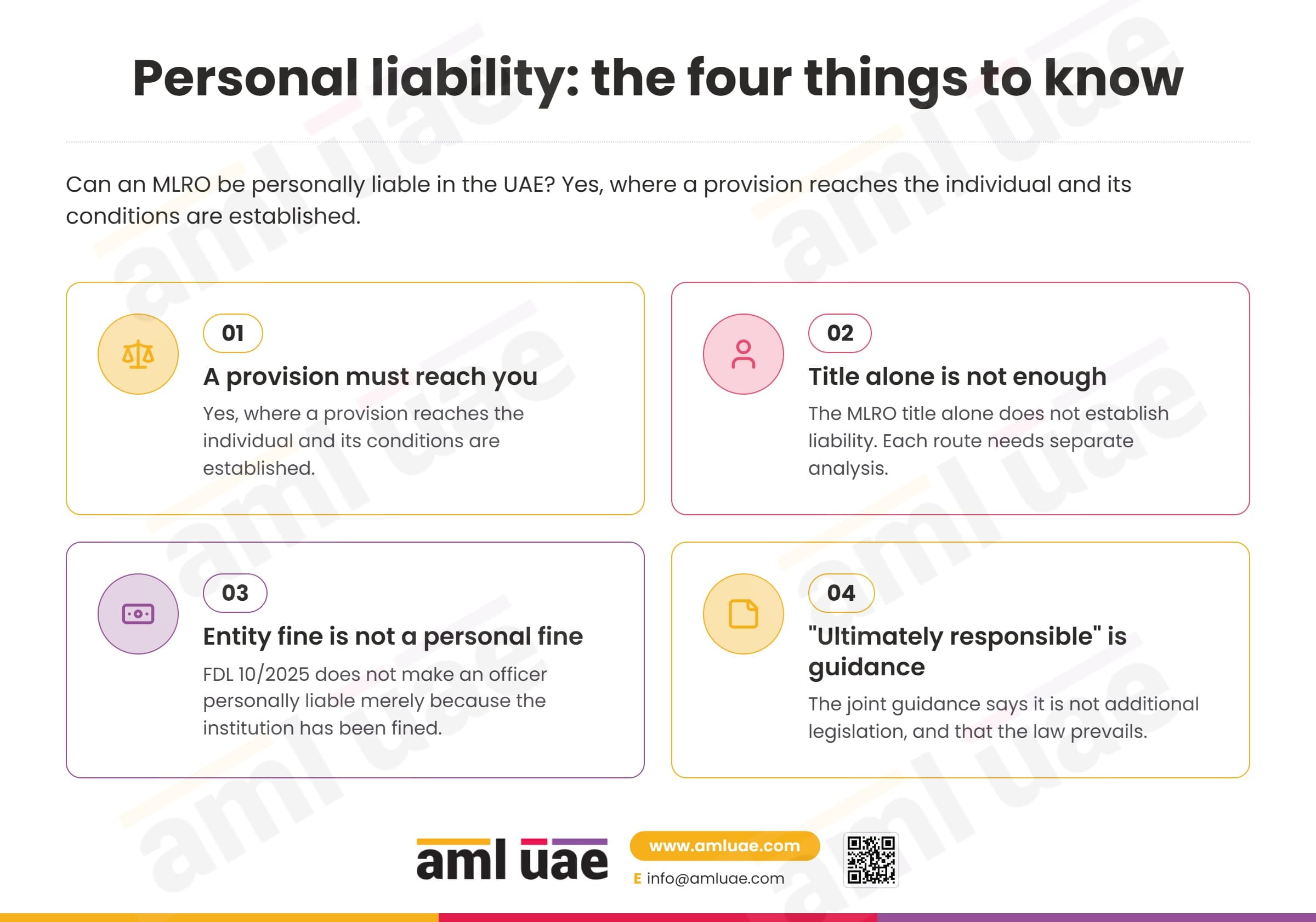
Figure 1. Four principles to keep in mind when reading about MLRO personal liability
Yes. A UAE MLRO can be personally liable where the law applies to that individual and the facts meet its requirements. A mistake, a failed control or a company fine does not by itself prove personal guilt. The individual’s responsibilities and actions must be assessed separately.
What the law does not say
- A fine on the business is not automatically a fine on its MLRO. The authority must establish the legal basis for any action against the individual.
- Different laws use different tests. Some managerial offences require awareness of the wrongdoing and a failure to carry out duties. The Central Bank framework also covers certain management failures involving negligence or failure to perform duties. Do not assume that one test applies to every MLRO.
- Supervisory guidance sets expectations, but it does not create automatic criminal liability. The words “ultimately responsible” are not a substitute for proving an offence.


“Before accepting an MLRO appointment, ask whether you can obtain the information, challenge decisions and take unresolved risks to the board. The title needs an operating mandate behind it.”

Is your MLRO carrying risk no one has mapped?
Get clarity on your regulatory perimeter, MLRO authority and reporting lines before a regulator asks.
Legal routes that can create personal exposure
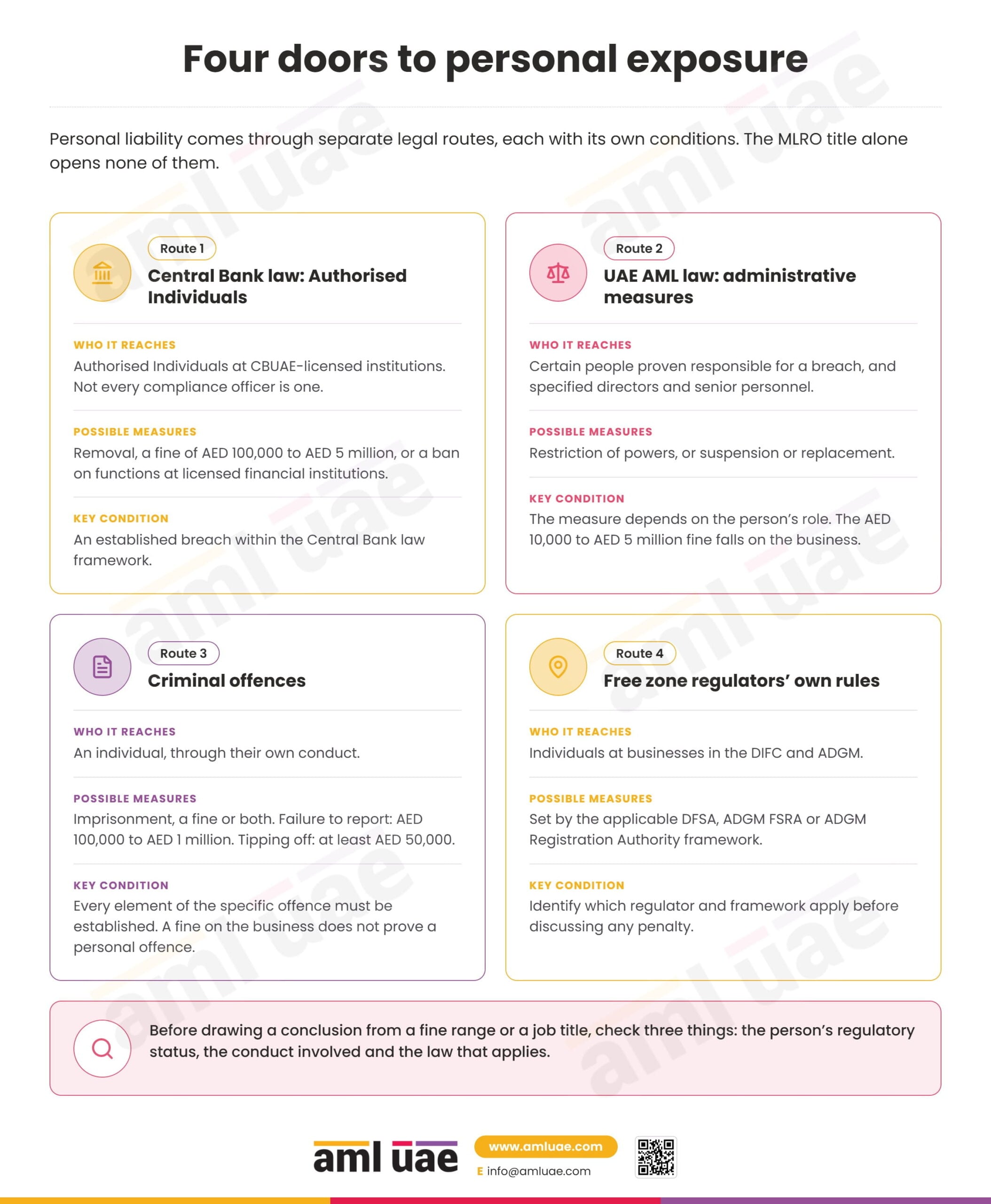
Figure 2. Four legal routes to personal exposure. Each route has its own conditions, and the MLRO title alone does not open any of them.
Personal exposure can arise through Central Bank sanctions, AML supervisory measures, criminal offences or a free zone regulator’s own rules. Each route has different conditions. Check the person’s regulatory status, the conduct involved and the law that applies before drawing a conclusion from a fine range or job title.
Route 1: Central Bank law sanctions on Authorised Individuals
At CBUAE-licensed institutions, certain people have formal regulatory authorisation. The Central Bank law allows action against these “Authorised Individuals” for established breaches within its framework. Measures can include removal, a fine of AED 100,000 to AED 5 million, or a ban on carrying out functions at licensed financial institutions.
Not every compliance officer is an Authorised Individual. Check the person’s regulatory status before applying this fine range to them. The reported 2026 MLRO fines do not prove which particular power the Central Bank used.
Which Central Bank-law offences can reach an individual?
Misleading the Central Bank, concealing information, mishandling examination documents or obstructing an examination can create criminal exposure. The relevant offence carries a fine of at least AED 500,000, imprisonment, or both. Preserve original records and make corrections through authorised channels.
A person in charge of management can also face consequences for an institution’s breach where the required knowledge, negligence or failure of duty is established. Whether an MLRO falls within that management role depends on the facts. It is not decided by the title alone.
Route 2: administrative measures under the UAE AML law
The UAE AML law allows restrictions on the powers of certain people proven responsible for a breach. It also allows suspension or replacement of specified directors and senior personnel. The categories differ, so the available measure depends on the person’s role. The administrative fine of AED 10,000 to AED 5 million per violation under this framework is imposed on the supervised business.
Route 3: criminal offences
Criminal exposure concerns the person’s conduct and the requirements of the particular offence. Key examples include:
- Failure to report. Deliberate failure or gross negligence in meeting the statutory reporting duty can attract imprisonment, a fine of AED 100,000 to AED 1 million, or both. The reporting duty is placed on regulated businesses; an individual’s legal responsibility must still be established.
A criminal fine on the business is a separate issue. It does not, by itself, establish that the MLRO personally committed an offence.
- Tipping off. Unlawfully revealing a report or related information can attract imprisonment, a fine of at least AED 50,000, or both. If the specified conduct prevents recovery of criminal proceeds, destroys them or reduces their value, the punishment can be more severe: at least one year’s imprisonment and a fine equal to the value of the proceeds, with a minimum of AED 100,000.
- Entrusted funds and official orders. Deliberate or grossly negligent mismanagement of entrusted funds, and violations of relevant seizure or freezing orders, can create criminal exposure. The base penalty is imprisonment, a fine of at least AED 50,000, or both. Do not assume that the same test of intent or negligence applies to every kind of order. The more severe consequences described above can also apply where the required harm to the proceeds is established.
- Sanctions instructions. Breaching applicable instructions from the Executive Office or another competent authority can attract imprisonment, a fine of at least AED 20,000, or both. The instruction and the person’s breach must be established.
- Other compliance duties. Breaches of specified AML duties can attract imprisonment, a fine of at least AED 10,000, or both. A failure by the business does not automatically prove a personal offence by the MLRO.
- Managerial responsibility. A person actually managing a business can face criminal consequences for listed offences if they knew about the offence and it happened because they failed in their duties. This is separate from the Central Bank management route described above.
- Immigration consequences. Where a foreigner receives a custodial sentence for money laundering or a felony covered by the UAE AML law, the judgment must order deportation. For the other covered misdemeanours involving a custodial penalty, the court may order deportation, including instead of custody. Holding the MLRO title alone does not trigger deportation.
Route 4: free zone regulators' own rules
Businesses in the Dubai International Financial Centre (DIFC) and Abu Dhabi Global Market (ADGM) must identify their own regulatory framework. The Dubai Financial Services Authority (DFSA), ADGM Financial Services Regulatory Authority (FSRA) and ADGM Registration Authority have different responsibilities.
“Map the licence and the individual’s regulatory status before discussing a penalty. A bank’s Authorised Individual sanction is not a universal fine for every UAE compliance officer.”

What the CBUAE has done: two 2026 cases
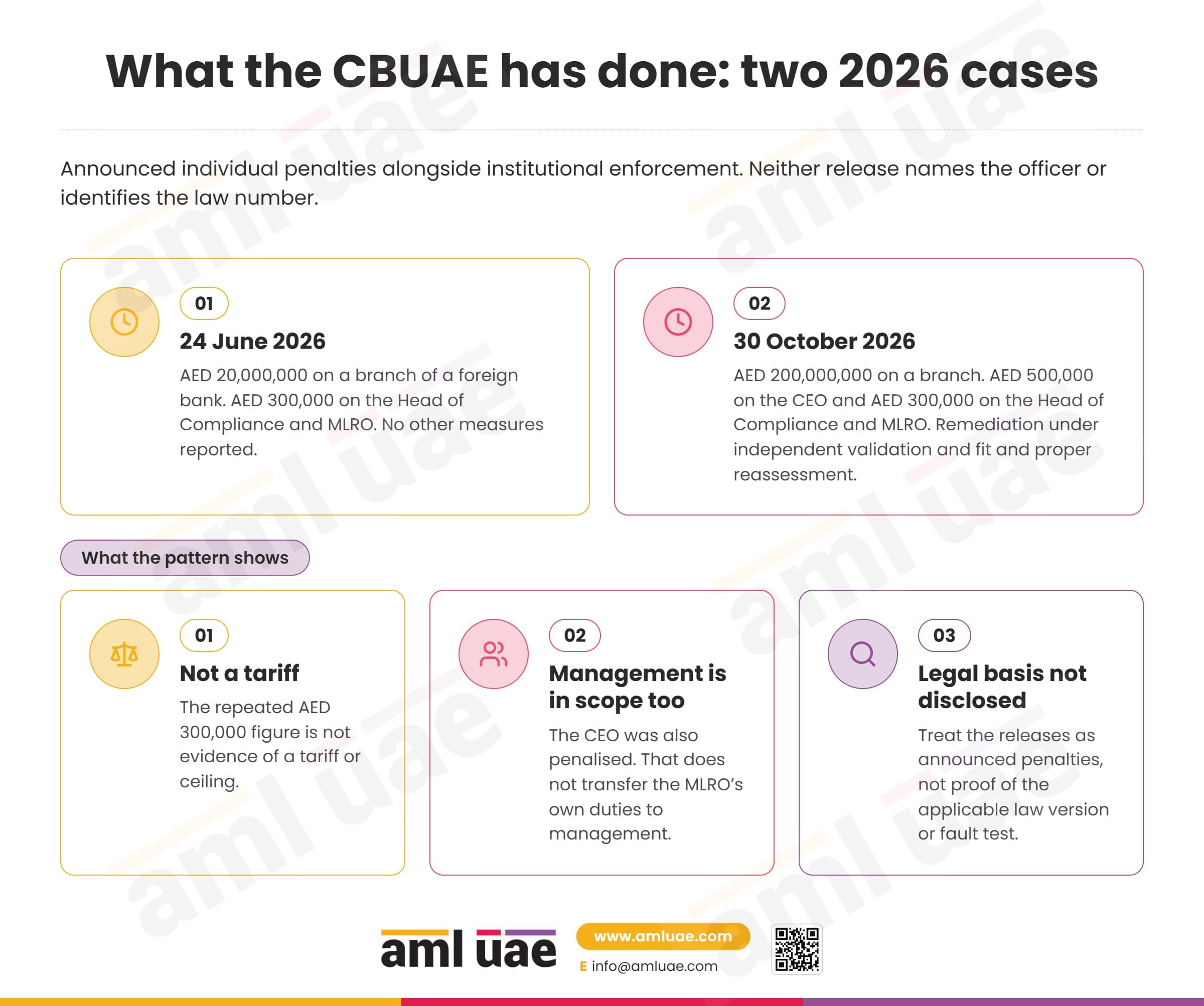
Figure 3. Two announced cases. These are examples of personal enforcement, not a standard MLRO penalty scale.
The CBUAE announcements show that institutions and individual officers can both face enforcement. They do not give enough detail to identify the exact legal basis for each personal fine. We should not treat them as proof that every similar control failure leads to the same result.
| Date | Fine on foreign-bank branch | Individual fines | Other announced measures |
|---|---|---|---|
| 24 June 2026 | AED 20 million | AED 300,000 on the Head of Compliance and MLRO. | No other measures reported in the release. |
| 30 October 2026 | AED 200 million | AED 500,000 on the CEO; AED 300,000 on the Head of Compliance and MLRO. | Independent validation of corrective work and reassessment of the CEO and compliance head’s fitness for their roles. |
Table 2. Announced figures and measures. June was checked against the mirrored CBUAE release and WAM; October against the release reproduced by ZAWYA. The releases do not name the officers or identify the exact individual sanction provision.
What do the CBUAE announcements establish?
- AED 300,000 is not a fixed tariff or maximum. The same announced amount in two cases does not establish what another MLRO would face.
- Management is in scope too. The October announcement also penalised the CEO. That does not transfer the MLRO’s own duties to management.
- Career consequences can extend beyond a fine. The October announcement required an independent review of the corrective work and a reassessment of the CEO and compliance head’s fitness for their roles. It did not announce a prohibition from all future roles.
- The announcements leave important facts undisclosed. They demonstrate personal enforcement, but they are not a complete explanation of what each individual did or which legal test was applied.
Don't wait to become the next enforcement case
Our AML/CFT health check finds the gaps in your MLRO function, control oversight and remediation evidence first.
Where an MLRO's decisions create exposure
An MLRO should be able to explain the decision and what happened next. This map connects seven everyday decisions to the risk involved and the record that helps explain the response. These records are AML UAE’s practical recommendations; they are not automatic legal defences.
| Decision | Risk to address | Useful record |
|---|---|---|
| File or retain a report | A required report is missed, or a decision cannot be explained. | Receipt and assessment dates, information reviewed, reasons, action and filing receipt where applicable. |
| Share report or customer information | Unlawful disclosure, tipping off or unauthorised customer-data access. | Approved recipients, reason and authority for sharing, and communication record. |
| Management overrides advice | No clear record of the decision or how risk will be controlled. | Advice, decision-maker, rationale, action owner, due date and follow-up. |
| Request resources | The function lacks the people, systems or authority needed. | Dated request, failing control, risk, management reply and temporary measures. |
| Report to management | Problems do not reach decision-makers or receive a response. | Report, delivery record, management observations and tracked actions. |
| Handle sanctions and freezing orders | Screening, execution, reporting or customer communication is mishandled. | Official decision/order, match assessment, receipt and action times, reports and authorised communications. Prepare separately for the FIU regime starting 14 December 2026. |
| Respond to a CBUAE examination | Inaccurate submissions, missing records or obstruction. | Source records, original material, version history, authorised corrections and response log. |
Table 3. Seven MLRO decisions and the evidence worth keeping.
Source note: UAE AML executive regulations and the relevant sanctions and FIU rules underpin the duties discussed below. The suggested records are AML UAE recommendations.
How should an MLRO assess internal suspicious activity reports?
The MLRO must assess internal reports confidentially and decide whether to report to the FIU or retain the matter with reasons. The reporting requirement covers suspicious transactions, attempted transactions and funds, regardless of value, where the legal threshold is met.
Required reports must be made immediately and without delay, subject to the specific professional-secrecy exception. An internal report is not the same as a filed STR. See STR filing on goAML and suspicious activity and suspicious transaction for more detail.
When does not filing become a criminal risk?
Deliberately or through gross negligence failing to meet a reporting duty can create criminal risk. Whether the individual MLRO committed that offence needs a separate assessment of their responsibilities and conduct. Writing a decision note does not excuse a report that should have been filed.
When does tipping off create personal exposure?
Tipping off means unlawfully revealing that a report has been made or is planned, or disclosing related information. Directors, officers and employees must respect the relevant restrictions. Limit file access and make sure routine customer questions do not reveal a report or investigation. Any permitted sharing must follow the applicable rules. See tipping-off risk for practical controls.
What customer-data limits apply to group sharing?
Customer confidentiality is a separate obligation at CBUAE-licensed institutions. People who can access customer data must not disclose it or allow unauthorised access. Intentional unlawful disclosure can lead to imprisonment, a fine of AED 100,000 to AED 500,000, or both.
Being part of the same corporate group does not give unrestricted permission to share customer information. Required AML disclosures and other authorised sharing need a valid legal basis and the right channel. Do not treat an exception applying to one part of the confidentiality rules as permission to ignore every other restriction.
What if senior management overrules you?
For a high-risk customer decision, supervisory guidance expects the MLRO to be consulted and management to record why it departs from the advice. Record your recommendation, management’s decision, the action agreed, its owner and the follow-up date. Check whether the promised action actually happened.
Can management approval replace the MLRO’s STR decision?
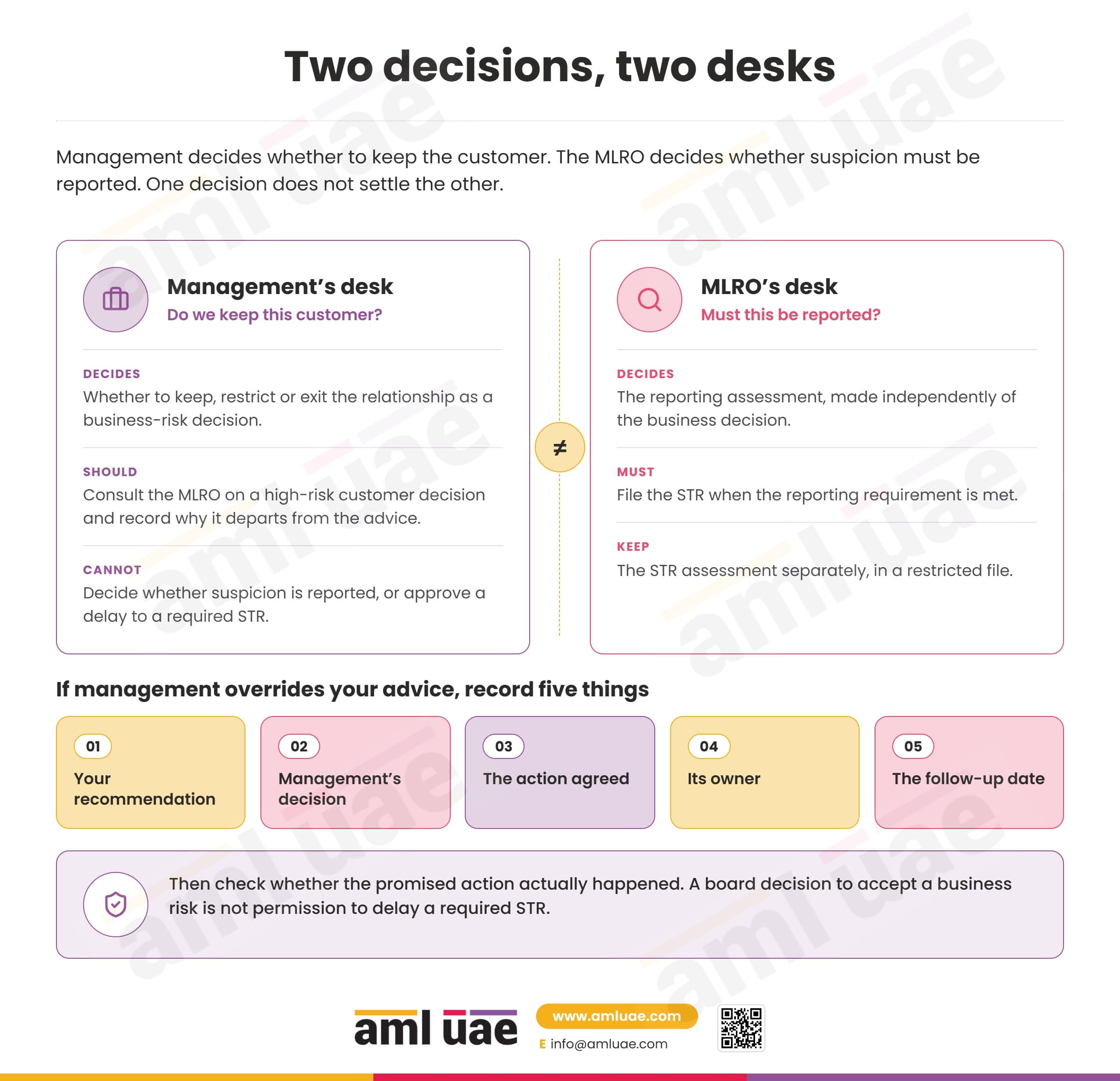
Figure 4. Management’s customer decision and the MLRO’s reporting decision are separate. Record any override and check the follow-up.
No. Management may decide to keep a customer, but that does not settle whether suspicion must be reported. The MLRO must make the reporting assessment independently and file when the reporting requirement is met. Board approval to accept a business risk is not permission to delay a required STR.
Does lack of resources reduce your exposure?
Limited resources explain the circumstances; they do not automatically remove responsibility. Make a dated request explaining the failing control, the resources needed, the immediate risk and any temporary measures. Keep management’s response and follow up. Older penalty schedules contain references to replaced rules, so do not present those legacy fines as automatically applicable without supervisor confirmation.
“A useful resource request explains the control that is failing, the options available and the risk left open. Record management’s response, then track whether the agreed action actually closes the gap.”

What should an MLRO preserve during a CBUAE examination?
Preserve original examination records, source documents, submissions and version history. Do not conceal, alter, destroy or improperly send examination material abroad. If you find an error, preserve the original and make an authorised correction with a clear explanation. An internal escalation does not remove these responsibilities.
When must sanctions-list funds be frozen?
Covered sanctions-list funds must be frozen immediately, without prior warning. The sanctions resolution defines “without delay” as immediately and, in any event, within 24 hours of the relevant inclusion decision by the UN Security Council, Sanctions Committee or UAE Cabinet. This is not permission to wait 24 hours after an internal alert. Other freezing orders have their own rules.
Which screening and reporting duties apply to sanctions lists?
Financial institutions and regulated non-financial businesses must register for official notifications, screen the required customers and transactions continuously, freeze covered funds on a match and act on applicable delisting decisions. They must also make the required reports, maintain controls, prevent tipping off and cooperate with the authorities. These are business obligations; personal liability needs its own legal basis.
Keep the official listing decision, the match assessment and the times of each action. Guidance and the resolution describe the timing slightly differently, but neither creates a fresh 24-hour allowance when your team notices an alert.
How do sanctions reports and current penalty guidance fit together?
Report the specified sanctions cases to the supervisor immediately. Separately, notify the Executive Office within five working days of freezing. One report does not replace the other. Keep both records and the freeze timestamps. Current official guidance identifies AML penalties for relevant sanctions-instruction breaches and supervisory measures; personal consequences still depend on the applicable conditions.
What changes for FIU orders?
A new FIU regulation is due to take effect on 14 December 2026. As at this article’s editorial update, 23 November 2026, businesses should prepare for it while continuing to meet existing duties. It introduces specific processes for postponing suspicious transactions, suspension orders and freezing funds. These are separate from sanctions-list freezes and court orders.
What PSTR workflow should an MLRO prepare for?
From 14 December 2026, a Postponement Suspicious Transaction Report (PSTR) is due within 24 hours when the required suspicion and imminent risk of funds being transferred, withdrawn or dissipated coexist. Unless the FIU authorises the transaction, do not proceed until three business days after filing have passed without FIU communication.
There is an exception where refraining is objectively impossible or likely to frustrate efforts to pursue the customer or intended beneficiary; a PSTR is then due within two hours after execution. Ordinary STR duties continue. This is not a holding rule for every STR.
How should an MLRO prepare for FIU suspension and freezing orders?
From 14 December 2026, FIU suspension and freezing orders under the new regulation must be acted on immediately, including outside ordinary business hours. Receipt generally needs to be acknowledged within two hours, with specific exceptions where relevant activity cannot occur outside business hours.
Inability to execute or delay also requires an explanation within two hours of receiving the written order. Keep these communications separate from execution: acknowledgement time is not permission to postpone action.
Suspension lasts for the period in the order, up to 10 business days; if no period is stated, it lasts 10 business days or until lifted sooner. Freezing lasts for the period in the order, up to 30 days unless extended by the Attorney General or delegate; if no period is stated, it lasts 30 days or until revoked sooner
When does an FIU order require customer notification?
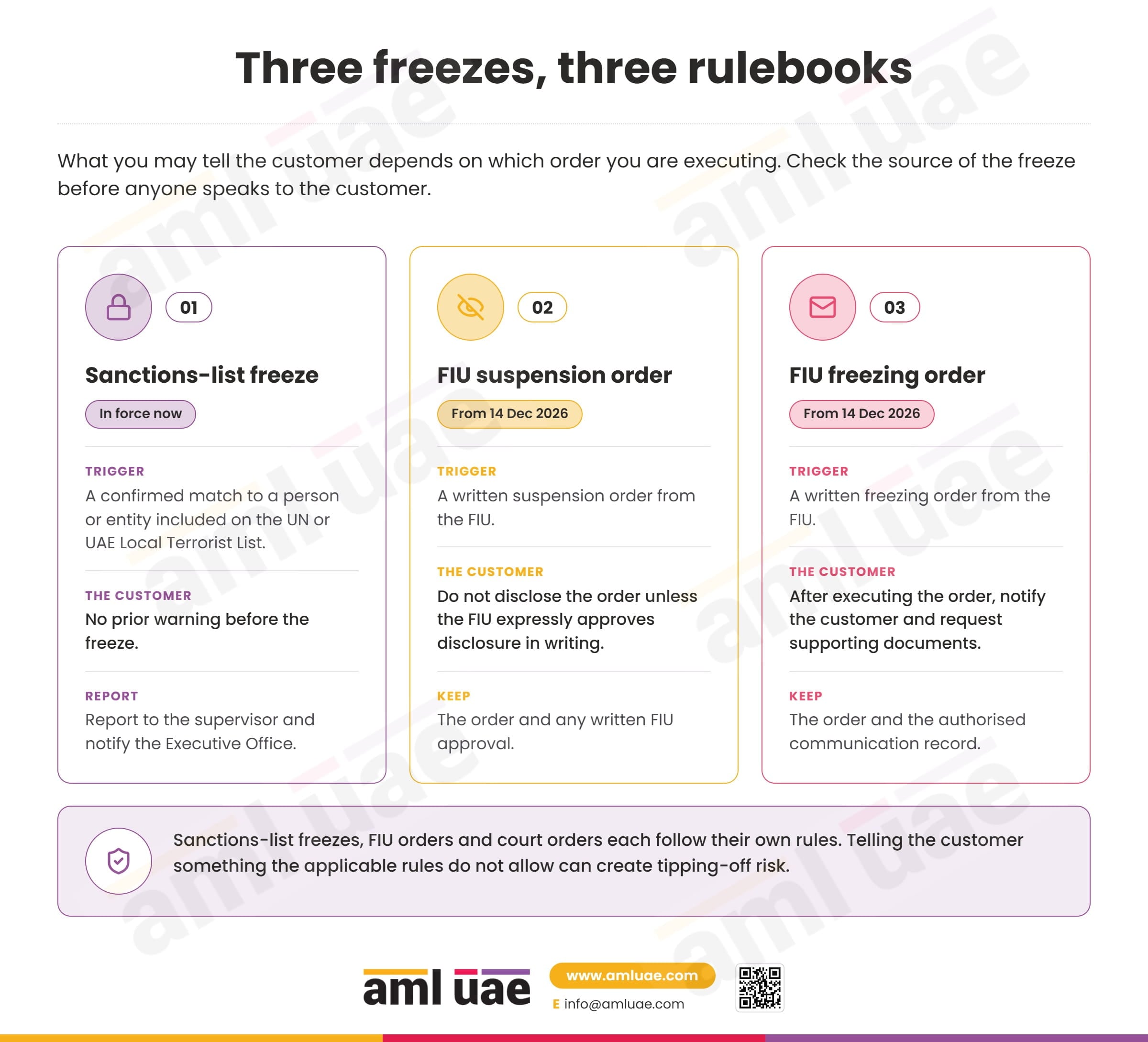
Figure 5. Sanctions-list freezes, FIU suspension orders and FIU freezing orders carry different rules on what the customer may be told.
From 14 December 2026, the new FIU rules distinguish suspension from freezing. Suspension orders must not be disclosed unless the FIU expressly approves disclosure in writing. After executing an FIU freezing order, the business must notify the customer and request supporting documents. A sanctions-list freeze follows different rules, including no advance warning. Keep the order and the authorised communication record.
What FIU order evidence and ownership should be prepared?
For the FIU regime starting on 14 December 2026, allocate responsibility to the compliance officer or an employee of similar status and seniority. Prepare action logs, system records, escalation arrangements, operational coverage, separation of duties, testing and training, with the regulation’s exceptions checked. A breach does not automatically establish the MLRO’s personal guilt.
What should a defensible decision record contain?
AML UAE suggests a decision note that answers: What happened? What did I review? What did I recommend, and why? Who decided what? What action was agreed, who owns it and when is it due? What did the follow-up show? Keep the STR assessment separately in a restricted file. This is a suggested working format, not a legal form or a real client case.
For example: “On [date], [facts] raised a concern. I reviewed [records] and recommended [action] because [reason]. [Name] decided [outcome]. [Owner] will complete [action] by [date]. The follow-up showed [result], so the next step is [action].” A note that management accepted the risk is incomplete unless the promised action is checked.
“A management decision to keep a customer and an MLRO decision on suspicion are different decisions. Document both, and do not let the first become a reason to delay the second.”

AML UAE MLRO Decision and Evidence Review: 12 checks
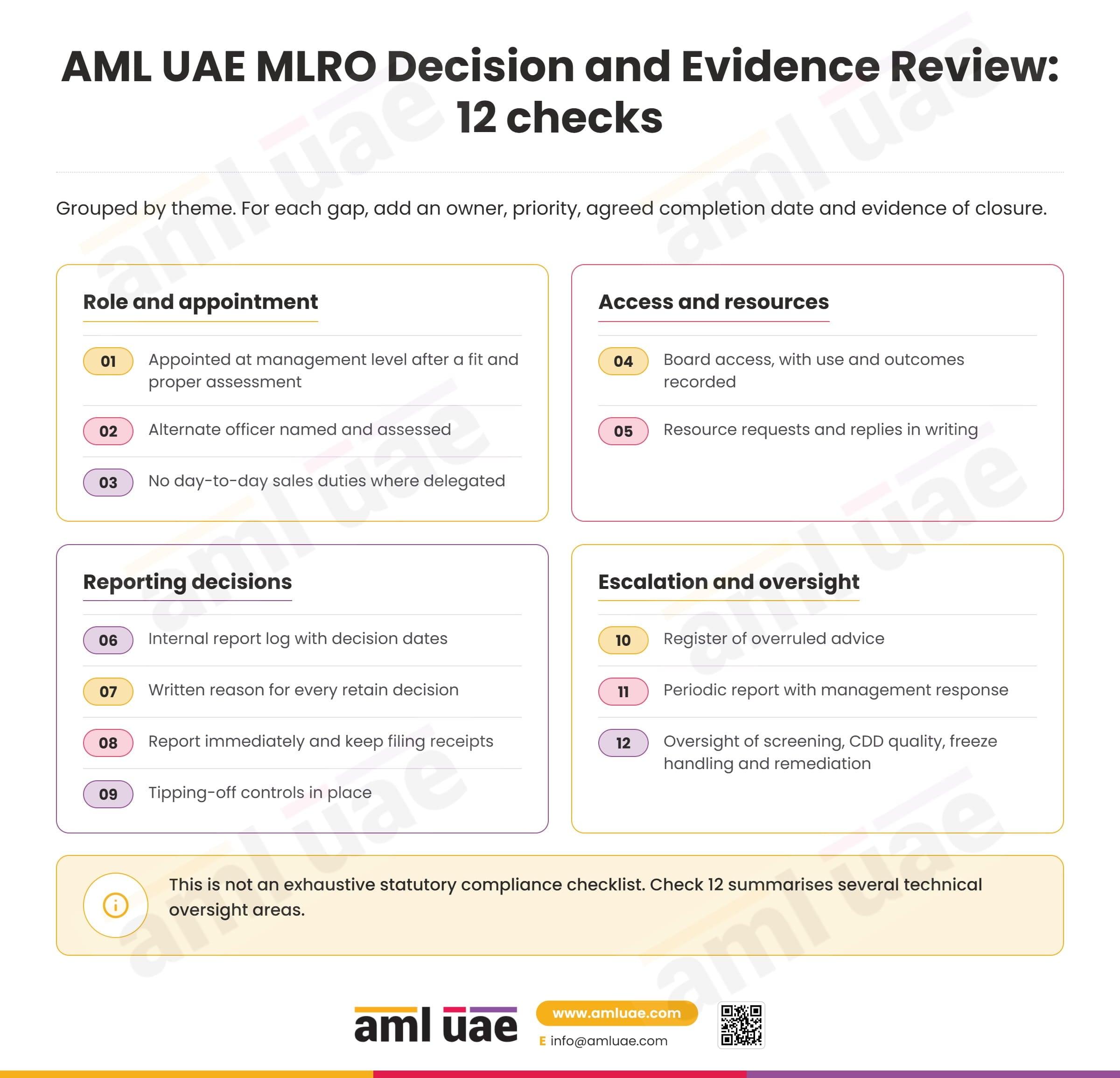
Figure 6. Twelve practical checks for the MLRO function. Use the editable checklist below to record gaps and follow-up.
Use the AML UAE MLRO Decision and Evidence Review to check whether your records explain your actions. For each gap, add an owner, priority, due date and evidence that the action was completed. The checklist turns the legal and supervisory expectations into practical questions.
| # | Check | Evidence to keep |
|---|---|---|
| 1 | Was the MLRO appointed at the right level and assessed as suitable? | Appointment letter, suitability assessment and organisation chart. |
| 2 | Is a suitable alternate named? | Alternate’s appointment and assessment record. |
| 3 | Are incompatible sales or customer duties avoided where the role is delegated? | Job description and reporting line. |
| 4 | Can the MLRO reach the board and show what happened after escalation? | Board papers, minutes and action records. |
| 5 | Are resource requests and responses in writing? | Request, management reply and budget decision. |
| 6 | Are internal reports logged, prioritised and assessed? | Receipt, priority and decision dates. |
| 7 | Is a decision not to report supported by written reasons? | Assessment and decision note. |
| 8 | Are required reports, including attempted transactions, filed immediately? | Filing receipts linked to the assessment and decision. |
| 9 | Are confidential reports protected from tipping off? | Access list, communication controls and staff briefing record. |
| 10 | Is overruled advice recorded and followed up? | Management rationale, agreed safeguards, owner and follow-up. |
| 11 | Do periodic reports reach management and receive a response? | Report, delivery record, management observations and actions. |
| 12 | Are screening, customer checks, freezing and corrective work tested and tracked? | Screening tests, match records, freeze/action times, required reports and completion evidence. Prepare and test the separate FIU processes before 14 December 2026. |
Table 4. AML UAE’s 12-check review. Adapt it to the business and its regulator; it is not a complete statutory compliance checklist.
Check your supervisor’s reporting timetable. The current federal rules require periodic compliance reports to senior management and a copy to the supervisor when requested. The joint guidance describes semi-annual reporting using an older statutory reference. Do not assume one timetable applies to every business.
Would your decision records survive an inspection?
We review the evidence behind your reporting decisions, management escalations and open actions, so nothing is left unexplained.
What should an MLRO do about inherited gaps?
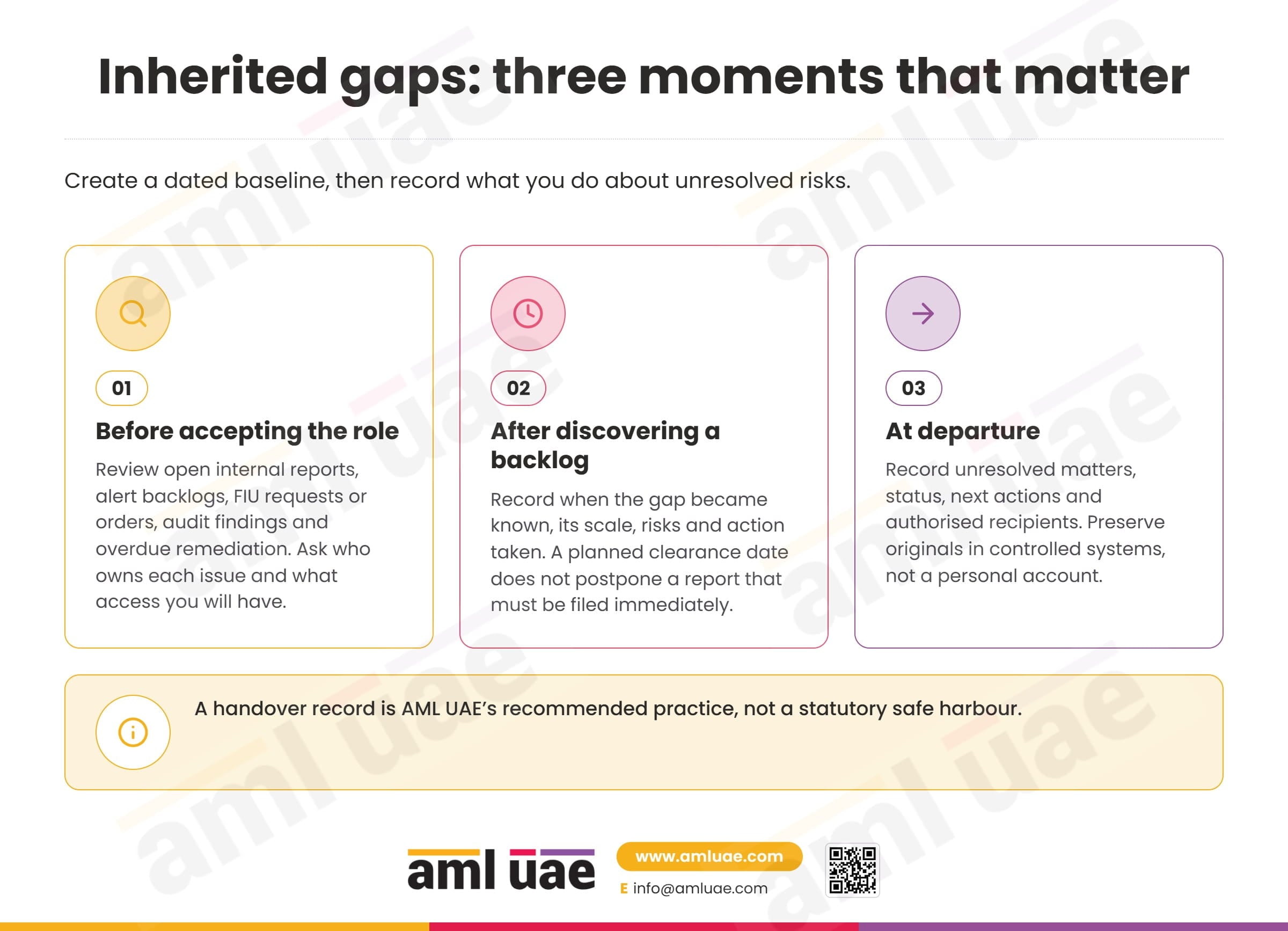
Figure 7. Taking over a role, finding a backlog and leaving the organisation each need a clear handover record.
Create a dated picture of the problems you inherit and record your response. A pre-existing gap and your actions after discovering it are different matters. A handover note does not make you automatically liable for a predecessor’s conduct, nor does it protect you from your own failures.
What should you ask for before accepting the MLRO role?
Ask for open internal reports, alert backlogs, FIU requests or orders, unresolved audit findings, overdue corrective work and commitments made to the supervisor. Find out who owns each issue, what information you can access and whether the board has approved the resources needed.
How should you respond after discovering a backlog?
Record when you found the backlog, how large it is, the immediate risks and the action taken. Assign owners and track progress. A future target date for clearing the backlog does not postpone a report that must be filed immediately.
What should be included in a departure handover?
Record open matters, status, next actions and authorised recipients. Keep original records and their history in the institution’s controlled systems. Do not take confidential STR or customer files to a personal account. Check the regulator’s appointment, departure and notification rules. Leaving the role does not erase past conduct or necessarily end every obligation.
Extra care is needed with customer data and material involved in a Central Bank examination. A handover must follow confidentiality and document-handling rules. Using an approved system is sensible control practice; the legal consequences of any transfer depend on the facts.
What protects an MLRO, and what must they report?
Good-faith reporting can protect an MLRO from liability for providing required information, within the relevant law’s terms. It does not excuse unrelated failures. Compliance officers at Central Bank-licensed institutions also have a personal reporting duty, and specific protections apply to dismissal or disciplinary action. The scope matters in each case.
What protection applies to good-faith AML reporting?
The UAE AML law protects required good-faith disclosures from criminal, civil and administrative liability within its terms. Reporting in bad faith with intent to harm is excluded. This protection concerns furnishing the information; it does not excuse an ineffective AML programme or an unrelated breach.
What protection applies to good-faith sanctions freezing?
The English sanctions resolution protects specified good-faith freezing and related actions from administrative liability. Official guidance describes wider protection, but that should not be treated as a blanket promise of freedom from criminal or civil liability. Keep the match evidence, reason for acting and action record, and check the legal basis for the protection claimed.
What must a compliance officer report to the CBUAE?
At CBUAE-licensed institutions, compliance officers have a personal duty to report the specified significant matters and violations to the Central Bank immediately. This is separate from filing STRs with the FIU.
The Central Bank framework also protects listed people for good-faith reporting and requires CBUAE approval before the institution dismisses or disciplines them. The approval requirement includes compliance officers and is not expressly limited to those who previously made a good-faith report. It is not a general employment protection for every sector.
An MLRO is only as strong as the support behind them
Strengthen reporting lines, access, resources and continuity with a properly structured in-house AML function.
Does the same exposure apply to a part-time, group or outsourced MLRO?
No single answer applies across all UAE regulators. A part-time, group or outsourced arrangement must meet the rules for that business and leave clear responsibility for the work. The contract alone does not make the arrangement compliant.
There is a tension to resolve: joint guidance prohibits outsourcing the MLRO role, while the DFSA and FSRA AML rulebooks expressly permit suitable external individuals subject to conditions. The FSRA has told firms to follow its AML rulebook where it conflicts with the guidance.
Check the applicable rulebook, appointment conditions and the individual’s duties. Where requirements appear inconsistent, obtain clarification from the relevant supervisor. Do not assume that an old letter or checklist settles the current position.
Which UAE residence requirements apply to an MLRO?
UAE residence is generally required under the relevant DFSA and FSRA provisions, including for outsourced FSRA MLROs. There are defined exceptions and waiver arrangements, and they differ between regulators. A possible waiver is not an automatic exemption. Check the conditions for the actual appointment.
FAQs on MLRO personal liability
An MLRO can face a personal fine or criminal proceedings, but liability depends on the applicable law and the person’s conduct. A company fine does not automatically establish an individual offence. These answers explain common questions about fines, prison, reporting, dismissal and the records that help explain an MLRO’s actions.
Can an MLRO be fined personally in the UAE?
Yes. At CBUAE-licensed institutions, a violating Authorised Individual can face a fine of AED 100,000 to AED 5 million under the relevant Central Bank power. That is not a universal fine range for all UAE MLROs. Other offences and regulators have their own rules.
Can an MLRO go to prison?
Yes, if a criminal offence applies to the individual and its conditions are proved. Reporting failures, unlawful disclosure and obstruction can create criminal exposure in the circumstances covered by law. The MLRO title alone does not establish an offence.
Is the MLRO liable if the company is fined?
Not automatically. A company fine and an individual’s liability are separate questions. An authority must establish the legal basis and conditions for acting against the person. The business being fined does not, by itself, prove that the MLRO personally broke the law.
Does “ultimately responsible” in the joint guidance mean legal liability?
No. The joint guidance describes supervisory expectations; it does not create automatic criminal liability. Any personal penalty depends on the relevant law and the person’s conduct.
Does this apply to compliance officers at DNFBPs?
Federal AML duties apply to designated non-financial businesses and professions (DNFBPs). Examples include real estate brokers and agents concluding transactions or settlements for customers concerning property purchases or sales, and precious-metals or precious-stones dealers undertaking cash transactions totalling at least AED 55,000, whether singly or through linked transactions. Certain professional activities are also covered.
Personal consequences depend on the relevant provision and conduct. Bank-specific fine ranges do not automatically apply. Older penalty schedules need supervisor confirmation where they refer to replaced rules.
Can an MLRO be dismissed for reporting a violation?
At CBUAE-licensed institutions, Central Bank approval is required before dismissing or disciplining listed people, including compliance officers. This approval requirement is separate from good-faith reporting protection and is not expressly dependent on a previous report. Do not assume the same rule applies to every UAE employer.
What should an MLRO keep to show they did their part?
Keep the facts, your assessment, reasons, decision-maker, escalation, action owner and follow-up. AML UAE’s 12-check review also covers appointments, resources, filing receipts, management responses and control oversight. Use approved systems and restrict access to confidential files. Good records support review; they do not guarantee protection from liability.
Does a written escalation remove an MLRO’s personal liability?
No. An escalation helps explain what you knew and did, but it does not remove your own duties. Follow up on unresolved risks and file any required report. A board email does not replace an STR.
Sources and scope: this guide draws on Federal Decree-Law 10/2025 (UAE AML law), Federal Decree-Law 6/2025 (Central Bank law), Cabinet Resolution 134/2025 (AML executive regulations), Cabinet Resolution 74/2020 (sanctions lists) and FIU Regulation 1/2026, alongside the guidance and free zone rules discussed above. It summarises selected English-language provisions, not every offence. The review checklist and record formats are practical recommendations.
Related reading: the role and responsibilities of the AML compliance officer, what an MLRO report contains, and AML fines and penalties in the UAE.
Found gaps in your review? Close them with AML UAE
Talk to our specialists about the issues your Decision and Evidence Review uncovered and get a clear remediation path.
Share via :
Share via :
About the Author

Pathik Shah
FCA, CAMS, CISA, CS, DISA (ICAI), FAFP (ICAI)
Pathik is an ACAMS-certified AML consultant specialising in governance, risk, and compliance for regulated entities in the UAE. He brings over 28 years of experience, with 1,000+ hours of AML training and 200+ advisory engagements across DNFBPs, VASPs, and FIs. He supports businesses in aligning with AML/CFT requirements from the CBUAE, DFSA, MoET, MoJ, VARA, CMA, FSRA, and FATF. Known for translating complex regulations into audit-ready procedures, Pathik enables operational clarity and compliance readiness.

Reach Out to Pathik