




AML Regulations for CMA-Regulated Advisors and Promoters in UAE
eKYC Software
eKYC Software
An efficient AML Software is a game-changer for Regulated Entities like DNFBPs, VASPs and SCA-regulated entities in the UAE. An eKYC Software addresses several challenges raised by the legacy KYC Software and provides a solution which is faster, more secure, and more reliable for meeting customer due diligence (CDD) requirements.
What is eKYC Software
Electronic Know Your Customer (eKYC) Software is a digitized form of verifying the identity of Customers using real-time data and advanced technology, which replaces the manual verification process and documentation. It facilitates in making entire KYC process more seamless, efficient, up to date and compliant with the regulatory requirements.
eKYC Software assists regulated entities in verifying the identity of potential as well as existing customers who might pose Money Laundering (ML), Terrorism Financing (TF), Proliferation Financing (PF) risks to the business.

How an eKYC Software Helps Businesses Navigate AML/CFT Compliance Landscape
eKYC Software assists with the identification and verification of Customers, enabling regulated entities to understand their customers better and perform risk-based due diligence measures. eKYC software enables these Regulated Entities to comply with the AML obligations defined in UAE’s AML/CFT laws, such as:
- Federal Decree by Law No. (10) of 2025, which mandates Regulated Entities to take Anti-Money Laundering and Counter-Terrorism Financing measures, KYC requirements are embedded throughout this regulation.
- Cabinet Resolution No. (134) of 2025, which concerns the implementation of Federal Decree Law No. (10) of 2025.
Financial Institutions in UAE are required to apply appropriate KYC process for its customers depending on the ML, FT risks associated with each customer as per the Rulebook of Central Bank of UAE (CBUAE).

Regulated Entities in UAE, while opting for an eKYC Software, must ensure that it aligns with the FATF Recommendations regarding the CDD process. Recommendation 10 of FATF states that digital source documents, data or information must be reliable and independent. This establishes that eKYC Software used to conduct digital identification must rely on adequate technology, governance, process and procedure which give confidence that the generated results are accurate.
Common Roadblocks while Conducting eKYC
Whether you are a KYC Analyst or Compliance Officer within a DNFBP or anyone tasked with conducting eKYC, there are always data privacy concerns, inadequate standardisation, technological glitches, etc., while performing eKYC.
Are you concerned about safeguarding the sensitive data from unauthorised access?
Do you also worry that there is threat to your client’s personal data with the growing cyber crimes?
Do you also frequently experience site crashes and other technical glitches while client onboarding?
Are you also fed up when you realise your KYC system is not up to date with the regulatory changes?
Do you also find managing digital CDD process overwhelming despite being techno-savvy?
Do you also feel frustrated when your client onboarding process take longer time due to slow eKYC system?
How eKYC Software Facilitates Compliance with KYC Obligations?
eKYC Software assists Regulated Entities to abide by the AML/CFT compliance regulations in the UAE by having a step-by-step uniform process that fulfils the primary objectives of KYC requirements, which are customer data collection, identity verification, customer risk assessment, ongoing monitoring and record keeping, which are explained in detaile below:

Customer Data Collection
eKYC software assists regulated entities in gathering the relevant data regarding customer’s identity. eKYC Software quickly and accurately collects relevant information once the customer logs in and enters personal details into the portal. Other than that, it also uses biometrics, digital signature, face recognition, and live check methods to extract real time data. Following details are collected by eKYC Software:
- Name, address and other relevant details of the Customer.
- Nationality and Residency
- Occupational details
- Type of business and date of registration in case of legal entity
- Purpose of Transaction
eKYC Software facilitates in collecting the above data efficiently from customers, apart from that eKYC Software also provides for KYB which is Know Your Business, it is similar to KYC process, however it also includes business verification, structure of business, its main business activity, its beneficial ownership, its relevant financial information, documentation and AML compliance.
Customer Identity Verification
After collecting the data, eKYC Software performs the stringent identity verification process on behalf of the regulated authorities.
eKYC Software automatically performs the verification process by cross verifying the collected data using Government databases like Passports, Emirates ID, utility bills, driving licenses, and bank details to fulfil KYC requirements. It further assists regulated entities in establishing the legitimacy and validity of the onboarded customers.
eKYC Software further automatically detects if any document submitted is forged or tampered and flags it for further review, apart from that it also flags those documents where there has been a suspicion of fraud or the data provided doesn’t match, making the whole verification process seamless and effortless for the regulated entities.
eKYC Software also assists regulated entities in detecting those companies who do not have a functioning business but can be very well misused for ML or TF activities, such as shell companies.
Customer Risk Assessment
Based on the data provided and verified, eKYC Software facilitates risk assessment of the customers. It assists Regulated Entities to differentiate between low, medium and high-risk customers based on the following:
– Nature of business
– Customer Background
– Nature of transaction
– Presence of business in various jurisdictions
– Company structure, names of directors and authorized representatives
– Beneficial ownership and shareholding structure
eKYC Software makes the entire customer risk assessment (CRA) process easier and quicker. The system sets simplified due diligence for low-risk customers, standard due diligence for medium-risk customers and enhanced due diligence for high-risk customers, so any kind of ML, TF or PF activities can be detected at an earlier stage only.
Ongoing Monitoring
eKYC Software facilitates ongoing monitoring of each customer’s profile. For regulated entities, the work does not end at customer identification, verification and customer risk assessment; it needs constant monitoring as customer data is prone to evolve with time.
eKYC Software provides alerts or notifications for:
- Expiry of KYC documents like passports, ID proofs, trade licenses
- Changes in business structure or ownership
- Missing documents or document renewals
- Suspicious or High-risk transaction behaviour
- Change in customer data or information
Robust eKYC Software aids Regulated entities to detect any ML or TF risk-inducing patterns in a timely manner so they can be compliant with the AML/CFT obligations.
Record Keeping
eKYC Software plays a pivotal role in maintaining records of the customer data collected. It facilitates regulated entities to comply with AML laws of UAE mainland as it necessitates them to keep the relevant data stored for at least 5 years as part of their KYC obligations.
eKYC Software facilitates easy and accessible cloud storage for customer records maintained by the regulated entity which includes customer’s CDD and KYC information, KYC Registers, List of fraudulent or forged KYC documents found, SARs/STRs file with FIU, Re-KYC Database, Risk-Based CDD Registers such as Simplified Due Diligence Register, Enhanced Due Diligence Register, and Standard Due Diligence Register.
eKYC software helps Regulated Entities to undergo AML Audits, investigations, and preparation of annual and semi-annual reports through robust recording keeping.
eKYC Software makes it easier to access cloud-based data of each customer for the purpose of any internal audits or investigations or regular CDD. Apart from that it also stores data that had been previously found fraudulent or suspicious, making it much easier for regulated entities to meet the specific requirements of record-keeping of authorities such as DFSA, CBUAE, SCA etc as part of their KYC obligations and compliance.
eKYC Software Calibration is Time-consuming
Fulfil Your KYC Obligations Effortlessly Using an Effective eKYC Software.
Common Challenges Faced by Regulated Entities While Implementing eKYC Software
Regulated Entities across UAE face several common and frequent challenges while implementing an efficient eKYC system. Despite overcoming the shortcomings of manual KYC through eKYC, there still exist roadblocks even in eKYC Software. Common roadblocks encountered by regulated entities are discussed below in depth.
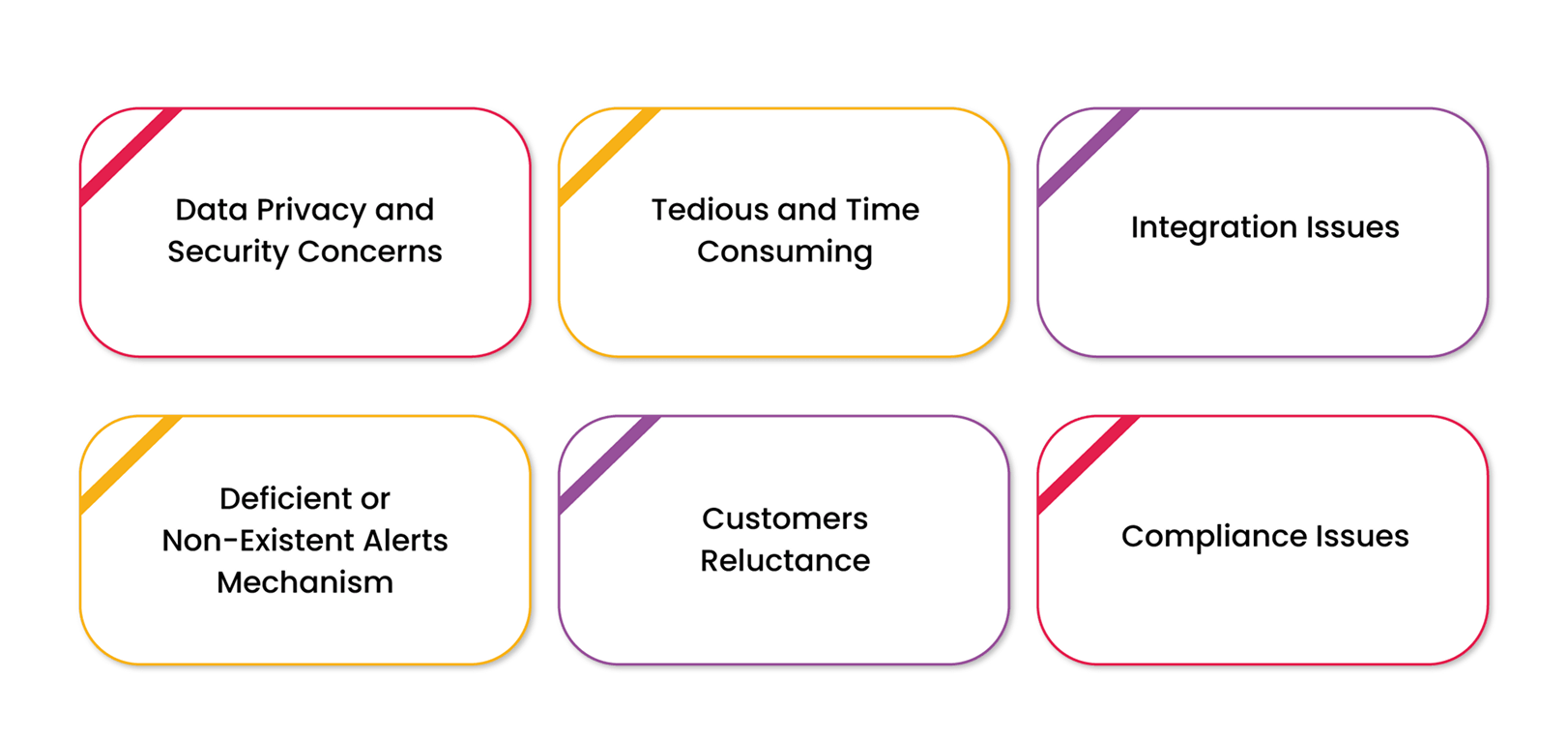
Regulated entities generally rely on certain legacy KYC Software, but many times these systems pose risks like data security breaches, privacy concerns, non-integration problems, inefficiencies, tedious processes, resistance from customers, etc.
Data Privacy and Security Concerns
Legacy KYC Software often falls short of modern encryption standards and lacks secure access and protocols, which make customers’ personal data collected during KYC prone to unauthorised access and leaks. Legacy KYC Software are not equipped with advanced technology with threat detection mechanisms to combat cybersecurity threats. UAE’s Personal Data Protection Law, established under Federal Decree-Law No.45 of 2021, requires Regulated Entities to comply with lawful data processing requirements and robust data protection measures.
Tedious and Time Consuming
Legacy KYC process mostly lacks a faster process and severely relies on manual inputs and processes due to not being equipped with advanced automation systems equipped to handle Re-KYC and Ongoing Monitoring. Customer documentations require manual reviews in certain cases. For Regulated Entities, in most cases, the verification process would take hours and sometimes days in the old KYC system, which is not feasible in today’s modern commercial ecosystem, as it would multiply delays in work.
Integration Issues
Legacy eKYC or KYC Software often lacks integration capabilities with modern KYC compliance requirements. Regulated Entities often face challenges when certain eKYC Software cannot integrate with their existing systems due to the absence of an Integration feature. It certainly forces them to make adjustments that result in high operational costs. Furthermore, Regulated Entities often face penalties due to the legacy eKYC/KYC tools not being equipped with stringent data security measures as per the requirements of PDPL.
Deficient or Non-Existent Alerts Mechanism
Regulated Entities often miss out on timely regulatory reporting issues due to inefficient legacy KYC Software. Many legacy eKYC software or KYC tools do not provide document expiry and renewal and alerts, making them prone to delays requiring manual intervention to ensure stringent KYC process. Apart from that, regulated entities often face site crashes during periods when many customers are onboarded at same time, risk of inaccuracy remains same during verification process too.
Customers Reluctance
Due to growing cybercrimes and data breaches concerns in today’s age, customers often show reluctance to share their personal and sensitive data with regulated entities, if they are not satisfied with the accuracy, security and legitimacy of eKYC Software. Due to this resistance from customers, Regulated Entities are often not able to fulfil their required KYC obligations, making ML, TF risks more probable.
Compliance Issues
Legacy eKYC Software are not equipped with autonomous updating with real time data. Regulating entities often face problems with the legacy eKYC Software when the system does not update itself with the changes in regulatory requirements or norms. These outdated systems often pose risks of non-compliance for regulated entities and can invite likelihood of ML, TF activities.
UAE AML/CFT laws require Regulated Entities to undertake stringent customer due diligence, continuous monitoring, Re-KYC for UBOs as well, ensure accurate regulatory reporting, record keeping and additional compliance, which can pressurise the business in cases where the KYC system is not seamless and efficient.
CDD, Document Verification, Ongoing Monitoring, Record Keeping Problems?
eKYC Software Solves it All!
Must have Key Features in eKYC Software
Regulated Entities including financial institutions, DNFBPs, VASPs, and SCA operating in UAE should implement eKYC Software which is equipped with AI-powered AML/CFT compliance measures, advanced liveness detection, swift scalability, real-time alerts, and cloud-based tools to ensure operational flexibility and seamless regulatory compliance.
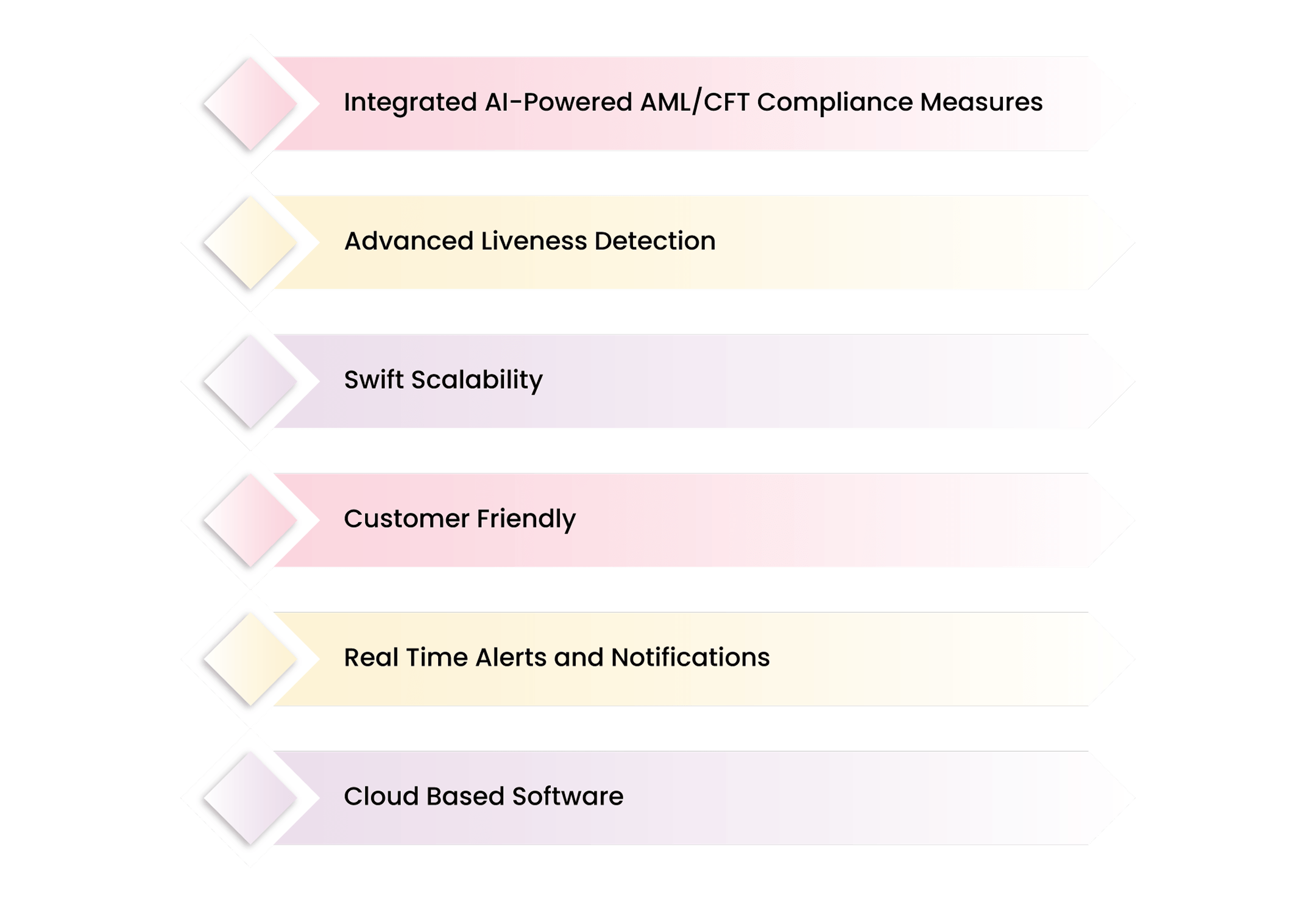
Integrated AI-Powered AML/CFT Compliance Measures
eKYC Software should be effective in implementing AML/CFT measures. eKYC Software should provide seamless measures to curb the risks of ML, TF activities. Robust eKYC Software powered by Artificial Intelligence and Machine Learning Technologies assists in streamlining accurate IDV process, followed by automated customer risk assessment, risk scoring, PEP and global sanctions screenings, fraud detection and other additional compliance in line with UAE’s AML/CFT regulations.
Advanced Liveness Detection
There have been emerging trends of AI-generated profiles or deepfakes with the objective of defrauding the eKYC process. Regulated entities with weak eKYC systems have high chances of getting defrauded by these tactics. eKYC Software should be equipped with advanced liveness detection. Advanced liveness detection observes signs of life that are distinct from AI-generated models and analyses the subject’s environment in a contextual manner, along with behavioural analysis, to achieve accurate results.
Swift Scalability
eKYC Software should provide swift scalability to handle bulk KYC processing without any technical glitches or sluggishness. eKYC Software should enable regulated entities to handle the growing volume of customers and verification requests rapidly in multiple channels without any security breaches. Swift and Faster eKYC Software benefits regulated entities to provide requisite services and regulatory reporting in a timely manner, avoiding unnecessary KYC backlogs.
Customer Friendly
Apart from fulfilling regulatory requirements, eKYC Software should have inbuilt features which are simple, understandable, and convenient to Customers, so the KYC process doesn’t seem hectic to users. eKYC Software must be equipped with features that are user-friendly, irrespective of their knowledge in technology. Robust eKYC Software must also ensure that it is in adherence with the UAE’s Personal Data Protection Law, for the security of clients’ data, which strengthens confidence of clients in regulated entities and the eKYC process.
Real Time Alerts and Notifications
eKYC Software must have inbuilt features to provide real-time alerts and notifications. This includes giving real-time alerts for document expiration and renewals, flags in case any suspicious transaction or activity pattern is detected, notifications in case of any regulatory changes, reminders for Re-KYC and additional required notifications, so the regulated entities in the UAE can stay in compliance with the AML laws.
Cloud-Based Software
eKYC Software must be cloud-based. It enables real-time data processing, analysis, and monitoring and facilitates automated backup of data, so regulated entities should not have to worry about storage blocks. Apart from that, cloud-based eKYC Software facilitates a system which is secure and isn’t vulnerable to any kind of data privacy breaches, which results in regulating entities gaining the confidence of customers to fulfil their KYC obligations as mandated by UAE’s AML/CFT regulations.


“I understand the fuel and the fire when you onboard customers. However, I am glad that technology is doing its best to bring ease to remote customer onboarding. Why does this change matter? eKYC Software is now leading to seamless compliance, faster, secure and paperless onboarding, which likely solves compliance problems for many Regulated Entities.”
Benefits of eKYC Software
Efficient eKYC Software offers various benefits to regulated entities such as swift client onboarding, enriched client experience, real-time data access and automated compliance measures. So, they can comply with the UAE’s AML/CFT regulations seamlessly. The discrete advantage is that it assists KYC analysts to fulfil their responsibilities in a simplified manner without any hassle.
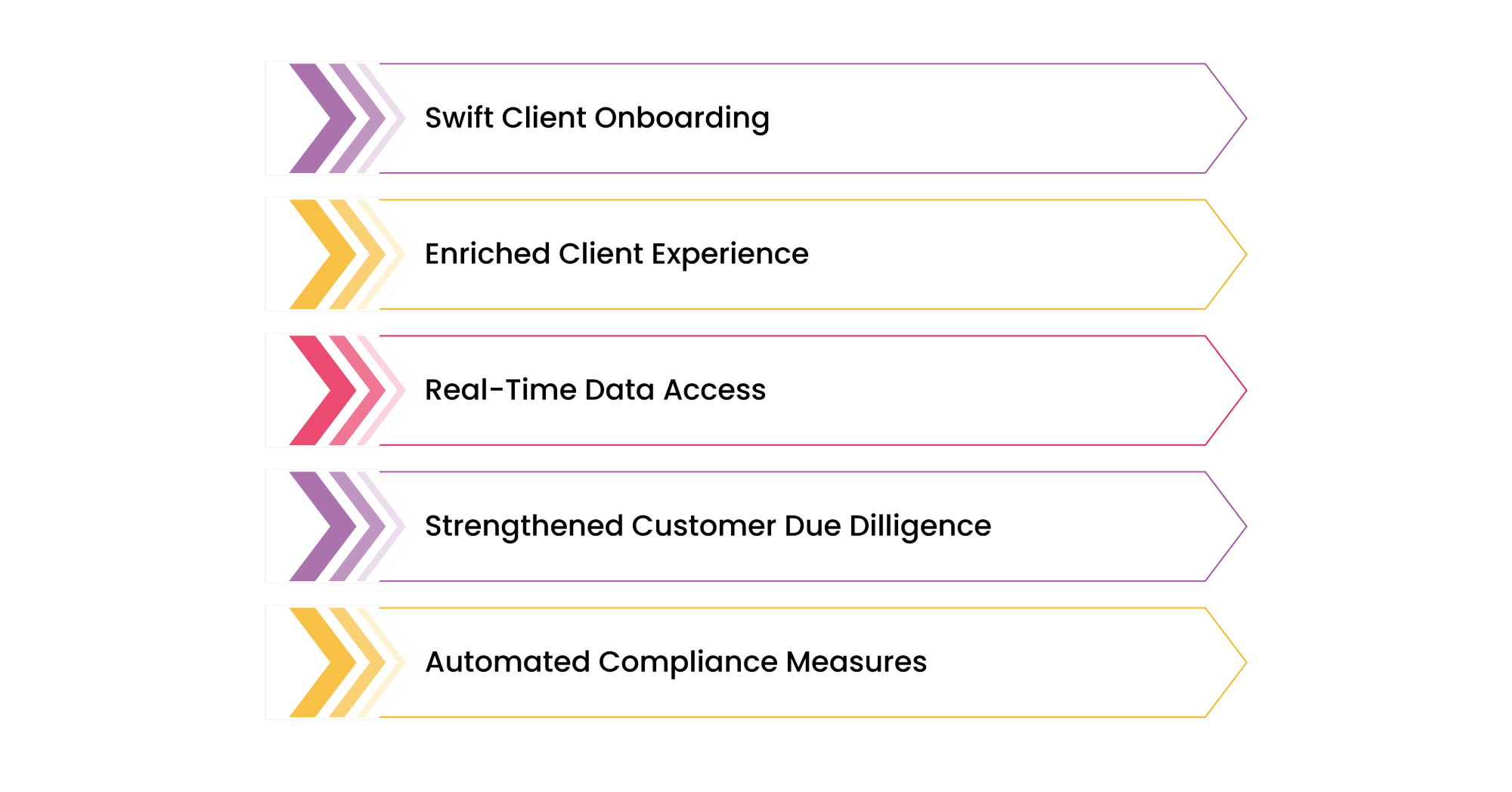
Swift Client Onboarding
eKYC software, consolidated with any existing CRM or customer service software or an API, is capable of instantly extracting relevant details, subject to data privacy permissions, and automatically filling in the customer information for eKYC purposes, reducing the time and accomplishing their KYC requirement. Document verifications and any other necessities are fulfilled faster and quickly by inbuilt OCR and AI technologies, facilitating swift customer onboarding.
Enriched Client Experience
eKYC Software equipped with modern technologies, especially an AI-powered process, provides for seamless client onboarding, which in turn results in an enriched experience for the clients. The entire KYC process becomes simplified and easily accessible in multiple channels. Modern eKYC Software enables clients to perform the KYC process as per their convenience with absolute clarity and ensures them security of their personal data.
Real-Time Data Access
eKYC Software offers regulated entities instant access to real-time information about their clients, which results in regulated entities achieving a high level of efficiency. Advanced eKYC Software provides for ongoing monitoring, continuously evolving data, PEP monitoring, global sanctions watchlist, and adverse media screening, which facilitates regulatory entities to track any change or suspicion subject to UAE’s AML/CFT obligations, without any delay.
Strengthened Customer Due Diligence
eKYC Software strengthens the CDD process. Through its inbuilt databases, it quickly verifies identity, performs IDV requirements and lists down risk scoring based on the kind of ML, FT, or PF risk the client would pose. It automates EDD workflow in case of a high-risk client. Efficient eKYC Software through its inbuilt system facilitates continuous monitoring, on-time alerts and notifications, which assists regulated entities to take swift actions in case any suspicious pattern is detected.
Automated Compliance Measures
Advanced eKYC Software, embedded with modern technologies and tools facilitates regulated entities to stay ahead in terms of any evolving legal obligations. Its automated tools keep the system updated with regulatory norms and facilitate regulated entities with autonomous adherence to the UAE’s AML/CFT laws and obligations, reducing the risk of non-compliance.
How to Select and Implement eKYC Software: Best Practices for DNFBPs, VASPs, SCA-Regulated Entities
Regulated Entities must meticulously select eKYC Software that aligns well with UAE’s AML/CFT compliance obligations and offers risk-based configurations, robust compliance and streamlined operations, ensures KYC data integrity, reliability and legitimacy, and harnesses real-time alerts to streamline workflows.

Aligning eKYC Software’s Features with UAE’s AML/CFT Obligations
While selecting an efficient eKYC Software, regulated entities must ensure that the software’s features are aligned with UAE’s existing AML/CFT compliance obligations. Apart from basic identification and verification, it should also be embedded with AI-powered features like risk-scoring, real-time ongoing screening against sanctions, adverse media screening, and PEP screening. This way, it would facilitate regulated entities to adhere to the UAE’s AML/CFT regulations effectively.
Ensuring KYC Data Integrity, Reliability and Legitimacy
For eKYC Software to be effective, customer data and other data stored in it should be legitimate and reliable. While selecting, it should be ensured that customer data is integrated by regular backups, updates, access control and secure storage of personal data. Apart from that, regulated entities must ensure that data processing and security is in adherence with UAE’s Personal Data Protection Law to avoid risks of non-compliance.
Establishing Risk-Based Approach with eKYC Software Configuration
It is a must for regulated entities to determine each customer’s risk level and then assign risk scoring to their profiles to ascertain the level of due diligence required for each of them. While selecting an eKYC Software, regulated entities must establish a risk-based approach with its configuration, so it would assist them to meet and achieve risk-based AML Compliance. CRA should be linked with ongoing monitoring to ensure efficient adherence with the UAE’s AML/CFT laws.
Harnessing eKYC Software Features for Optimal Use
Regulated Entities, while selecting eKYC Software, must ensure that apart from basic tools, it makes the most of the multiple features like Optical Character Recognition (OCR), Automated ID Verification, Face Matching, Liveness Detections, Biometrics, and many more AI-powered advanced features for ongoing monitoring. This would facilitate regulated entities to be in adherence with UAE’s AML/CFT Obligations.
Implementing Consolidated AML Software for Achieving Overall Compliance Objective
Regulated Entities must look for eKYC Software that is embedded with unified AML compliance functions. This simply means that eKYC Software must be able to perform all tasks related to AML compliance with ease. These automated functions include onboarding customers, checking customer risks, assigning customer risk ratings, creating customer risk profiles, conducting ongoing monitoring and record keeping. This way, regulated entities would achieve compliance.
Harnessing Real-Time Alert Management to Streamline Workflows
While selecting eKYC Software, regulated entities must ensure that, it sends out real time alerts and notifications regarding any suspicious activity, unusual patterns, document expiration and other regulatory changes. This will aid in reducing delays and produce faster and accurate compliance accomplishments on part of regulated entities.
Jammed With Any of This? An Efficient eKYC Software Bridges the Gap Between Risks and Compliance.
In a world where one faulty customer can invite potential risks to business, a well-designed eKYC Software equipped with modern technology ensures protection and precision.
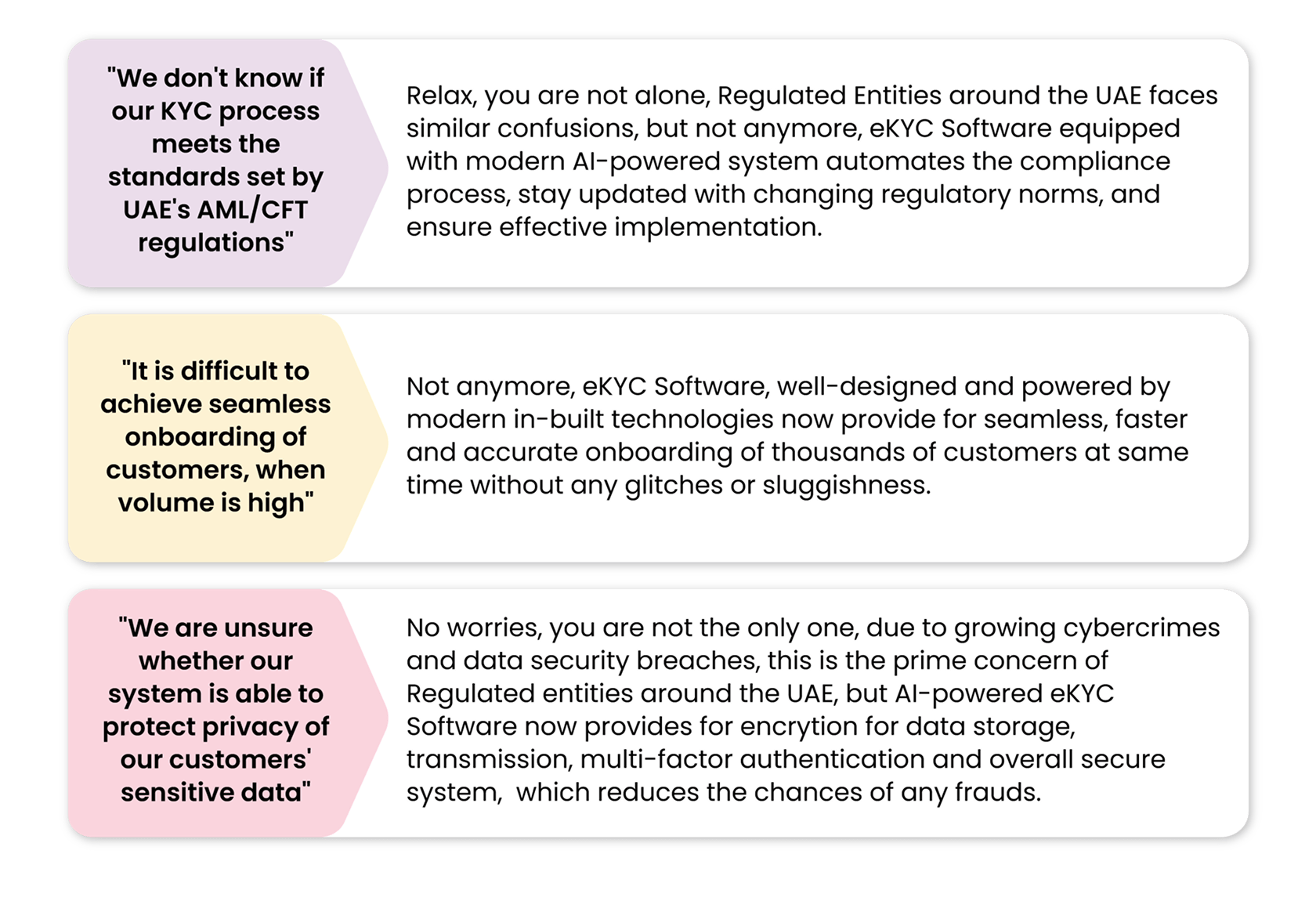
Ensuring Secure, Efficient, Accurate, Swift, Compliance with eKYC Software
To effectively detect any suspicion regarding ML/TF activities, it is must that KYC requirements are done in accordance with the standards set by regulating authorities like UAE Central Bank, Ministry of Economy, and Financial Intelligence Unit (FIU). eKYC Software integrated with modern AI-powered, machine learning technologies ensures that regulated authorities in UAE like financial institutions, DNFBPs, VASPs, SCA regulated entities, achieve compliance securely, accurately, efficiently and swiftly with risk-based approach and in adherence with the benchmarks set by regulating authorities.
Why fret? When meticulous eKYC Software is here for the smooth handling of KYC operations.
FAQs on eKYC Software
What is eKYC Software, and how does it help with AML/CFT compliance in the UAE?
eKYC Software is a digital tool that automates the process of verifying customers’ identities without requiring in-person presence or physical verification of customer’s identification documents. It helps Regulated Entities to stay compliant with the stringent Customer Due Diligence requirements by providing secure, efficient and auditable AML Compliance assistance.
Which identity documents are supported, and how does verification work in the UAE?
In the UAE, for individuals (natural person) verification, any government issued ID document with photograph (Emirates ID or passport) and the latest address proof is required. While for Legal Persons, a trade licence, Memorandum of Association or Articles of Association, ownership structure and latest address proof is required. Once collected, these documents are processed through eKYC Software to extract the data, run checks and validate the information for risk assessment and monitoring.
Does the eKYC Software support Ongoing Monitoring, alerts and re-KYC reminders?
Yes, an advanced eKYC Software provide Ongoing Monitoring, alerts for suspicious activity or transaction and automated re-KYC reminders.
What features matter most in eKYC Software?
The features that matter the most in eKYC Software are automated documentation verification, liveness detection, workflow automation, scalability, real-time alerts, and compliance with data protection.
How does eKYC Software support compliance with UAE AML and data protection laws?
eKYC Software supports UAE AML and data protection laws by ensuring accurate data collection, automating identity verification, providing secure access and maintaining data privacy to stay aligned with regulatory expectations.