



ID Verification Software
Decode what is Identity Verification (IDV) Software and how it simplifies ID Verification in UAE AML compliance through automation and advanced technologies like biometrics and AI. IDV Software eliminates the need for manual checks, making the process faster and more accurate. Regulated Entities including DNFBPs in UAE can complete ID Verification remotely with minimal effort and enhanced security to comply with their AML/CTF framework.
What is IDV Software
Identity Verification Software is a digital tool that automatically verifies a person’s identity by checking the personal details they provide against valid Identification Documents such as a passport, Emirates ID, driver’s license, or any similar government-issued documents. It ensures that the individual is genuinely who they say they are and that the document supporting their identity is both valid and official.
ID Verification Software use technologies like OCR, face matching, liveness checks, and live database lookups. Integration of such technologies in the IDV process makes things faster, safer, and fully compliant with rules like AML, CFT, and KYC, which helps Regulated Entities (REs) to onboard customers smoothly without cutting corners.

Regulatory Requirements of Identity Verification Compliance in UAE
Article 16.1.(b) of the Federal Decree by Law No. (10) of 2025
2025 Regarding Anti-Money Laundering, and Combating the Financing of Terrorism and Proliferation Financing
Articles 4 and 5 of Cabinet Resolution No. (134) of 2025
on implementing AML/CFT guidelines
Other guidelines issued by Central Bank, Ministry of Economy, Ministry of Justice, VARA, etc.
Require Regulated Entities operating in the UAE, whether Financial Institutions (FI), Designated Non-Financial Businesses and Professions (DNFBPs), Fintech Companies, Crypto Exchanges, or even Real Estate Agents to undertake risk-based customer due diligence (CDD) measures, which can be facilitated by an Identity Verification software. Resulting in the IDV Software of the REs to be in sync with the aforementioned rules and regulations to mitigate Money Laundering (ML) and Terrorism Financing (TF) risk effectively.
IDV Pain Points Every Regulated Entity Faces: Manual, Semi-Digital, or Software-Based
IDV is far more than a basic regulatory requirement. It is one of the most critical and regulated components of the Customer Onboarding and KYC compliance process. Yet, many Regulated Entities, either in UAE mainland or in Free Zones, are relying on outdated, manual, or semi-digital methods that simply can’t keep up with the real-time regulatory and operational demands.
Let’s be honest, manual ID Verification processes can drain the compliance team and expose the business to risk. Even if the Regulated Entity has digitized some parts of the IDV process, gaps in compliance will quickly become apparent if their Software is not purpose built for UAE AML compliance.
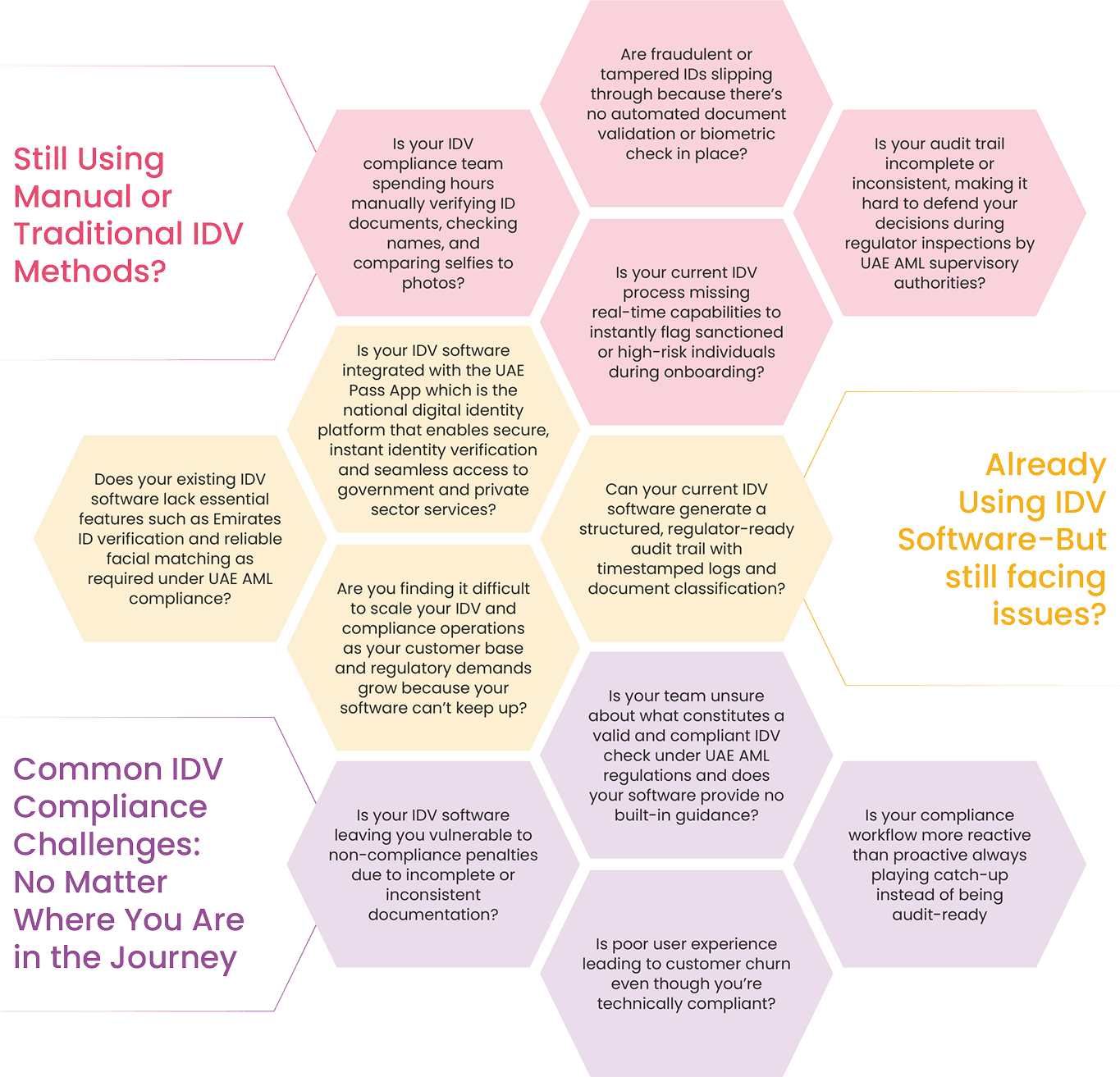
So, the real problem isn’t compliance itself.
It’s how you’re trying to manage IDV compliance without the right IDV Software.
Don’t Let Manual Errors, or Outdated IDV Software Cost You.
Replace manual IDV tasks with seamless, automated IDV Software that is designed for UAE regulatory precision.
How Smart IDV Software Helps Business Navigate AML Compliance Requirements
In today’s evolving regulatory environment, merely collecting ID documents no longer meets compliance standards. Regulated Entities including DNFBPs in the UAE require a smarter, faster, and risk-based approach to identity verification, one that aligns fully with AML/CFT obligations. That’s where intelligent IDV Software comes in, automating the heavy lifting and streamlining compliance. Here’s how it works:
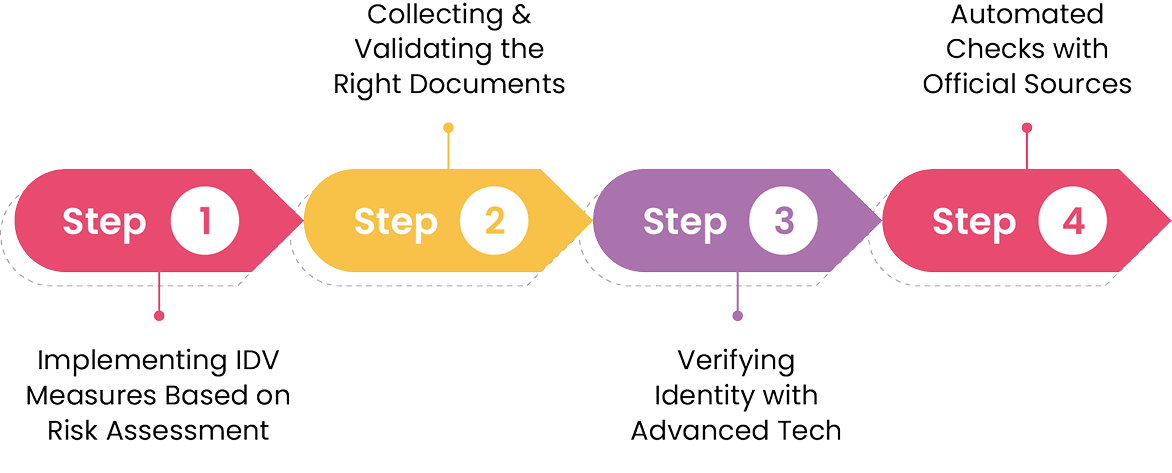

Implementing IDV Measures Based on Risk Assessment
Effective IDV Software enables Regulated Entities to assess ID Verification needs based on ML, TF, and PF risk exposures. Using AI-driven segmentation, the Software automatically classifies customers into high, medium, or low risk categories based on predefined criteria such as business type, geographic region, and transactional behavior.
Accordingly, the IDV Software applies a dynamic and risk-based ID Verification approach:
- Low-risk customers may go through basic ID Document Verification.
- Medium-risk customers may require facial recognition, liveness checks, and real-time screening.
- High-risk customers, such as cross-border or politically exposed persons (PEPs), may trigger enhanced due diligence (EDD) processes including multiple verification layers.
Once classified, the IDV Software automatically enforces Customer Due Diligence (CDD) of the RE and determines the specific verification steps needed for each customer, ensuring full alignment with UAE AML/CFT regulations.

Collecting the Right Docs and Making Sure They’re Valid
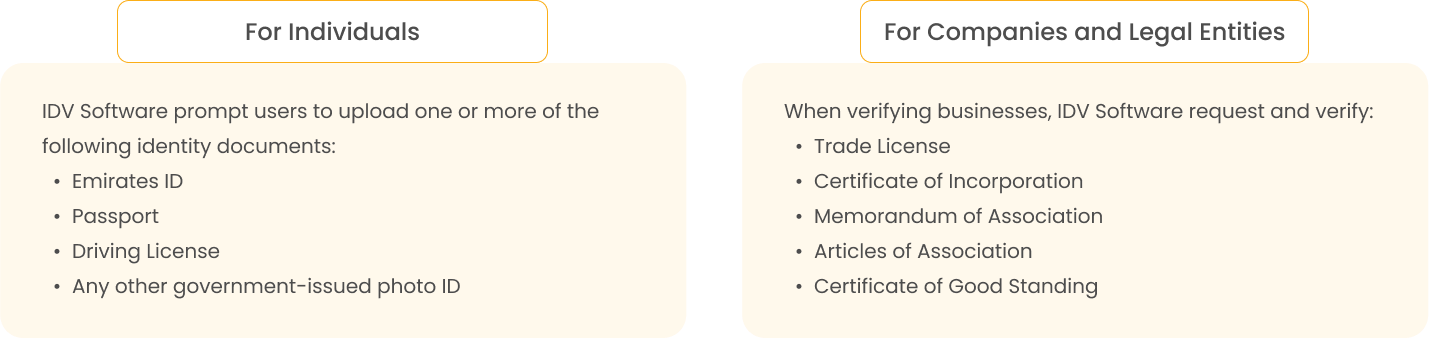
IDV Software built for AML compliance in the UAE, do more than just collecting Documents, it ensures every document is valid, authentic, and issued by a recognised authority. IDV Software make sure documents are not only present but also compliant, legible, and trustworthy.

Verifying Identity Through Multiple Robust Methods
A robust ID Verification Software leverages multiple layers of technology to ensure accurate, secure, and fraud-resistant identity checks. Here’s how each component works together to protect the business of REs and ensure compliance with UAE AML/CFT regulations:
- Optical Character Recognition (OCR):
The IDV Software uses OCR to automatically extract and digitize data from government-issued ID documents such as Emirates ID or passports, minimizing manual entry errors and ensuring accuracy. - Biometric Face Matching:
The system compares the customer’s live selfie or video with the photo on their ID document using facial recognition algorithms to confirm Identity authenticity. - Liveness Detection:
To prevent spoofing (e.g., using a photo or mask), the IDV Software uses AI-powered liveness checks to verify that the person submitting the ID is physically present and real. - Two-Factor Authentication (2FA):
As an added layer of security, the software enables 2FA such as sending a one-time password (OTP) to the user’s registered device to confirm account access or verification actions. - Device Verification:
The IDV Software might analyze device fingerprints (IP address, device ID, location, browser details) to flag suspicious or inconsistent logins, enhancing fraud detection. - Knowledge-Based Authentication (KBA):
For higher-risk cases, the Software can prompt users with security questions based on their personal or transactional history to confirm their identity.
Together, these features enable secure, scalable, and regulation-ready verification workflows tailored to the risk profile and onboarding channel of each customer.

Performing Automated Verification with Government Data
The IDV Software performs automated verification by cross-referencing user-submitted customer details with trusted third-party and government databases such as UAE Pass, national ID registries, and sanctions lists to validate identity and ensure AML compliance.
With built-in capabilities for document authentication, data extraction, and consistency checks, the Software ensures that every identity is verified with precision and accuracy.
For seamless digital identity verification, the IDV Software should be integrated with the UAE Pass App , enabling direct access to government-issued identity sources and enhancing both speed and security in the verification process.
Smarter ID Checks. Zero Compliance Stress.
Say goodbye to slow, outdated checks and embrace AI driven IDV Software
Building a Compliant ID Verification Workflow with IDV Software: The Smart Compliance
To stay compliant with UAE’s AML/CFT regulations, the Regulated Entities’ ID Verification process must be thorough, structured, risk-based and Software enabled. Manual or disconnected systems fall short when it comes to the scale, speed, and accuracy expected by today’s regulatory environment.
Here’s how REs should be operating and implementing an effective IDV Software to comply with AML/CTF framework in UAE.
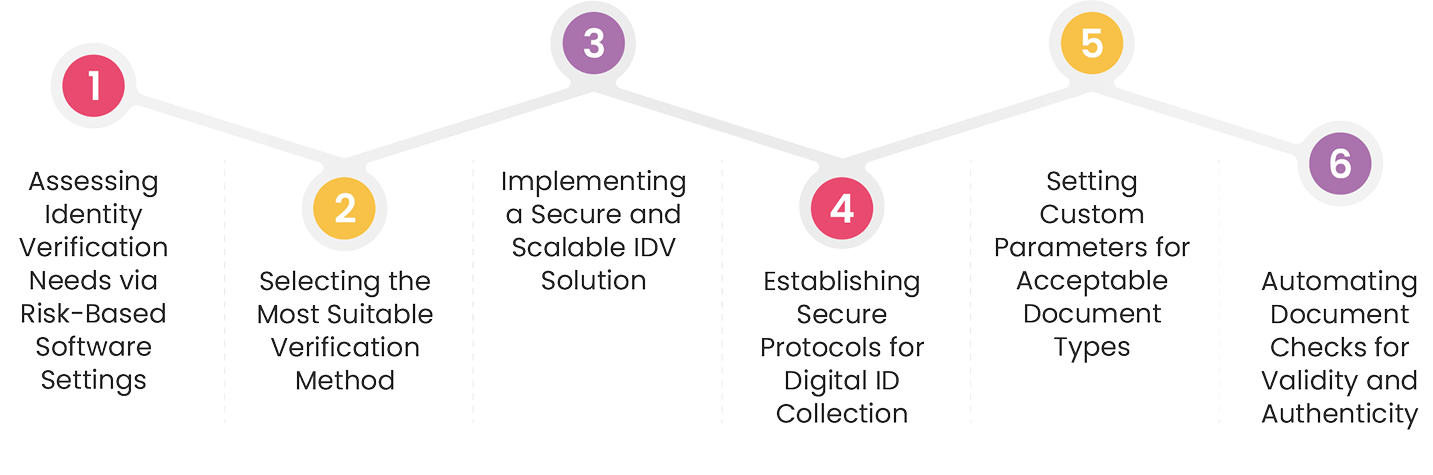

Assessing Identity Verification Needs via Risk-Based Software Settings
Regulated Entities should configure the IDV software based on their business’s exposure to ML/TF/PF risks, customer types, and industry requirements.

Selecting the Most Suitable Verification Method
Regulated Entities must choose between digital onboarding, in-person assisted verification, or API-based integrations enabled directly through the software dashboard.

Implementing a Secure and Scalable IDV Solution
Regulated Entities must ensure that their IDV Software deploy end-to-end ID Verification powered by OCR, biometric face matching, liveness detection, and real-time screening capabilities.

Establishing Secure Protocols for Digital ID Collection
IDV Software of Regulated Entities should use encrypted portals or SDKs within the software to collect documents safely, eliminating the risks of email or manual uploads.

Setting Custom Parameters for Acceptable Document Types
Regulated Entities should define within the platform which ID documents (e.g., Emirates ID, passport) are acceptable and auto-reject low-quality or unsupported types.

Automating Document Checks for Validity and Authenticity
IDV Software system should be automated to verify document expiry, tampering, and data consistency using AI-driven validation, UAE-specific checks, and integrated UAE Pass support.
Knowledge. Expertise. RegTech
Find the perfect ID Verification Software for your CDD requirements
Must Have Features in IDV Software for AML Compliance in the UAE
An ideal IDV Software should have the following features that grant proper assistance to Regulated Entities to fulfil AML/CFT regulations for effective and compliant execution, some of these must-haves discussed are: multi-format ID support, multi-factor verification, document authenticity checks, EID and passport verification, and OCR based extraction.
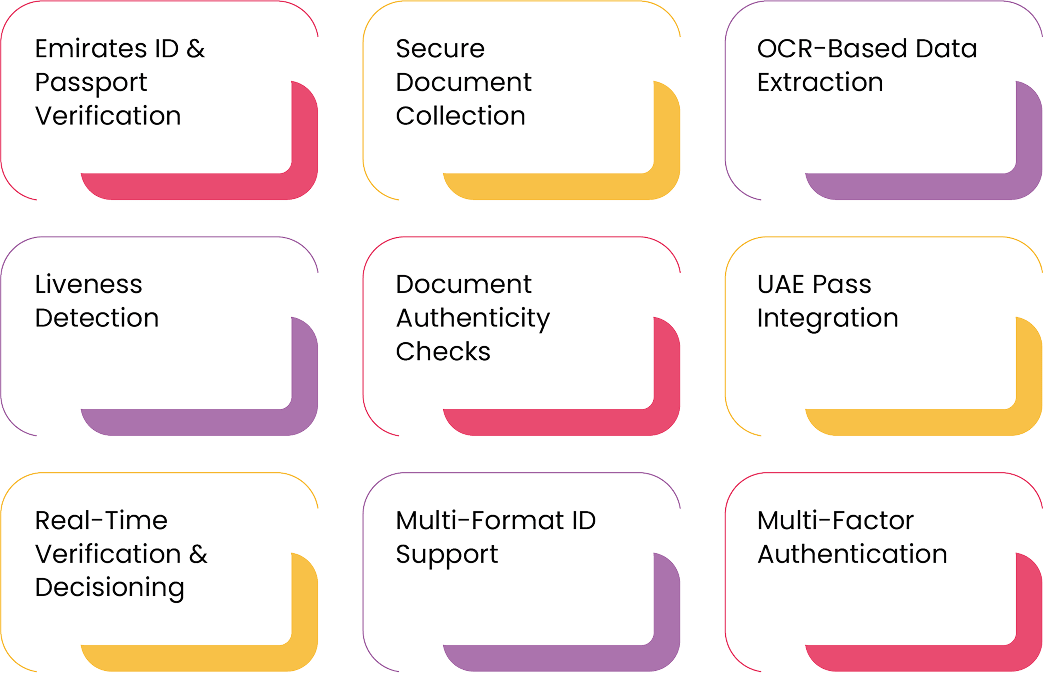
Emirates ID & Passport Verification
IDV Software must provide instant validation of UAE government issued identity documents, such as the Emirates ID, passport, and driver’s license. The system should verify document authenticity, check expiration dates, and confirm issuance details in alignment with official UAE government standards.
Secure Document Collection
The IDV Software should offer encrypted document submission via a secure portal, mobile SDK, or web-based interface. This ensures both ease of use and protection of sensitive customer data in line with UAE data privacy standards.
OCR-Based Data Extraction
An efficient IDV Software uses OCR mechanism to extract text from ID Documents such as names, ID numbers, dates, accurately and instantly. This not only enhances speed and accuracy but also reduces manual entry errors during onboarding.
Liveness Detection
To prevent spoofing and impersonation, the IDV solution must include AI-driven liveness detection. It confirms that the selfie or biometric input is captured from a real person in real time, ensuring robust identity assurance.
Document Authenticity Checks
A robust IDV Software should automatically detect forged or manipulated documents by analysing MRZ codes, visual layouts, font consistency, and embedded security features, meeting compliance needs for document integrity checks.
UAE Pass Integration
A valid IDV Software is seamlessly integrated with UAE Pass which enables Identity Verification against officially verified sources. This provides Regulated Entities with high-trust digital ID authentication for both Mainland and Free Zone customers.
Real-Time Verification & Decisioning
An ideal IDV Software is one which performs all checks in real time, enabling instant decision-making during customer onboarding or ongoing due diligence.
Multi-Format ID Support
An Advanced IDV systems must verifies IDs uploaded as images, PDFs, or captured through a live camera even when ID Documents are slightly tilted or cropped.
Multi-Factor Authentication
IDV Software must enhance security and streamline compliance with built-in Phone and Email Verification to support Two-Factor Authentication. Integrated eSignatures ensure seamless customer onboarding while meeting legal and regulatory standards.


“Technological improvements within compliance are shaping the customer onboarding approach. One of the recent advancements, i.e., IDV Software, is astonishing the market with faster and safer compliance.”

Benefits of Leveraging IDV Software
IDV software does more than streamline document collection, it transforms the onboarding process into a secure, audit-ready gateway that proactively defends against impersonation, document fraud, and compliance breaches.
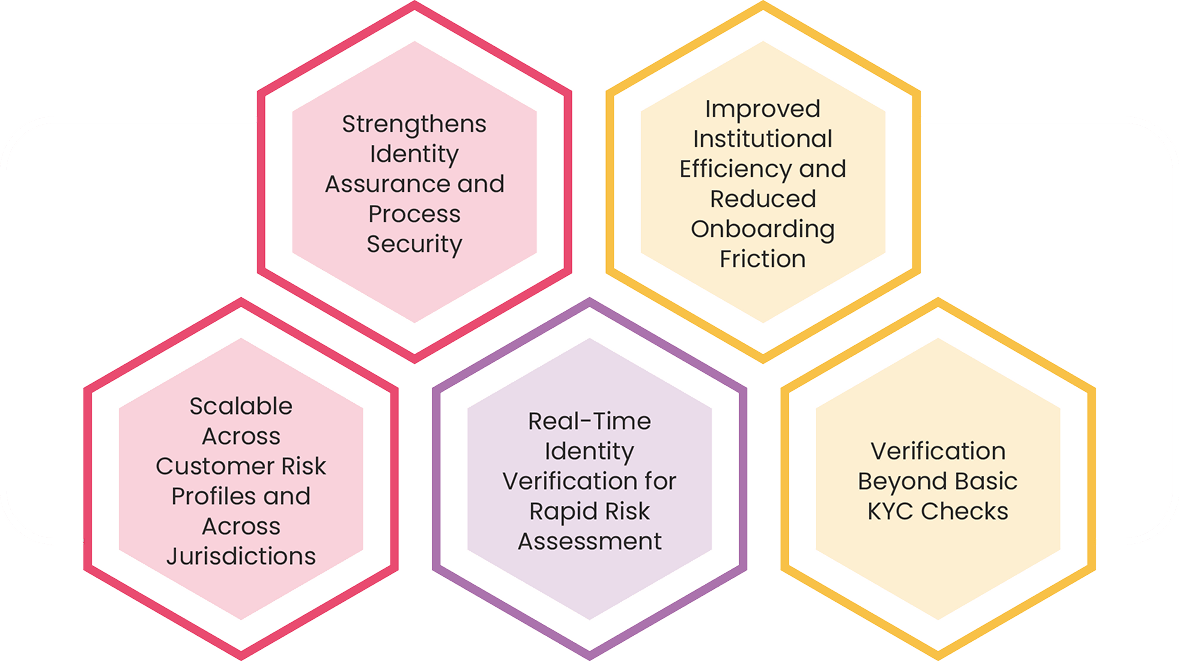

Strengthens Identity Assurance and Process Security
Through the integration of advanced biometric and document authentication technologies, IDV Software ensures that customers are accurately verified at the point of onboarding. By limiting human intervention, the IDV Software reduces manual error, enhances identity assurance, and strengthens the Regulated Entity’s overall AML/CFT posture.

Improved Institutional Efficiency and Reduced Onboarding Friction
Manual onboarding processes often create significant inefficiencies, compliance backlogs, and customer dissatisfaction. IDV software addresses these issues by automating identity verification and documentation collection workflows, ensuring customers are verified within minutes. For compliance officers, this reduces reliance on physical documentation, email chains, or error-prone manual verification, thereby freeing up time to focus on higher-value tasks such as reviewing alerts or analysing risk triggers.
Scalable Across Customer Risk Profiles and Across Jurisdictions
As Regulated Entities expand across Mainland and Free Zone jurisdictions such as ADGM, DIFC, and DMCC, IDV software provides a consistent, cross-jurisdictional verification framework that ensures uniform compliance. Whether onboarding a few or thousands of clients, the IDV Software applies risk-aligned checks tailored to the customer profile, thereby ensuring compliance without overburdening internal teams.
Real-Time Identity Verification for Rapid Risk Assessment
IDV Software empowers Regulated Entities to perform Identity Verification in real-time, enabling onboarding teams to screen, approve, or flag customers within minutes. This real-time capability not only reduces onboarding delays but also strengthens early-stage risk detection and supports timely application of Enhanced Due Diligence measures when anomalies are identified.

Verification Beyond Basic KYC Checks
IDV software empowers Regulated Entities to go beyond standard name-matching KYC verification by ensuring that individuals are who they claim to be, through multi-layered digital identity verification processes. This includes biometric verification, document authenticity checks, and real-time liveness detection. Where basic KYC may fall short in detecting identity fraud or synthetic identities, IDV software mitigates ML/FT risks.
Is Your AML Strategy Ready for UAE’s Digital Fraud Surge?
Protect your operations with AI-driven detection and goAML ready reporting.
How to Select and Implement IDV Software: Best Practices for DNFBPs, VASPs & SCA-Regulated Entities
Businesses in UAE must adhere to the best practices listed further to select and implement IDV Software efficiently.
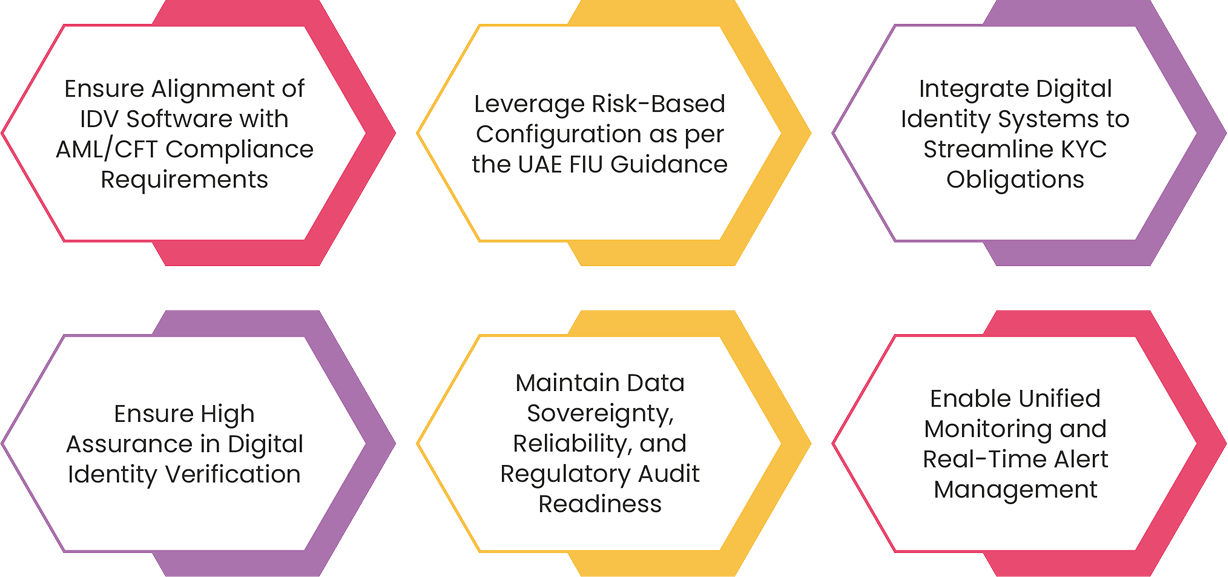
Ensure Alignment of IDV Software with AML/CFT Compliance Requirements
IDV software must directly support compliance with UAE’s AML-CFT laws, including risk-based CDD as mandated by the Federal Decree by Law No. (10) of 2025. Regulated Entities should also look for functionalities like Enhanced Due Diligence (EDD), ongoing monitoring, and SAR/STR triggers.
Leverage Risk-Based Configuration as per the UAE FIU Guidance
Implement configurable risk-rating function of the IDV software based on customer profiles (e.g., Free Zone entities, offshore structures, high-net-worth individual) transaction behaviour, and geographic risk, tailored for high-risk sectors like VASPs and real estate DNFBPs.
Integrate Digital Identity Systems to Streamline KYC Obligations
Regulated Entities should select IDV platforms capable of integrating with UAE Pass, the national digital identity solution, to facilitate fast, secure, and government-recognised onboarding while fulfilling KYC requirements under the UAE’s “go-digital” regulatory strategy.
Ensure High Assurance in Digital Identity Verification
Ensure the IDV Software uses multi-factor verification methods, including Emirates ID OCR scanning, ICA database validation, facial biometrics, and liveness detection aligned with Federal Authority for Identity and Citizenship (ICA) and other authorities’ protocols.
Maintain Data Sovereignty, Reliability, and Regulatory Audit Readiness
Given UAE’s emphasis on data residency and cross-border data controls, IDV systems must ensure secure storage within approved jurisdictions and provide immutable audit trails for inspections of superior authorities.
Enable Unified Monitoring and Real-Time Alert Management
Choose software with real-time monitoring and escalation capabilities that integrate with broader AML tools (such as goAML reporting mechanisms), ensuring timely STR generation and regulatory responsiveness.
See IDV Software in Action
Dive through a live demo and explore IDV Software features
IDV Headaches? Robust IDV Software is the Cure
Choosing and implementing the right ID Verification Software shouldn’t feel like a puzzle. Here’s how an efficient IDV Software makes things easy.
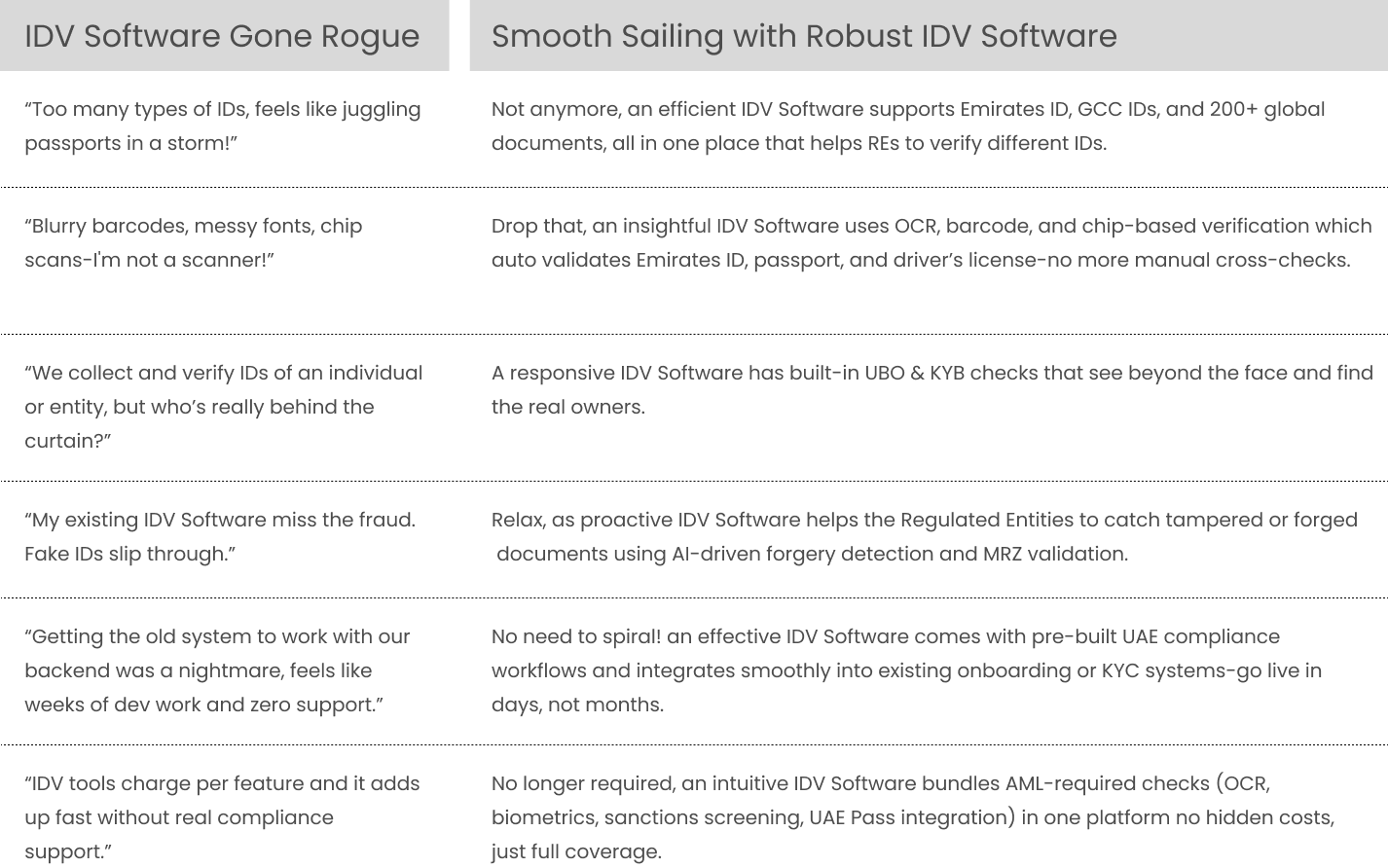

Driving AML Compliance Through Intelligent IDV Software
In today’s regulatory environment, effective IDV demands a technical framework that is both adaptive and intelligent. Software-based IDV solutions provide risk-calibrated automation, ensuring compliance with evolving AML mandates through secure document intake, multi-layered authentication, and real-time decisioning.
By integrating biometric validation, government database access, and customizable verification rules, organizations can architect a scalable IDV infrastructure tailored to UAE Mainland as well as Freezone Regulated Entities. This enables a high-assurance, low-friction compliance process that minimizes risk exposure across customer onboarding and monitoring workflows.
Struggling with Manual of Legacy IDV Software Issues? Let’s Automate It.
Dive through a live demo and explore IDV Software features
FAQs on ID Verification Software
The best ID Verification Software for UAE KYC/AML Compliance should be capable of verifying the Emirates ID accurately as a core function, because the Emirate ID is one of the most widely used documents for basic identification used while performing the KYC.
- Authentication Technology
- Robust Data Protection Standards
- Integration Capabilities
- User-Friendly Interface
Yes, the ID Verification Software can combine both the Emirate ID verification process with screening related services which help businesses to comply with AML/CFT requirements seamlessly.
Modern day’s ID Verification Software uses Optical Character Recognition (OCR) technology to extract the data of the customers, including name, ID number, nationality of the individual, and expiration date of Emirates ID to perform screening. The ID Verification Software uses all the extracted data from the Emirates ID to conduct further screening.
While conducting the screening, the ID Verification Software screens the customer through sanctions lists, PEP databases, adverse media including watchlists. With this integrated feature, the ID Verification Software performs the compliance tasks in no time with the utmost accuracy, which enhances the operational efficiency and lets the Regulated Entities onboard the customer faster.
Modern day ID Verification Software performs the whole scanning and verification remarkably fast. As soon the customer information such as Emirates ID, passport, driver’s license and other documents are fed to the ID Verification Software, it initiates Customer Due Diligence (CDD) and conducts the scanning through which it checks the authenticity of the documents if they’re authentic and valid.
Immediately after the scanning is done, the ID Verification Software automatically conducts the verification of the customers. From document submission to final verification results, the entire process gets completed within a minute. On part of Regulated Entities, they get an instant result in no time enabling them to decide upon whether onbording the customer.
The speed of ID Verification Software may sometimes get impacted due to low-quality documents which might take a longer time to perform OCR-based scanning, or due to network connectivity related issues, but otherwise, in general, the automation and integrated technology of the modern ID Verification Software has drastically enhanced the speed of manual verification processes while maintaining the accuracy.
Yes, advanced ID Verification Software has the capability to detect forged or tampered Emirates ID with multiple authentication systems. Emirates ID contains Machine Readable Zones (MRZ) which are scanned by the ID Verification Software in order to validate the correct format of MRZ marking and check the authenticity of the provided document.
Genuine Emirates ID has multiple visual security attributes such as holographic layers, specific unique patterns, font sizes and positioning which are scanned by ID Verification Software, which helps the Regulated Entities to prevent counterfeiting-related risks. There are high chances that the forged document might have details in incorrect format by which the originality of the provided Emirates ID is checked.
Yes, ID Verification Software does have certain pitfalls which occur while implementing the verification process. One of the most common pitfalls is observed while integrating the platform with the existing system as due to lack of integration mechanism which fails to handle the complexities involved while dealing with multiple tools and platforms for AML COmpliance and Customer Onboarding. Also, in certain instances, the ID Verification Software also faces downtime due to unprecedented technical failures or overload of the system.
ID Verification Software is a digital tool which is equipped with a dedicated mechanism to conduct ID Verification to validate the documents of the customers, including Emirates ID, passport or driver’s license. The IDV Software contains Optical Character Recognition (OCR) technology with facial detection system and automatic database validation to ensure the customer’s ID documents are genuine.
ID Verification Software is important for all businesses operating within the UAE as it helps them to comply with the regulatory requirements as per AML/CFT laws. Instances of identity fraud are an emerging risk and the IDV Software helps the Regulated Entities to safeguard them from any such identity fraud-related cases by detecting forged documents if used by customers.
The automation mechanism of IDV Software completes the entire ID verification process within a few minutes with maximum accuracy, which significantly enhances the operational efficiency of the businesses.
Modern day’s ID Verification Software comes with a dedicated API-based integration system which makes it very easy to integrate it with their existing AML/KYC system. The IDV Software seamlessly aligns with the existing AML/KYC system of the Regulated Entities and optimizes the whole configuration of systems without requiring extensive manual intervention.
With seamless integration, the businesses also get to set up the IDV Software to align with the specific business requirements, such as specifying acceptable types of documents, customising parameters for the triggering mechanism with overall setting up the real-time integration feature to verify the documents and helping the Regulated Entities to comply with the AML/CFT laws of the UAE.
ID Verification Software comes with a robust data security system which safeguards the sensitive information of the customers and helps the Regulated Entities in complying with data privacy laws of the UAE as well.
Reputed IDV Software has a strong data encryption mechanism which prevents the data from getting intercepted by any third party. IDV Software is also equipped with a system dedicated to complying with the GDPR and related laws, which ensures that the businesses handling clients from the European Union’s jurisdiction are also verified and compliant with their regional laws on data privacy.
As per the AML/CFT laws of the UAE, while conducting the ID Verification, Regulated Entities are required identifying the customers and then verify their identity by collecting information about customers such as full name, date of birth, address proof using reliable and independent sources such as Emirates ID, passport or driver’s license.
Also, while identifying the customers, businesses require to validate the authenticity of the ID provided by the customers and check the validity of the documents as if they are not expired. This whole process would not just make the Regulated Entities compliant but also prevent them from any possible identity theft instances.
AI and Machine Learning significantly enhance the ID verification process through automation. AI model-based ID Verification Software is designed to detect any forged documents instantly by examining the font consistency, visual characteristics, precision in spacing, detailed patterns and color used with detection marks.
Machine Learning helps in curating the algorithms to develop an advanced fraud pattern recognition system which detects any kind of dubious documents used during the process of verifying the identity of the customers. With the integration of AI and Machine Learning, the whole ID Verification process is completed in no time with the utmost accuracy.
Modern ID Verification Software does offer real-time global database updates to ensure that the documents provided for the verification are authentic and screened through the latest sanctions database. ID Verification Software can be integrated with the sanctions database, including the PEP database, and adverse news updates on a continuous basis.
As per standard practices, databases are updated on an everyday basis to ensure the verification is performed with the current list. Screening the global database on an ongoing basis helps the Regulated Entities to avoid onboarding any customers based on outdated screening databases and helps comply with the AML/CFT requirements for businesses operating within the UAE.
The accuracy rate of modern ID Verification Software can be as high as 99.99% through its advanced verification mechanism which is equipped with AI and machine learning. Advanced OCR-powered ID Verification Software automatically extracts the information from the identity documents of customers, although the rate of accuracy can decrease due to poor-quality images of documents which might require manual corrections.
Reputed ID Verification Software ensures that the Regulated Entities operating within the UAE meet all the CDD requirements as per the AML/CFT compliance. While conducting the ID Verification of the customers, the ID Verification Software also ensures that it verifies the customers through a risk-based approach as per the requirements of the specific business needs of the Regulated Entities. Starting from verifying the documents of the customers, conducting automated screening of the names through sanctions and PEP database on an ongoing basis.
For high risk customers, ID Verification Software triggers enhanced measures requirements such as asking for additional documents to establish the Ultimate Beneficial Owners in cases of complex legal structures.
While selecting ID Verification Software, Regulated Entities operating within the UAE should look for the following features as essential requirements:
- Dedicated Emirates ID Verification Mechanism:
ID Verification Software must be equipped with a dedicated tool to verify the Emirates ID of the customers without any errors by scanning it with the OCR technology and verifying the code through Machine Readable Zone (MRZ), running checks to detect its validity and ensuring the authenticity of the provided document. - Multi-document Capabilities:
Beyond Emirates ID, the ID Verification Software should be able to conduct the verification of other ID documents such as UAE passports, including international passports from 190+ countries, driver’s license, residential address and all such other supporting ID documents. - Biometrics Verification System:
Advanced ID Verification Software must have an integrated biometric facial matching feature through which the Regulated Entities can conduct the verification of the customers through live selfies with an ID document photo to confirm the customer’s legitimacy. - AI Powered Live Detection:
Regulated Entities must consider ID Verification Software which comes with an AI-enabled automated liveness detection system which would help to prevent businesses from spoofing. - API Integration Capabilities:
ID Verification Software must have a seamless integration system which would enable the Regulated Entities to configure it with their existing system without any hinderance.
User-friendly Interface
While picking any ID Verification Software, the Regulated Entities must look for a system which comes with a very intuitive interface by which the compliance team would be able to navigate through the dashboard easily.